Replace Your Brand Manager with an AI Brand Manager Agent
Replace Your Brand Manager with an AI Brand Manager Agent
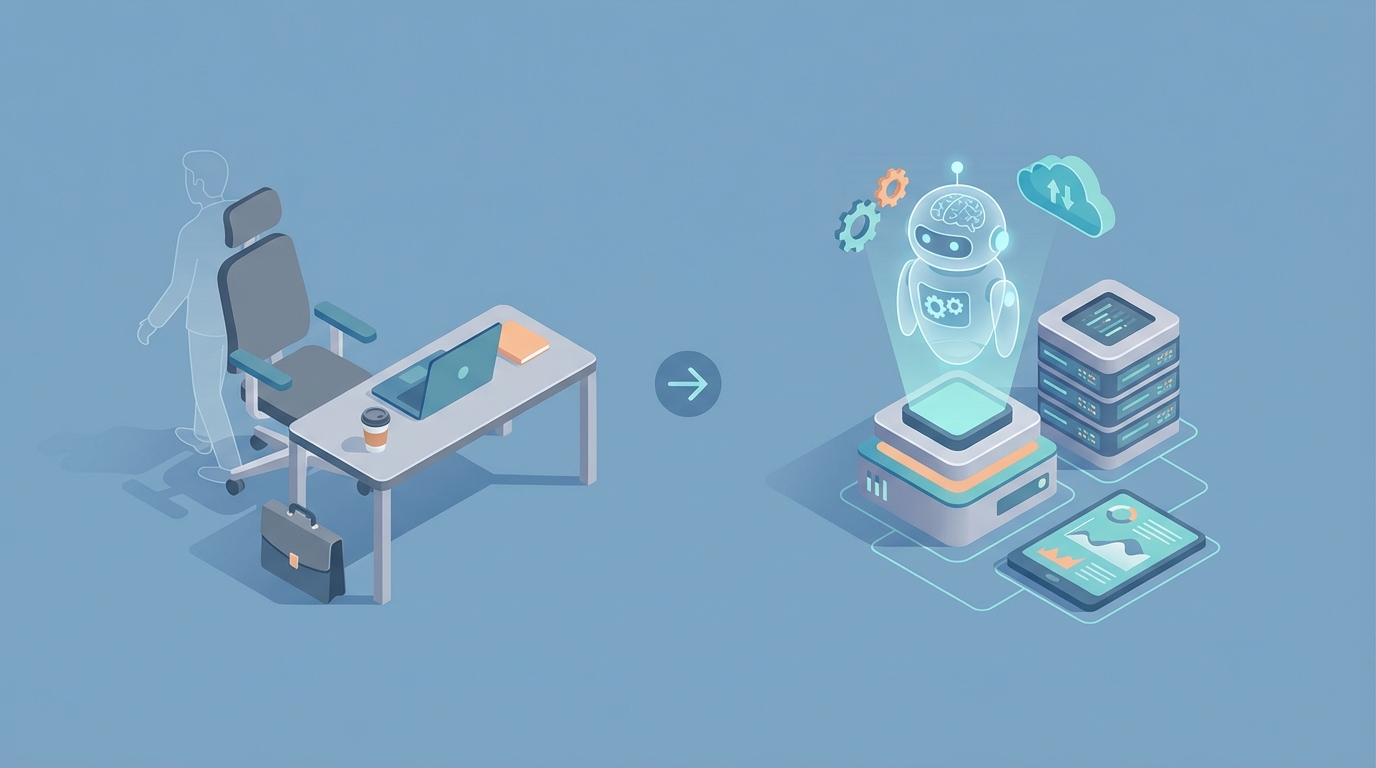
Most brand managers spend their days doing things an AI agent could handle by lunch.
That's not a dig at brand managers. It's a reflection of how the role has evolved into something that's 70% operational overhead and 30% actual strategic thinking. When you look at what a Brand Manager does hour by hour, day by day, you start to see that a huge chunk of the work is pattern matching, data synthesis, content iteration, and reporting — exactly the kind of tasks AI systems are already good at.
So let's talk about what it actually looks like to replace a Brand Manager with an AI agent built on OpenClaw. Not theoretically. Not "someday." Right now, with tools that exist today.
I'll be honest about what works, what doesn't, and where you still need a human in the loop.
What a Brand Manager Actually Does All Day
Job descriptions for Brand Managers are notoriously vague. "Own the brand." "Drive brand strategy." "Lead cross-functional initiatives." Cool, what does that mean on a Tuesday at 2pm?
Here's what it actually looks like, based on Glassdoor reviews from 500+ Brand Managers and breakdowns from MarketingProfs:
~25-30% of their time: Performance monitoring and reporting. Pulling data from Google Analytics, social platforms, CRM dashboards, and ad managers. Aggregating it into slides or spreadsheets. Writing summaries. Sending them to stakeholders who skim the first two bullet points.
~20-25%: Market and competitor research. Reading industry reports. Monitoring what competitors are launching. Scanning social listening tools for sentiment shifts. Summarizing all of it into "insights" for leadership.
~20%: Meetings and cross-functional coordination. Syncing with sales, product, agencies, PR, and executives. Aligning on timelines. Following up on the things discussed in the last meeting that nobody did.
~15-20%: Content creation and review. Writing briefs for creative teams. Reviewing ad copy, social posts, packaging, and collateral. Running A/B tests. Giving feedback. Reviewing the revisions of the feedback.
~10%: Actual strategy. The thing they were hired to do. Defining positioning, long-term brand vision, messaging architecture. This happens maybe a few times a quarter in concentrated bursts, not daily.
That ratio is the problem. The highest-value work gets the smallest slice of time because the operational grind eats everything else.
The Real Cost of This Hire
Let's talk money, because this is where the math gets interesting.
A mid-level Brand Manager in the US earages between $110,000 and $150,000 in base salary, according to 2026 data from Glassdoor and Payscale across 10,000+ roles. Add in bonuses and equity and you're looking at $140,000 to $200,000 in total compensation.
But that's not what they cost you. The fully loaded cost to the employer — benefits, payroll taxes, 401k matching, healthcare, equipment, software licenses, office space — adds 30-50% on top. So your $130k Brand Manager actually costs you $170,000 to $200,000 per year.
And that's before you account for:
- Recruiting costs: $15,000-$30,000 per hire (agency fees, job boards, interview time across your team)
- Ramp time: 3-6 months before they're fully productive. That's $50,000-$100,000 in salary while they learn your brand, your tools, your internal politics.
- Turnover: Average tenure for brand managers is 2-3 years. Then you start the cycle again.
- Training: Tools change. Platforms change. Someone has to teach them your analytics stack, your project management system, your brand guidelines.
Conservatively, over three years, a single Brand Manager costs you $550,000 to $700,000 when you factor in everything. In places like San Francisco or New York, add another 20-30%.
For a CPG company or a Fortune 500, that number is higher. For a startup, it's a massive chunk of your marketing budget going to one person who spends a quarter of their time making slides.
What AI Handles Right Now (And How OpenClaw Does It)
This is where I want to be specific, because vague claims about AI are worthless. McKinsey's 2026 AI in Marketing report estimates that AI can automate 30-50% of routine brand management work today. Having worked with these systems, that tracks — maybe even conservative for certain task categories.
Here's what an AI Brand Manager agent built on OpenClaw can actually do:
Performance Monitoring and Reporting
This is the lowest-hanging fruit and the highest time savings.
An OpenClaw agent can connect to your analytics platforms — Google Analytics, social media APIs, ad platforms, CRM — and continuously monitor performance against your KPIs. No more manual data pulls. No more weekly "let me build this dashboard" rituals.
You configure the agent with your metrics, your thresholds, and your reporting cadence. It generates reports automatically, flags anomalies, and surfaces the three things that actually matter instead of burying them in a 40-slide deck.
Here's what a basic monitoring agent configuration looks like in OpenClaw:
agent:
  name: brand-performance-monitor
  type: recurring
  schedule: daily

data_sources:
  - google_analytics:
      property_id: "GA4-XXXXXXX"
      metrics: [sessions, conversions, engagement_rate, bounce_rate]
  - social:
      platforms: [instagram, tiktok, linkedin, x]
      metrics: [impressions, engagement, follower_growth, sentiment]
  - advertising:
      platforms: [meta_ads, google_ads]
      metrics: [roas, cpc, ctr, spend]

analysis:
  compare_to: previous_period
  anomaly_detection: true
  threshold_alerts:
    engagement_drop: 15%
    roas_below: 2.0
    sentiment_shift: negative

output:
  format: executive_summary
  length: 500_words
  distribute_to: [slack_channel, email_list]
  include: [key_changes, recommendations, action_items]
That replaces 8-10 hours per week of manual reporting. Not with worse output — with better output, because it never forgets to check a platform and it doesn't get tired at 4pm on Friday.
Market and Competitor Research
Brand Managers spend a quarter of their time trying to answer: What are consumers saying? What are competitors doing? What trends should we care about?
An OpenClaw agent handles this through continuous monitoring rather than periodic research sprints. You point it at competitor websites, social accounts, industry publications, and review sites. It tracks changes, summarizes findings, and delivers a weekly competitive intelligence brief.
agent:
  name: competitive-intel
  type: recurring
  schedule: weekly

monitoring:
  competitors:
    - name: "Competitor A"
      website: "competitor-a.com"
      social: [instagram, tiktok, linkedin]
      track: [new_products, pricing_changes, campaign_launches, messaging_shifts]
    - name: "Competitor B"
      website: "competitor-b.com"
      social: [instagram, x]
      track: [new_products, partnerships, content_themes]

  industry:
    sources: [trade_publications, reddit_threads, google_trends]
    topics: [category_trends, consumer_sentiment, regulatory_changes]

analysis:
  summarize: true
  identify: [opportunities, threats, gaps]
  compare_to: our_positioning

output:
  format: competitive_brief
  distribute_to: [brand_team_slack, leadership_email]
P&G's "ConsumerIQ" system analyzes 10 billion+ data points for brands like Tide, automating 60% of their market research. You don't need P&G's budget to do a version of this. OpenClaw lets you build the same architecture scaled to your needs.
Content Generation and Iteration
This one is nuanced. AI is very good at generating content variants, writing first drafts, and running A/B testing frameworks. It's not good at original creative concepts (more on that in the next section).
What an OpenClaw agent can do:
- Generate 20 social post variants from a single campaign brief
- Write first drafts of ad copy aligned to your brand voice guidelines
- Create content calendars based on your posting cadence and seasonal strategy
- Produce email copy, product descriptions, and landing page text
- Run automated A/B test analysis and recommend winners
agent:
  name: content-engine
  type: on_demand

brand_context:
  voice: "brand-guidelines.pdf"
  tone: [confident, accessible, slightly irreverent]
  avoid: [jargon, corporate_speak, superlatives]
  examples: "approved-content-samples/"

tasks:
  social_content:
    platforms: [instagram, linkedin, tiktok]
    variants_per_concept: 10
    include: [copy, hashtag_suggestions, posting_time_recs]

  ad_copy:
    formats: [headline, body, cta]
    variants: 15
    optimize_for: [click_through, conversion]

  content_calendar:
    duration: 30_days
    frequency:
      instagram: 5_per_week
      linkedin: 3_per_week
      tiktok: 4_per_week
    themes: [product_features, customer_stories, industry_insights, behind_the_scenes]

review:
  human_approval_required: true
  route_to: [creative_director]
Coca-Cola's AI Creative Studio, built with Adobe Firefly, saved them 40% on content production costs. L'Oréal cut campaign testing time by 70%. These aren't small numbers.
The key detail in that config: human_approval_required: true. The agent generates, a human approves. That's the right workflow.
Budget Optimization and Forecasting
Brand Managers spend significant time on budget allocation — deciding where to spend, tracking what's been spent, and projecting ROI. An OpenClaw agent can run simulation models across your channels, recommend budget shifts based on performance data, and forecast expected returns on different allocation scenarios.
agent:
  name: budget-optimizer
  type: recurring
  schedule: weekly

inputs:
  total_budget: 500000
  channels: [paid_social, search, influencer, events, content]
  historical_data: "performance-by-channel-24months.csv"
  business_goals:
    primary: brand_awareness
    secondary: lead_generation
    constraints:
      min_spend_per_channel: 10%
      max_spend_per_channel: 40%

analysis:
  model: multi_touch_attribution
  scenarios: [current_allocation, optimized, aggressive_digital, balanced]
  forecast_period: 90_days

output:
  format: recommendation_report
  include: [projected_roi_per_scenario, recommended_shifts, risk_assessment]
What Still Needs a Human
Here's where I need to be straight with you, because overselling AI's capabilities is how you end up with a dumpster fire instead of a brand strategy.
Original creative concepts. AI can iterate and generate variants, but the breakthrough idea — the "Just Do It," the "Think Different," the campaign concept that makes people feel something — that still comes from humans. AI is a remix machine. It's excellent at recombining patterns it's seen before. It's terrible at genuine creative leaps.
Brand voice nuance and emotional resonance. You can feed an OpenClaw agent your brand guidelines and it'll produce copy that's technically on-brand. But the subtle judgment calls — "this technically follows our voice but feels off" — that requires human taste. A good creative director catches things an agent won't.
Crisis response and reputation management. When a PR crisis hits, you need human judgment, empathy, and accountability. AI can help you monitor for emerging crises and draft initial response frameworks, but the decision about how to respond when your CEO said something stupid on a podcast? That's a human call.
Cross-functional negotiation and politics. A Brand Manager spends 20% of their time in meetings, and a lot of that is navigating internal dynamics — convincing the sales team to align on messaging, pushing back on an executive's pet idea, negotiating timelines with agencies. AI doesn't do organizational politics.
Ethical judgment. Especially around issues like representation, cultural sensitivity, and data privacy. AI can flag potential issues if you train it to, but the final call on "is this appropriate for our brand to say?" requires human accountability.
Strategic pivots based on business context. The data might say one thing, but the business context — an upcoming acquisition, a shift in company strategy, a relationship with a key retail partner — changes the calculus in ways that aren't in the dataset.
The honest framework: AI handles the operational 70%. Humans handle the strategic 30%. The result isn't replacing a Brand Manager with nothing — it's replacing a Brand Manager with an AI agent and a fractional human strategist who spends their time on the work that actually matters.
How to Build Your AI Brand Manager on OpenClaw
Here's the practical path from "this sounds interesting" to "this is running and saving us money."
Step 1: Audit Your Current Brand Management Workload
Before you build anything, document what your Brand Manager (or brand team) actually spends time on. Use the categories I outlined above. Be honest about the split. Most teams discover they're spending 60-70% of time on work that's automatable.
Step 2: Set Up Your OpenClaw Environment
Create your workspace in OpenClaw and connect your data sources. At minimum, you'll want:
- Analytics platforms (GA4, social analytics)
- Social media accounts (for posting and monitoring)
- Ad platforms (Meta, Google, TikTok)
- Your brand assets (guidelines, approved content, voice documentation)
- CRM or customer data platform
OpenClaw's integration layer handles the connections. You're not writing custom API wrappers — you're configuring data sources through the platform.
Step 3: Build Your Agent Stack
Don't try to build one mega-agent that does everything. Build specialized agents that handle specific workflows:
- Performance Monitor — daily reporting and anomaly detection
- Competitive Intel — weekly competitive landscape summary
- Content Engine — on-demand content generation and calendar planning
- Budget Optimizer — weekly budget allocation recommendations
- Social Listener — continuous sentiment and trend monitoring
Each agent has its own configuration, its own data sources, and its own output channels. They can share context through OpenClaw's shared memory layer, so your content engine knows what the performance monitor is seeing.
Step 4: Feed It Your Brand Context
This is the step most people rush through, and it's the one that determines whether your agents produce generic garbage or genuinely useful output.
Upload everything:
- Brand guidelines (visual and verbal)
- Approved content examples (at least 50-100 pieces)
- Tone and voice documentation
- Competitor positioning maps
- Customer personas and research
- Past campaign briefs and results
- Internal terminology and things to avoid
The more context your agents have, the better their output. Think of this as the onboarding process — except unlike a human Brand Manager who takes 3-6 months to ramp, your OpenClaw agents are productive within days once properly configured.
Step 5: Set Up Human-in-the-Loop Checkpoints
Define where human approval is required. My recommendation:
- Auto-publish: Internal reports and dashboards
- Human review before publishing: All external content, campaign recommendations, budget shift proposals
- Human only: Crisis response, strategic pivots, creative concepts
Configure these approval workflows in OpenClaw so nothing goes out that shouldn't without the right eyes on it.
Step 6: Iterate Based on Output Quality
Run your agents for two weeks in shadow mode — they produce output but you compare it against what your current process generates. Tune the configurations. Adjust the brand context. Refine the prompts. Then go live.
The Math
Let's be conservative.
A Brand Manager costs you $170,000-$200,000 per year fully loaded. An OpenClaw agent stack costs a fraction of that in platform fees and the time to configure and maintain it.
Even if the AI agent only replaces 50% of the workload (and I think it's more like 60-70%), you're either:
- Eliminating the role entirely and hiring a fractional brand strategist for the human-required work at $5,000-$10,000/month
- Upgrading the role so your Brand Manager stops doing operational work and focuses entirely on strategy, creative direction, and stakeholder leadership
Either way, the ROI is obvious. Unilever reduced research time by 50%. L'Oréal cut testing time by 70%. Coca-Cola saved 40% on content production. And those are enterprise companies with complex implementations. For a mid-market brand, the impact per dollar is even higher.
The Honest Take
I'm not going to tell you that AI replaces the need for brand thinking. It doesn't. The companies winning with AI in brand management — Unilever, Nike, P&G, L'Oréal — they didn't fire their brand teams. They automated the grunt work and redirected human talent toward higher-value problems.
But here's what I will tell you: the Brand Manager role as it exists today — spending 25% of their time pulling data into slides and another 25% summarizing competitor moves — that version of the role is already obsolete. The companies that recognize this first will move faster, spend smarter, and build stronger brands with leaner teams.
OpenClaw gives you the infrastructure to make that transition. Whether you build it yourself or have someone build it for you, the capability is here now. Not in some hypothetical future. Now.
Next Steps
You've got two options:
Build it yourself. Sign up for OpenClaw, follow the steps above, and start with one agent — the performance monitor is the easiest win. Get it running, prove the value, then expand.
Or hire us to build it. If you'd rather skip the learning curve and have a production-ready AI Brand Manager agent deployed for your specific brand, that's exactly what Clawsourcing does. We'll audit your brand management workflows, build your agent stack on OpenClaw, load your brand context, and hand you a system that's running within weeks.
Either way, stop paying $200k a year for someone to make dashboards.
Recommended for this post
Content Pipeline
Skill
A complete content production system — SEO blog posts, social media, email sequences, and landing pages. Writes 2,000+ word articles with proper heading structure, internal linking, and keyword optimization.
Build, write, and deploy complete Klaviyo email programs from chat — flows, campaigns, segments, and automations via the full API
AI Cofounder
Persona
A full-stack AI cofounder that runs sales, marketing, engineering, finance, and operations — not just answers questions. Half the price of competing personas, twice the operational depth.