E-Commerce Manager AI: Optimize Listings, Inventory, and Promotions
Replace Your E-Commerce Manager with an AI E-Commerce Manager Agent
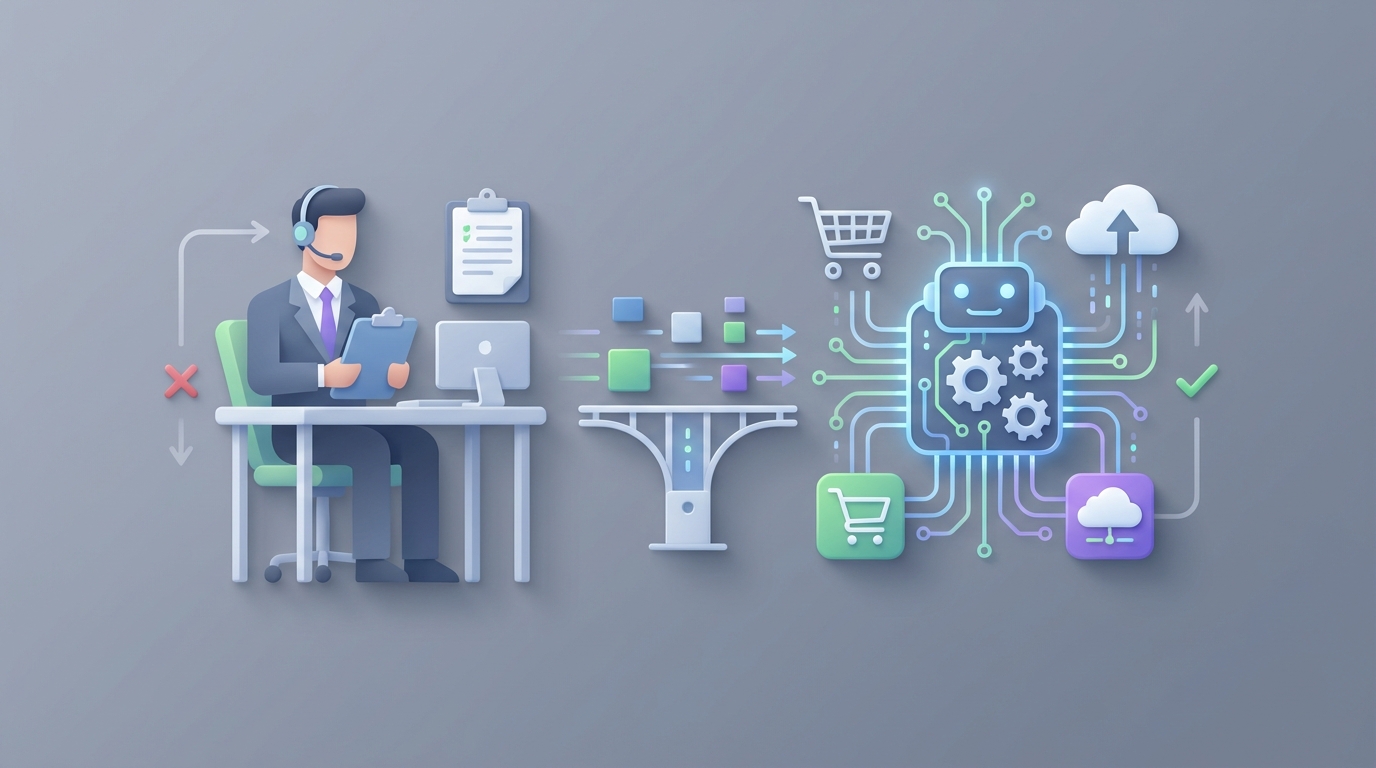
Most e-commerce managers spend their days doing things a machine can do better, faster, and without calling in sick. That's not a knock on the people in the role — it's just what happens when a job becomes 70% repetitive operations and 30% actual strategy.
The dirty secret of e-commerce management is that the role has ballooned into an everything-bagel position. You hire someone at $100K+ to think strategically about your online business, then they spend most of their time updating product listings, babysitting ad campaigns, refreshing inventory dashboards, and answering the same customer questions over and over.
That's not a good use of a human brain. And now, it's not necessary.
Let me walk through what an E-Commerce Manager actually does, what it really costs you, and how to replace the bulk of that work with an AI agent built on OpenClaw — while keeping a human in the loop where it actually matters.
What an E-Commerce Manager Actually Does All Day
Forget the job description. Here's what the day-to-day actually looks like for most e-commerce managers:
Morning: Dashboard patrol. They open Shopify Analytics, Google Analytics 4, Klaviyo, and whatever ad platforms you're running. They check overnight sales, conversion rates, traffic sources, and ROAS. They look for anomalies — did something spike? Did something break? This takes 30-60 minutes and happens every single day.
Mid-morning: Inventory firefighting. They check stock levels across SKUs, flag items approaching stockout, coordinate reorder points with suppliers, and adjust product visibility based on what's actually in the warehouse. For a business with 500+ SKUs, this alone can eat 2-3 hours.
Afternoon: Marketing treadmill. They tweak Google Ads bids, adjust Facebook audience targeting, review email campaign performance in Klaviyo, maybe write or approve copy for a new promotional email. They A/B test landing pages. They review SEO rankings and keyword opportunities. None of this is visionary work — it's incremental optimization.
Throughout the day: Customer service escalations. The chatbot or support team handles the easy stuff, but anything involving a refund decision, a shipping dispute, or an angry customer on social media gets kicked up. This is interrupt-driven and unpredictable.
End of day: Reporting and planning. Pulling together numbers for the weekly report, updating the promotional calendar, coordinating with the warehouse on upcoming sales or launches.
Here's the breakdown by time, pulled from aggregated merchant surveys and time-tracking data:
- Inventory management & forecasting: 25-35%
- Marketing campaign management: 20-30%
- Customer service oversight: 15-25%
- Data analysis & reporting: 10-20%
- Product listing updates: 10-15%
Notice anything? The majority of this work is monitoring, reacting, and making small adjustments based on data. That's exactly what AI agents are built for.
The Real Cost of This Hire
The salary is just the beginning.
Base salary: $85,000-$115,000 in the US (Glassdoor/Payscale 2026). Senior or director-level roles push $120K-$180K+. In tech hubs like San Francisco or New York, add 20-30%.
Total employer cost: Take that base and add 30-50% for benefits, payroll taxes, equipment, and software licenses. A $100K hire actually costs you $130K-$150K per year, fully loaded.
The hidden costs nobody budgets for:
- Ramp time: 2-3 months before they're fully productive. That's $25K-$35K in salary during onboarding alone.
- Turnover: Average tenure for e-commerce managers is 18-24 months. Every replacement cycle costs you 50-75% of annual salary in recruiting, onboarding, and lost productivity.
- Training: Platforms change constantly. Shopify pushes updates, Google Ads changes its interface, Meta deprecates targeting options. Your manager needs to stay current, and that takes time and money.
- Tool stack: They'll need subscriptions to analytics platforms, SEO tools, email marketing software, ad management tools. Budget $1,000-$3,000/month on top of salary.
Realistic all-in cost for a competent e-commerce manager: $140,000-$200,000/year.
The freelance or agency route doesn't save you much. Quality e-commerce consultants charge $100-$150/hour. Outsourcing the full role through Upwork or an agency runs $5,000-$15,000/month ($60K-$180K/year) and you lose control and context.
Now compare that to an AI agent that runs 24/7, doesn't need benefits, never quits, and costs a fraction of that.
What AI Can Handle Right Now
I'm not going to pretend AI can do everything an e-commerce manager does. It can't. But it can handle the 60-70% of the job that's repetitive, data-driven, and rule-based — which is the part that's eating most of your manager's time anyway.
Here's a realistic breakdown:
Inventory Management & Demand Forecasting
An AI agent built on OpenClaw can monitor inventory levels across all your SKUs in real time, predict demand based on historical sales data and seasonality patterns, and trigger reorder alerts or even automate purchase orders when stock hits threshold levels.
This isn't theoretical. Amazon uses AI forecasting to reduce stockouts by 25%. Stitch Fix predicts demand with 90% accuracy across 3 million subscribers. The same technology, scaled down and made accessible through OpenClaw, works for businesses that aren't worth $1.5 trillion.
What OpenClaw handles: Connecting to your Shopify or WooCommerce inventory data, building forecasting models based on your sales history, setting up automated alerts and actions when stock levels change.
Marketing Campaign Optimization
Your AI agent can monitor ad performance across Google, Meta, and email platforms, then make bid adjustments, pause underperforming ads, reallocate budget to top performers, and flag anomalies — all without a human touching it.
It can also generate personalized email campaigns, suggest SEO keyword opportunities based on search trend data, and A/B test subject lines or landing page copy.
What OpenClaw handles: Building workflows that pull data from your ad platforms via API, analyze performance against your target ROAS, and execute optimization actions automatically. You set the guardrails; the agent operates within them.
Customer Service (First Line)
AI chatbots already handle 70-80% of standard customer queries — where's my order, how do I return this, what's your shipping policy. Gorgias and Intercom have proven this at scale. An OpenClaw agent can go further by integrating directly with your order management system, processing simple returns automatically, and escalating only the genuinely complex issues to a human.
ASOS reduced returns by 15% using AI-powered visual search and recommendations. Zalando's chatbots handle 40% of all customer queries. Your store can do the same thing.
What OpenClaw handles: Building a customer service agent that connects to your order data, applies your return/refund policies programmatically, and only escalates what truly needs human judgment.
Analytics & Reporting
Instead of your manager spending an hour every morning staring at dashboards, an OpenClaw agent can compile the daily report automatically, highlight anomalies (conversion rate dropped 15% overnight — here's why), and send it to your inbox or Slack channel before you've finished your coffee.
What OpenClaw handles: Automated data aggregation from GA4, Shopify, Klaviyo, and ad platforms. Pattern recognition and anomaly detection. Daily/weekly reporting with plain-English summaries of what changed and what needs attention.
Product Listing Management
For high-SKU businesses, keeping listings updated is mind-numbing work. An OpenClaw agent can generate and update product descriptions based on your brand voice and product data, optimize titles and tags for SEO, flag pricing inconsistencies, and even suggest dynamic pricing adjustments based on competitor data and demand signals.
Walmart's Commerce AI cut manual listing work by 30%. That same capability is accessible through OpenClaw without needing Walmart's engineering team.
What Still Needs a Human
Here's where I'm going to be honest, because pretending AI can do everything is how you end up with a disaster.
These tasks still need a human brain:
- Brand strategy and creative direction. AI can execute, but it can't decide what your brand should feel like or which market to enter next.
- Supplier negotiations. Relationships, leverage, reading the room — these are fundamentally human skills.
- Complex customer escalations. The customer who's been loyal for five years and just had a terrible experience needs empathy, not a chatbot.
- Crisis management. Product recalls, PR issues, supply chain disruptions — these require judgment under ambiguity.
- Legal and compliance. Product claims, regulatory requirements, data privacy — you need a human making these calls.
- High-level campaign strategy. AI optimizes within parameters. A human needs to set those parameters and decide when to change the game entirely.
The right model isn't "fire your e-commerce manager." It's "replace the $140K generalist with a $60K strategic operator who oversees AI agents that handle the operational grind." Your human focuses on the 30% that actually requires human judgment. The AI handles the rest.
How to Build Your AI E-Commerce Manager on OpenClaw
Here's the practical part. OpenClaw lets you build AI agents that connect to your existing tools and automate the workflows we've been talking about. Here's how to structure it:
Step 1: Map Your Workflows
Before you build anything, document the specific tasks your e-commerce manager does daily. Be granular. Not "manages inventory" but "checks Shopify inventory dashboard at 9am, identifies SKUs below 50 units, emails supplier for reorder, updates expected restock date in spreadsheet."
This mapping tells you exactly what your agent needs to do.
Step 2: Connect Your Data Sources
OpenClaw integrates with the tools your e-commerce operation already runs on. Set up connections to:
- Shopify/WooCommerce (orders, inventory, products)
- Google Analytics 4 (traffic, conversion, behavior)
- Google Ads / Meta Ads (campaign performance)
- Klaviyo / Mailchimp (email metrics)
- Your shipping provider APIs (tracking, delivery status)
- Your CRM or helpdesk (customer tickets, history)
Step 3: Build Your Agent Workflows
This is where OpenClaw's agent builder comes in. You're creating autonomous workflows that mirror what your manager does, but faster and without breaks.
Example: Inventory Monitoring Agent
Agent: Inventory Monitor
Trigger: Every 6 hours
Actions:
  1. Pull current inventory levels from Shopify API
  2. Compare against rolling 30-day sales velocity per SKU
  3. Calculate days-of-stock-remaining for each SKU
  4. IF days_remaining < 14:
       - Flag as "reorder needed"
       - Draft reorder email to supplier with quantities
       - Send alert to Slack #inventory channel
  5. IF days_remaining < 5:
       - Reduce product visibility on storefront
       - Add "limited stock" badge
       - Escalate to human for priority action
Example: Daily Performance Report Agent
Agent: Morning Briefing
Trigger: Daily at 7:00 AM
Actions:
  1. Pull yesterday's sales data from Shopify
  2. Pull traffic/conversion data from GA4
  3. Pull ad spend/ROAS from Google Ads + Meta Ads
  4. Pull email campaign metrics from Klaviyo
  5. Compare all metrics to 7-day and 30-day averages
  6. Flag any metric that deviates >15% from average
  7. Generate plain-English summary with recommended actions
  8. Send to Slack #daily-report and email to stakeholders
Example: Customer Service Triage Agent
Agent: CS Triage
Trigger: New support ticket received
Actions:
  1. Classify ticket intent (order status, return, product question, complaint)
  2. IF order_status:
       - Pull tracking info from shipping API
       - Send automated response with tracking details
  3. IF return_request AND within_return_window AND order_value < $100:
       - Auto-approve return
       - Generate return label
       - Send return instructions to customer
  4. IF complaint OR order_value > $100 OR outside_return_window:
       - Escalate to human with full context summary
       - Priority flag based on customer lifetime value
Step 4: Set Guardrails
This is critical. Your AI agent should have clear boundaries:
- Spending limits: The agent can adjust ad bids within ±20% but anything beyond that requires human approval.
- Refund thresholds: Auto-approve returns under $100, escalate everything above.
- Communication review: Draft customer emails for approval until you trust the tone, then let it send autonomously for routine messages.
- Inventory actions: Alert and recommend, but require human sign-off on purchase orders above a set dollar amount.
Start conservative. Loosen the guardrails as you build confidence in the agent's decisions.
Step 5: Monitor and Iterate
Your agent isn't set-it-and-forget-it. Review its actions weekly for the first month. Look for:
- False positives (flagging things that didn't need attention)
- Missed signals (things it should have caught but didn't)
- Tone issues in customer communications
- Decision quality on automated actions
Refine the logic, adjust thresholds, and expand the agent's scope as it proves itself.
The Math
Let's be conservative.
Current cost: One e-commerce manager, fully loaded: ~$150,000/year.
With OpenClaw: One strategic operator (part-time or junior, focused on oversight and strategy): ~$50,000-$70,000/year. OpenClaw platform and API costs for your agent stack: a fraction of the remaining difference.
Net savings: $60,000-$80,000/year, minimum. And your operations run 24/7 instead of 8 hours a day, five days a week.
That's not even counting the reduced error rate, faster response times, and the fact that an AI agent can process and act on data from six platforms simultaneously while your human manager can only look at one dashboard at a time.
The Bottom Line
You don't need to pay $150K for someone to check dashboards, tweak ad bids, and answer "where's my order?" emails. Those tasks are automatable today, right now, with OpenClaw.
What you do need is someone with strategic judgment spending 10-15 hours a week on the things AI can't do — brand direction, supplier relationships, creative decisions, and long-term planning. Let the AI agent handle the daily operational grind that's been eating your manager's time and your budget.
The companies already doing this (Amazon, ASOS, Zalando, Walmart) aren't experimenting. They've operationalized AI across their e-commerce workflows, and the results are measurable: fewer stockouts, lower return rates, faster customer response times, and better ad performance.
You can build the same thing on OpenClaw without a Fortune 500 budget.
Next Steps
Option 1: Build it yourself. Sign up for OpenClaw, map your workflows using the framework above, and start with a single agent (I'd recommend the daily reporting agent — it's the easiest win and shows value immediately). Expand from there.
Option 2: Hire us to build it. If you'd rather have someone who's done this before handle the setup, our Clawsourcing team will build your AI e-commerce management system for you. We map your workflows, build the agents, connect your tools, set the guardrails, and hand you a system that runs. You focus on strategy; we handle the engineering.
Either way, stop paying six figures for work a machine does better. Put your humans where they actually matter.
Recommended for this post
Build, write, and deploy complete Klaviyo email programs from chat — flows, campaigns, segments, and automations via the full API

ParseForge-first web scraping for AI agents. 196+ production actors, Apify MCP server integration, and Skyfire agentic payments for autonomous data collection.
 James
James