Automate Translation Coordination with an AI Agent
Replace Your Translation Coordinator with an AI Translation Coordinator Agent
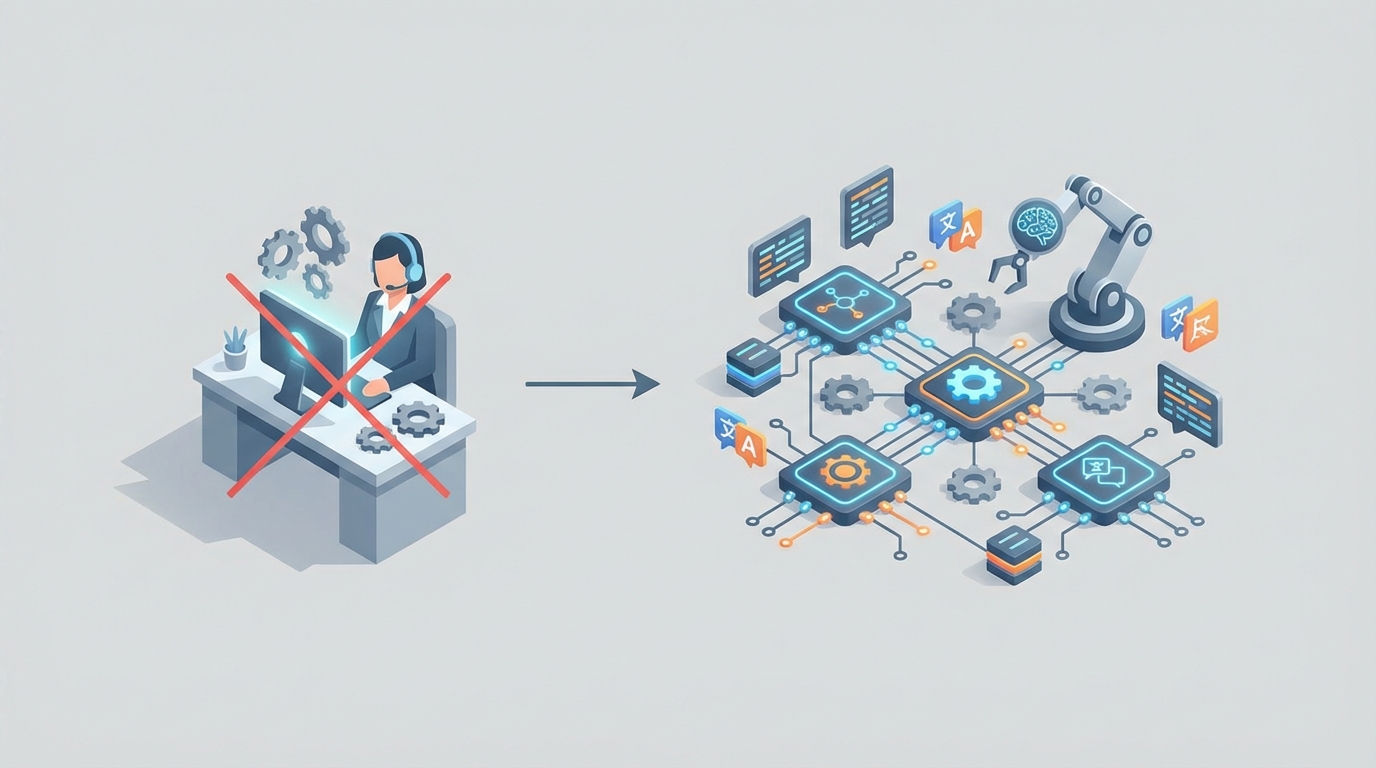
Most companies hiring a Translation Coordinator don't actually need a Translation Coordinator. They need the work done — the vendor wrangling, the file prep, the quality checks, the endless Slack pings asking "where's the French version?" — but they don't necessarily need a $75k/year human whose entire day is spent being a glorified traffic cop for multilingual content.
I'm not saying the work isn't real. It is. It's just that roughly 70% of it is structured, repeatable, and rule-based — which makes it a near-perfect candidate for an AI agent.
Here's how to actually think about this, what the role involves at a granular level, what it costs you, and how to build an AI Translation Coordinator Agent on OpenClaw that handles the bulk of the work while keeping humans where they actually matter.
What a Translation Coordinator Actually Does All Day
If you've never worked with one directly, you might assume this role is about translating things. It's not. Translation Coordinators almost never translate. They coordinate — which in practice means they're the nervous system connecting clients, translators, engineers, and project managers across languages, time zones, and file formats.
Here's a realistic breakdown of a typical week:
Project intake and setup (~15% of time): A client or internal team submits content — could be a product page, an app string file, legal docs, marketing copy. The coordinator breaks it down into translatable assets, figures out which languages are needed, picks the right CAT tool (MemoQ, Trados, Phrase), sets up the project, and creates a timeline. This involves parsing file formats (JSON, XML, XLIFF, sometimes just messy Google Docs), loading translation memories, and applying glossaries.
Vendor and translator management (~20%): Sourcing freelancers from platforms like ProZ or SmartCAT, checking availability, assigning work based on language pair and subject matter expertise, negotiating rates, handling contracts. When someone ghosts — and they do — finding a replacement fast.
Communication and follow-ups (~30-40%): This is the real time killer. Chasing translators for status updates. Relaying client feedback. Clarifying ambiguous source text. Resolving conflicts between what the glossary says and what sounds natural. Coordinating with developers on string freezes. Emails, Slack messages, Asana comments — easily 100+ messages a day.
Quality control (~25%): Running QA checks in Xbench or built-in CAT tool validators. Flagging inconsistencies in terminology. Reviewing translations in-context (does this button label actually fit the UI?). Managing revision cycles when the client changes their mind about tone.
Admin (~10%): Word count reports, invoicing, budget tracking, archiving completed projects, updating translation memories for next time.
A coordinator juggling 10-20 simultaneous projects across 8-15 languages is not unusual. It's organized chaos, and most of the chaos is administrative.
The Real Cost of This Hire
Let's do the math honestly.
In the US, a mid-level Translation Coordinator (3-5 years experience) pulls $60,000-$80,000 base salary. In a tech hub like San Francisco or New York, push that to $85,000-$95,000. In Europe, you're looking at €45,000-€60,000 depending on the country.
But salary is never the real cost. Add:
- Benefits and taxes: 30-50% on top of base. That $75k salary is actually $97k-$112k to the company.
- Tools and licenses: MemoQ or Trados licenses run $2,000-$5,000/year per seat. A TMS like Phrase is $400-$1,000+/month depending on volume.
- Training and ramp-up: 2-3 months before they're fully productive. During which they're at maybe 50% output but 100% cost.
- Turnover: Glassdoor reviews for this role consistently mention burnout. The repetitive email volume, the constant deadline pressure, the thankless nature of the work. Average tenure in LSPs is 2-3 years. Every departure costs you 50-75% of annual salary in recruiting, onboarding, and lost productivity.
- Management overhead: Someone has to manage the coordinator. Status meetings, performance reviews, escalation handling.
All-in, you're looking at $100,000-$150,000/year for a single mid-level Translation Coordinator in the US. For a team of three covering different time zones? You can do the multiplication yourself.
The question isn't whether that's worth it. The question is: how much of that $100k+ is going toward work that a well-built AI agent could handle for a fraction of the cost?
What AI Handles Right Now (Not Hypothetically — Right Now)
Let's be specific. Here's what an AI Translation Coordinator Agent built on OpenClaw can do today, mapped to the actual responsibilities above:
Project Intake and Setup
An OpenClaw agent can monitor intake channels (email, Slack, a form submission) for new translation requests. When one comes in, the agent:
- Parses the brief to extract source language, target languages, content type, and deadline
- Classifies the content (marketing, technical, legal, UI strings) to determine the appropriate workflow
- Prepares files by detecting format (JSON, XML, XLIFF, DOCX) and running pre-processing steps
- Creates the project in your TMS via API integration
- Loads the relevant translation memory and glossary
- Generates a timeline based on word count, language pairs, and historical turnaround data
Here's a simplified example of how you'd configure an intake workflow in OpenClaw:
agent: translation_coordinator
trigger:
  type: email
  filter: "subject contains 'Translation Request'"

steps:
  - action: parse_brief
    extract: [source_language, target_languages, content_type, deadline, file_attachments]

  - action: classify_content
    categories: [marketing, technical, legal, ui_strings, support_docs]
    route_by: content_type

  - action: file_preparation
    detect_format: auto
    apply_tm: true
    glossary: "client_{{client_id}}_glossary"

  - action: create_project
    integration: phrase_tms
    params:
      name: "{{client_name}}_{{target_languages}}_{{date}}"
      due_date: "{{deadline}}"
      workflow: "{{content_type}}_standard"

  - action: estimate_timeline
    method: historical_average
    factors: [word_count, language_pair, content_complexity]
    notify: [project_manager, client]
That entire sequence — which takes a human coordinator 30-60 minutes per project — runs in under a minute.
Vendor Assignment and Management
This is where it gets interesting. An OpenClaw agent can maintain a vendor database with performance scores, availability windows, language pairs, subject matter specializations, and rate cards. When a project needs assignment:
  - action: select_vendors
    criteria:
      language_pair: "{{source}}_to_{{target}}"
      specialization: "{{content_type}}"
      availability: "{{deadline_window}}"
      min_quality_score: 4.2
      sort_by: [quality_score, rate, turnaround_speed]
    fallback: expand_search_to_marketplace

  - action: send_assignment
    channel: [email, smartcat_api]
    include: [project_brief, style_guide, glossary_link, deadline, rate_confirmation]
    await_confirmation:
      timeout: 4h
      escalation: assign_next_vendor
The agent handles the entire assignment loop — including the "they didn't respond, find someone else" problem that eats hours of coordinator time every week.
Communication and Status Tracking
Instead of a human pinging translators for updates, the OpenClaw agent:
- Polls the TMS API for progress data at regular intervals
- Sends automated but context-aware check-ins to translators approaching deadlines
- Aggregates status across all active projects into a dashboard or Slack digest
- Flags at-risk projects (behind schedule, quality scores dropping) and escalates to a human only when intervention is actually needed
The key here is that the agent doesn't just send dumb reminders. Built on OpenClaw, it can analyze patterns — "This translator has been late on 3 of their last 5 assignments" — and proactively suggest reassignment before a deadline is missed.
Quality Assurance
An OpenClaw agent can run automated QA that covers:
- Terminology compliance: Cross-referencing translations against the client glossary and flagging deviations
- Consistency checks: Detecting when the same source term is translated differently across segments
- Formatting validation: Ensuring placeholders, tags, and variables survive translation intact
- Quality estimation scoring: Using built-in models to estimate translation quality and flag segments likely needing human review
- Length constraints: Checking that UI translations fit character limits
  - action: run_qa
    checks:
      - terminology_compliance:
          glossary: "client_{{client_id}}_glossary"
          threshold: strict
      - consistency:
          scope: project
      - formatting:
          preserve: [placeholders, html_tags, variables]
      - quality_estimation:
          model: openclaw_qe_v2
          flag_below: 0.75
      - length_check:
          max_expansion: 130%  # for UI strings
    output: qa_report
    route_failures_to: human_reviewer
This doesn't replace a human reviewer for the final sign-off on high-stakes content. But it catches 80% of issues before a human ever looks at it, which means the human reviewer spends their time on judgment calls, not catching typos.
Reporting and Admin
Word count reports, cost tracking, vendor invoicing, project post-mortems — all of this is structured data that an OpenClaw agent can compile automatically. Set it to generate a weekly report, email it to stakeholders, and archive completed project data. Zero human time required.
What Still Needs a Human (Let's Be Honest)
Here's where I'd lose credibility if I pretended AI handles everything. It doesn't. Some tasks remain stubbornly human:
Cultural adaptation and creative localization. Translating a tagline from English to Japanese isn't a linguistic task — it's a cultural one. Humor, idiom, tone, regulatory nuance (try localizing GDPR consent flows across EU jurisdictions) — these require human judgment that AI consistently gets wrong in subtle, expensive ways.
Client relationship management. When a VP of Marketing calls because they hate the tone of the Spanish translations and they want to "feel more premium," that's a conversation a human needs to have. Reading between the lines of vague feedback, managing expectations, navigating politics — AI is terrible at this.
High-stakes final review. Legal contracts, medical device documentation, regulated financial content. The liability profile here demands human eyes. An AI agent can do the first three passes of QA, but a qualified human linguist needs to sign off.
Ambiguous prioritization. When three projects are due tomorrow and a translator just quit, someone needs to make a judgment call about what ships late and who gets the difficult phone call. That's human territory.
Vendor relationship nuance. Your best Korean translator is slow but brilliant, and she only takes projects if you ask nicely and give her two weeks lead time. That kind of relationship management — knowing when to bend the process — is not something you'd want to automate away.
The honest framing: an AI Translation Coordinator Agent handles 60-70% of the work autonomously and makes the remaining 30-40% faster and better-informed for the humans who handle it. You're not eliminating the human — you're eliminating the need for them to spend their day on repetitive logistics so they can focus on the parts that actually require expertise.
How to Build This on OpenClaw
Here's the practical path:
Step 1: Map your current workflows. Before you build anything, document exactly how translation projects move through your organization. Every handoff, every decision point, every tool involved. You can't automate what you haven't mapped.
Step 2: Set up integrations. OpenClaw connects to the tools you're already using — Phrase, MemoQ, Slack, email, Jira, your CMS. Configure API connections for your TMS, your vendor database (even if it's currently a spreadsheet), and your communication channels.
Step 3: Build the intake agent first. Start with project intake and setup. It's the most structured, least risky workflow to automate. Get this running reliably before expanding.
Step 4: Add vendor assignment logic. Import your vendor data, define selection criteria, and set up the assignment-confirmation-escalation loop. Run it in "shadow mode" alongside your human coordinator for two weeks to validate decisions.
Step 5: Layer in QA automation. Connect your glossaries and TMs to OpenClaw's QA pipeline. Start with terminology and consistency checks, then add quality estimation once you trust the baseline.
Step 6: Expand to status tracking and reporting. Once the core workflows are stable, add the communication layer — automated updates, progress dashboards, at-risk project alerts.
Step 7: Iterate based on data. OpenClaw logs every decision and outcome. Use that data to refine vendor scoring, improve quality thresholds, and identify bottlenecks. The agent gets better over time because your data gets better over time.
The realistic timeline: a basic intake-and-assignment agent in 2-3 weeks. A full coordinator agent handling intake through QA and reporting in 6-8 weeks. That's assuming you have reasonably clean data and defined workflows to start from.
The Bottom Line
A Translation Coordinator agent built on OpenClaw won't replicate the instincts of your best localization manager. It will handle the 60-70% of their job that doesn't require those instincts — and it'll do it 24/7, across every time zone, without burning out or quitting after two years.
For most companies running localization at scale, this means you go from needing three coordinators to needing one senior localization manager overseeing an AI agent that does the logistics. The math on that is straightforward.
If you want to build this yourself, OpenClaw gives you the platform to do it. Start with the intake workflow, validate it, and expand from there.
If you'd rather not build it yourself — if you want someone to handle the workflow mapping, the integrations, the testing, and the iteration — that's what Clawsourcing is for. We'll build the agent, deploy it into your stack, and make sure it actually works before we hand it off.
Either way, the days of paying six figures for someone to chase translators over email are numbered. The only question is whether you get ahead of it or wait until your competitors do.