How to Automate Guest Post Outreach and Content Briefing
How to Automate Guest Post Outreach and Content Briefing
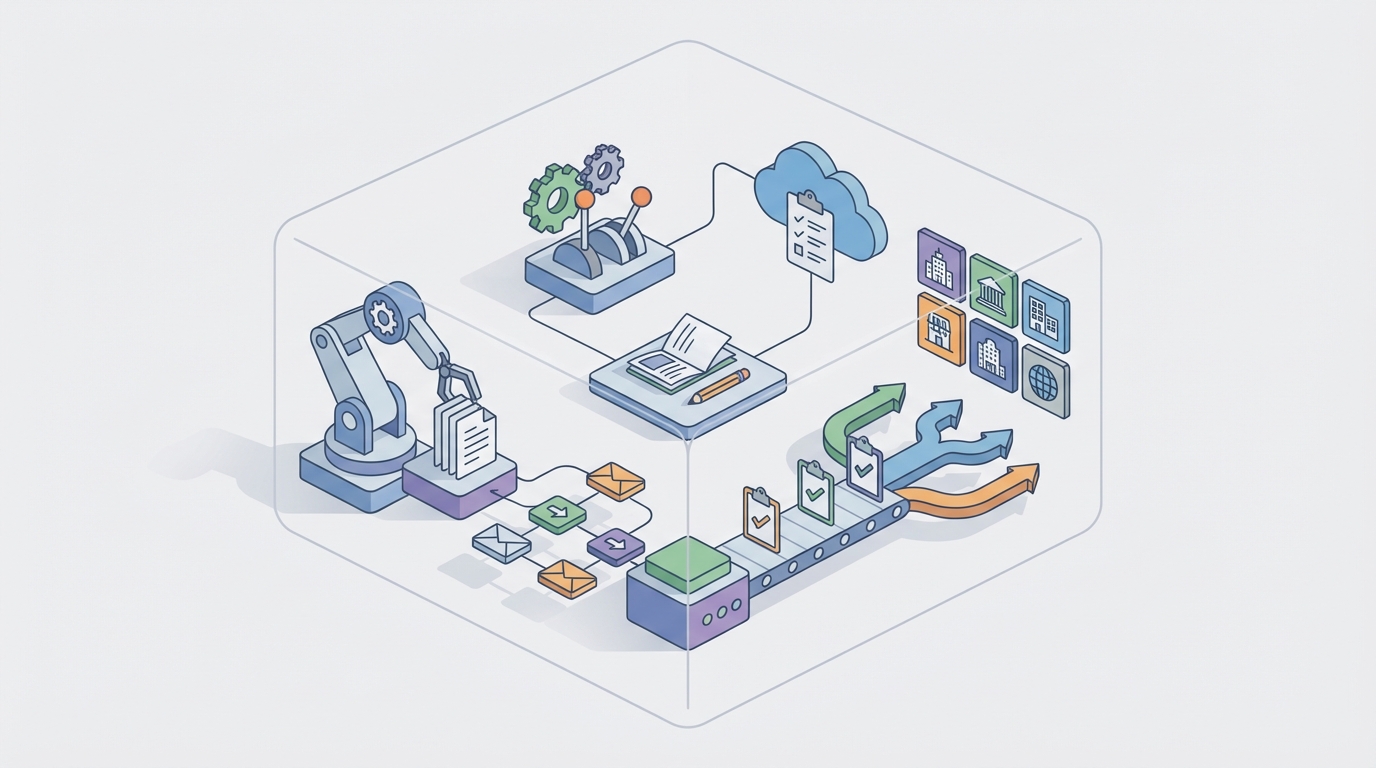
Let's be honest about guest post outreach: it's one of the most effective link-building strategies that almost nobody executes well, because executing it well is brutally time-consuming.
The typical workflow involves finding relevant sites, vetting their authority and traffic, hunting down contact info, writing personalized pitches, sending follow-ups, negotiating terms, and delivering content. When you do it properly — meaning you're not blasting generic "I'd love to contribute to your blog" emails to 500 people — securing a single quality guest post takes somewhere between 15 and 40 hours of work. To land five solid placements per month, you're looking at 100 to 200 hours. That's a full-time employee doing nothing else.
Most people either burn out and stop, or they take shortcuts and send garbage pitches that get 0.5% response rates. Neither outcome is good.
Here's the better approach: automate the repetitive, soul-crushing parts with an AI agent built on OpenClaw, keep a human in the loop for the judgment calls, and cut your time per placement by 60-80%. Let me walk through exactly how to do this.
The Manual Workflow (And Why It Hurts)
Before we automate anything, let's map what the full process actually looks like when done right. I'm being specific here because you can't automate what you haven't clearly defined.
Step 1: Prospect Research (3-6 hours per batch)
You're running Google advanced search operators like "write for us" + [your niche], digging through Ahrefs Content Explorer, scanning competitor backlink profiles, and combing through niche communities on Reddit and Slack. For a batch of 100 prospects, this alone eats half a workday.
Step 2: Vetting (2-4 hours per batch)
Now you're checking each site's Domain Rating in Ahrefs, looking at organic traffic trends in SEMrush, evaluating topical relevance, scanning for spam signals, and making sure they haven't turned into a guest post farm. About half your prospects get cut here.
Step 3: Contact Discovery (2-3 hours per batch)
Finding the actual decision-maker — the editor, content manager, or founder — and getting a verified email address. You're cycling through Hunter.io, Apollo.io, LinkedIn, and sometimes just guessing at email patterns and verifying with Neverbounce or ZeroBounce.
Step 4: Personalized Outreach (4-8 hours per batch)
Writing pitches that don't sound like every other guest post request in their inbox. This means reading two or three of their recent articles, referencing something specific, proposing topics that genuinely fit their audience, and explaining why you're credible enough to write for them. At 5-10 minutes per pitch for 40-60 vetted prospects, this is where most of your time goes.
Step 5: Follow-ups (1-2 hours per batch)
Sequencing 2-3 follow-up emails, tracking who opened what, and managing timing so you're persistent without being annoying.
Step 6: Negotiation and Content Delivery (2-5 hours per accepted post)
Agreeing on anchor text, editorial guidelines, image requirements, bio links, and publication timeline. Then writing or coordinating the actual article, which is a whole separate beast.
Step 7: Post-Publication Tracking (1 hour per post)
Confirming the post went live, checking that links are correct and dofollow, promoting the piece, and logging it in your campaign tracker.
Total for one batch of 100 prospects that yields 1-3 published posts: approximately 15-30 hours.
What Makes This Painful Beyond Just Time
The time cost is obvious. But there are subtler problems:
Error accumulation. When you're manually copying data between Ahrefs, Google Sheets, Hunter.io, and your email tool, things fall through cracks. You email the wrong person. You pitch a topic they published last month. You forget to follow up with someone who was genuinely interested.
Inconsistent quality. Pitch number 1 gets your full creative attention. Pitch number 47 gets a half-hearted attempt because you're exhausted. Your response rates reflect this perfectly.
Delayed feedback loops. You don't know if your pitch template is working until you've sent 50 of them and waited two weeks for responses. By then you've wasted hours on a bad approach.
Cost. If you're paying a Content Partnerships Manager $70-90K per year and they spend 60% of their time on outreach, that's $42-54K annually on what is largely repetitive, pattern-based work. Freelancers charge $350-800 per guaranteed placement, which adds up fast if you want meaningful volume.
What AI Can Handle Right Now
Not everything. Let me be clear about that upfront, because the "just automate it all" crowd is why most automated outreach produces garbage results. But a well-built AI agent on OpenClaw can handle a significant chunk of this workflow reliably.
High automation potential:
- Discovering guest post opportunities using search operators and crawling "write for us" pages at scale
- Pulling and verifying contact information across multiple data sources
- Analyzing site metrics — DR, traffic, topical relevance — and generating a quality score
- Drafting first versions of personalized pitches using context scraped from the target site's recent content
- Generating topic suggestions based on content gap analysis between the target site and your expertise
- Categorizing responses as positive, negative, or questions that need human input
- Managing follow-up sequences with appropriate timing and escalation
- Basic spam and quality scoring of target domains
Requires human judgment (don't try to automate these):
- Final brand alignment decisions — does publishing here make you look credible or desperate?
- Editing AI-drafted pitches to sound genuinely human (2-3 minutes per email, not 10)
- Handling positive replies and relationship building
- Content quality review before submission
- Link strategy and anchor text decisions to avoid over-optimization penalties
- Negotiation when sites push back on dofollow links or want payment
Step-by-Step: Building the Automation on OpenClaw
Here's how to build a guest post outreach agent that handles steps 1 through 5 with human checkpoints at the critical decision points.
Phase 1: The Prospecting Agent
Your first agent handles discovery and initial vetting. On OpenClaw, you're building an agent that:
- Takes your target niche and seed keywords as input
- Runs search queries using Google search operators —
"write for us" + [keyword],"contribute" + "inurl:blog" + [keyword],"guest post guidelines" + [keyword] - Crawls the resulting pages and extracts site information
- Pulls domain metrics via API integrations (Ahrefs, SEMrush, or Moz — OpenClaw supports these through its tool integration layer)
- Scores each prospect on a composite of DR, organic traffic, topical relevance, and spam signals
- Outputs a ranked list to a structured database
The key configuration here is your scoring rubric. Define clear thresholds:
scoring_criteria:
  domain_rating_min: 30
  organic_traffic_min: 5000
  spam_score_max: 3
  topical_relevance: true
  has_guest_post_page: true
  recent_publish_frequency: "at_least_weekly"
  reject_if:
    - "casino"
    - "payday loans"
    - "write for us" page lists 100+ niches
    - no original content in last 90 days
This agent runs on a schedule — weekly or biweekly — and continuously feeds your pipeline. One run against 10-15 search queries typically surfaces 200-500 raw prospects, which the scoring logic filters down to 80-150 worth reviewing.
Phase 2: The Contact Discovery Agent
A second agent takes the filtered prospect list and:
- Scrapes the site's about page, team page, and editorial guidelines for names and roles
- Cross-references with Hunter.io and Apollo.io APIs to find and verify email addresses
- Falls back to pattern-based guessing (firstname@domain.com, editor@domain.com) and verifies with an email validation API
- Enriches each contact with LinkedIn profile data where available
- Outputs a contact-ready database with name, role, verified email, and LinkedIn URL
On OpenClaw, you wire these API calls into a sequential tool chain. The agent tries the highest-confidence source first and cascades down. This eliminates the manual tab-switching between five different tools that usually eats 2-3 hours per batch.
Phase 3: The Pitch Drafting Agent
This is where the real leverage kicks in. Your pitch agent:
- Visits each target site and reads the three most recent articles
- Identifies the site's primary topics, writing style, and audience level
- Generates 2-3 topic suggestions that align with both the site's content and your expertise
- Drafts a personalized pitch email that references specific content on the site, proposes the topics with brief angles, and establishes your credibility
Here's an example of the kind of prompt structure you'd configure in OpenClaw for this agent:
You are drafting a guest post pitch email.

Context about the target site:
- Site: {site_url}
- Recent articles: {article_summaries}
- Their audience: {audience_description}
- Their content gaps: {identified_gaps}

Context about us:
- Our expertise: {our_topics}
- Our credentials: {credentials}
- Link targets: {target_pages}

Write a pitch that:
1. Opens with a specific, genuine reference to one of their recent articles
2. Proposes 2-3 topics that fill a gap in their content
3. Briefly establishes why we're qualified
4. Keeps total length under 150 words
5. Sounds like a real person, not a template
6. Does NOT use phrases like "I came across your blog" or "I'd love to contribute"
The output goes into a review queue — not straight to send. This is a critical distinction. The agent drafts; a human approves and edits.
Phase 4: The Outreach and Follow-Up Agent
Once pitches are human-approved, this agent:
- Sends the initial email via your configured sending infrastructure (you'll want a warmed domain — tools like Instantly.ai or Smartlead handle this, and OpenClaw can trigger sends through their APIs)
- Tracks opens and replies
- Sends follow-up #1 after 4 business days if no response
- Sends follow-up #2 after another 5 business days
- Categorizes any replies — positive interest, rejection, question, or out-of-office — and routes positive replies to a human immediately
The follow-ups aren't just "bumping this to the top of your inbox." The agent generates contextually aware follow-ups that add value:
follow_up_1:
  strategy: "Add a new angle or data point related to the proposed topics"
  tone: "Helpful, not pushy"
  max_length: 80 words

follow_up_2:
  strategy: "Brief, acknowledges they're busy, offers to adjust topics"
  tone: "Respectful close-out"
  max_length: 50 words
Phase 5: The Content Briefing Agent
When a site accepts your pitch, this agent accelerates content delivery:
- Pulls the site's editorial guidelines (formatting, word count, image requirements, internal linking expectations)
- Analyzes top-performing content on the site to identify structural patterns
- Generates a detailed content brief including outline, target word count, recommended headers, internal links to include, and SEO recommendations
- Optionally drafts a first version of the article for human editing
This cuts content delivery time from days to hours. Instead of a writer starting from scratch, they're working from a structured brief that's already aligned with the target site's style.
What Still Needs a Human
I want to be direct about this because over-automation is how you get blacklisted by editors and flagged by Google.
The human review queue is not optional. Here's what stays manual:
Prospect approval. The AI scores and ranks. You spend 20-30 minutes reviewing the top 100-150 prospects and cutting the ones that don't pass the smell test. Some sites look great on metrics but are clearly pay-for-play farms. A human spots this in seconds; an AI often doesn't.
Pitch editing. Every AI-drafted pitch gets a 2-3 minute human pass. You're checking tone, making sure the personalization actually makes sense (AI sometimes hallucinates details about articles), and adding any genuine personal touches. This is 2-3 minutes per pitch, not 10.
Positive reply handling. The moment someone says "yes, I'm interested," a human takes over. Relationship building, negotiation, and editorial collaboration are fundamentally human activities. Automating these is how you turn a warm lead into a lost opportunity.
Content quality gate. Whether you're writing the article yourself or using an AI draft as a starting point, a human needs to ensure the final piece is genuinely good. Sites are increasingly rejecting AI-sounding content, and rightfully so.
Link strategy. Deciding which pages to link to, what anchor text to use, and how to distribute link equity across your site requires strategic thinking that accounts for your broader SEO picture.
Expected Time and Cost Savings
Let's put real numbers on this.
Manual workflow (100 prospects → 1-3 posts):
- Prospecting: 4 hours
- Vetting: 3 hours
- Contact discovery: 2.5 hours
- Pitch writing: 6 hours
- Follow-ups: 1.5 hours
- Content briefing and delivery: 4 hours per post
- Total: ~21 hours for the batch + 4 hours per accepted post
OpenClaw-automated workflow (same 100 prospects → 1-3 posts):
- Prospecting agent runs automatically: 0 hours (runs on schedule)
- Human prospect review: 0.5 hours
- Contact discovery agent: 0 hours (automated)
- Human pitch review and editing: 1.5 hours (3 min × 50 approved pitches)
- Follow-ups: 0 hours (automated)
- Human reply handling: 1 hour
- Content brief generation: 0.5 hours (AI brief + human review)
- Total: ~3.5 hours of human time for the batch + 2 hours per accepted post
That's roughly an 80% reduction in human time for the same output quality. For a team running 4-5 batches per month to secure 8-15 placements, you're going from 100+ hours of human work to about 20-25 hours.
In dollar terms: if you're paying someone $50/hour for this work, you're saving roughly $4,000-5,000 per month. If you were outsourcing at $500 per placement and landing 10 posts per month, you were spending $5,000 — an OpenClaw-powered workflow with one part-time human reviewer gets you there for a fraction.
Getting Started
If you want to build this system, here's the practical sequence:
- Start with one agent, not four. Build the prospecting agent first. Get it reliably surfacing good prospects before you layer on contact discovery and outreach.
- Invest in your scoring rubric. The quality of your automation is directly proportional to the quality of your filtering criteria. Spend time defining what a good prospect looks like for your specific niche.
- Warm your sending infrastructure first. Even the best AI pitches fail if they land in spam. Set up dedicated sending domains and warm them for 2-3 weeks before running outreach.
- Track response rates religiously. Your AI pitch templates need the same A/B testing discipline you'd apply to any outreach. OpenClaw lets you version your prompt configurations and track which variants perform best.
You can find pre-built agent components for guest post outreach — including prospect scoring templates, pitch generation prompts, and follow-up sequences — on the Claw Mart marketplace. These give you a head start so you're not building from zero. Some of the outreach agents available there were built by people who've run campaigns at scale and encoded their workflows into reusable templates.
If you've already built an outreach workflow that works — maybe you've cracked a particular niche or developed a pitch framework with consistently high response rates — consider listing it on Claw Mart through Clawsourcing. Other teams are actively looking for proven outreach agents, and your expertise has real market value. Build once, earn repeatedly.
The guest post outreach game hasn't changed in what matters: genuine value exchange between your expertise and their audience. What's changed is that the mechanical work sitting between "I know who I want to write for" and "my pitch is in their inbox" no longer needs to eat your entire week.
Recommended for this post
Your orchestrator that coordinates agent swarms with task decomposition and consensus protocols -- agents working together.
 SpookyJuice.ai
Content Pipeline
Skill
A complete content production system — SEO blog posts, social media, email sequences, and landing pages. Writes 2,000+ word articles with proper heading structure, internal linking, and keyword optimization.
 Otter
Otter
Your memory engineer that builds persistent context, tiered storage, and retrieval systems -- agents that remember.
SpookyJuice.ai