How to Automate Podcast Guest Outreach and Pitch Personalization
How to Automate Podcast Guest Outreach and Pitch Personalization
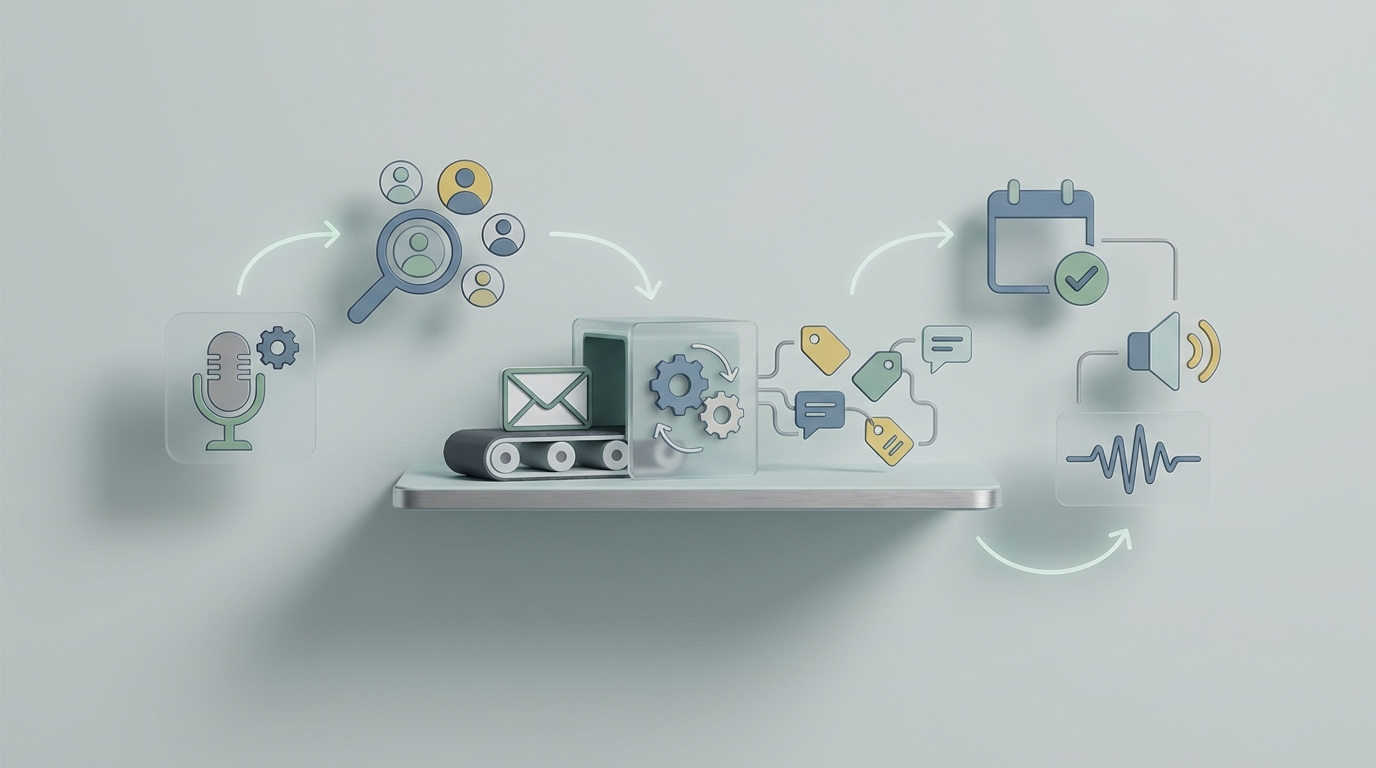
If you've ever tried to get booked on podcasts as a guest, you already know the drill. You spend an entire afternoon researching shows, another afternoon tracking down host emails, another afternoon writing pitches that reference specific episodes so you don't sound like every other PR spam in their inbox, and then you do it all again next week. Multiply that by a few months and you've built yourself a part-time job that produces maybe four bookings.
The math is brutal. Practitioners consistently report spending 40 to 80 hours per month on outreach to land somewhere between two and six appearances. A B2B SaaS founder I came across on Reddit documented spending roughly 60 hours to secure four quality podcast spots. That's 15 hours per booking. If your time is worth anything north of $50 an hour, you're paying $750 or more per appearance in opportunity cost alone, and that's before you factor in the mental drain of context-switching between research, writing, sending, and tracking.
The obvious question: can you automate this? The honest answer: you can automate a lot of it, but not all of it, and the parts you can't automate are exactly the parts that determine whether your pitch gets a reply or gets deleted. The trick is knowing which is which and building a system that handles the grind while preserving the human judgment where it actually matters.
Here's how to do that with an AI agent built on OpenClaw.
The Manual Workflow, Step by Step
Let's get specific about what podcast guest outreach actually looks like when you're doing it by hand, because you need to understand the current process before you can intelligently decide what to automate.
Step 1: Strategy and targeting. You define your ideal podcast profile. What niche? What audience size range? What episode frequency suggests the show is active? What host style fits your communication strengths? This usually takes a couple of hours of thinking and maybe a spreadsheet.
Step 2: Research and list building. You search Listen Notes, Podchaser, Apple Podcasts charts, Spotify, and Google with advanced operators. For each potential show, you listen to at least part of a recent episode, read the description, check the publishing cadence, and decide whether it's worth pursuing. Building a well-researched list of 100 targets takes 10 to 25 hours. Not a typo.
Step 3: Contact discovery. You dig through show notes, podcast websites, and LinkedIn profiles to find a working email for the host or producer. Many podcasts use generic addresses like hello@showname.com that nobody checks. You might use Hunter.io or Apollo.io to find personal emails, then verify them. This adds another several hours per batch.
Step 4: Pitch creation. This is where the real time goes. A good pitch references a specific episode, explains why you'd be a compelling guest for this particular show, suggests two or three concrete topic angles, and includes a brief bio with credentials. Writing 50 of these takes 15 to 30 hours if you're doing them well.
Step 5: Outreach and follow-up. You send the initial email and then follow up two or three times over the next three to six weeks. Every follow-up needs to be tracked so you don't accidentally double-send or miss a response window.
Step 6: Tracking. Most people use Google Sheets or Airtable. Some use a CRM like HubSpot or Pipedrive. Regardless of the tool, manually updating statuses, logging responses, and scheduling next actions is tedious busywork.
Step 7: Booking logistics. When someone says yes, you handle scheduling, prep calls, technical requirements, and post-episode promotion planning.
Step 8: Relationship management. The best guests get invited back or get referred to other shows. This requires genuine follow-up that isn't transactional.
Total time for a serious monthly campaign targeting 100 to 200 podcasts: 40 to 80 hours. That's a full work week, every month, just on outreach.
Why This Hurts So Much
The time cost alone is painful, but three other factors make this workflow particularly miserable.
Response rates are terrible unless you're highly personalized. Cold pitch response rates range from 5 to 25 percent depending on targeting quality and personalization. Podcast hosts, especially popular ones, receive 20 to 100 or more pitches per week. They've developed finely tuned BS detectors. Generic pitches get deleted instantly. Many hosts have said this publicly and repeatedly.
The research-to-action ratio is absurd. You might spend 30 minutes researching a single podcast, writing a tailored pitch, and finding the right email, only to never hear back. When your conversion rate is 10 to 15 percent, that means 85 to 90 percent of your research time produces zero results. It feels like throwing effort into a void.
Scaling destroys quality. The moment you try to speed things up by templating your pitches or skipping the episode-listening step, your response rate craters. Hosts can spot a mail merge from orbit. But if you maintain quality, you can only send maybe 10 to 15 truly personalized pitches per week. That's a ceiling that keeps you perpetually under-booked.
This is the classic automation trap: the work is repetitive enough to feel automatable, but the quality bar is high enough that naive automation fails spectacularly. You need a system that's smarter than a mail merge but doesn't require you to personally listen to 200 podcast episodes.
What AI Can Actually Handle Right Now
Here's where I'll be straight with you about what works and what doesn't, because the worst thing you can do is over-automate and end up on every podcast host's mental blacklist.
AI is genuinely good at these parts:
-
Podcast discovery and semantic matching. Instead of keyword-searching "marketing podcast" and getting 10,000 results, an AI agent can analyze podcast descriptions, episode titles, and even transcripts to find shows that align with your specific expertise and angle. This is dramatically better than manual directory browsing.
-
Transcript analysis for pitch angles. Feed an AI agent the transcript of a recent episode and it can identify the host's interests, recurring themes, questions they didn't get answered, and gaps you could fill. This is the single highest-leverage automation in the entire workflow because it replaces the most time-consuming manual step: actually listening to episodes.
-
First-draft pitch generation. Given the transcript analysis, your bio, and your topic angles, AI can generate a solid first draft of a personalized pitch. It won't be perfect. It will need editing. But it cuts pitch-writing time by 60 to 80 percent.
-
Contact enrichment and verification. AI agents can scrape show notes, crawl podcast websites, cross-reference LinkedIn profiles, and compile contact information faster than any human.
-
Follow-up sequencing. Scheduling and sending follow-ups at appropriate intervals based on response status is pure automation territory. No human judgment needed.
-
Response classification. Sorting incoming replies into interested, maybe, not interested, and out of office categories so you only spend time on the ones that matter.
-
List scoring and prioritization. Ranking your target list by relevance, audience size, engagement signals, and booking likelihood so you focus human effort on the highest-value targets first.
AI is not good at these parts (yet):
- Reading the room on brand alignment and controversial topics
- Making the final call on whether a pitch sounds authentically like you
- Navigating ambiguous "maybe" responses that require relationship intuition
- Knowing when to stop pursuing a host who's gone quiet
- Actually performing well in the interview (obviously)
Building the Agent on OpenClaw: Step by Step
Here's a practical walkthrough of how to build a podcast outreach agent using OpenClaw. I'm going to be specific about architecture and logic, not just hand-wave at "AI magic."
Step 1: Define Your Agent's Core Modules
Your outreach agent needs four distinct capabilities, and OpenClaw lets you build each as a modular component that feeds into the others:
Module 1 — Discovery Engine This module takes your targeting criteria (niche keywords, audience size preferences, episode frequency minimums, geographic focus) and searches podcast databases via API. Configure your OpenClaw agent to pull data from Listen Notes API, cross-reference with Podchaser data, and score each result against your criteria.
The key prompt engineering here is building a scoring rubric. In your OpenClaw agent configuration, define weighted criteria:
Relevance Score Rubric:
- Topic alignment with [your expertise]: 0-30 points
- Episode frequency (weekly = 20, biweekly = 10, monthly = 5): 0-20 points
- Evidence of having guests (vs solo show): 0-20 points
- Audience size signals (reviews, ratings): 0-15 points
- Recency of last episode (within 30 days = 15, 60 days = 10): 0-15 points
Minimum threshold for outreach: 60 points
Your agent evaluates each podcast against this rubric and outputs a ranked list. You review the top tier. This alone saves 10 to 15 hours of the initial research phase.
Module 2 — Transcript Analyzer For each podcast that clears your scoring threshold, the agent pulls the most recent two or three episode transcripts (many are available via podcast RSS feeds or transcription APIs). It then analyzes them for:
- Host's stated interests and recurring questions
- Topics covered recently (so you don't pitch something they just did)
- Guest format and style (interview, conversation, debate)
- Specific quotes or themes you could reference in your pitch
Configure this module in OpenClaw with a structured output format:
For each podcast, return:
{
  "show_name": "",
  "host_name": "",
  "recent_topics": [],
  "host_interests": [],
  "content_gaps": [],
  "suggested_angles": [],
  "specific_episode_reference": {
    "episode_title": "",
    "relevant_quote_or_topic": "",
    "connection_to_guest_expertise": ""
  },
  "pitch_tone": "casual | professional | academic | conversational"
}
This structured output becomes the input for the pitch drafting module. The quality of this analysis directly determines the quality of the pitch, so spend time tuning this module's prompts.
Module 3 — Pitch Drafter This module takes the transcript analysis output, your speaker bio, your core topic angles, and a few example pitches you've written manually (your best ones that actually got responses) and generates a first draft.
Critical implementation detail: upload three to five of your previously successful pitches into the agent's context as style examples. This is what keeps the output sounding like you rather than sounding like generic AI copy. OpenClaw's agent configuration lets you include these reference documents so the agent learns your voice pattern, your typical pitch length, and how you frame your value proposition.
The agent should output the pitch with clearly marked sections that need human review:
Subject: [DRAFT — review for tone]

Hey [host first name],

[Opening that references specific episode — VERIFY THIS IS ACCURATE]

[Value proposition paragraph — REVIEW FOR CLAIMS]

[Suggested topics — CONFIRM THESE ARE CURRENT]

[Brief bio — STATIC, pre-approved]

[Sign-off]
Those bracketed review flags are important. They tell you exactly where to focus your human attention instead of re-reading the entire pitch.
Module 4 — Outreach Sequencer Once you've approved a pitch, this module handles sending, scheduling follow-ups, and tracking responses. Configure it with your email sending tool (the agent can integrate with your existing email infrastructure via API) and set rules:
- Initial send on Tuesday or Wednesday morning (highest open rates for podcast hosts based on available data)
- First follow-up after 5 business days if no response
- Second follow-up after 10 business days with a slightly different angle
- Mark as "no response" after 20 business days and move to a re-engagement queue for 90 days later
- Auto-classify responses and flag anything that needs human reply
Step 2: Connect the Pipeline
In OpenClaw, wire these modules together so the output of each feeds into the next. The workflow becomes:
- Discovery Engine produces a scored list of 50 podcasts
- You spend 15 minutes reviewing and approving the top 30 (removing any that are obviously wrong)
- Transcript Analyzer processes the approved 30 and produces structured analysis
- Pitch Drafter generates 30 first drafts
- You spend 45 to 60 minutes reviewing and editing the drafts (most will need only light edits, some will need heavier rewrites, a few will be great as-is)
- Outreach Sequencer sends approved pitches and manages follow-ups
- You handle replies that need human responses
Step 3: Build the Feedback Loop
This is what separates a good system from a great one. Track which pitches get responses and which don't, then feed that data back into your agent. Over time, your Discovery Engine gets better at picking shows likely to respond, your Transcript Analyzer gets better at identifying the right angles, and your Pitch Drafter learns which styles convert.
In OpenClaw, you can set up this feedback loop by logging outcomes against each outreach attempt and periodically updating your agent's instructions with patterns from your highest-performing pitches.
What Still Needs a Human
I want to be explicit about this because automating the wrong parts will actively hurt your results.
You must personally review every pitch before it sends. AI-generated pitches occasionally hallucinate episode details, misattribute quotes, or make claims about your expertise that aren't quite right. Sending a pitch that references an episode that doesn't exist is worse than sending a generic pitch. It tells the host you're using AI and didn't bother to check.
You must handle all substantive replies personally. When a host responds with interest, a question, or a "maybe," that's a relationship moment. AI cannot navigate this. Your authentic enthusiasm and genuine engagement is what converts "interested" into "booked."
You must make final strategic decisions about targeting. The agent might score a podcast highly based on topical relevance, but you might know that the host has political views that conflict with your brand, or that the audience skews wrong demographically. Human pattern recognition and judgment catches what scoring rubrics miss.
You must do the actual interview well. This should be obvious, but no amount of outreach automation matters if you're a boring guest. The system gets you booked. You have to deliver.
Expected Time and Cost Savings
Let's compare the numbers honestly.
Manual workflow: 40 to 80 hours per month for a campaign targeting 100 to 200 podcasts, typically yielding 5 to 15 bookings (assuming a 10 to 15 percent conversion rate on well-targeted, personalized outreach).
With an OpenClaw-powered agent: Your time drops to roughly 8 to 15 hours per month for the same volume. Here's the breakdown:
- Discovery review: 1 to 2 hours (agent does the research, you approve the list)
- Pitch review and editing: 4 to 8 hours (agent drafts, you refine)
- Reply handling and relationship building: 3 to 5 hours (fully human, as it should be)
- Agent tuning and feedback: 30 minutes to 1 hour
That's a 70 to 85 percent reduction in time spent, with potentially higher response rates because the agent's transcript analysis catches personalization opportunities you'd miss when manually skimming episodes at 2x speed.
Cost comparison against alternatives:
- Hiring a podcast booking agency: $1,500 to $5,000 or more per month
- Hiring a virtual assistant for outreach: $1,000 to $2,500 per month
- Building and running your OpenClaw agent: a fraction of either, with more control and better personalization than most agencies deliver
The ROI math gets especially compelling when you consider that podcast appearances have compounding value. Every booking generates content (clips, quotes, backlinks) and relationship equity (host referrals to other shows) that feeds future appearances.
Getting Started
If you want to build this agent yourself, head to Claw Mart and browse the pre-built agent templates and components. You don't have to start from scratch. There are existing discovery, enrichment, and outreach modules that you can customize for podcast outreach specifically.
If you'd rather have someone build it for you, this is exactly the kind of project that works well through Clawsourcing. Post your outreach automation project on Claw Mart, describe your targeting criteria and pitch style, and let an experienced OpenClaw builder configure the agent for your specific use case. You'll get a working system faster than learning to build it yourself, and you can always modify it once it's running.
The podcasts are out there. The hosts want good guests. The bottleneck has always been the tedious middle layer between "I'd be great on that show" and "Hey, I'd love to have you on." That middle layer is exactly what AI agents are built to handle.
Stop spending 15 hours to land one booking. Build the system, review the output, and spend your time where it actually matters: being a guest worth having on.
Recommended for this post
Your orchestrator that coordinates agent swarms with task decomposition and consensus protocols -- agents working together.
 SpookyJuice.ai
Content Pipeline
Skill
A complete content production system — SEO blog posts, social media, email sequences, and landing pages. Writes 2,000+ word articles with proper heading structure, internal linking, and keyword optimization.
 Otter
Otter
Your memory engineer that builds persistent context, tiered storage, and retrieval systems -- agents that remember.
SpookyJuice.ai