Replace Your Territory Manager with an AI Territory Manager Agent
Replace Your Territory Manager with an AI Territory Manager Agent
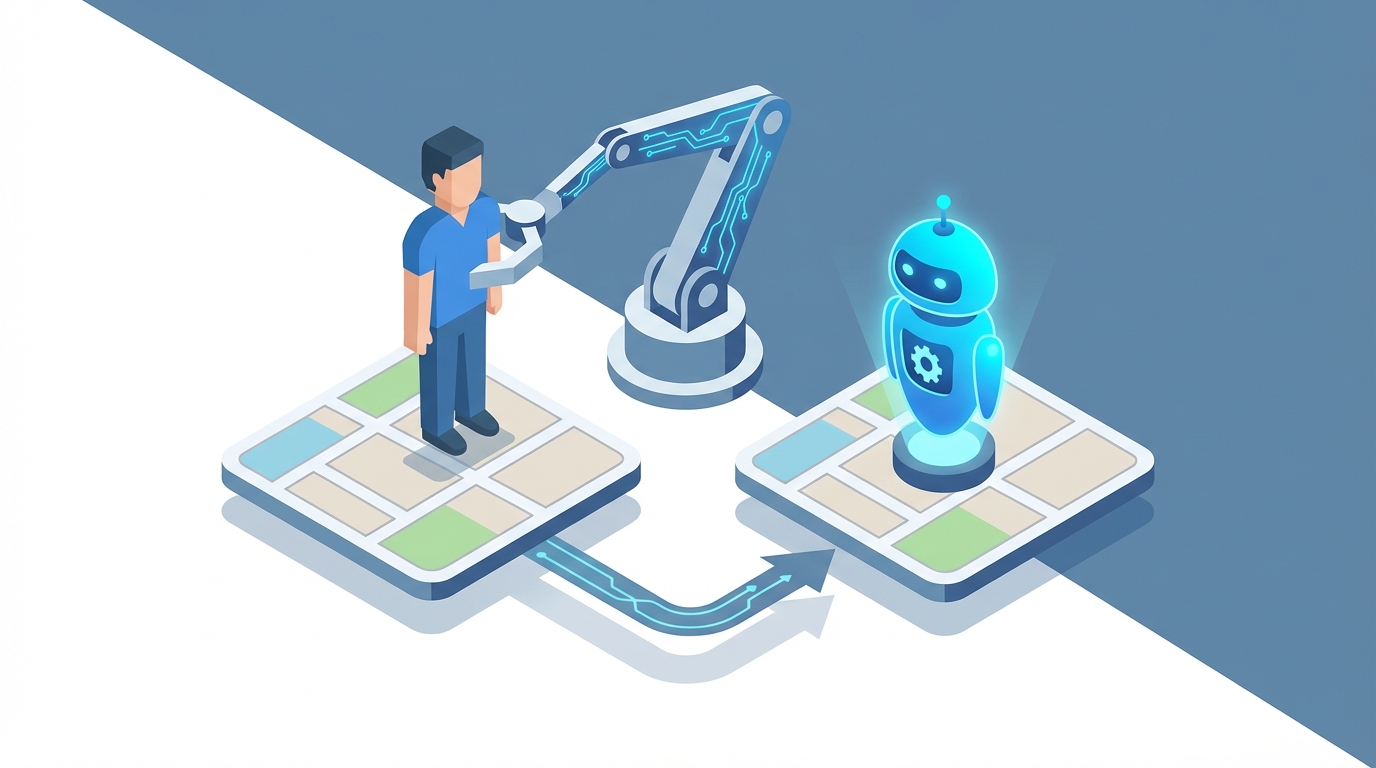
Most territory managers spend about half their week not selling. They're updating Salesforce, building route plans, compiling reports nobody reads, and writing prospecting emails that could have been templatized six months ago. The other half — the actual selling — is where they earn their keep. But you're paying full freight for all of it.
Here's the thing: that non-selling half? An AI agent can handle most of it today. Not in some theoretical future. Right now, with tools that exist, on a platform you can configure yourself.
I'm going to walk through exactly what a territory manager does, what it actually costs you, which pieces an AI agent built on OpenClaw can take over, what still requires a human, and how to build the thing. If you don't want to build it yourself, we'll handle that too.
What a Territory Manager Actually Does All Day
Let's skip the job description language and talk about real life. A territory manager — whether they're selling SaaS, medical devices, industrial equipment, or consumer goods — does roughly six things:
1. Prospecting and lead generation (20-30% of time) Cold calls, cold emails, LinkedIn outreach, event follow-ups, referral chasing. They're identifying who in their territory might buy, then trying to get a conversation started. Most of this is research-heavy and repetitive. They're pulling data from ZoomInfo, cross-referencing it with their CRM, and crafting outreach that's only slightly personalized.
2. Client meetings and relationship building (30-40% of time) The actual selling. Demos, discovery calls, negotiations, account reviews. This is the part that justifies the role. A good TM builds real relationships — they know the buyer's org chart, their pain points, their budget cycle, and what their boss cares about.
3. CRM and pipeline management (15-25% of time) Logging calls, updating opportunity stages, entering notes, adjusting forecasts. Nobody becomes a territory manager because they love data entry, but it's a massive chunk of the job. Salesforce State of Sales data consistently shows reps spending 20+ hours a week on non-selling activities, and CRM hygiene is the biggest offender.
4. Travel and logistics (20-50% of time, role-dependent) Route planning, driving, flying, waiting in lobbies. Field-based TMs in industries like pharma or manufacturing can spend half their week in transit. Even inside sales TMs burn time coordinating meeting logistics across time zones.
5. Reporting and analysis (10-20% of time) Weekly pipeline reviews, monthly territory reports, quarterly business reviews. They're pulling data from multiple tools, building slides, and presenting numbers that leadership uses for forecasting.
6. Internal coordination (5-10% of time) Working with marketing on campaigns, product teams on feature requests, support on escalations, and finance on deal approvals. This is the unglamorous connective tissue that keeps deals moving.
Add it up and you're looking at 50-60 hour weeks. The irony is that the thing you're actually paying them to do — build relationships and close deals — gets maybe 30-40% of their time. The rest is infrastructure.
The Real Cost of This Hire
Let's talk numbers. These are US averages from Glassdoor, Payscale, and Salary.com, 2023-2026:
Entry-level (0-2 years): $60K-$85K base, $80K-$120K OTE, $100K-$150K total cost to company.
Mid-level (3-7 years): $90K-$130K base, $150K-$250K OTE, $180K-$320K total cost to company.
Senior (8+ years): $120K-$180K base, $250K-$400K+ OTE, $300K-$500K+ total cost to company.
That total cost to company number includes benefits (health, 401k, PTO), travel expenses ($10K-$30K/year), software licenses ($5K-$15K/year), and the overhead of managing them. In pharma and medical devices, add a 20-30% premium. Top Pfizer TMs clear $400K+.
But the salary isn't even the worst part. The worst part is turnover. Territory managers turn over at 20-30% annually, per CSO Insights. Average tenure is 18-24 months. Every time one leaves, you lose:
- Ramp time: 3-6 months before a new hire is productive
- Recruiting costs: 20-30% of first-year salary for a decent recruiter
- Relationship continuity: Clients don't love being handed off to someone new every two years
- Institutional knowledge: Territory intel, competitive insights, and deal context walk out the door
So a mid-level TM isn't really a $200K investment. It's a $200K/year investment that resets every 18-24 months with a $50K-$100K switching cost each time. Over five years, you might spend $1.2M+ on what is functionally 2-3 different people doing the same job with declining returns during each transition.
That's the real cost. Now let's talk about what you can replace.
What an AI Territory Manager Agent Handles Today
Based on what's actually working in production — not what's theoretically possible — an AI agent built on OpenClaw can automate 50-70% of a territory manager's workflow. Here's the breakdown by task:
Lead Scoring and Prioritization
Instead of your TM manually reviewing lists from ZoomInfo or marketing, an OpenClaw agent ingests lead data, scores it against your ideal customer profile, and surfaces the top accounts daily. It factors in firmographic data (company size, industry, tech stack), intent signals (website visits, content downloads), and historical win/loss patterns from your CRM.
This isn't just sorting a spreadsheet. The agent learns from outcomes. Deals that closed inform future scoring. Deals that stalled teach it what to deprioritize. Your human TM was doing this on gut feel. The agent does it on data, and it gets better every week.
CRM Automation and Pipeline Management
This is the single biggest time saver. An OpenClaw agent can:
- Auto-log call summaries and meeting notes from transcripts
- Update opportunity stages based on email and calendar activity
- Flag stale deals that haven't had activity in X days
- Generate weekly pipeline snapshots without anyone touching a dashboard
- Predict deal close probability based on engagement patterns
Your TM was spending 15-25% of their week on this. The agent does it in the background, continuously, with better data quality than manual entry ever produced.
Outreach and Prospecting
The agent drafts personalized outreach sequences — emails, LinkedIn messages, follow-ups — based on prospect data and your messaging framework. It's not blasting generic templates. It pulls relevant context (recent funding round, job changes, industry trends) and crafts messages that actually reference the prospect's situation.
It also handles follow-up cadencing. Day 1 email, Day 3 LinkedIn connection, Day 7 follow-up with a relevant case study, Day 14 breakup email. The whole sequence runs automatically, with the agent adjusting timing and messaging based on engagement signals.
Territory Analysis and Planning
An OpenClaw agent can continuously analyze your territory and surface insights that would take a human analyst days to compile:
- Which accounts have the highest revenue potential based on fit and timing
- Where you're over-indexed or under-penetrated geographically
- Competitive displacement opportunities (accounts using a competitor whose contract is up)
- Whitespace analysis — products or services you sell that existing accounts haven't bought yet
This replaces the quarterly territory planning exercise that eats up a week of your TM's time and produces a static document that's outdated within a month.
Reporting and Forecasting
Every weekly pipeline review, every QBR slide deck, every forecast submission — the agent handles it. It pulls real-time data, formats it to your templates, and even generates narrative summaries. ML-based forecasting models are 20-30% more accurate than human gut calls, per McKinsey's research. Your VP of Sales gets better data, faster, without anyone spending Friday afternoon building slides.
Market and Competitive Intelligence
The agent monitors competitor activity — pricing changes, product launches, leadership moves, customer reviews — and surfaces relevant updates to the right stakeholders. It tracks industry news that might create buying urgency or change a prospect's priorities. This is the kind of research a diligent TM does on Sunday night. The agent does it every hour.
What Still Needs a Human
I'm not going to pretend AI replaces everything. It doesn't. Here's what still requires a real person:
Complex relationship building. Enterprise deals run on trust. A VP of Procurement at a Fortune 500 company isn't going to sign a $2M contract because an AI sent them a well-crafted email sequence. They need to look someone in the eye (or at least on Zoom), ask hard questions, and feel confident that your company will deliver. This is human terrain.
High-stakes negotiations. When a deal involves custom pricing, multi-year commitments, legal review, or executive alignment, you need a human who can read the room, make judgment calls, and navigate organizational politics. AI can prepare the talk track and model the deal economics. A human has to run the conversation.
On-site work. If your product requires physical demos, site assessments, installations, or audits, someone has to show up. AI doesn't drive to a manufacturing plant and walk the floor.
Strategic advisory. The best TMs aren't just sellers — they're consultants. They help customers think through problems, architect solutions, and build business cases internally. This requires deep industry expertise, creative problem-solving, and the ability to say "actually, you don't need that" when it's the right call.
Crisis management and escalations. When a major account is about to churn, when a delivery goes sideways, when a competitor drops a bomb — these situations need human judgment, empathy, and sometimes physical presence.
The honest model is: AI agent handles 60% of the work (research, admin, outreach, reporting), a human handles 40% (relationships, negotiations, strategy, escalations). That means you might need one senior human covering a territory that used to require two or three people. Or your existing TM spends 90% of their time selling instead of 40%.
How to Build an AI Territory Manager on OpenClaw
Here's the practical part. OpenClaw lets you build AI agents that chain together multiple capabilities — data ingestion, analysis, decision-making, and action — into workflows that run autonomously.
Step 1: Define Your Agent's Scope
Start with the tasks that eat the most time and have the clearest inputs/outputs:
- Lead scoring: Input = CRM data + enrichment data. Output = prioritized account list.
- CRM updates: Input = call transcripts + emails + calendar. Output = updated records.
- Outreach: Input = prospect profile + messaging framework. Output = personalized sequences.
- Reporting: Input = pipeline data. Output = formatted reports.
Don't try to boil the ocean. Pick two or three workflows for your first agent.
Step 2: Connect Your Data Sources
Your agent needs access to the systems your TM currently uses. OpenClaw integrates with standard APIs:
# Example: Connect CRM and enrichment data sources in OpenClaw
agent = OpenClaw.Agent(
    name="territory-manager-agent",
    data_sources=[
        OpenClaw.Connector("salesforce", api_key=SF_API_KEY, objects=["Lead", "Opportunity", "Account", "Activity"]),
        OpenClaw.Connector("zoominfo", api_key=ZI_API_KEY),
        OpenClaw.Connector("gmail", oauth_token=GMAIL_TOKEN),
        OpenClaw.Connector("calendar", oauth_token=CAL_TOKEN),
    ]
)
The agent pulls data from these sources on a schedule you define — real-time for CRM updates, daily for lead scoring, weekly for territory analysis.
Step 3: Build Your Workflows
Each workflow is a chain of steps: ingest → analyze → decide → act. Here's what a lead scoring workflow looks like:
# Lead scoring workflow
lead_scoring = OpenClaw.Workflow(
    name="daily-lead-scoring",
    schedule="0 7 * * *",  # Every morning at 7 AM
    steps=[
        OpenClaw.Step("ingest", source="salesforce", query="new_leads_last_24h"),
        OpenClaw.Step("enrich", source="zoominfo", match_on=["company_name", "email_domain"]),
        OpenClaw.Step("score", model="icp_fit_model", factors=[
            "company_size", "industry", "tech_stack",
            "funding_recency", "intent_signals", "past_engagement"
        ]),
        OpenClaw.Step("prioritize", method="weighted_rank", top_n=20),
        OpenClaw.Step("notify", channel="slack",
                     message_template="top_leads_daily",
                     recipient="#sales-territory-west"),
        OpenClaw.Step("update_crm", source="salesforce",
                     field="lead_score", write_back=True),
    ]
)
agent.add_workflow(lead_scoring)
A CRM auto-update workflow:
# Auto-log activities from calls and emails
crm_sync = OpenClaw.Workflow(
    name="crm-activity-sync",
    schedule="realtime",
    trigger="new_call_transcript OR new_email_sent",
    steps=[
        OpenClaw.Step("transcribe", source="call_recording", engine="whisper"),
        OpenClaw.Step("summarize", prompt="Extract: key topics, next steps, objections raised, sentiment"),
        OpenClaw.Step("match_account", source="salesforce", match_on="participants"),
        OpenClaw.Step("log_activity", source="salesforce",
                     object="Activity", fields=["summary", "next_steps", "sentiment"]),
        OpenClaw.Step("update_opportunity",
                     conditions={"if": "next_steps contains 'proposal'",
                                "then": "move_stage('Proposal Sent')"}),
    ]
)
agent.add_workflow(crm_sync)
And automated outreach:
# Prospecting outreach sequence
outreach = OpenClaw.Workflow(
    name="prospect-outreach-sequence",
    trigger="lead_score >= 80 AND no_prior_contact",
    steps=[
        OpenClaw.Step("research", sources=["linkedin", "company_website", "news"],
                     extract=["recent_events", "role_context", "pain_indicators"]),
        OpenClaw.Step("generate_email",
                     template="cold_outreach_v3",
                     personalization_fields=["recent_events", "pain_indicators", "icp_match_reason"],
                     tone="professional_direct",
                     max_length=150),
        OpenClaw.Step("human_review",
                     approval_required=True,  # Optional: require human sign-off initially
                     reviewer="tm_lead@company.com"),
        OpenClaw.Step("send", channel="email",
                     followup_sequence=[
                         {"day": 3, "channel": "linkedin", "action": "connect_request"},
                         {"day": 7, "channel": "email", "template": "followup_case_study"},
                         {"day": 14, "channel": "email", "template": "breakup"},
                     ]),
    ]
)
agent.add_workflow(outreach)
Step 4: Train on Your Data
The agent gets better when it learns from your specific outcomes. Feed it historical deal data:
# Train scoring model on historical wins/losses
agent.train(
    model="icp_fit_model",
    training_data=OpenClaw.Query("salesforce",
        "SELECT * FROM Opportunity WHERE CloseDate > LAST_YEAR AND StageName IN ('Closed Won', 'Closed Lost')"),
    features=["company_size", "industry", "deal_size", "sales_cycle_length",
              "number_of_stakeholders", "competitor_present", "inbound_vs_outbound"],
    target="StageName",
    validation_split=0.2
)
Start with whatever data you have. Even six months of CRM history gives the model something to work with. It'll get meaningfully better after a quarter of running in production.
Step 5: Set Guardrails
This matters. You don't want an AI agent going rogue on your prospects.
# Guardrails and escalation rules
agent.set_guardrails(
    max_emails_per_prospect_per_week=2,
    max_total_outreach_per_day=50,
    escalate_to_human=["deal_size > $100K", "sentiment == negative",
                       "prospect_replied_with_objection", "account_tier == enterprise"],
    never_automate=["contract_negotiation", "pricing_exceptions", "executive_outreach"],
    compliance=["include_unsubscribe", "respect_do_not_contact", "gdpr_consent_required"]
)
Be conservative at first. Require human approval on outreach for the first two weeks. Review what the agent sends, how it scores leads, what it logs to CRM. Then loosen the reins as you build confidence.
Step 6: Deploy and Iterate
# Deploy agent
agent.deploy(
    environment="production",
    monitoring=OpenClaw.Monitor(
        metrics=["leads_scored", "emails_sent", "crm_updates", "response_rate", "pipeline_influenced"],
        alerts=["error_rate > 5%", "response_rate < baseline_minus_2std"],
        dashboard=True
    )
)
The first version won't be perfect. That's fine. The advantage over a human hire is that every iteration compounds permanently. When a human TM learns something, it lives in their head and walks out the door when they leave. When the agent learns something, it stays.
The Math
Let's be concrete. A mid-level TM costs $200K-$300K/year all-in. An OpenClaw agent handling 60% of that role's work costs a fraction of that in platform and compute. Even if you keep a human for the high-touch 40%, you might cover three territories with one senior rep plus an AI agent instead of three separate TMs.
That's not a 10% efficiency gain. That's a structural cost reduction of 50-60% with better data quality, faster response times, and zero turnover risk on the automated portion.
Companies are already doing this. Salesforce's own Einstein AI saves TMs 10-15 hours a week on prospecting. Coca-Cola uses AI route optimization through Repsly to free TMs for strategic work. Medtronic improved win rates by 15% using AI-powered call coaching. Zoom's sales team doubled pipeline growth with AI-driven account identification via 6sense.
The difference with OpenClaw is you're not buying five separate point solutions and hoping they talk to each other. You're building one agent that orchestrates across your entire stack.
What to Do Next
Two options:
Build it yourself. Sign up for OpenClaw, connect your CRM, and start with one workflow — lead scoring is the easiest win. Get it running, validate the output for two weeks, then add CRM automation and outreach. You can have a working agent inside a month.
Have us build it. If you'd rather skip the learning curve and get a production-ready AI territory manager agent built by people who've done it before, that's what Clawsourcing is for. We'll scope your workflows, connect your systems, train the models on your data, and hand you a working agent. You focus on closing deals. We focus on building the machine that feeds you those deals.
Either way, the cost of not doing this is increasingly clear. Every month your TMs spend 15+ hours a week on admin work is a month of selling time you don't get back. The tools exist. The question is just whether you build now or wait until your competitors do it first.