Replace Your Sales Manager with an AI Sales Manager Agent
Replace Your Sales Manager with an AI Sales Manager Agent
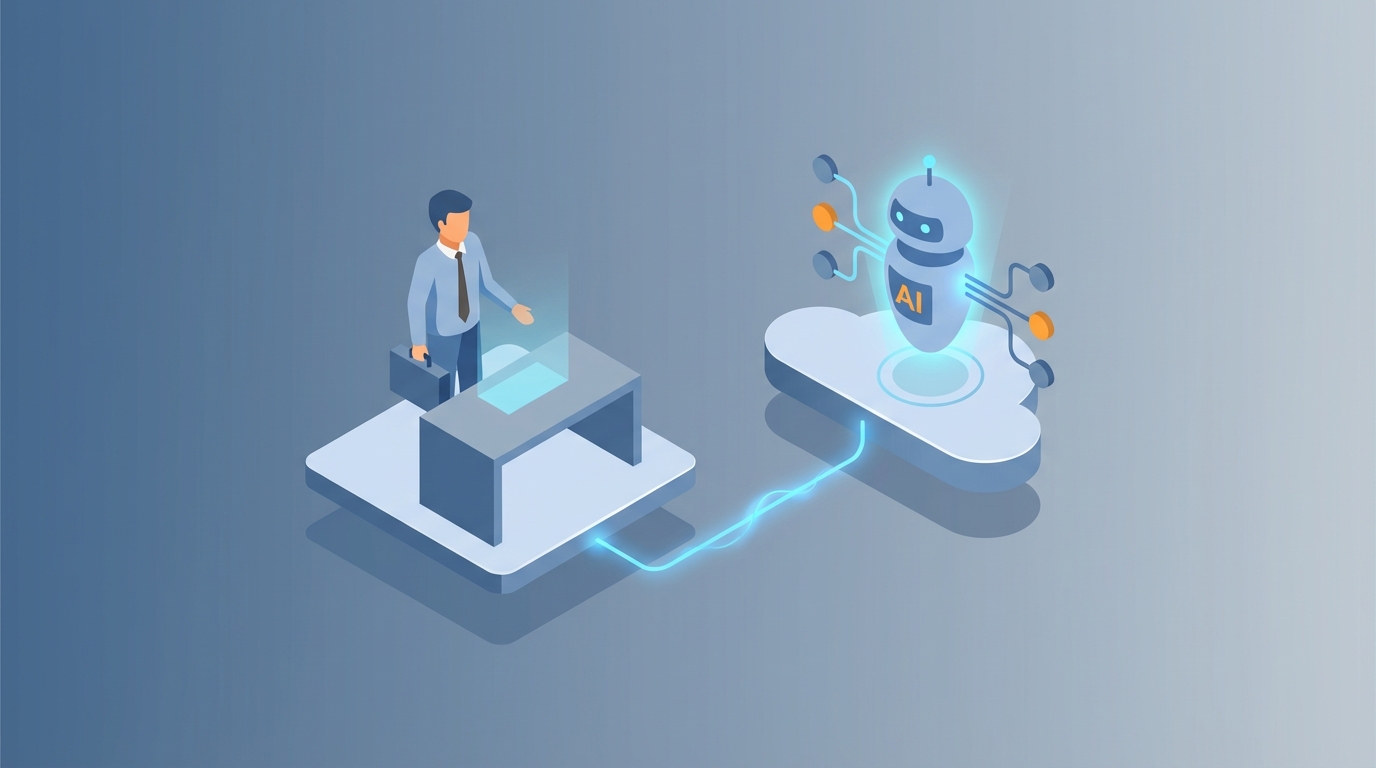
Most sales managers spend their week doing things a machine could do better. That's not an insult — it's just the reality of what the role has become.
When you actually break down what a sales manager does hour by hour, a massive chunk of it is pipeline reviews, CRM hygiene, forecast spreadsheets, performance reporting, and coaching prep. Important work, sure. But most of it is pattern recognition on structured data. And pattern recognition on structured data is exactly what AI is good at.
So let's talk about what it would actually look like to replace your sales manager with an AI agent — what's realistic, what's not, what it costs, and how to build one on OpenClaw.
What a Sales Manager Actually Does All Day
Forget the job description. Here's what the week actually looks like for most mid-level sales managers, based on time-tracking data from HubSpot and Gong:
25–35% of their time: Coaching and 1:1 meetings. Weekly check-ins with each rep. Deal reviews. Listening to calls and giving feedback. Helping reps unstick deals. This is the highest-value work, and also the most inconsistently executed. A manager with eight direct reports is spreading themselves thin across all of them.
20–30%: Pipeline reviews and forecasting. Staring at Salesforce dashboards. Trying to figure out which deals are real and which are happy ears. Building the forecast spreadsheet for leadership. Adjusting numbers when reps are being optimistic, which is always.
15–25%: Reporting and admin. Data entry. CRM updates. Compliance documentation. Building slide decks for QBRs. Pulling numbers that should have been automated three years ago.
15–20%: Team management overhead. Dealing with underperformance. Motivation. Handling internal politics. Recruiting when someone inevitably leaves (and with 30–40% annual turnover in sales, someone is always leaving).
The remaining scraps: Actual client-facing work and strategy. The stuff that theoretically makes a sales manager valuable — setting territory plans, building strategy, sitting in on key negotiations — gets the least time.
The brutal truth: most sales managers are glorified middle-management data processors who occasionally give pep talks. The system forces them into it.
The Real Cost of This Hire
Let's do the math that nobody wants to do when they post a req for a sales manager.
Base salary: $120,000–$160,000 in the US. Median sits around $140K.
Total compensation with commissions and bonuses: $200,000–$300,000. Top performers in SaaS clear $400K+.
Fully loaded cost to the company: Add 30–50% for benefits, payroll taxes, equipment, recruiting fees, and the HR overhead of managing another human. You're looking at $250,000–$450,000 per year for a mid-level sales manager in the US.
And that's assuming they stay. The average tenure of a sales manager is about 18–26 months. Every departure triggers a recruiting cycle ($30K–$50K in agency fees or internal recruiting time), a ramp period (3–6 months of reduced team productivity), and institutional knowledge loss that nobody accounts for but everyone feels.
Then there's the inconsistency problem. Human managers have bad days, blind spots, favorites, and biases. Manager A coaches differently than Manager B. Rep performance becomes a function of which manager they report to — not the company's methodology.
You're paying a quarter million dollars a year for someone who spends most of their time on tasks that don't require human judgment, and whose quality of output varies wildly based on whether they slept well and how many meetings they've already had today.
There's a better way to handle a significant portion of this.
What AI Can Handle Right Now
I'm not going to pretend AI can do everything a sales manager does. It can't. But here's what it genuinely can do today, and often better than a human:
Pipeline Management and Lead Scoring
An AI agent can monitor your entire pipeline in real time, score every lead based on historical conversion data, flag deals that are stalling, identify pipeline gaps before they become next quarter's revenue miss, and auto-update CRM records so your reps stop wasting two hours a day on data entry.
This isn't theoretical. Salesforce reports their internal teams save 10–15 hours per week on pipeline reviews using Einstein AI. Clari auto-fills pipeline data and detects deal risk. The technology works.
On OpenClaw, you build this as an agent that connects to your CRM, ingests deal data, and runs scoring models against your historical win/loss patterns. It outputs a daily pipeline briefing that's more accurate than what your human manager produces after four hours of spreadsheet work.
Forecasting
Humans are terrible at forecasting. Sixty percent of sales managers cite inaccurate forecasting as a top pain point, and the main reason is that human forecasts are built on gut feel and rep optimism. Your reps say the deal will close this quarter. Your manager wants to believe them. Leadership gets a number that's 20–30% inflated.
AI forecasting models trained on your actual deal data — stage duration, engagement signals, historical close rates by segment — hit 90%+ accuracy. They don't have feelings about whether the deal should close. They just look at the data.
Call Analysis and Coaching Prep
This is the big one. Tools like Gong already prove the concept — AI can analyze 100% of your team's sales calls, score them against your methodology, identify patterns in winning vs. losing conversations, and surface specific coaching recommendations.
A human manager listens to maybe 5–10% of calls. AI listens to all of them. Cisco's sales teams reported a 50% gain in coaching efficiency after implementing Gong's AI-generated coaching plans.
With OpenClaw, you can build an agent that ingests call transcripts, evaluates them against your playbook, and generates a coaching brief for each rep — complete with specific moments to review, talk-to-listen ratios, objection handling scores, and recommended focus areas for their next 1:1.
Reporting and Analytics
Real-time dashboards. Automated KPI alerts. Weekly performance summaries generated and distributed without anyone touching a spreadsheet. Anomaly detection that flags when a rep's activity drops or when a segment's win rate shifts.
This is the lowest-hanging fruit. If your sales manager is still manually building reports, you're burning money.
Outreach Optimization
AI agents can generate and optimize email sequences, A/B test messaging, personalize outreach at scale, and handle initial prospect engagement through intelligent chatbots. Your reps focus on conversations that matter. The machine handles the volume work.
What Still Needs a Human
Here's where I stay honest, because overselling AI is how you end up with a mess.
Empathy and motivation. When a rep is burned out, going through a personal crisis, or losing confidence after a bad quarter, they need a human who can read the room and respond with genuine care. AI can flag that a rep's numbers are slipping. It cannot sit across from someone and help them find their drive again.
High-stakes negotiations. Complex enterprise deals with multiple stakeholders, political dynamics, and creative deal structuring require human judgment. AI can prepare you for the negotiation. It can't run it.
Cultural fit and hiring decisions. AI can screen resumes and schedule interviews. But evaluating whether someone will thrive on your specific team, in your specific culture, requires human intuition that we're nowhere close to automating.
Strategic pivots during market shifts. When the market changes — new competitor, economic downturn, product pivot — someone needs to rethink the strategy from scratch. AI optimizes within a framework. Humans rewrite the framework.
The final call on forecasts. AI gives you the data-driven number. A human who knows that your champion at Account X just got promoted, or that a competitor just fumbled their launch, adds the qualitative layer that makes the forecast truly accurate.
The right model isn't replacement. It's restructuring. AI handles the 60–70% of the sales manager role that's data processing, pattern recognition, and routine administration. A human handles the 30–40% that requires emotional intelligence, strategic creativity, and relationship depth.
For many teams, that means you don't need a full-time sales manager. You need an AI agent doing the heavy lifting and a senior leader spending 10–15 hours a week on the human stuff. That's a fundamentally different cost structure.
How to Build Your AI Sales Manager on OpenClaw
Here's where it gets practical. OpenClaw gives you the platform to build an AI sales manager agent that's customized to your sales process, your data, and your team's needs. Not a generic chatbot — a purpose-built agent that actually does the work.
Step 1: Define Your Agent's Scope
Start by mapping the specific tasks you want to automate. Be precise. "Help with sales management" is useless. Instead:
- Daily pipeline health report delivered to Slack at 8 AM
- Weekly rep performance summaries with coaching recommendations
- Real-time deal risk alerts when a deal stalls for more than X days
- Automated forecast generation every Friday
- Call transcript analysis with methodology scoring
Each of these becomes a discrete capability within your OpenClaw agent.
Step 2: Connect Your Data Sources
Your agent is only as good as the data it can access. On OpenClaw, you'll integrate:
- Your CRM (Salesforce, HubSpot, Pipedrive) — deal data, activity logs, contact records
- Call recording platform (Gong, Chorus, or your own recordings) — transcripts for coaching analysis
- Communication tools (Slack, email) — for delivering outputs and capturing team context
- Revenue data — actual close rates, deal values, cycle times for forecast training
OpenClaw's integration layer handles the connections. You define what data the agent can access and what it can write back.
Step 3: Build Your Workflows
This is where OpenClaw shines. You're not writing a monolithic AI application. You're building modular workflows that each handle a specific sales management function.
Pipeline Scoring Workflow:
Trigger: Daily at 7:00 AM
→ Pull all open opportunities from CRM
→ Score each deal against historical win/loss model
→ Flag deals with >30% risk of slipping
→ Generate pipeline summary with recommended actions
→ Post to #sales-pipeline Slack channel
→ Update CRM deal risk field
Rep Coaching Workflow:
Trigger: New call transcript available
→ Analyze transcript against sales methodology
→ Score: discovery quality, objection handling, next steps, talk ratio
→ Compare to rep's trailing 30-day average
→ If score drops >15% from average, flag for manager review
→ Generate coaching brief with specific timestamps to review
→ Add to rep's coaching queue in your project management tool
Forecast Workflow:
Trigger: Every Friday at 4:00 PM
→ Pull all pipeline deals with close dates in current/next quarter
→ Apply probability model based on stage, age, engagement, segment
→ Weight against rep's historical accuracy
→ Generate forecast with confidence intervals
→ Compare to previous week's forecast, highlight changes
→ Deliver to VP Sales via email with executive summary
Step 4: Train on Your Data
Generic AI gives you generic outputs. The power of building on OpenClaw is that your agent learns from your specific sales data. Feed it:
- Your last 12–24 months of closed-won and closed-lost deals
- Your sales methodology and playbook documentation
- Your call scoring rubrics
- Your quota and territory structures
The agent calibrates its scoring, forecasting, and coaching recommendations to your reality — not industry averages.
Step 5: Set Up the Feedback Loop
This is the step most people skip, and it's the most important one. Your AI sales manager needs a feedback mechanism to improve over time.
Build a simple workflow where the human leader (whoever is handling the 30% human tasks) can rate the agent's recommendations. Was the deal risk flag accurate? Was the coaching suggestion useful? Was the forecast close to actuals?
OpenClaw uses this feedback to continuously improve the agent's models. After 90 days, your agent will be substantially better than it was at launch. After six months, it will know your sales org better than most human managers could in their first year.
Step 6: Deploy Incrementally
Don't try to automate everything on day one. Start with reporting and pipeline scoring — they're the lowest risk and highest time savings. Get your team comfortable with the outputs. Let them trust the data.
Then layer in coaching analysis. Then forecasting. Then outreach optimization.
Each layer you add reduces the amount of human management time required and increases the quality and consistency of the output.
The Math That Makes This Obvious
Let's put real numbers to this.
Current state: One sales manager at $300K fully loaded cost. Spends 60% of time on tasks AI can handle. Effective cost of their uniquely human contributions: $120K worth of the $300K you're paying.
Future state: An OpenClaw AI agent handling pipeline management, forecasting, reporting, call analysis, and coaching prep. A senior sales leader spending 10–15 hours per week on motivation, strategy, high-stakes deals, and hiring. You've cut your cost by 50–70% while improving consistency, coverage, and speed.
Your pipeline gets reviewed in real time instead of once a week. Every call gets analyzed instead of 5%. Forecasts are data-driven instead of vibes-driven. Reps get coaching briefs before their 1:1s instead of during them.
That's not a marginal improvement. It's a structural advantage.
The Honest Caveat
If your sales team has three people and you're pre-product-market-fit, you don't need this. You need a player-coach who's closing deals themselves and figuring out the playbook.
If your team has 10+ reps and an established sales motion, this becomes a no-brainer. The data exists, the patterns are learnable, and the cost savings are significant enough to fund other growth investments.
AI doesn't replace the need for sales leadership. It replaces the need for sales leadership to spend most of its time on work that doesn't require leadership.
Next Steps
You've got two options:
Build it yourself on OpenClaw. The platform gives you everything you need — data integrations, workflow builders, model training, and deployment tools. If you've got someone technical on your team who understands your sales process, you can have a working v1 in a couple of weeks.
Or hire us to build it. Through Clawsourcing, our team will design, build, and deploy your AI sales manager agent end to end. We'll map your workflows, integrate your tools, train on your data, and hand you a working system. You focus on selling. We'll build the machine that manages the selling.
Either way, stop paying $300K a year for spreadsheet work. Put that budget toward the parts of sales management that actually require a human — and let the agent handle the rest.
Recommended for this post
The skill every OpenClaw user needs. Gives your agent persistent memory across sessions — daily logs, long-term recall, and structured knowledge that survives restarts. Less than a coffee.
Identify repetitive tasks, build automation, and reclaim hours per week.
 SpookyJuice.ai
Close the performance gap between OpenClaw and Claude Code