AI Lead Qualification Agent: Stop Paying Humans to Score Leads
Stop Paying Humans to Score Leads
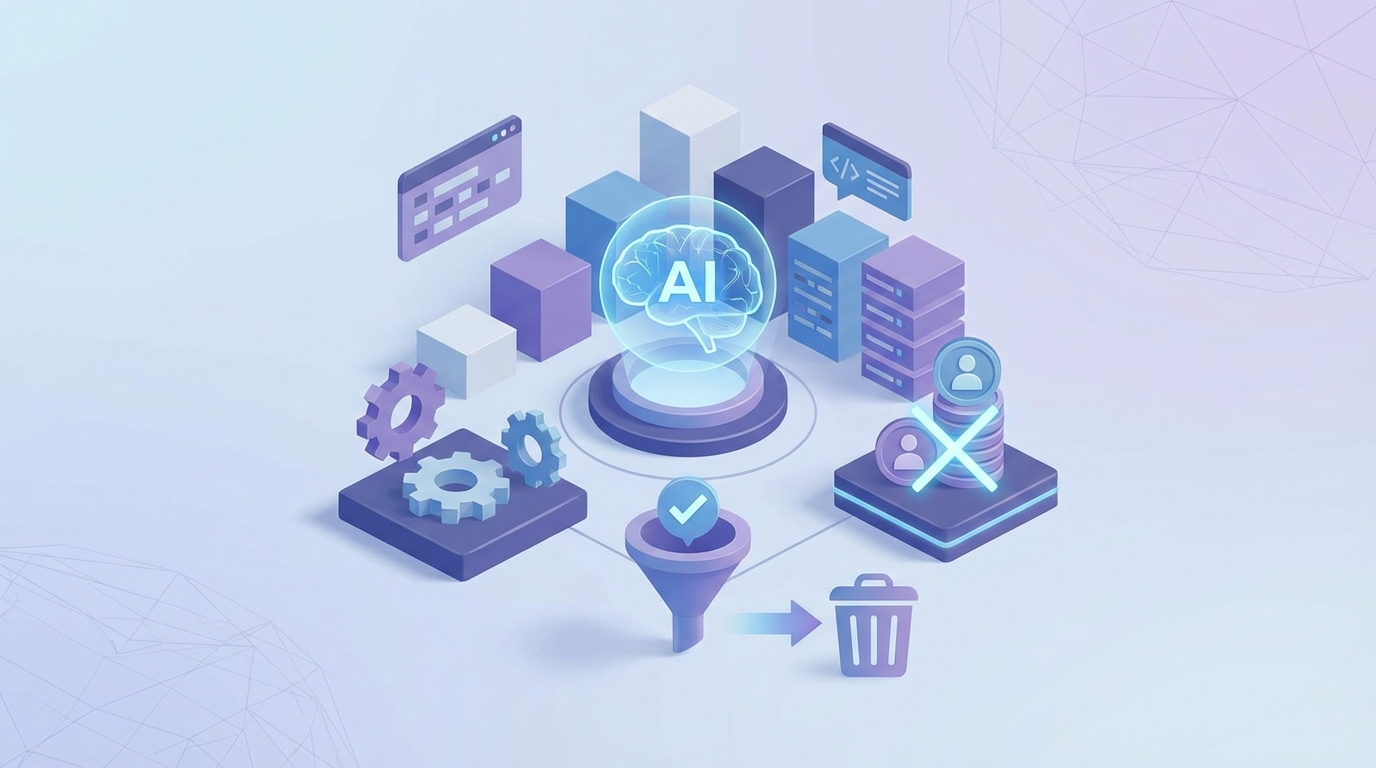
Most companies hire their first lead qualification specialist the same way they hire everyone else: they feel the pain, write a job description, and start interviewing. Three months later, someone's sitting in a chair making 60 calls a day, logging notes in Salesforce, and manually deciding which of your 500 weekly inbound leads are worth a salesperson's time.
Here's the thing — roughly 70% of that job is pattern matching, data lookup, and rule application. It's work a well-built AI agent can do today. Not in some vague "future of work" sense. Right now. With tools that exist.
I'm not going to tell you AI replaces the entire role. It doesn't. But it replaces enough of it that you should seriously reconsider your next hire. Let me walk through exactly what this role does, what it actually costs you, and how to build an AI agent on OpenClaw that handles the automatable parts — so your humans can focus on the parts that actually require being human.
What a Lead Qualification Specialist Actually Does All Day
Job titles vary — SDR, BDR, Lead Qualification Specialist — but the core workflow is remarkably consistent across companies. Here's what fills their day:
Inbound lead triage (20-30% of time): Someone fills out a form, downloads a whitepaper, signs up for a webinar, or requests a demo. The qualifier reviews the submission, looks up the company, checks if it fits your ICP (Ideal Customer Profile), and decides: junk, nurture, or pass to sales. This happens dozens to hundreds of times per day.
Outbound research and prospecting (20-30%): Pull up LinkedIn. Check ZoomInfo or Apollo. Look at the company's website, recent news, tech stack, headcount, funding. Build a picture of whether this account is worth pursuing. Then craft an outreach message.
Discovery calls and emails (25-35%): The actual qualification conversations. Using frameworks like BANT (Budget, Authority, Need, Timeline) or CHAMP (Challenges, Authority, Money, Prioritization), they ask questions to figure out if the lead has a real problem, real budget, and real urgency. This is the highest-value part of the job.
CRM data entry and hygiene (15-20%): Log every call. Update every lead status. Merge duplicates. Fix bad email addresses. Enrich incomplete records. Nobody went to college for this, but it eats hours every week.
Meeting scheduling and handoff (5-10%): When a lead qualifies, book the meeting with an AE (Account Executive), write up the notes, and make sure nothing falls through the cracks.
Reporting (5%): Track qualification rates, pipeline contribution, call volume, conversion metrics.
If you add it up, a typical qualifier spends 20-30 hours per week on tasks that are essentially mechanical: looking things up, entering data, scoring leads against known criteria, and sending templated outreach. The remaining 10-20 hours involve actual human judgment — reading between the lines on a call, building rapport, navigating office politics at a prospect's company.
That ratio matters.
The Real Cost of This Hire
Let's do the math that most hiring managers don't do thoroughly enough.
Base salary: $50,000-$75,000 for a competent qualifier in the US. In tech hubs like SF or NYC, push that to $65,000-$90,000.
OTE (On-Target Earnings): $70,000-$110,000 when you add commissions on booked meetings or pipeline generated.
Benefits and overhead: Health insurance, 401(k), payroll taxes, PTO. Typically adds 25-35% on top of base. Call it $15,000-$25,000.
Tooling: CRM seat ($1,200-$1,800/year), sales engagement platform like Outreach or Salesloft ($1,200-$2,400/year), data enrichment tool like ZoomInfo ($5,000-$10,000/year per seat), dialer, email tools. Budget $8,000-$15,000 per rep per year.
Ramp time: It takes 2-4 months before a new qualifier hits full productivity. During ramp, they're earning salary but producing at maybe 30-50% capacity. That's $15,000-$25,000 in effective ramp cost.
Turnover: Average SDR tenure is 14-18 months (Bridge Group data). So you're re-hiring and re-ramping roughly every year and a half. Each turnover cycle costs $10,000-$20,000 in recruiting, onboarding, and lost productivity.
Fully loaded annual cost: $90,000-$150,000 per qualifier.
For a team of three — which is common even at mid-market companies — you're looking at $300,000-$450,000 per year. And that's before you account for management overhead, the VP of Sales spending time coaching, or the ops team maintaining their tool stack.
Now ask yourself: what if an AI agent could handle 60-70% of the work that team does?
What AI Handles Right Now (No Hype, Just Reality)
Let's be specific about which tasks an AI agent built on OpenClaw can handle today with high reliability, and which it can't.
Tasks AI Does Well Right Now
Lead scoring against ICP criteria. This is pure pattern matching. You define your ICP — say, B2B SaaS companies with 50-500 employees, Series A or later, using Salesforce, headquartered in North America. An AI agent ingests a lead submission, enriches it with company data, and scores it against your criteria. No judgment calls. No subjectivity. Just: does this lead match or not, and by how much?
On OpenClaw, you'd build this as a workflow that triggers on new CRM entries, pulls enrichment data via API integrations (Clearbit, Apollo, or your own database), and runs the lead through a scoring rubric you define.
Data enrichment and research. Company size, funding stage, tech stack, recent news, key personnel — all of this is available via APIs and public data. An AI agent can compile a research brief on a lead in seconds that would take a human 10-15 minutes of tab-switching.
Initial outbound sequencing. First-touch emails, follow-ups, and basic nurture sequences based on lead segment. Not the "spray and pray" approach that gets you marked as spam, but thoughtful, personalized messages generated from the enriched data the agent already collected.
Chatbot-style qualification. When someone hits your website and requests a demo, an AI agent can ask the qualifying questions in real time: What's your role? How many people on your team? What tools are you using today? What's your timeline? This replaces the round-trip of form submission → human review → email back → schedule call.
Call and email analysis. Post-interaction, AI can analyze transcripts for qualification signals — mentions of budget, urgency language, competitor references, objections. It flags what matters so a human reviewer doesn't have to listen to 45 minutes of recordings.
Routing and scheduling. Once a lead scores above threshold, the agent routes it to the right AE based on territory, vertical, or deal size, and books the meeting automatically.
What Still Needs a Human
I'm not going to pretend AI handles everything. It doesn't, and claiming otherwise would be dishonest. Here's where humans remain essential:
Complex discovery conversations. When a prospect says "we're kind of looking at this but it's complicated," a human can probe. They can read tone, ask follow-up questions that weren't in the script, and uncover needs the prospect didn't know they had. AI is getting better at conversation, but it still can't reliably navigate the ambiguity of a real discovery call with a skeptical VP.
Rapport and trust-building. Especially in high-ACV (Annual Contract Value) sales, people buy from people. The qualifier who remembers a prospect mentioned their kid's soccer game, or who shares a genuine insight about the prospect's industry — that's not automatable yet.
Multi-stakeholder navigation. "Let me loop in my CFO" kicks off a political process inside the prospect's organization that requires human judgment, patience, and strategic thinking.
Edge cases and nuance. A lead from a huge company but with a weird use case. A startup with no budget but massive potential. A competitor's employee filling out your form. Humans handle ambiguity; AI handles patterns.
The honest framework is: AI qualifies the 70% of leads that are clearly good or clearly bad. Humans focus on the 30% that require judgment.
How to Build a Lead Qualification Agent on OpenClaw
Here's where it gets practical. OpenClaw gives you the infrastructure to build AI agents as configurable workflows — not chatbots, not glorified forms, but actual agents that take actions, make decisions, and integrate with your existing stack.
Step 1: Define Your Qualification Criteria
Before you build anything, write down your scoring rubric. Be explicit. Here's an example:
QUALIFICATION RUBRIC:
- Company size: 50-500 employees → +20 pts, 500-2000 → +15 pts, <50 or >2000 → +5 pts
- Industry: SaaS/Tech → +20 pts, Financial Services → +15 pts, Other → +5 pts
- Funding: Series A-C → +15 pts, Public → +10 pts, Bootstrapped → +5 pts
- Role of submitter: VP/C-suite → +20 pts, Director → +15 pts, Manager → +10 pts, Individual Contributor → +5 pts
- Tech stack: Uses Salesforce → +10 pts, Uses HubSpot → +10 pts
- Intent signal: Requested demo → +15 pts, Downloaded whitepaper → +5 pts, Visited pricing page → +10 pts

THRESHOLDS:
- 70+ pts → SQL (route to AE immediately)
- 40-69 pts → MQL (enter nurture sequence, flag for human review)
- <40 pts → Archive (auto-respond with resources, no human touch)
This rubric becomes the decision logic your OpenClaw agent uses.
Step 2: Set Up Data Enrichment
Your agent needs data to score against. In OpenClaw, configure API integrations to pull enrichment data when a new lead enters your system:
WORKFLOW TRIGGER: New lead created in CRM

ENRICHMENT STEPS:
1. Query company domain → Pull employee count, industry, funding data
2. Query contact email → Pull role/title, LinkedIn profile, seniority level
3. Query tech stack database → Identify tools/platforms in use
4. Query intent data → Recent content downloads, page visits, ad clicks
5. Compile enriched lead profile → Store in CRM record
OpenClaw supports integration with common enrichment APIs. You configure these as workflow nodes — input is the raw lead data, output is the enriched profile.
Step 3: Build the Scoring Workflow
Once enrichment runs, the agent applies your rubric:
SCORING WORKFLOW:
Input: Enriched lead profile
Process: Apply rubric point values to each attribute
Output: Total score + category (SQL / MQL / Archive)

ACTION BY CATEGORY:
- SQL: Create task for AE, send calendar link to lead, notify Slack channel
- MQL: Add to nurture sequence, schedule human review in 48 hours
- Archive: Send automated "thanks for your interest" email with resource links
This entire flow — from lead submission to scored-and-routed — happens in under 60 seconds. No human touched it. No data entry required.
Step 4: Add Conversational Qualification
For leads that come through your website in real time, build an OpenClaw conversational agent that asks qualifying questions before routing:
CONVERSATIONAL FLOW:
Agent: "Thanks for your interest. To connect you with the right person,
        a few quick questions."
Agent: "What's your role at {{company_name}}?"
Agent: "How many people are on your team?"
Agent: "What tools are you currently using for [your category]?"
Agent: "What's driving your interest right now — is there a specific
        challenge or timeline?"

LOGIC: Map responses to rubric attributes → Score in real-time →
       Route accordingly
This replaces the "fill out a form and wait 24 hours for someone to email you" experience that kills conversion rates. The lead gets instant engagement, and your system gets structured qualification data without a human doing intake.
Step 5: Build the Feedback Loop
This is the step most people skip, and it's the one that makes the difference between a useful agent and a stale one.
FEEDBACK WORKFLOW:
1. Track which scored SQLs actually convert to opportunities
2. Track which MQLs eventually become SQLs after human review
3. Monthly: Compare agent scores vs. actual outcomes
4. Adjust rubric weights based on what's actually predictive
5. Flag patterns the agent misses (e.g., "leads from webinar X
   convert 3x higher than scored")
On OpenClaw, you can set up this feedback loop as a scheduled workflow that pulls conversion data from your CRM and surfaces discrepancies. Over time, your agent gets more accurate — not because it's "learning" in some magical AI sense, but because you're systematically refining the rubric based on real outcomes.
Step 6: Layer In Outreach Automation
For MQLs that need nurturing, your OpenClaw agent can generate and send personalized outreach based on the enriched profile:
OUTREACH WORKFLOW:
Input: Enriched lead profile + score category (MQL)
Process:
  - Select email template based on industry + pain point
  - Personalize with company-specific details from enrichment
  - Schedule send based on optimal timing data
  - Set follow-up sequence (Day 3, Day 7, Day 14)
Output: Personalized email sequence, auto-logged in CRM
The key here: AI-generated outreach needs guardrails. Set up review triggers for any message that references specific claims, competitive comparisons, or pricing. Those should get a human eye before sending. OpenClaw lets you build approval steps into workflows for exactly this kind of thing.
What This Looks Like in Practice
Let's say you're currently running a team of two lead qualifiers handling 400 inbound leads per month plus outbound prospecting. Fully loaded cost: ~$240,000/year.
With an OpenClaw agent handling scoring, enrichment, routing, chatbot qualification, and initial outreach:
- 70% of inbound leads get scored and routed automatically (no human touch needed for clear SQLs or clear junk).
- CRM data entry drops to near-zero for those leads.
- Research time drops from 10-15 minutes per lead to essentially zero (enrichment runs automatically).
- Response time to new leads drops from hours to under a minute.
Your two qualifiers? Maybe you need one now. And that one person spends their time on the work that actually matters: the nuanced calls, the relationship-building, the edge cases where human judgment makes the difference between a closed deal and a lost opportunity.
That's not a 50% headcount reduction for the sake of cutting costs. It's a reallocation. Your human does higher-value work, your leads get faster responses, and your pipeline quality goes up because nothing falls through the cracks.
Companies like Lenovo have already demonstrated 40% reductions in qualification time with conversational AI. Okta pre-qualifies 70% of leads before any human interaction. These aren't startups experimenting — they're enterprises running this at scale.
The Honest Limitations
A few things to keep in mind before you build:
AI-generated outreach can feel robotic. Even good personalization has tells. Monitor reply rates and iterate on templates. If your deliverability or response rates drop, scale back the automation.
Enrichment data isn't perfect. Company databases have stale records, wrong employee counts, outdated tech stack info. Build in confidence scores and flag low-confidence enrichment for human review.
Your rubric is only as good as your assumptions. If you've never formally defined your ICP, the agent will inherit your biases and blind spots. Garbage rubric in, garbage scores out.
Regulatory compliance matters. GDPR, CAN-SPAM, and state privacy laws apply to automated outreach. Make sure your workflows include opt-out mechanisms and data handling that meets legal requirements.
These aren't reasons not to build. They're reasons to build carefully and iterate.
Next Steps
If you've made it this far, you're probably in one of two camps:
Camp 1: "I want to build this myself." Go to OpenClaw, set up a workspace, and start with the scoring workflow. It's the highest-ROI component and the easiest to validate. Get it scoring your last 100 leads, compare against what your human qualifiers actually did with those leads, and refine from there. You can have a working prototype in a week.
Camp 2: "I want this built, but I don't want to be the one building it." That's what Clawsourcing is for. We'll scope your qualification workflow, build the agent on OpenClaw, integrate it with your CRM and enrichment stack, and hand you a working system. You focus on selling. We focus on the plumbing.
Either way, the math is hard to argue with. A $150,000/year role where 70% of the work is automatable is a $100,000 problem looking for a solution. The solution exists. The question is whether you build it this quarter or next.
Recommended for this post
The skill every OpenClaw user needs. Gives your agent persistent memory across sessions — daily logs, long-term recall, and structured knowledge that survives restarts. Less than a coffee.
Identify repetitive tasks, build automation, and reclaim hours per week.
 SpookyJuice.ai
Close the performance gap between OpenClaw and Claude Code