Replace Your Inside Sales Rep with an AI Inside Sales Rep Agent
Replace Your Inside Sales Rep with an AI Inside Sales Rep Agent
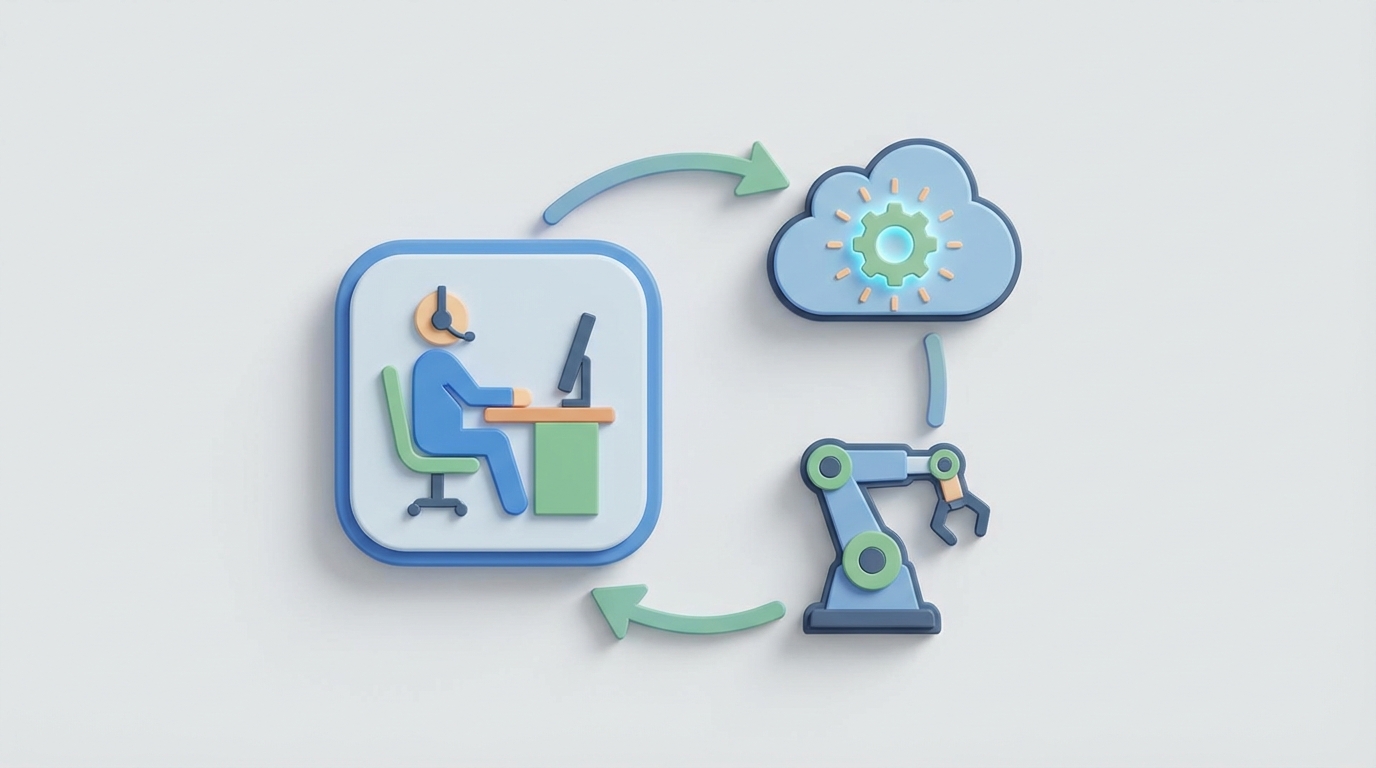
Most companies hire an inside sales rep thinking they need a person. What they actually need is a system that qualifies leads, follows up relentlessly, updates the CRM, and books meetings — without calling in sick, missing quota, or quitting after seven months to join a competitor.
That's not a dig at inside sales reps. The role is genuinely brutal. It's 50-100 cold dials a day with a 2-5% connect rate, endless CRM data entry, and a rejection rate that would make a standup comedian quit. The average tenure for an ISR is about 18 months. The ramp time to productivity is 3-6 months. You do the math on how much productive selling you're actually getting.
Here's the thing: roughly 60-70% of what an inside sales rep does every day can now be handled by an AI agent. Not a chatbot. Not a template. A real agent that reasons, decides, and acts across your sales stack. And you can build one on OpenClaw.
Let me walk you through exactly what this looks like.
What an Inside Sales Rep Actually Does All Day
Let's get specific, because "sales" is vague and vague doesn't help you decide what to automate.
An inside sales rep's week breaks down roughly like this:
Prospecting and Research (30-50% of their time) This is the biggest time sink. Reps are combing through LinkedIn, ZoomInfo, Apollo, company websites, and industry databases trying to find people who might want to buy. Then they're personalizing outreach — reading someone's recent LinkedIn post, checking if the company just raised a round, figuring out the right angle. At high volume, this means researching and reaching out to 50-100 prospects per day.
Lead Qualification (20-30%) When someone responds — or when marketing hands over an inbound lead — the rep has to figure out if this person is worth pursuing. Most teams use some version of BANT: Does the prospect have the Budget? Are they the Authority (decision-maker)? Is there a real Need? What's the Timeline? This happens through short discovery calls (15-30 minutes each) and email exchanges.
Follow-Ups and Sequencing (10-20%) The average deal requires 7-12 touches before a prospect converts. That means the rep is managing dozens of concurrent follow-up sequences across email, phone, and sometimes LinkedIn. Miss a follow-up and the lead goes cold. Every. Single. Time.
CRM Administration (15-20%) Every call, email, meeting, and status change needs to be logged in Salesforce, HubSpot, or whatever CRM the company runs. This is the work nobody likes and everybody skips, which is why CRM data has roughly 30% inaccuracy rates across most organizations (per Gartner). Bad data means bad forecasts, which means bad decisions.
Demos and Presentations (15-25%) Virtual product walkthroughs via Zoom or Teams. This is the part that's actually selling — reading the room, handling objections live, pivoting the pitch based on what the prospect cares about.
Reporting and Meetings (5-10%) Pipeline reviews, quota tracking, team standups, 1:1s with managers. Necessary but not revenue-generating.
Here's the punchline from the Bridge Group's ISR Report: reps spend only about 30% of their time actually selling. The rest is admin, research, and logistics. That's your automation opportunity.
The Real Cost of This Hire
Let's talk money, because this is where the decision gets clear.
Direct compensation:
- Base salary: $50,000–$70,000 (entry-level starts around $45k; senior can hit $80k+)
- On-Target Earnings (OTE) including commission: $80,000–$120,000
- In high-cost markets like SF or NYC, add 20-30% to those numbers
Total cost to company runs 1.3x to 1.5x the OTE once you factor in:
- Benefits (health, dental, 401k): ~20% of base
- Sales tools and licenses (Salesforce seat, ZoomInfo, Outreach, Gong, etc.): $5,000–$15,000/year per rep
- Training and onboarding: $5,000–$10,000 per hire
- Management overhead: your sales manager is spending 10-15% of their time on each rep
So a mid-level inside sales rep costs you $120,000–$180,000 per year, all in.
Now factor in turnover. With average tenure at 18 months and ramp time at 3-6 months, you're losing your investment right as the rep hits full productivity. Then you start the cycle over: recruit, hire, train, ramp, lose, repeat. Conservatively, turnover costs you 50-75% of annual comp per departure (SHRM data).
For a team of five ISRs, you're looking at $600k–$900k annually. And roughly 60% of them will miss quota (Salesforce State of Sales 2026).
This isn't sustainable. It's just familiar.
Which Tasks AI Handles Right Now
Not "in the future." Not "theoretically." Right now, today, with tools that exist and work.
Here's the breakdown by task category, with specific capabilities you can build into an OpenClaw agent:
Prospecting and Lead Research — 70-80% Automatable
An OpenClaw agent can:
- Pull lead data from enrichment APIs (Clearbit, Apollo, People Data Labs) based on your ICP criteria
- Monitor trigger events: funding rounds, job changes, company expansions, tech stack changes
- Research individual prospects by aggregating data from multiple sources into a single brief
- Generate personalized outreach angles based on that research
- Score prospects based on fit signals before any human touches them
What this replaces: the 3-4 hours per day your rep spends on LinkedIn and ZoomInfo just finding people to talk to.
Initial Outreach — 80% Automatable
An OpenClaw agent can:
- Draft personalized cold emails at scale (not mail merge — actually personalized based on the prospect's company, role, recent activity)
- Manage multi-channel sequences: email → LinkedIn connection → follow-up email → phone task for the human
- A/B test subject lines, CTAs, and email body variations automatically
- Respond to initial replies with contextually appropriate messages
- Route hot replies to a human instantly
Lead Qualification — 60-70% Automatable
An OpenClaw agent can:
- Run qualification conversations via email or chat using BANT or any custom framework you define
- Ask the right discovery questions in a conversational, natural flow
- Score leads based on responses and behavioral signals (email opens, website visits, content downloads)
- Route qualified leads to the right human rep based on territory, deal size, or product line
- Disqualify bad-fit leads politely and keep them in a nurture track
Follow-Ups and Scheduling — 90% Automatable
This is the easiest win and the one with the biggest impact. An OpenClaw agent can:
- Execute follow-up sequences on autopilot with branching logic (if no reply after 3 days, send version B; if opened but no reply, try a different angle)
- Book meetings directly via calendar integration — no back-and-forth
- Send meeting reminders and reduce no-shows (companies using AI scheduling report 50% reduction in no-shows)
- Re-engage stale leads with fresh angles based on new trigger events
CRM Updates and Admin — 85% Automatable
An OpenClaw agent can:
- Auto-log every interaction (email sent, reply received, meeting booked, call notes)
- Update deal stages based on qualification criteria being met
- Flag pipeline risks (e.g., deal stuck at same stage for 14+ days)
- Generate weekly pipeline summaries for managers
Analysis and Reporting — 70% Automatable
An OpenClaw agent can:
- Track conversion rates at every stage
- Identify which outreach sequences perform best
- Surface patterns in won vs. lost deals
- Generate forecasts based on current pipeline velocity
What Still Needs a Human
I'm not going to pretend AI handles everything. It doesn't, and being honest about that is what separates a useful guide from a sales pitch.
Here's where humans are still essential:
Live demos and complex product walkthroughs. When a prospect has specific technical questions, wants to see their use case reflected in the product, or needs to be guided through a nuanced evaluation — you need a person. AI can prep the demo (generate a custom script, pull relevant case studies, brief the rep on the prospect's pain points), but the actual live interaction requires human judgment.
High-stakes objection handling. When a prospect says "we're locked into a contract with your competitor until next year" or "our CEO doesn't believe in this category," the response requires emotional intelligence, creative problem-solving, and genuine rapport. AI can coach reps on objection responses (Gong and Chorus do this well), but the moment itself needs a human.
Strategic negotiation. Pricing discussions, enterprise deal structuring, multi-stakeholder alignment — these require reading the room, building trust over time, and making judgment calls that AI can't reliably make yet.
Relationship building. For complex, high-ACV sales, the human relationship still matters. People buy from people they trust, especially on six- and seven-figure deals.
The play isn't to eliminate humans from sales. It's to eliminate humans from the 70% of the job that isn't actually selling, so they can spend all their time on the 30% where they're irreplaceable.
One senior rep supported by an OpenClaw agent can cover the territory that previously required three to five junior reps. That's the math that matters.
How to Build an AI Inside Sales Agent on OpenClaw
Here's how you'd actually set this up. This is technical enough to be useful, accessible enough that you don't need a machine learning team.
Step 1: Define Your Agent's Scope
Don't try to automate everything at once. Start with the highest-volume, lowest-complexity tasks:
- Lead enrichment and scoring (takes data in, produces scored leads)
- Outreach sequence execution (sends emails, manages follow-ups)
- Inbound lead qualification (responds to form fills, qualifies via conversation)
- CRM updates (logs everything automatically)
Step 2: Set Up Your OpenClaw Agent
In OpenClaw, you'll create an agent with specific instructions, tools, and workflows. Here's a simplified example for a lead qualification agent:
agent:
  name: "ISR Qualifier"
  description: "Qualifies inbound leads using BANT framework"

  system_prompt: |
    You are a sales development representative for [Company Name].
    Your job is to qualify inbound leads by determining:
    1. Budget: Can they afford our solution? ($X minimum deal size)
    2. Authority: Are they a decision-maker or influencer?
    3. Need: Do they have a problem our product solves?
    4. Timeline: Are they looking to buy within 6 months?

    Be conversational, not interrogative. Ask one question at a time.
    If qualified (3/4 BANT criteria met), offer to book a demo.
    If not qualified, add to nurture sequence and end politely.
    Never fabricate product capabilities. If unsure, say you'll
    have a specialist follow up.

  tools:
    - crm_lookup    # Pull existing lead data from CRM
    - crm_update    # Log conversation and update lead score
    - calendar_book # Book meetings on rep's calendar
    - enrichment    # Pull firmographic/technographic data
    - email_send    # Send follow-up emails

  triggers:
    - event: "new_form_submission"
      source: "hubspot"
      action: "begin_qualification"
    - event: "email_reply_received"
      source: "email_inbox"
      action: "continue_conversation"
Step 3: Connect Your Tools
OpenClaw integrates with your existing sales stack. You'll connect:
- CRM (Salesforce, HubSpot, Pipedrive) for reading/writing lead and deal data
- Email (Gmail, Outlook) for sending and receiving messages
- Calendar (Google Calendar, Calendly) for booking meetings
- Enrichment APIs (Clearbit, Apollo, People Data Labs) for lead research
- Communication channels (your website chat, LinkedIn via approved APIs)
Each connection becomes a "tool" your agent can use. The agent decides when to use which tool based on the conversation context — this is the difference between an agent and a simple automation.
Step 4: Build Your Workflows
Here's an example outbound prospecting workflow:
Trigger: New lead added to "Outbound Target" list in CRM

Step 1: Agent pulls firmographic data via enrichment API
Step 2: Agent checks CRM for any prior interactions
Step 3: Agent generates personalized email based on:
        - Prospect's role and seniority
        - Company's recent news/triggers
        - Relevant case study from your library
Step 4: Agent sends email via connected email account
Step 5: If no reply in 3 days → send follow-up variant B
Step 6: If reply received → classify intent:
        - Interested → begin qualification flow
        - Objection → respond with relevant handling
        - Not interested → log and remove from sequence
        - Out of office → reschedule follow-up
Step 7: If qualified → book meeting on rep's calendar
Step 8: Log all activity to CRM with notes and score
Step 5: Set Guard Rails
This is critical. You need boundaries:
- Approval gates: For deals above a certain value, require human review before the agent sends a proposal or books a call
- Escalation triggers: If the prospect mentions a competitor, asks about pricing above a threshold, or expresses frustration, route to a human immediately
- Send limits: Cap outbound emails per day to protect your domain reputation
- Tone review: Periodically audit agent conversations to ensure brand consistency
- Do-not-contact compliance: Integrate your suppression lists so the agent never contacts opted-out leads
guardrails:
  max_daily_emails: 150
  escalate_on:
    - "competitor_mention"
    - "pricing_request_above_50k"
    - "negative_sentiment_detected"
    - "legal_or_contract_question"
  require_human_approval:
    - "proposal_send"
    - "discount_offer"
  compliance:
    - check_suppression_list: true
    - include_unsubscribe: true
    - respect_timezone_sending_windows: true
Step 6: Test Before You Scale
Run the agent on a small lead segment first (50-100 leads). Measure:
- Reply rates vs. your human baseline
- Qualification accuracy (are the leads it marks as "qualified" actually converting?)
- False positives (leads it qualified that shouldn't have been)
- Escalation quality (when it hands off to a human, is the context sufficient?)
- CRM data accuracy
Tune the system prompt, adjust your scoring criteria, and refine your sequences based on real data. Then scale.
The Real Numbers
Let's do rough economics.
Current state: Team of 3 junior ISRs
- Total cost: ~$360,000–$450,000/year (all-in)
- Combined productive selling time: ~30% = equivalent of 1 full-time seller
- Pipeline coverage: limited by human bandwidth
- Turnover risk: high (expect to replace 1-2 per year)
Future state: 1 senior rep + OpenClaw AI agent
- Senior rep cost: ~$150,000–$180,000/year (all-in)
- OpenClaw agent: fraction of one rep's salary annually
- Senior rep's productive selling time: 70-80% (AI handles the rest)
- Pipeline coverage: 3-5x what the team of 3 was handling
- Turnover risk: lower (senior reps are more stable, and the system knowledge lives in the agent, not in someone's head)
That's a 50-60% cost reduction with better pipeline coverage. And when your senior rep does leave someday, you're not starting from zero — the agent retains all the process knowledge, sequences, and qualification logic.
Start Here
You've got two options:
Option 1: Build it yourself. Sign up for OpenClaw, follow the steps above, and start with one workflow — I'd recommend inbound lead qualification since it's highest-impact and easiest to measure. You can have a working agent in a week if your CRM and email integrations are straightforward.
Option 2: Hire us to build it. If you'd rather skip the learning curve and get a production-ready AI inside sales agent built for your specific sales process, CRM, and tech stack — that's exactly what Clawsourcing does. We'll audit your current ISR workflow, identify the automation opportunities, build the agent on OpenClaw, and hand you a system that works on day one.
Either way, the gap between companies using AI agents for inside sales and those still running pure human teams is widening every quarter. The companies that figure this out first don't just save money — they move faster, follow up more consistently, and never let a qualified lead slip through the cracks because someone forgot to log a call.
Your inside sales rep's job isn't going away. But the version of it that's 70% admin and 30% selling? That's already obsolete.
Recommended for this post
The skill every OpenClaw user needs. Gives your agent persistent memory across sessions — daily logs, long-term recall, and structured knowledge that survives restarts. Less than a coffee.
Identify repetitive tasks, build automation, and reclaim hours per week.
 SpookyJuice.ai
Close the performance gap between OpenClaw and Claude Code