Replace Your Demand Generation Manager with an AI Demand Generation Manager Agent
Replace Your Demand Generation Manager with an AI Demand Generation Manager Agent
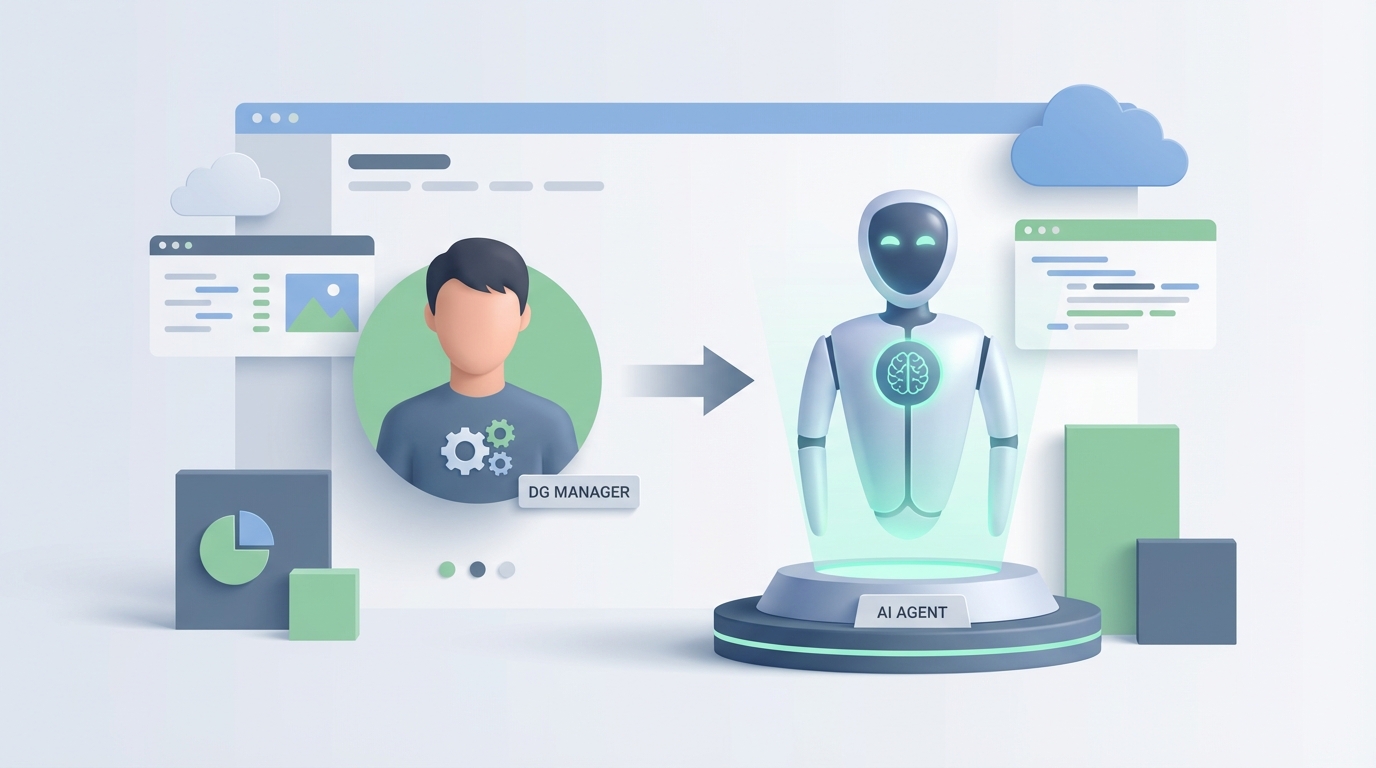
Most companies hiring a Demand Generation Manager are really hiring someone to do three things: build campaigns, measure what's working, and feed qualified leads to sales. That's it. Everything else — the meetings, the vendor management, the endless Slack threads about MQL definitions — is overhead that accumulates around those core functions like barnacles on a hull.
Here's the thing: about 60% of what a DGM does day-to-day is now automatable. Not in a "someday when AGI arrives" sense. Right now, today, with tools that exist and work. The remaining 40% genuinely requires a human brain — strategic judgment, stakeholder relationships, creative direction. But you don't need a $180K full-time hire to cover that 40%. You need a sharp fractional marketer working five to ten hours a week, paired with an AI agent that handles the rest.
This post walks through exactly what a Demand Generation Manager actually does, what it really costs you, which pieces an AI agent built on OpenClaw can own, what still needs a person, and how to build the agent yourself. Or, if you'd rather not, how to hire us to do it.
What a Demand Generation Manager Actually Does All Day
Job descriptions for DGMs read like wish lists. "Drive pipeline growth across multi-channel campaigns while aligning cross-functional stakeholders and optimizing full-funnel performance." Cool. What does that mean in practice?
Here's the realistic breakdown of where their time goes:
Analytics and Reporting (25-30% of time) This is the biggest chunk, and it's mostly manual drudgery. Pulling data from Google Analytics, your CRM (Salesforce or HubSpot), ad platforms (Google Ads, LinkedIn, Meta), and whatever BI tool you're using. Reconciling numbers that never quite match. Building dashboards. Explaining to the VP of Marketing why CAC went up this quarter. Running attribution analysis that everyone will argue about anyway.
Campaign Setup and Execution (20-25%) Building audiences in ad platforms. Writing email sequences in Marketo or HubSpot. Setting up UTM parameters. Scheduling sends. Launching LinkedIn campaigns. Adjusting bids. Pausing underperformers. This is high-volume, repetitive work with occasional moments of creative thinking.
Content and Asset Management (15-20%) Coordinating the content calendar. Briefing writers. Optimizing landing pages. Creating email templates. Syndicating gated content to third-party platforms. A/B testing headlines. Most of this is project management with some copywriting mixed in.
Lead Management and Nurturing (15-20%) Configuring lead scoring models. Setting up routing rules so the right leads hit the right SDRs. Building drip campaigns for leads that aren't ready to buy. Running retargeting. This is critical work but it's largely rule-based once the logic is defined.
Cross-Functional Collaboration (10-15%) Meetings with sales about lead quality. Meetings with product about messaging. Meetings with the exec team about pipeline targets. Budget reviews. Vendor calls. This is the overhead I mentioned — necessary but not directly productive.
Experimentation (5-10%) Testing a new channel like podcast ads or SMS. Trying intent data providers. SEO tweaks. This is where the best DGMs earn their keep, but it's always squeezed into whatever time is left after everything else.
If you look at this list honestly, the top four categories — which account for roughly 80% of the role — are dominated by tasks that are either data manipulation, template-based execution, or rules-based logic. These are exactly the kinds of tasks AI agents handle well.
The Real Cost of This Hire
Let's do the math, because "just hire someone" is never as simple as the salary number.
Base salary: $110K to $160K, with a median around $135K nationally. In San Francisco or New York, you're looking at $160K to $250K for someone good.
Total compensation: Add 15-30% in bonuses tied to pipeline targets. Now you're at $140K to $220K.
Fully loaded cost: Benefits, payroll taxes, equipment, software licenses, and office costs add another 30-50%. Real cost to the company: $180K to $300K per year.
The hidden costs nobody talks about:
- Recruiting: Takes two to four months and costs $20K-$40K between recruiter fees, job board postings, and internal time spent interviewing.
- Ramp time: A new DGM takes three to six months to fully understand your ICP, sales process, and tech stack. During ramp, you're paying full price for partial output.
- Turnover: Average tenure for marketing managers is about 2.5 years. So you'll be doing this again before you know it.
- Tool sprawl: DGMs accumulate tools. Every new hire brings their preferred stack. Suddenly you're paying for Marketo AND HubSpot AND Pardot because three different people set things up over three years.
For a startup or mid-market company doing $5M to $50M in revenue, a quarter-million dollars annually on a single contributor role is a serious commitment. Especially when the majority of their output is the kind of work machines are already good at.
What an AI Agent Handles Right Now
I'm not going to pretend AI replaces the entire role. It doesn't. But built right on OpenClaw, an AI demand generation agent can own these functions today:
1. Automated Reporting and Analytics
Instead of your DGM spending ten hours a week pulling data from six platforms and building slides, an OpenClaw agent connects to your data sources via API, aggregates performance metrics, identifies anomalies, and generates a digestible report — daily if you want it.
This isn't a static dashboard. The agent actively surfaces insights: "LinkedIn CPC increased 23% week-over-week with no corresponding increase in conversion rate. Recommend pausing Campaign X and reallocating budget to Campaign Y, which is converting at 2.1x the average." It makes recommendations based on the patterns it finds, and it does it every morning before your team logs on.
Gartner's data suggests AI-driven analytics saves about 70% of the time humans spend on reporting. In practice, I've seen it go higher because the agent doesn't get distracted by Slack or need a coffee break.
2. Lead Scoring and Routing
Traditional lead scoring is a joke at most companies. Someone sets up a point system in HubSpot three years ago — "downloaded whitepaper: +10 points, visited pricing page: +20 points" — and nobody touches it again. Meanwhile, your SDRs complain that MQLs are garbage.
An OpenClaw agent builds dynamic scoring models using actual conversion data. It looks at which behaviors actually correlate with closed-won deals, not which behaviors your team assumed would matter. It re-weights the model continuously. When a lead crosses the threshold, it routes to the right rep based on territory, segment, or whatever logic you define — instantly, not during business hours only.
ZoomInfo's Copilot and Salesforce Einstein do pieces of this, but they're locked into their respective ecosystems. An OpenClaw agent works across your entire stack.
3. Campaign Generation and Optimization
Give an OpenClaw agent your ICP definition, value propositions, and brand guidelines, and it generates complete campaign drafts: email sequences, ad copy variants, landing page copy, and audience targeting recommendations. Not one version — dozens of variants for A/B testing.
Once campaigns are live, the agent monitors performance and makes optimization decisions. Which ad variants to pause. Which email subject lines to scale. Where to shift budget. HubSpot reports that companies using AI for campaign execution launch campaigns 40% faster. When the agent is doing the execution layer, that number goes even higher because there's no context-switching or approval bottleneck.
4. Personalization at Scale
This is where AI genuinely outperforms humans. A DGM can maybe create five audience segments and write tailored copy for each. An OpenClaw agent creates fifty segments and generates personalized content for every one, dynamically adjusting based on engagement data. Email subject lines, landing page hero text, ad creative angles — all tailored, all tested, all optimized without manual intervention.
The key here isn't just generating the content — it's the feedback loop. The agent learns which personalization approaches work for which segments and improves over time. A human doing this manually would need a team of five and a year of runway.
5. Content Production and Optimization
Blog posts, email copy, social posts, ad variants, case study drafts, webinar descriptions. An OpenClaw agent generates first drafts for all of it, informed by your existing content that performs well and SEO data showing what your audience is searching for. You still need a human to review and refine (more on that below), but the heavy lifting of going from blank page to solid draft is handled.
Jasper.ai users like Zapier report 50% time savings on email content alone. An OpenClaw agent, properly configured with your brand context, should match or exceed that because it's purpose-built for your specific use case rather than being a generic content tool.
What Still Needs a Human
I said I'd be honest, so here's what AI doesn't do well in demand generation:
Strategic Decision-Making Which markets to enter. Whether to shift from PLG to enterprise sales. How to position against a new competitor. Whether to double down on webinars or kill them. These decisions require business context, market intuition, and judgment that AI doesn't have. You need a senior marketing person making these calls — but that person doesn't need to be full-time. A fractional CMO or demand gen consultant working five to ten hours a week can provide the strategic layer.
Stakeholder Relationships Convincing the VP of Sales that marketing's lead scoring model is accurate. Negotiating budget increases with the CFO. Building trust with the product team so they actually contribute to content. This is human work. No agent handles politics.
Creative Direction and Brand Voice AI generates competent copy. Humans generate compelling copy. The difference matters for brand-defining content — your manifesto page, keynote presentations, flagship content pieces. For the 80% of content that's functional (email nurture sequence #14, LinkedIn ad variant #37), AI is fine. For the 20% that shapes perception, you want a human.
Edge Cases and Crisis Response New privacy regulation drops. A competitor launches a feature that undermines your main talking point. Your biggest channel changes its algorithm overnight (thanks, Google). Responding to these requires judgment, speed, and creativity that AI agents aren't equipped for.
Ethical and Compliance Oversight Making sure campaigns don't inadvertently exclude protected groups. Ensuring GDPR and CCPA compliance. Reviewing AI-generated content for claims that could create legal liability. A human needs to own this.
The pattern here is clear: AI owns execution and analysis. Humans own strategy, relationships, and judgment. The expensive mistake is paying human rates for execution work. The dangerous mistake is trusting AI with judgment calls.
How to Build Your AI Demand Generation Agent on OpenClaw
Here's the practical part. OpenClaw lets you build AI agents that integrate with your existing martech stack and handle the execution layer I described above. Here's how to set it up:
Step 1: Define Your Agent's Scope
Don't try to automate everything at once. Pick the highest-time-cost area first. For most teams, that's reporting and analytics — it consumes the most hours with the least creative input required.
Start by mapping your data sources:
- CRM (Salesforce, HubSpot)
- Ad platforms (Google Ads, LinkedIn, Meta)
- Analytics (GA4, Mixpanel)
- Marketing automation (Marketo, HubSpot, Pardot)
- Intent data (6sense, Bombora, ZoomInfo)
Step 2: Configure Your Data Connections
OpenClaw connects to your tools via API integrations. Set up your data pipeline so the agent has access to the metrics it needs:
# openclaw-agent-config.yaml
agent:
  name: demand-gen-agent
  type: marketing-ops

data_sources:
  - platform: salesforce
    connection: api
    objects: [leads, opportunities, campaigns]
    sync_frequency: hourly

  - platform: google_ads
    connection: api
    metrics: [cpc, ctr, conversions, spend]
    sync_frequency: daily

  - platform: hubspot
    connection: api
    objects: [contacts, deals, email_events]
    sync_frequency: hourly

  - platform: google_analytics_4
    connection: api
    metrics: [sessions, conversions, attribution]
    sync_frequency: daily

  - platform: linkedin_ads
    connection: api
    metrics: [cpc, ctr, conversions, spend]
    sync_frequency: daily
Step 3: Define Your Workflows
This is where you encode the DGM's decision logic. Each workflow is a set of triggers, analysis steps, and actions:
workflows:
  daily_performance_report:
    trigger: schedule_daily_0800
    steps:
      - aggregate_metrics:
          sources: [google_ads, linkedin_ads, hubspot]
          period: last_7_days
          compare_to: previous_7_days
      - identify_anomalies:
          threshold: 15_percent_change
          metrics: [cpc, conversion_rate, cpl]
      - generate_recommendations:
          context: campaign_objectives
          constraints: monthly_budget
      - deliver_report:
          channel: slack
          recipients: [marketing_team]
          format: executive_summary

  lead_scoring_update:
    trigger: new_lead_created
    steps:
      - enrich_lead:
          sources: [clearbit, zoominfo]
      - score_lead:
          model: conversion_correlation
          factors: [firmographic, behavioral, intent]
      - route_lead:
          rules:
            - score >= 80: assign_to_ae
            - score >= 50: add_to_nurture_high
            - score < 50: add_to_nurture_low

  campaign_optimization:
    trigger: schedule_daily_1200
    steps:
      - evaluate_campaigns:
          platforms: [google_ads, linkedin_ads]
          metrics: [roas, cpl, conversion_rate]
      - pause_underperformers:
          threshold: cpl > 2x_target
          require_approval: true
      - reallocate_budget:
          strategy: top_performer_weighted
          require_approval: true
      - generate_new_variants:
          type: [ad_copy, headlines]
          based_on: top_performers
          count: 5_per_campaign
Step 4: Set Your Brand Context
This is the step most people skip, and it's why their AI output sounds generic. Feed your OpenClaw agent your actual brand materials:
brand_context:
  voice: "Direct, technical, no buzzwords. Write like you're explaining to a smart peer, not pitching a prospect."
  icp:
    primary: "VP Marketing / Director Demand Gen at B2B SaaS, 50-500 employees, $5M-$100M ARR"
    secondary: "Marketing Ops Manager at enterprise, 500+ employees"
  value_props:
    - "Reduce CAC by 40% through AI-driven campaign optimization"
    - "Launch campaigns 3x faster without adding headcount"
  competitors: [competitor_a, competitor_b, competitor_c]
  tone_examples:
    - source: "top_performing_email_q3.html"
    - source: "homepage_hero_copy.md"
    - source: "case_study_acme_corp.pdf"
Step 5: Set Guardrails and Approval Gates
You don't want your agent going rogue. OpenClaw lets you define approval requirements for different action types:
guardrails:
  budget_changes:
    threshold: $500
    requires: manager_approval
    notification: slack_dm

  content_publishing:
    requires: human_review
    reviewer: marketing_lead
    auto_approve_after: 48_hours  # optional timeout

  lead_routing_changes:
    requires: sales_ops_approval

  new_campaign_launch:
    requires: manager_approval
    checklist: [brand_review, compliance_check, budget_confirm]
Step 6: Launch, Monitor, Iterate
Start with the agent in "recommend mode" — it analyzes and suggests but doesn't take action. Review its recommendations for two weeks. If the recommendations are consistently good, start enabling automated actions for low-risk workflows (reporting, lead scoring) while keeping approval gates on high-risk ones (budget changes, campaign launches).
Track these metrics to measure your agent's impact:
- Time saved per week on reporting and analysis
- Lead-to-opportunity conversion rate (should improve with better scoring)
- Campaign launch velocity (time from concept to live)
- Cost per lead and cost per opportunity trends
- Number of optimization actions taken vs. previous manual cadence
Most teams see meaningful results within 30 days. The agent gets better over time as it accumulates more performance data to learn from.
The Math That Makes This Obvious
Let's compare your options:
Option A: Full-time DGM
- Cost: $180K-$300K/year fully loaded
- Ramp time: 3-6 months
- Output: Limited by one person's bandwidth
- Risk: Turnover, burnout, key-person dependency
Option B: OpenClaw Agent + Fractional Strategy Human
- Agent cost: A fraction of a full-time salary
- Fractional strategist: $3K-$8K/month for 5-10 hours/week
- Total: Significantly less than a full-time hire
- Ramp time: 2-4 weeks for agent; strategist productive immediately
- Output: Agent works 24/7, handles unlimited campaign variants
- Risk: Distributed across system, not dependent on one person
Option B gives you more execution capacity, faster optimization cycles, and better analytics — at a fraction of the cost. The fractional strategist provides the judgment, relationships, and creative direction the agent can't. Together, they outperform a solo DGM on every dimension.
Start Building, or Let Us Build It
You've got two paths from here:
Path 1: Build it yourself. Use the configuration framework above to set up your OpenClaw demand generation agent. Start with reporting automation, prove the value, then expand to lead scoring, campaign optimization, and content generation. The technical lift is real but manageable if you have someone on your team comfortable with API integrations and YAML configs.
Path 2: Let us build it for you. Our Clawsourcing team has done this for dozens of companies. We'll audit your current demand gen stack, identify the highest-ROI automation opportunities, build and configure your OpenClaw agent, and train your team to manage it. Most engagements go from kickoff to live agent in three to four weeks.
Either way, the endgame is the same: stop paying $200K+ for someone to pull data into spreadsheets and write email variant #47. Let the agent handle execution. Let humans handle strategy. Spend the savings on the things that actually move pipeline — better content, bigger ad budgets, or that ABM program you've been putting off for two years.
The companies that figure this out first get a compounding advantage. Every month your AI agent runs, it gets better at scoring leads, optimizing campaigns, and surfacing insights. Every month your competitor's DGM spends pulling reports is a month they're not thinking strategically. The gap widens fast.
Time to build.