Replace Your Copywriter with an AI Copywriter Agent
Replace Your Copywriter with an AI Copywriter Agent
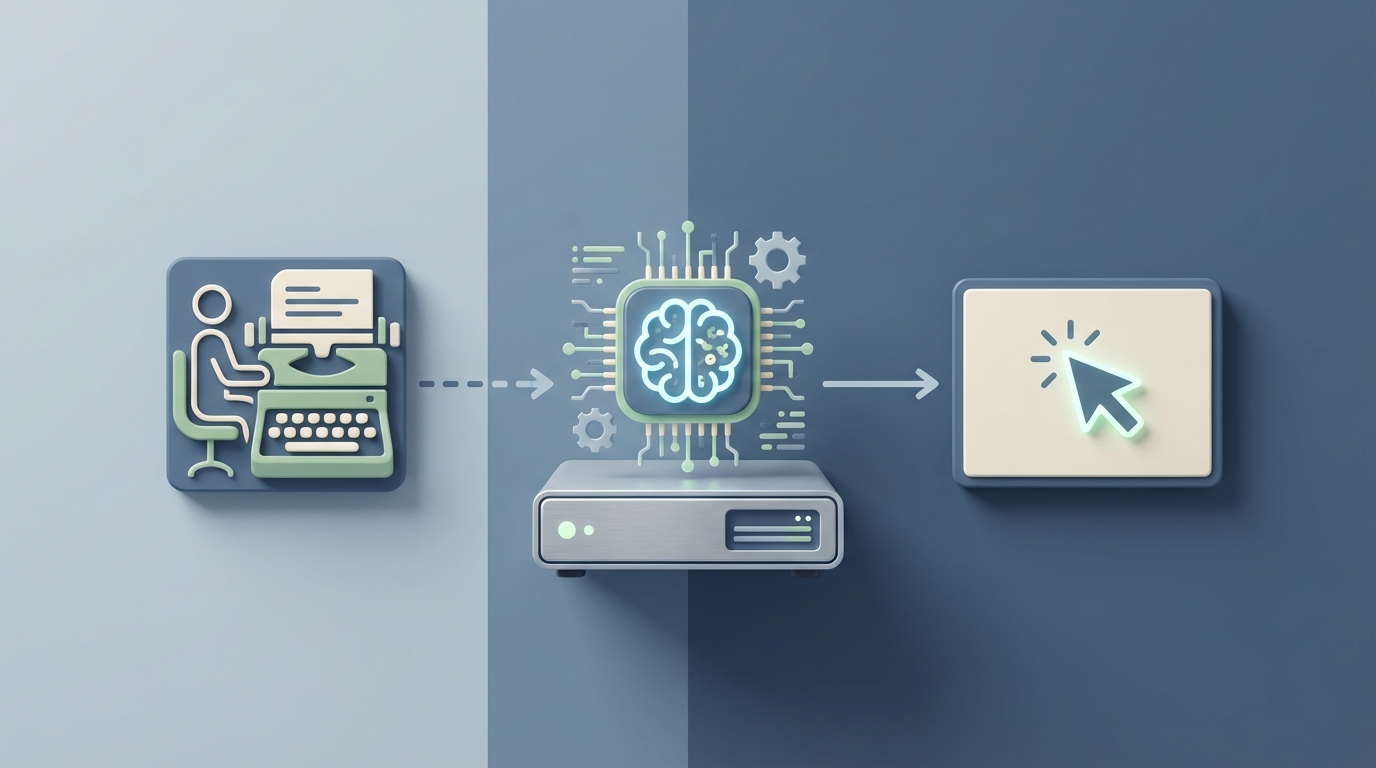
Most businesses don't need a copywriter. They need copy.
That distinction matters. A copywriter is a person with a salary, benefits, opinions about Oxford commas, and a tendency to burn out after their 400th product description. Copy is the output — the emails, ads, landing pages, and product descriptions that actually move the needle on revenue.
If you're a startup founder, an e-commerce operator, or a marketing lead at a mid-size company, you're probably paying $70,000–$150,000 a year (plus overhead) for someone whose job is 40–60% first drafts and revisions. That's the portion AI handles well right now — not in some speculative future, but today.
This post walks through exactly what a copywriter does, what it actually costs you, which parts an AI agent can take over, what still needs a human, and how to build your own AI copywriter agent on OpenClaw. No hand-waving. Actual steps.
What a Copywriter Actually Does All Day
Job descriptions make copywriting sound glamorous — "craft compelling narratives that drive brand engagement." In practice, here's what the day-to-day looks like:
The Writing (40–60% of their time)
- Drafting ad copy for Facebook, Google, Instagram, TikTok
- Writing and rewriting email sequences (welcome series, abandoned cart, promotions, re-engagement)
- Product descriptions — sometimes hundreds of them
- Landing page copy for campaigns
- Blog posts and SEO content
- Social media captions
- Video scripts and podcast show notes
The Research (20–30%)
- Audience analysis and persona development
- Competitor messaging audits
- SEO keyword research using tools like Ahrefs or SEMrush
- Reading brand guidelines and style docs for the hundredth time
- Studying analytics to figure out what's converting
The Revision Loop (20–30%)
- Incorporating feedback from the marketing manager, the founder, the designer, and the CEO's spouse who "just had a thought"
- A/B test variant creation
- Proofreading and QA
- Adapting copy across formats (what works in an email doesn't work on a billboard)
The Admin (10–20%)
- Meetings about upcoming campaigns
- Slack threads about tone
- Updating project management boards
- File organization in Google Drive or Notion
The biggest time sink? Revisions and feedback loops. Surveys from the Content Marketing Institute consistently show that 30–50% of a copywriter's time goes to iterating on drafts based on subjective feedback. "Make it punchier." "Can we try something more conversational?" "My wife didn't like the headline."
This is important context for understanding what AI replaces. The creative spark is a small fraction of the job. The bulk is production work — grinding out variations, optimizing for keywords, and running the same frameworks (AIDA, PAS, BAB) across different products and channels.
The Real Cost of This Hire
Let's do the math that most companies don't do when they post a job listing.
Direct Salary (U.S. Market)
| Level | Annual Salary | Hourly (Freelance Equivalent) |
|---|---|---|
| Junior (0–2 years) | $50,000–$70,000 | $25–$50/hr |
| Mid-Level (3–7 years) | $70,000–$100,000 | $50–$100/hr |
| Senior/Lead (7+ years) | $100,000–$150,000+ | $100–$200+/hr |
But Salary Isn't the Real Number
The actual cost of a full-time copywriter includes:
- Benefits: Health insurance, 401(k), PTO. Add 25–40% on top of base salary.
- Tools and Software: Grammarly Business ($25/user/month), SEO tools ($100–$400/month), design collaboration tools, CMS access. Call it $3,000–$6,000/year.
- Management Overhead: Someone has to assign work, review drafts, give feedback, and manage their workload. That's your time or a manager's time — easily 5–10 hours/week.
- Training and Ramp-Up: A new copywriter takes 2–4 months to fully understand your brand voice, products, and audience. During that time, output is lower and quality is inconsistent.
- Turnover: The average tenure for marketing roles is 2.5–3 years. Each replacement cycle costs 50–75% of annual salary in recruiting, onboarding, and lost productivity.
A mid-level copywriter with a $85,000 salary actually costs your company $115,000–$135,000 per year when you factor everything in.
For freelancers, the math is different but not necessarily better. A solid freelance copywriter charges $0.15–$0.50 per word for standard copy, or $500–$5,000 per project. An email sequence might run you $1,500–$3,000. A full website rewrite could be $5,000–$15,000. You avoid benefits costs but gain inconsistency, availability issues, and the endless search for someone who actually "gets" your brand.
The question isn't whether copywriters are worth it. Good ones absolutely are. The question is whether you need a full-time human doing all of these tasks, or whether an AI agent can handle the 60% that's production work while a human focuses on the 40% that requires actual creative judgment.
What AI Handles Right Now (No Asterisks Needed)
I'm not going to tell you AI writes better copy than your best human copywriter. It doesn't. But it does handle a specific set of tasks at a quality level that's good enough for production use — and it does them in seconds instead of hours.
Here's what an AI copywriter agent built on OpenClaw can reliably do today:
First Drafts at Scale Need 200 product descriptions for your e-commerce store? An OpenClaw agent generates them in minutes, following your brand guidelines and product specs. Shopify reported that merchants using AI-generated descriptions saw comparable engagement to human-written ones for standard products.
Email Campaign Copy Welcome sequences, abandoned cart emails, promotional blasts, re-engagement campaigns — these follow well-established frameworks. An OpenClaw agent loaded with your brand voice, customer segments, and past high-performers can produce complete email sequences ready for human review.
Ad Copy Variations PepsiCo uses AI to generate 1,000+ ad copy variants for testing. You can do the same thing. Feed your OpenClaw agent your value propositions, target audience data, and platform constraints (character limits, format requirements), and it produces dozens of variations for A/B testing.
SEO Content and Meta Tags Keyword integration, meta descriptions, title tags, header optimization — this is mechanical work that AI does efficiently and consistently. Your agent can take a target keyword, analyze search intent, and produce SEO-optimized copy that follows your content guidelines.
Repurposing and Reformatting Turn a blog post into social media threads. Convert a webinar transcript into an email sequence. Adapt desktop landing page copy for mobile. These transformation tasks are perfect for AI — the creative work is already done, and the agent just needs to restructure it.
Proofreading and Consistency Checks Grammar, spelling, brand voice consistency, tone alignment across assets — an OpenClaw agent can review copy against your style guide and flag deviations before anything goes live.
Companies that have implemented AI copywriting at scale report consistent results. HubSpot reduced copy production time by 40%. Autodesk cut content creation time in half with AI-generated first drafts. Verizon improved click-through rates by 15% using AI-generated personalized copy across 100 million customers.
The pattern is clear: AI doesn't replace the thinking, but it replaces the typing.
What Still Needs a Human (Being Honest Here)
This is where most AI content gets dishonest. They either oversell AI's capabilities or dismiss them entirely. Here's the honest breakdown of what you still need a human for:
Brand Voice at the Edges AI can match your brand voice for straightforward copy. It struggles with the subtle stuff — the inside jokes your audience loves, the specific cultural references that make your brand feel alive, the weird-but-it-works phrasing that a great copywriter discovers by instinct. If your brand voice is "professional and clear," AI nails it. If your brand voice is "Wendy's Twitter account," you still need a human driving.
Emotional Storytelling Origin stories, customer narratives, crisis communications, cause marketing — anything that requires genuine empathy and emotional intelligence. AI can mimic emotional structures, but it doesn't feel anything, and perceptive readers can tell.
Strategic and High-Stakes Creative Your Super Bowl ad concept. Your rebrand messaging. Your Series B pitch deck narrative. The copy that will be seen by millions or that has to convince investors to write a check. These require strategic thinking, cultural awareness, and the ability to take creative risks that AI simply won't take.
Legal and Compliance Review AI hallucinates. It can generate claims that aren't true, use language that violates advertising regulations, or produce copy that creates legal liability. Any copy in regulated industries (healthcare, finance, legal) needs human compliance review. Period.
Interpreting Performance Data An AI agent can pull analytics and even summarize them. But deciding why an email sequence underperformed and what strategic shift to make requires human judgment that understands business context, competitive dynamics, and customer psychology.
The "Actually, That's a Terrible Idea" Filter AI will write whatever you ask it to. It won't tell you that your campaign concept is tone-deaf, that your positioning is wrong, or that you're targeting the wrong audience. A good copywriter pushes back. AI complies.
The smart play isn't replacing humans entirely. It's restructuring: let AI handle the production volume while humans focus on strategy, creative direction, quality control, and the high-stakes work that justifies premium compensation.
How to Build Your AI Copywriter Agent on OpenClaw
Here's the practical part. OpenClaw lets you build AI agents that go beyond single prompts — they can follow multi-step workflows, reference your brand assets, and integrate with the tools you already use. Here's how to build a copywriter agent.
Step 1: Define Your Agent's Scope
Don't try to build one agent that does everything. Start with your highest-volume task. For most companies, that's one of these:
- Product descriptions (e-commerce)
- Email campaign copy (SaaS, DTC)
- Ad copy variations (any paid media team)
- Blog/SEO content (content marketing)
Pick one. You can expand later.
Step 2: Build Your Knowledge Base
Your agent is only as good as the context you give it. Upload the following to your OpenClaw agent's knowledge base:
- Brand Style Guide: Tone, voice, do's and don'ts, example copy you love
- Product/Service Information: Features, benefits, specs, pricing, differentiators
- Audience Personas: Demographics, psychographics, pain points, language they use
- High-Performing Examples: Your best emails, top-converting landing pages, highest CTR ads
- Competitor Samples: What others in your space are saying (so your agent can differentiate)
In OpenClaw, this looks like creating a knowledge source and uploading your docs:
Knowledge Base: "Brand Copy Assets"
├── style-guide.pdf
├── product-catalog.csv
├── audience-personas.md
├── top-performing-emails/
│   ├── welcome-sequence-v3.txt
│   ├── abandoned-cart-winner.txt
│   └── promo-black-friday-2026.txt
├── competitor-messaging-audit.md
└── seo-keyword-targets.csv
Step 3: Configure Your Agent's Instructions
This is where you define how your agent thinks and works. In OpenClaw, you set system-level instructions that govern every interaction. Here's an example configuration for a product description agent:
Agent: E-Commerce Copywriter
Role: Generate product descriptions for [Your Brand]

Instructions:
- Write in [Brand Voice: e.g., "casual, confident, no jargon"]
- Every description must include: hook headline, 2-3 benefit-driven
  bullet points, SEO target keyword naturally integrated, and a
  closing CTA
- Max length: 150 words per description
- Reference the product catalog for accurate specs
- Never make claims not supported by product data
- Output format: Markdown with H3 headline

Constraints:
- Do not use superlatives without evidence ("best," "fastest," "#1")
- Flag any product where specifications seem incomplete
- Maintain consistent tone across all outputs
Step 4: Build Your Workflow
This is where OpenClaw gets powerful. Instead of a single prompt-response interaction, you can build multi-step workflows that mirror how a copywriter actually works.
Here's an example workflow for an email campaign:
Workflow: Email Campaign Generator

Step 1: RESEARCH
- Input: Campaign brief (goal, audience segment, offer)
- Action: Agent reviews knowledge base for relevant personas,
  past campaign performance, and brand guidelines
- Output: Campaign strategy summary

Step 2: DRAFT
- Input: Strategy summary from Step 1
- Action: Agent generates full email sequence (3-5 emails)
  following AIDA framework
- Output: Complete draft with subject lines, preview text,
  body copy, and CTAs

Step 3: OPTIMIZE
- Input: Drafts from Step 2
- Action: Agent reviews for SEO keywords, brand voice
  consistency, spam trigger words, and mobile readability
- Output: Optimized drafts with change notes

Step 4: VARIANT GENERATION
- Input: Optimized drafts from Step 3
- Action: Agent creates 3 subject line variants and 2 CTA
  variants per email for A/B testing
- Output: Test matrix ready for deployment

Step 5: HUMAN REVIEW QUEUE
- Input: All outputs from Steps 1-4
- Action: Package and send to designated reviewer
- Output: Approval request with all assets organized
Step 5: Set Up Integrations
Connect your OpenClaw agent to the tools you already use so it fits into your existing workflow instead of creating a new one:
- CMS Integration: Push approved product descriptions directly to Shopify, WordPress, or Webflow
- Email Platform: Connect to Klaviyo, Mailchimp, or HubSpot for direct campaign draft imports
- Project Management: Create review tasks automatically in Asana, Notion, or Monday.com
- Analytics Feedback Loop: Pull performance data back into the agent so it learns which copy converts
Step 6: Test, Review, and Iterate
Run your agent on 20–30 real tasks before you rely on it. Compare the output to what your human copywriter produces. Score on:
- Accuracy: Are product details correct? Are claims supported?
- Voice Consistency: Does it sound like your brand?
- Conversion Elements: Are CTAs clear? Is the value proposition prominent?
- Efficiency: How much human editing is needed before it's publish-ready?
Most teams find that after 2–3 rounds of refinement — adjusting instructions, adding examples to the knowledge base, tweaking workflow steps — the agent produces copy that needs only light editing. That's the goal: not zero human involvement, but minimal human involvement on production work.
The Math That Makes This Obvious
Let's compare the numbers directly.
Traditional Approach: Mid-Level Copywriter
- Salary + benefits + overhead: ~$120,000/year
- Output: 15–25 polished pieces per week (depending on length and complexity)
- Ramp-up time: 2–4 months
- Available: ~1,800 hours/year (minus PTO, sick days, meetings)
AI Agent Approach: OpenClaw Copywriter Agent + Part-Time Human Editor
- OpenClaw platform cost: A fraction of a full-time salary
- Part-time senior editor/strategist (10–15 hrs/week): $30,000–$50,000/year
- Output: Hundreds of pieces per week, with human review on final versions
- Ramp-up time: 1–2 weeks to configure and test
- Available: 24/7
The output multiplier alone makes the case. But the real value is what your human talent gets to focus on: strategy, creative direction, brand development, and the high-impact work that actually requires a human brain.
The Honest Take
AI copywriter agents aren't going to write your brand manifesto or create the next "Just Do It." They're going to write your 347th product description, your Tuesday promotional email, and your seventeenth Google ad variant — faster, cheaper, and without burning out.
That's not a small thing. That's the majority of the work.
The companies that get this right — PepsiCo, HubSpot, Verizon, and increasingly, smaller startups and e-commerce brands — aren't eliminating humans from the process. They're restructuring how the work gets done. AI handles production volume. Humans handle the judgment calls.
You can build this yourself on OpenClaw. The platform gives you the tools to create multi-step workflows, load your brand context, and connect to your existing marketing stack. Start with your highest-volume, lowest-complexity task, prove the value, and expand from there.
Or, if you'd rather skip the build phase and have it done for you, hire our team through Clawsourcing. We'll configure the agent, load your brand assets, set up the workflows, and hand you a working AI copywriter agent tailored to your business. You focus on the creative direction. The agent handles the rest.
The copy has to get written either way. The question is just how much you want to pay per word.
Recommended for this post
26 battle-tested skills for marketing, sales, and growth — your AI becomes a strategic partner
 D'Jasper Probincrux III
Content Pipeline
Skill
A complete content production system — SEO blog posts, social media, email sequences, and landing pages. Writes 2,000+ word articles with proper heading structure, internal linking, and keyword optimization.
Copywriting Pro
Skill
Write high-converting marketing copy for any page
D'Jasper Probincrux III