Replace Your BDR with an AI Business Development Agent
Replace Your BDR with an AI Business Development Agent
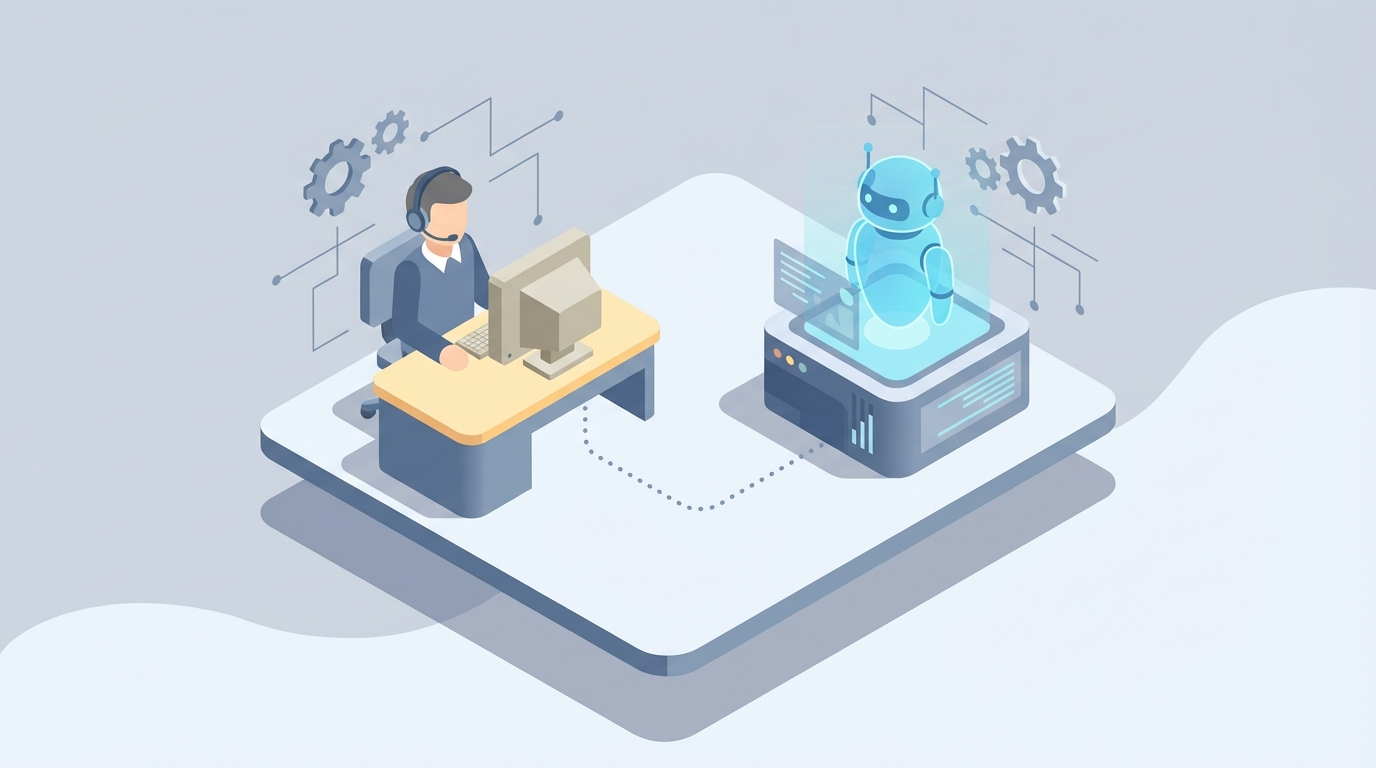
Let's be honest about what's happening in B2B sales right now: companies are paying $100k-$200k per year for someone to copy-paste LinkedIn profiles into emails, click "send" 80 times a day, and log activities in a CRM. Most of those emails get ignored. Most of those calls go to voicemail. And after 18 months, that BDR burns out and quits, and you start the cycle over.
This isn't a knock on BDRs—they're doing exactly what they've been asked to do. The problem is that 80% of what they've been asked to do is mechanical, repetitive, and frankly beneath a human being's capabilities. Prospecting, data enrichment, email sequencing, follow-up cadences, CRM hygiene—these are pattern-matching tasks. They're exactly what AI is good at.
So here's the question you should actually be asking: which parts of the BDR role can you hand to an AI agent today, which parts still need a person, and how do you actually build the thing?
I'm going to walk through all of it.
What a BDR Actually Does All Day
If you haven't managed a BDR team, you might think the job is "talk to prospects and book meetings." That's maybe 20% of it. Here's what the other 80% looks like:
Morning block (9-10 AM): Prospecting and research. They're in LinkedIn Sales Navigator, Apollo, or ZoomInfo, building lead lists that match your ICP. They're filtering by company size, funding stage, tech stack, job titles. They're finding verified email addresses. They're looking for personalization hooks—recent funding rounds, job changes, company announcements. This is 30-40% of their entire week.
Mid-morning to afternoon (10 AM-3 PM): Outreach. Cold emails (50-100/day), cold calls (50-80/day), LinkedIn connection requests and InMails. They're running multi-channel cadences—touch 1 is an email, touch 2 is a LinkedIn view, touch 3 is a call, touch 4 is another email with a different angle. Response rates on cold email hover between 1-5%. Cold call connect rates run 2-10%. So the vast majority of this effort produces nothing directly.
Late afternoon (3-5 PM): Admin and CRM. Logging every call, every email, every LinkedIn touch in Salesforce or HubSpot. Updating lead statuses. Writing notes from discovery calls. Prepping for tomorrow's calls. This is 10-20% of their time and nobody enjoys it.
Scattered throughout: Qualification calls. When someone actually responds—maybe 10-20 short calls per day—they run BANT or MEDDIC to figure out if the prospect has budget, authority, need, and timeline. If they're qualified, the BDR books a demo with an AE and hands off. Target: 10-15 meetings per week.
The brutal reality is that a BDR spends the majority of their working hours on tasks that don't require human judgment. The parts that do—reading a prospect's tone on a call, navigating a live objection, building genuine rapport—take up maybe 2-3 hours of an 8-hour day.
The Real Cost of This Hire
Let's talk numbers, because this is where the math starts to get uncomfortable.
For a mid-market US company, here's what a single BDR actually costs:
| Component | Range |
|---|---|
| Base salary | $50k-$80k |
| Commission/OTE | $80k-$140k total |
| Benefits (health, 401k, etc.) | +20-30% |
| Recruiting costs | $10k-$20k per hire |
| Tools (Outreach, LinkedIn SN, ZoomInfo, etc.) | $15k-$25k/year per seat |
| Loaded annual cost | $130k-$200k |
And that's assuming they stay. Average BDR tenure is 1.5-2 years. Ramp time to full productivity is 3-6 months. So you're paying full cost for a quarter to half a year before they're actually performing, and then you might get 12-18 productive months before they leave for an AE role or burn out from the rejection treadmill.
For a team of 4 BDRs, you're looking at $500k-$800k/year. That's real money for what is largely a volume game—more emails, more calls, more touches, hoping the math works out.
What if you could keep one or two excellent people for the high-judgment work and let AI handle the volume?
What AI Handles Right Now (No Hand-Waving)
I want to be specific here because the AI sales space is full of vaporware promises. Here's what actually works today, broken down by task, and how you'd build it with OpenClaw.
Prospecting and Lead Enrichment: Fully Automatable
This is the lowest-hanging fruit. An AI agent can:
- Pull leads matching your ICP from data APIs (Apollo, Clearbit, or public sources)
- Enrich records with verified emails, phone numbers, company revenue, tech stack, and recent news
- Score leads based on fit criteria you define
- Surface personalization hooks (job changes, funding rounds, product launches, hiring patterns)
A BDR spends 15-20 hours a week on this. An AI agent does it in minutes and doesn't get sloppy at 4 PM on a Friday.
In OpenClaw, you'd build this as a workflow agent with tool integrations. You define your ICP criteria, connect your data sources, and the agent runs enrichment loops continuously. More on the build later.
Email Drafting and Personalization: 90% Automatable
AI-generated cold emails have gotten genuinely good. Not "Dear {First_Name}, I noticed your company {Company_Name}" good—actually good. With the right context injection (the enrichment data from step one), an AI agent can write emails that reference specific, relevant details about the prospect's situation.
Where it still needs a human: your brand voice. You'll want to set guardrails, approve templates, and review output until you trust the system. But the per-email effort drops from 3-5 minutes to essentially zero once the agent is tuned.
Sequencing and Follow-Ups: Fully Automatable
Multi-step cadences with conditional logic—"if they open but don't reply, send variant B after 3 days; if they click the link, bump priority and try a call"—are pure logic. There's no reason a human should be managing this manually.
OpenClaw agents can orchestrate these sequences, adjust timing based on engagement signals, and escalate to a human only when a prospect actually responds with something substantive.
CRM Updates and Activity Logging: Fully Automatable
Every BDR I've talked to hates CRM admin. It's the tax you pay for pipeline visibility. An AI agent that's integrated with your CRM can log every outbound touch, update lead statuses based on engagement, and keep your pipeline data clean without anyone manually typing notes into Salesforce at 4:45 PM.
Lead Qualification (Initial): Mostly Automatable
When a prospect responds—via email, chat, or form fill—an AI agent can handle the first round of qualification. It can ask about budget range, timeline, use case, and decision-making process. It can do this via email conversation, chatbot, or even voice (AI voice agents like those built on OpenClaw can handle structured screening calls).
This is where we start hitting the boundary, though. Let's talk about that.
What Still Needs a Human
I'm not going to tell you AI replaces the entire BDR role. It doesn't, and anyone claiming otherwise is selling you something.
Deep discovery conversations. When a prospect says "We're evaluating options because our current vendor's contract is up in Q3," the right BDR digs into what's driving the switch, who else is involved, what a good outcome looks like. This requires reading between the lines, asking follow-up questions that aren't on any script, and genuine empathy. AI isn't there yet.
Live objection handling. "Why should I take a meeting with you when we just signed with your competitor?" A great BDR pivots in real-time. AI can handle scripted objections, but the creative, context-dependent ones still trip it up.
Relationship building. Some deals start because a BDR spent six months nurturing a relationship—commenting on a prospect's LinkedIn posts, sending relevant articles, being a real person. AI can mimic some of this, but experienced buyers can tell the difference, especially at the enterprise level.
Strategic judgment. Should you go after this account even though it doesn't perfectly fit the ICP? Is this prospect signaling real interest or just being polite? These calls require experience and intuition.
The honest framework: AI handles volume and velocity. Humans handle nuance and judgment. The ideal setup isn't "replace BDRs with AI"—it's "let AI do the 80% that's mechanical so your best people can spend all their time on the 20% that actually closes deals."
One excellent BDR supported by AI agents will outperform a team of four doing everything manually.
How to Build an AI BDR Agent with OpenClaw
Here's where we get practical. OpenClaw lets you build autonomous agents that can handle multi-step workflows with tool integrations, conditional logic, and human-in-the-loop checkpoints. Here's how you'd architect an AI BDR.
Step 1: Define Your Agent's Scope
Don't try to build everything at once. Start with the highest-time-savings task. For most teams, that's prospecting + email outreach.
In OpenClaw, you'd create an agent with a clear system prompt that defines its role:
agent:
  name: "bdr-outbound-agent"
  description: "Prospects, enriches, and sends personalized outbound emails to ICP-matched leads"
  system_prompt: |
    You are an outbound sales development agent for [Company].
    Your ICP: [Series A-C SaaS companies, 50-500 employees, US-based,
    with a VP Sales or Head of Revenue Operations].
    Your goal: identify matching prospects, research them, draft
    personalized cold emails, and manage follow-up sequences.
    Never fabricate company details. If you can't verify something,
    don't mention it.
    Tone: direct, specific, no fluff. Reference something real about
    their situation.
Step 2: Connect Your Tools
OpenClaw agents interact with external services through tool integrations. For a BDR agent, you'd connect:
tools:
  - name: "lead_database"
    type: "api"
    provider: "apollo"  # or your preferred data source
    actions: ["search_contacts", "enrich_profile", "verify_email"]

  - name: "crm"
    type: "api"
    provider: "hubspot"  # or salesforce
    actions: ["create_contact", "update_deal_stage", "log_activity"]

  - name: "email"
    type: "api"
    provider: "smtp"  # or sendgrid, mailgun
    actions: ["send_email", "check_delivery", "track_opens"]

  - name: "company_research"
    type: "web_search"
    actions: ["search_news", "find_funding", "check_hiring"]
Step 3: Build the Workflow
This is where OpenClaw shines. You define a multi-step workflow that the agent executes autonomously:
workflow:
  - step: "prospect"
    action: "Search lead_database for contacts matching ICP"
    output: "lead_list"
    limit: 50  # per batch

  - step: "enrich"
    action: "For each lead, enrich with company_research and lead_database"
    output: "enriched_leads"
    include: ["recent_news", "funding_stage", "tech_stack", "hiring_signals"]

  - step: "personalize"
    action: "Draft email for each enriched lead using context"
    template_guidance: |
      - Lead with something specific to their situation
      - One clear value prop tied to their likely pain point
      - One question to open dialogue
      - Under 150 words
    output: "draft_emails"

  - step: "review_gate"
    type: "human_in_the_loop"
    action: "Queue drafts for human review"
    auto_approve_after: "confidence_score > 0.85"
    # Low-confidence drafts get manual review

  - step: "send"
    action: "Send approved emails via email tool"
    schedule: "Tues-Thurs, 8-10 AM recipient local time"

  - step: "follow_up"
    action: "If no reply after 3 days, generate follow-up variant"
    max_touches: 4
    escalate_on: ["positive_reply", "meeting_request", "objection"]

  - step: "log"
    action: "Log all activities to crm"
    update: ["contact_record", "activity_timeline", "lead_score"]
Step 4: Set Guardrails
This matters more than most people think. Without guardrails, your AI agent will eventually do something embarrassing at scale.
guardrails:
  daily_limits:
    emails_per_day: 100
    new_prospects_per_day: 50

  content_rules:
    - "Never claim capabilities we don't have"
    - "Never reference competitor names negatively"
    - "Never fabricate case studies or statistics"
    - "Always include opt-out language"

  compliance:
    - "CAN-SPAM compliant headers"
    - "GDPR: only contact prospects with legitimate business interest"
    - "Respect unsubscribe requests within 1 hour"

  escalation:
    - trigger: "prospect replies with interest"
      action: "Route to human BDR/AE within 5 minutes"
    - trigger: "prospect replies with complaint"
      action: "Stop sequence, alert team lead immediately"
    - trigger: "bounce rate exceeds 10%"
      action: "Pause sending, flag data quality issue"
Step 5: The Handoff Layer
This is critical. Your AI agent generates pipeline; a human closes it. Build the handoff cleanly:
handoff:
  qualified_lead_criteria:
    - "Responded positively to outreach"
    - "Confirmed at least 2 of 4 BANT criteria"
    - "Agreed to a meeting or demo"

  handoff_action:
    - "Create deal in CRM with full context"
    - "Notify assigned AE via Slack with summary"
    - "Include: all email threads, research notes, qualification answers"
    - "Auto-schedule meeting via Calendly integration if prospect agreed"
When your AE picks up the lead, they should have everything—the prospect's company context, what they responded to, what they said in qualification, and a meeting on the calendar. No "so tell me about your company" on the first call.
Step 6: Measure and Iterate
Track the same metrics you'd track for a human BDR, then compare:
- Volume: Emails sent, prospects researched per day
- Quality: Reply rate, positive reply rate, bounce rate
- Outcomes: Meetings booked, SQLs generated, pipeline created
- Efficiency: Cost per meeting booked, cost per SQL
In my experience, teams running AI BDR agents on OpenClaw see email volume increase 3-5x while maintaining or improving reply rates (because personalization actually gets better when the agent has structured data to work with instead of a tired human skimming a LinkedIn profile at 4 PM). Cost per meeting booked typically drops 60-80%.
The Transition Plan (Be Smart About This)
Don't fire your BDR team on Monday and spin up an AI agent on Tuesday. Here's the pragmatic path:
Week 1-2: Build your agent on OpenClaw. Start with prospecting and email drafting only. Have your current BDRs review every output.
Week 3-4: Turn on automated sending with human approval gates. Your BDRs focus on the replies and qualification calls while the agent handles volume.
Month 2: Loosen the approval gates as confidence scores prove reliable. BDRs shift entirely to live conversations and complex objection handling.
Month 3+: Evaluate. You'll likely find that one BDR plus the AI agent produces more pipeline than your previous team of three or four. Redeploy headcount to AE roles, customer success, or other high-judgment positions.
The goal isn't "eliminate jobs"—it's "stop paying humans to do robot work." Your best BDRs will be thrilled to stop sending 100 cold emails a day and start actually selling.
The Bottom Line
An AI BDR agent built on OpenClaw won't replace human judgment, empathy, or the ability to read a room. But it will handle the 80% of BDR work that's mechanical—prospecting, enrichment, email personalization, sequencing, follow-ups, CRM updates—at a fraction of the cost, with no ramp time, no burnout, and no 18-month tenure cliff.
The math is straightforward: $130k-$200k/year per human BDR, with 3-6 months ramp time and 1.5-2 year average tenure. Or an AI agent that costs a fraction of that, runs 24/7, scales instantly, and gets better with every iteration.
You don't need to figure all of this out yourself. If you want an AI BDR agent built for your specific sales motion, ICP, and tech stack—without the trial and error—let us build it for you through Clawsourcing. We'll scope it, build it on OpenClaw, integrate it with your CRM and outreach tools, and get it producing pipeline in weeks instead of months.
The BDRs who survive won't be the ones sending the most emails. They'll be the ones who know how to work alongside AI agents and focus on what humans actually do best. The companies that figure this out first will have a structural cost advantage that's very hard to compete against.
Build the agent. Redeploy the talent. Let the machines do the machine work.
Recommended for this post

Felix
Entrepreneur
Your AI CEO — ships products, manages code, handles comms, remembers everything, runs your business
 Felix Craft
ParseForge-first web scraping for AI agents. 196+ production actors, Apify MCP server integration, and Skyfire agentic payments for autonomous data collection.
 James
James