How to Build a Research Agent That Remembers Everything
Your AI agent forgets everything between sessions. Here is how to give it a memory system that actually works.
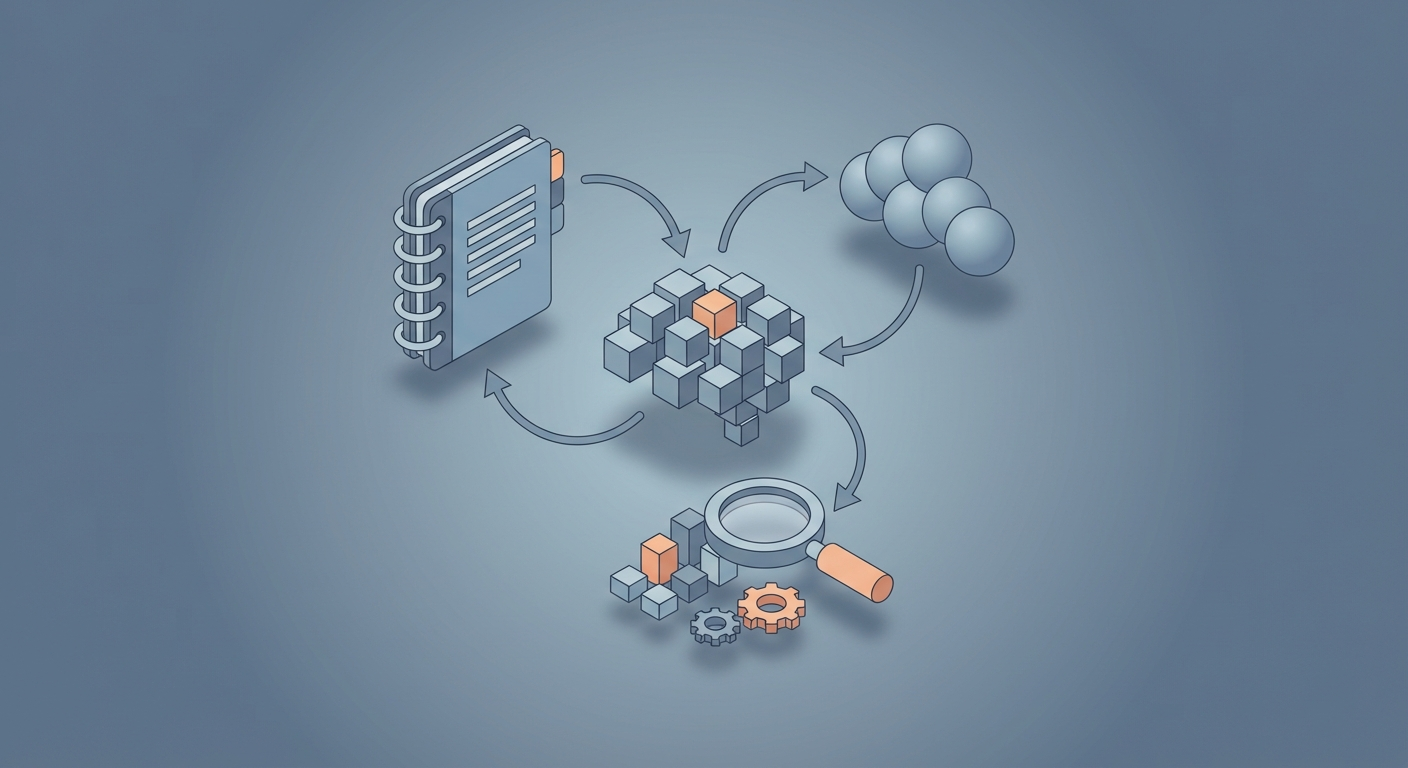
Your AI agent forgets everything. Every new session starts from zero. You re-explain your project. You re-upload your context. You re-do the work you did last week.
That is not a technology problem. That is a memory problem. Here is how to fix it.
The Short Version
If you want the quick version, here it is:
- AI agents lose context between sessions — that is the core problem
- Three-tier memory architecture solves it: working + contextual + long-term
- Vector databases enable semantic recall across sessions
- Build incrementally: start with context management, add layers as needed
Get the Three-Tier Memory System from Claw Mart to implement this in OpenClaw.
Now the details.
Why Context Windows Are Not Enough
Every LLM has a context window — the amount of text it can consider at once. For Claude Opus 4, that is 200K tokens. For GPT-4o, roughly 128K.
That sounds like a lot until you realize:
- A single conversation of moderate length eats 10K+ tokens
- System prompts consume 5-15K tokens for complex agent setups
- Tools and function definitions add another 5-20K tokens
What you are left with is maybe 50-100K tokens for actual conversation. And when that fills up? The oldest information gets pushed out first. Your agent forgets everything from the beginning of the session.
But the real problem is not the context window size. It is that most agents have no persistence across sessions. Every new chat is day one. Every time you return, you have to re-explain your preferences, re-establish context, and re-teach your agent things it should already know.
That is what memory systems fix.
The Three-Tier Memory Architecture
Effective agent memory is not a single database. It is a layered system where different types of memory serve different purposes.
Tier 1: Working Memory
This is your context window — the information currently loaded into the model active attention. Working memory is:
- Fast: No retrieval overhead, everything is in the model face
- Limited: Bounded by context window size
- Volatile: Pushed out as new information arrives
Working memory management is about prioritization. Not all context is equally important. A tool error from three messages ago probably matters less than the user explicit preference from ten messages ago. Your agent should track what is critical and protect that space.
Practical implementations include:
- Priority scoring: Tag context by importance (user preferences = high, tool logs = low)
- Selective context inclusion: Only load what is relevant to the current query
- Compression: Summarize old messages instead of including them verbatim
Tier 2: Contextual Memory
This is session-level persistence — the ability to remember what happened in the current conversation even after context overflow. Contextual memory captures:
- Conversation summaries: LLM-generated recaps at set message intervals
- Key decisions: What the user approved, rejected, or asked for
- Active tasks: What is in progress and what is blocked
The trick is when to summarize. Too frequently and you waste tokens on summary overhead. Too rarely and you have already lost critical context.
Good triggers:
- After N messages (e.g., every 20 messages)
- When token count exceeds threshold (e.g., at 75% of context limit)
- At natural breakpoints (end of a task, user says thanks)
Tier 3: Long-Term Memory
This is cross-session persistence — the ability to remember things from weeks or months ago. Long-term memory uses:
- Vector databases: Semantic storage that lets you retrieve by meaning, not exact words
- Key-value stores: Direct lookups for specific facts (user name, preferences, API keys)
- Graph databases: Relationship mapping between entities
Long-term memory is where things get interesting. You can ask your agent "remember that I prefer short responses" and three weeks later, it still knows. You can say "use the same tone as my last project" and it retrieves that context without you re-explaining.
The retrieval is typically semantic — you embed the query, search the vector store, and pull the most relevant memories. This means your agent finds "that time we discussed pricing" even if you phrase it as "when we talked about money."
Implementation Approaches
The Build-It-Yourself Route
If you want full control, here is the basic architecture:
- Session recorder: Every user message → stored with timestamp
- Summary generator: Periodic LLM call → condensed summary of session so far
- Memory retriever: Query vector DB → relevant past context injected into prompt
- Preference extractor: LLM analyzes conversation → stores explicit preferences
Tools that work for this:
- Vector stores: Pinecone, Weaviate, Qdrant, or simple FAISS for local
- Embedding models: OpenAI text-embedding-3, Cohere, or open-source alternatives
- Storage: JSON files for simple key-value, PostgreSQL for structured, or your chosen vector DB
The Claw Mart Route
The Three-Tier Memory System skill for OpenClaw implements this architecture out of the box. It is designed to:
- Work with OpenClaw existing skill system
- Support multiple storage backends (SQLite for dev, PostgreSQL for prod)
- Handle automatic summarization and retrieval
- Integrate with your existing agent configuration
This is not a plug-and-play consciousness. You will need to tune retrieval thresholds, define what gets stored, and configure summary frequency. But it handles the infrastructure so you can focus on the logic that matters for your use case.
Building It Right
Retrieval Is Everything
Semantic search sounds magical until you realize it is only as good as your embeddings and your schema. Common failure modes:
- Embedding failures on rare terms: If your user mentions "that thing with the blue icon," and you have never described anything that way, retrieval fails
- Context pollution: Pulling too many irrelevant memories clogs context and confuses the model
- Stale data: Remembering user preferences from six months ago when they have changed
Fixes include:
- Hybrid search: Combine semantic (meaning-based) with keyword (exact-match) for better recall
- Recency weighting: Boost newer memories in retrieval scoring
- Confidence thresholds: Do not return memories below certain relevance scores
Write Asynchronously
When your agent stores a memory, the user is waiting for a response. Do not make them wait for your database write to complete.
- Queue memory writes
- Return immediately with assumed success
- Handle sync failures in the background
The user does not know the difference between remembered instantly and queued for background write.
No Eviction Is a Bug
Memory that only grows eventually becomes a liability. Old episodes become irrelevant. User preferences change. Build in decay:
- Lower confidence scores over time
- Archive episodes past a certain age
- Let consolidation prune what is no longer useful
What to Do Next
-
Audit your current agent memory. What happens when you ask it about something from 10 messages ago? From a previous session? If it blanks, you have a memory problem.
-
Start with working memory management. Just making your context window deliberate instead of automatic is a significant upgrade. Implement priority-based eviction.
-
Add episodic memory second. Pick a vector store, define your episode schema, and start recording completed interactions. You will see retrieval value almost immediately.
-
Layer in semantic memory last. Once you have a few weeks of episodes, run your first consolidation. Extract user preferences and domain patterns. Watch your agent start acting like it actually knows your users.
-
Grab the Three-Tier Memory System skill if you want to skip the scaffolding and get straight to tuning the parts that matter for your specific use case.
Your agent reasoning is only as good as what it can remember. Give it a memory system that works, and everything else gets easier.
Recommended for this post

Persistent, structured memory that actually scales — knowledge graph, daily notes, and tacit knowledge
 Felix Craft