OpenClaw for Breweries: Automate Taproom Events and Distribution
How breweries can use OpenClaw to automate taproom events, distribution tracking, and customer engagement.
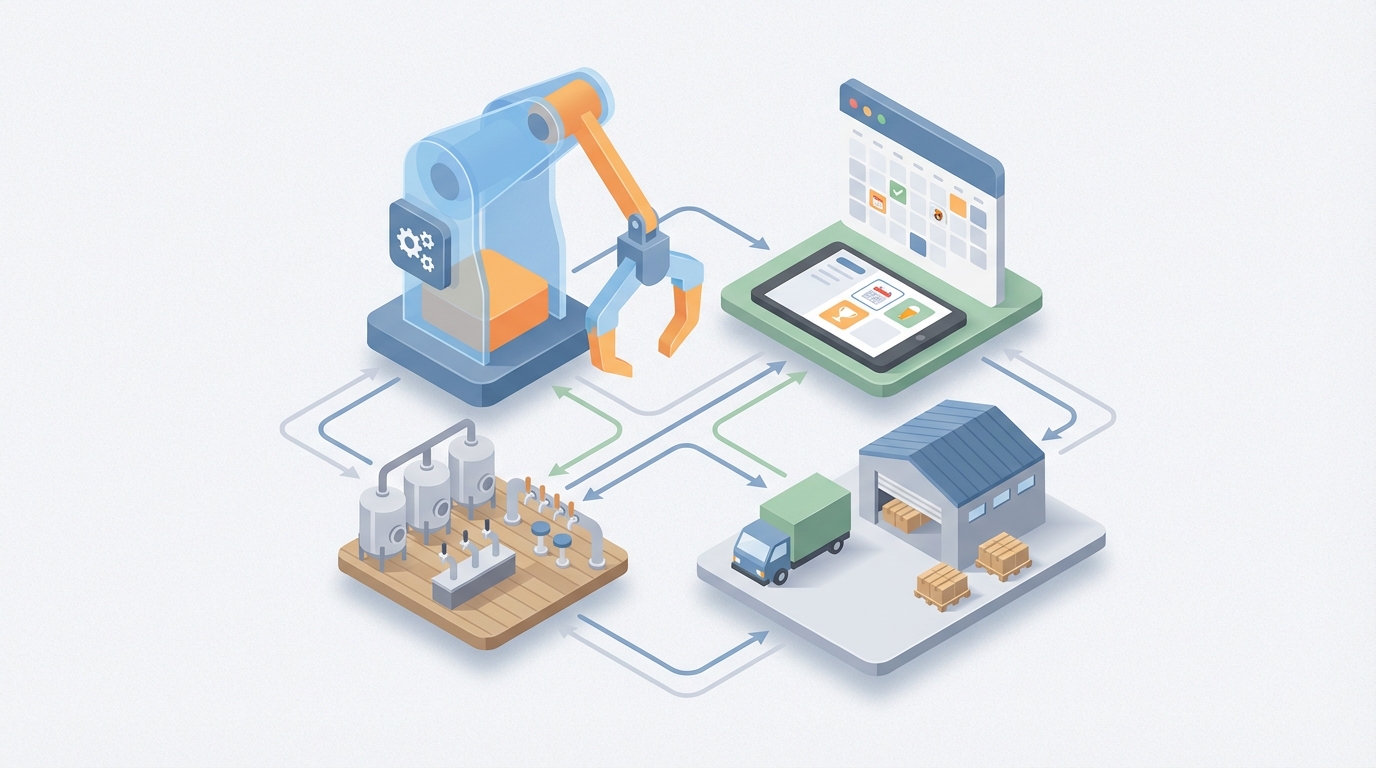
Most brewery owners I talk to didn't get into this business to spend their Wednesdays updating spreadsheets, chasing RSVPs for a trivia night, or manually texting their distributor about a late keg shipment. They got into it to make great beer. But here's the reality: the operational overhead of running a taproom, managing distribution, keeping a beer club alive, and staying relevant on social media is absolutely crushing small teams.
The average craft brewery has maybe 5-15 employees doing the work of 30. Taproom events get promoted with copy-pasted Instagram stories an hour before they start. Distribution tracking lives in a Google Sheet that three people edit simultaneously and nobody trusts. The beer club sends the same shipment to everyone regardless of whether they prefer stouts or sours. And customer feedback? It goes into a black hole.
This is where AI automation stops being a buzzword and starts being the difference between a brewery that's scraping by and one that's actually growing. And specifically, this is where OpenClaw comes in. Not as some abstract "AI strategy" — as a concrete platform where you build agents that do the tedious work for you, plugged directly into the tools you already use.
Let me walk through exactly how this works across the major pain points brewery operators face every single day.
Taproom Event Promotion That Actually Fills Seats
Here's a stat that should bother you: the average brewery event RSVP-to-attendance rate hovers around 60-70%. That means 30-40% of your "confirmed" guests are no-shows. And that's assuming you even got decent RSVPs in the first place, which — if you're relying on a flyer taped to the bar and a single Instagram post — you probably didn't.
The problem isn't that people don't want to come. It's that promotion is inconsistent, reminders don't go out, and there's no system handling the back-and-forth of "What time does it start?" and "Can I bring my dog?" while you're elbow-deep in a grain bill.
With OpenClaw, you build an event promotion agent that handles this end to end. Here's what the workflow looks like:
Step 1: Event creation triggers the agent. When you add an event to your calendar (Google Calendar, Eventbrite, even a simple Airtable), the OpenClaw agent picks it up and generates promotional copy — Instagram captions, email blasts, SMS messages — tailored to the event type. A tap takeover gets different language than a live music night.
Step 2: The agent schedules posts at optimal times. Instead of you guessing when to post, the agent analyzes your past engagement data and pushes content when your audience is actually online. This alone can boost RSVPs 25-50% based on what platforms like Eventbrite have documented.
Step 3: Automated RSVP handling and reminders. The agent responds to DMs and texts with event details, confirms RSVPs, and sends reminder sequences — 3 days out, day-of, and an hour before. No-show rates drop dramatically when people get a "See you tonight at 7! First beer's on us 🍺" text at 5 PM.
Step 4: Post-event follow-up. The agent sends a thank-you message with a feedback link and a teaser for the next event. This keeps your flywheel spinning without you lifting a finger.
You could cobble something like this together with five different tools and a rats' nest of Zapier connections. Or you could build one OpenClaw agent that owns the entire flow. The agent lives in your OpenClaw workspace, connects to your existing platforms via API, and runs autonomously. You set it up once, tweak it as needed, and get back to brewing.
If you need the hardware side — a kiosk for in-taproom RSVPs, QR code displays, NFC tap-to-RSVP setups — that's where Claw Mart comes in. Claw Mart is the marketplace where you can grab pre-configured hardware bundles designed to work with OpenClaw agents out of the box. Think of it as the physical layer that makes your AI agents tangible in your taproom.
Distribution Tracking That Doesn't Make You Want to Scream
Distribution is where small breweries hemorrhage money quietly. Stockouts cost the average craft brewery 15-20% of potential sales. Overstocking leads to waste — beer has a shelf life of roughly 90 days, and every unsold keg past its prime is money down the drain. And the tracking? It's a nightmare. You've got distributor portals that haven't been updated since 2014, sales reps who text you orders, and a spreadsheet that was "temporary" three years ago.
Here's what an OpenClaw distribution agent does:
Demand forecasting: The agent pulls your sales history from your POS (Square, Toast, whatever you use), cross-references it with local event calendars, weather data, and seasonal trends, and predicts what you'll need where. This isn't magic — it's basic ML pattern matching, but it's shockingly effective when you actually feed it data instead of going on gut feel.
Automated reorder alerts: When inventory at a retail account drops below a threshold the agent calculates (not a static number you set — an intelligent threshold based on that account's velocity), it fires off an alert. This goes to you via Slack or email, and optionally straight to the distributor as a suggested PO.
Shipment tracking and delay prediction: If you're using any kind of logistics platform, the agent monitors shipment status and flags probable delays before they become problems. "Heads up: the shipment to Whole Foods on 5th is likely delayed 2 days based on carrier patterns. Want me to notify the account manager?"
The practical implementation here is straightforward in OpenClaw. You create an agent, connect your data sources (POS API, distributor portal if they have one, even just a shared Google Sheet if that's all you've got), define your alert rules, and let it run. The agent gets smarter over time as it accumulates more data about your specific distribution patterns.
One brewery I'm aware of cut stockouts by 30% and saved over $50K annually in waste just by implementing predictive reorder alerts. That's not a rounding error — for a small brewery, that's a new fermenter.
Beer Club Management That Actually Retains Members
Beer clubs and subscriptions should be a brewery's most reliable revenue stream. In practice, they're a retention nightmare. Annual churn rates hit 20-40%, mostly because members get bored receiving the same stuff, forget to update their payment info, or feel like the club isn't worth the price.
The fix is personalization and proactive communication, both of which are impossible to do manually at any meaningful scale.
An OpenClaw beer club agent handles:
- Preference learning: Every purchase, rating, and interaction feeds the agent's understanding of each member's taste profile. Over time, it segments members automatically — hopheads, sour lovers, stout enthusiasts, the adventurous "surprise me" crowd.
- Custom box curation: Instead of everyone getting the same four-pack, the agent suggests (or automatically builds) personalized shipments. This alone addresses the #1 cancellation reason: "I kept getting beers I didn't like."
- Churn prediction: The agent monitors engagement signals — login frequency, email open rates, time since last order, support tickets — and flags members likely to cancel. It then triggers a win-back sequence: a personalized email, a discount, a "we picked this just for you" bonus bottle. Breweries using AI-driven retention see 25-35% improvements in keeping members.
- Billing and logistics automation: Payment failures get retried intelligently. Address changes get confirmed. Shipment notifications go out automatically. The 5-10 hours per week your team spends on club admin drops to near zero.
This is one of the highest-ROI OpenClaw implementations for any brewery with more than 100 club members. The agent pays for itself in retained subscriptions within the first quarter.
Social Media That Doesn't Eat Your Entire Day
Content creation is a time vampire. Small brewery marketing teams (often one person wearing six hats) spend 2-5 hours daily on social media for an average engagement rate of 1-3%. That math doesn't work.
An OpenClaw content agent changes the equation:
Taplist-driven content generation. Connect your POS or taplist management tool (Untappd for Business, DigitalPour, etc.) to your OpenClaw agent. Every time the taplist changes — new beer goes on, a keg kicks — the agent auto-generates a post. It pulls the beer name, style, ABV, tasting notes, and creates platform-specific content: a punchy Instagram caption, a detailed Facebook post, a quick Twitter/X update.
Release hype sequences. For new releases, the agent creates a multi-day content calendar: teaser three days out, behind-the-scenes brew day content, launch day announcement, follow-up "almost gone" urgency post. All generated, all scheduled, all without you opening Canva at 11 PM.
Engagement responses. The agent monitors comments and DMs for common questions — hours, taplist, event details, directions — and responds instantly. Not with robotic canned replies, but with natural, on-brand responses that sound like your taproom manager wrote them.
One brewery using this kind of automation reported a 40% increase in followers and a 15% bump in drive-through sales directly attributed to consistent, timely social content. The key word is consistent. AI doesn't forget to post. It doesn't get busy. It doesn't have an off day.
Wholesale Account Management Without the Admin Hell
If you're self-distributing or managing wholesale accounts directly, you know the pain: tracking 50-100+ accounts, chasing payments, remembering who needs a check-in, keeping compliance docs organized. Five to ten percent delinquency on payments is standard, and 20% annual account loss from simple neglect is tragically common.
An OpenClaw wholesale agent:
- Scores accounts by purchase volume, payment reliability, and growth trajectory, so you know where to focus your limited sales time.
- Auto-schedules check-ins based on account activity. Quiet account? The agent nudges your sales rep. Big order just landed? The agent sends a thank-you and asks about a reorder timeline.
- Handles invoice tracking by monitoring payment status, sending automated reminders at 30/60/90 days, and flagging disputes before they fester.
- Organizes compliance documents — invoices, TTB filings, state-specific paperwork — so you're not digging through email threads during an audit.
This is the kind of boring, essential work that nobody wants to do and everybody needs done. Perfect for an AI agent.
Customer Feedback That Actually Gets Used
Most breweries collect feedback passively (Yelp reviews, Untappd check-ins) or not at all. The ones that send surveys get 5-10% response rates and then never analyze the results because who has time.
An OpenClaw feedback agent:
- Deploys QR-code surveys at the point of experience — on table tents, on receipts, on can labels. Short, smart surveys that adapt based on what the customer ordered.
- Analyzes responses in real time using sentiment analysis. Instead of reading 500 survey responses, you get a dashboard: "73% positive sentiment on the new pilsner. Common complaint: 'too carbonated.' Mentioned 47 times this month."
- Routes critical feedback immediately. Negative experience? The agent alerts your taproom manager within minutes, not weeks.
- Tracks trends over time so you can make data-driven recipe and experience decisions instead of guessing.
For the physical survey deployment — QR displays, NFC-enabled table tents, tablet kiosks — check Claw Mart for hardware that integrates directly with your OpenClaw feedback agent.
Getting Started: The Practical Path
Here's my honest recommendation for any brewery looking at this:
Start with one agent. Don't try to automate everything at once. Pick your biggest pain point — usually it's either event promotion or distribution tracking — and build one OpenClaw agent to handle it.
Connect your existing tools. OpenClaw works with what you already have. Square, Toast, Google Workspace, Slack, Mailchimp, Eventbrite, Untappd — you don't need to rip and replace anything. The agents sit on top of your current stack and make it smarter.
Iterate based on results. Run the agent for a month. Look at the data. Tweak the workflows. Then add another agent. Most breweries see clear ROI within 90 days on their first implementation.
Use Claw Mart for the physical layer. If your agent needs a real-world touchpoint — an in-taproom kiosk, a warehouse scanner, a customer-facing display — Claw Mart has hardware bundles pre-configured to work with OpenClaw. No DIY wiring required.
The breweries that are going to thrive in the next five years aren't the ones with the best recipes (though that helps). They're the ones that figure out how to run a tight operation with a small team. AI agents aren't about replacing people — they're about freeing your people to do the work that actually requires a human: making beer, building relationships, creating experiences.
Everything else? Let the agents handle it.
Next steps: Head to OpenClaw to spin up your first agent. Browse Claw Mart for hardware that fits your taproom. And if you want to see how other breweries are implementing this, join the OpenClaw community — there's a growing channel of brewery operators sharing workflows, templates, and results.
Stop spending your best hours on your worst tasks. Build an agent. Get back to brewing.