Automate Offer Letter Generation and Delivery: Build an AI Agent That Personalizes Offers
Automate Offer Letter Generation and Delivery: Build an AI Agent That Personalizes Offers
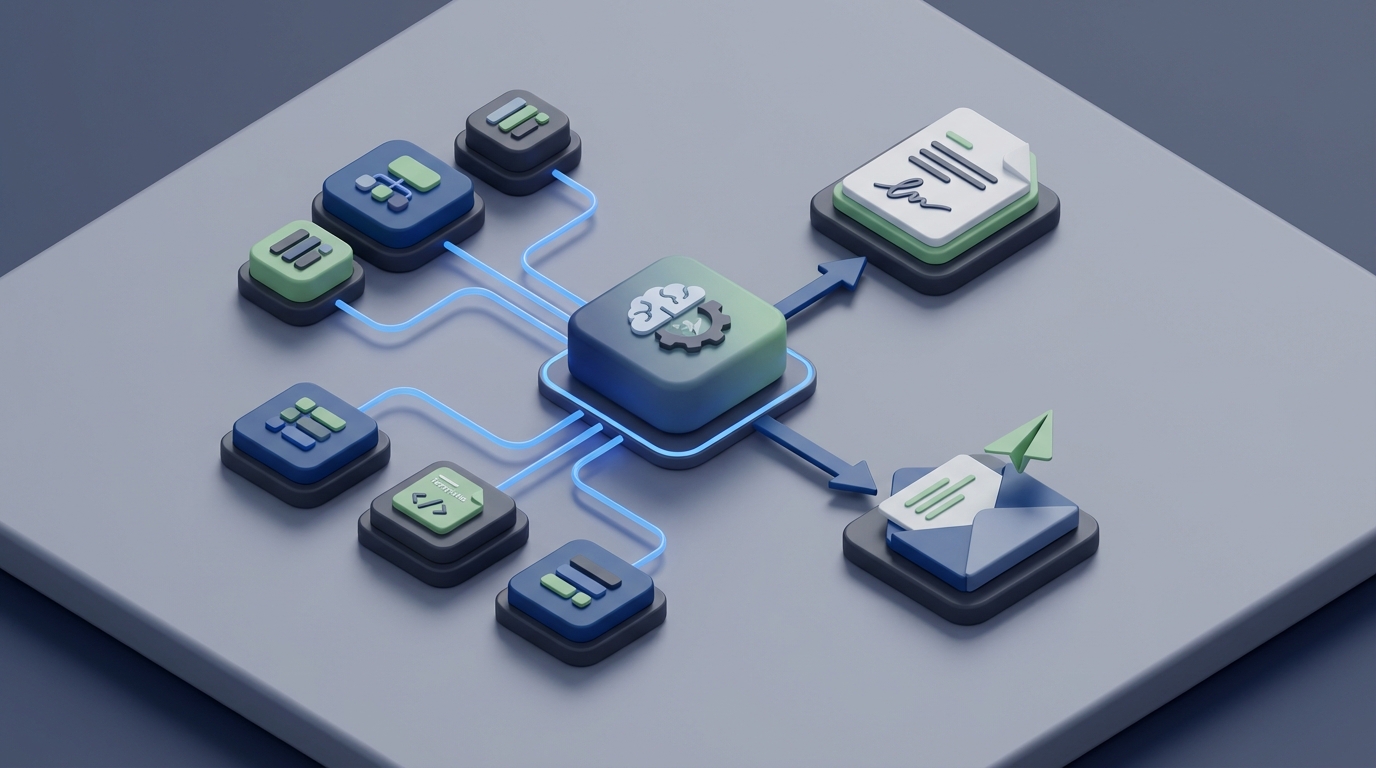
Every HR team I've talked to in the last year has the same dirty secret: their offer letter process is held together with duct tape. I'm talking copy-pasted Word docs, email threads titled "Offer v3 FINAL FINAL (2).docx," and a compensation number that somehow got fat-fingered between the approval spreadsheet and the actual letter. It's 2026 and we're still doing this.
Here's the thing — generating a personalized, accurate, compliant offer letter is not a creative act. It's a structured data problem with conditional logic. Which means it's exactly the kind of workflow an AI agent can crush. So let's talk about how to actually build one using OpenClaw, what it replaces, and what it doesn't.
The Manual Workflow Today (And Why It's Slower Than You Think)
Let's map the actual steps most HR teams follow to get a single offer letter out the door. I'm being specific because people tend to underestimate how many micro-tasks are buried in "create the offer."
Step 1: Offer Approval (15–45 minutes, often days of waiting) Hiring manager submits a request. Compensation gets reviewed by Finance or a Comp team. This usually happens in a separate tool — or worse, over email. The back-and-forth alone can eat one to three business days.
Step 2: Data Collection (10–20 minutes) HR pulls candidate details from the ATS (Greenhouse, Lever, iCIMS, whatever). Comp data lives in a spreadsheet, Workday, or CompAnalyst. Benefits info is in another system entirely. Someone is tabbing between three to five tools minimum.
Step 3: Draft Creation (15–30 minutes) HR opens the Master Offer Template — a Word doc or Google Doc — and starts manually filling in candidate name, title, salary, bonus, equity, start date, location, and any custom clauses like relocation packages or sign-on bonuses. For a standard role, this takes 15 minutes if nothing goes wrong. For a senior hire with equity, relocation, and non-standard terms, you're looking at 30 minutes to an hour.
Step 4: Legal and Compliance Review (variable, often days) California requires specific at-will language. New York City requires salary range disclosure. The EU has its own requirements. Someone has to verify the right clauses are included. For senior roles or international hires, legal actually reads the thing.
Step 5: Internal Approvals (hours to days) The draft gets routed — via email, Slack, or an approval workflow — to two to five people. Each one adds a day if they're busy.
Step 6: Delivery and Negotiation (15–30 minutes per round) The offer goes to the candidate. They counter. Now you're back to Step 3, manually revising the letter, re-routing for approval, and re-sending.
Step 7: Execution (5–10 minutes) E-signature via DocuSign or similar. Filing in the HRIS.
Total time per offer letter for a standard role: 45 minutes of active HR work, spread across 4.2 business days (that's the Lever 2023 benchmark for companies under 500 employees). For senior roles, double or triple it.
Multiply that by the number of offers your team sends per month. Now you see the problem.
What Makes This Painful
The time cost alone is brutal, but it's not even the worst part. Here's what actually hurts:
Errors are rampant. BambooHR's 2026 survey found that 68% of small and mid-market HR teams "frequently" find errors in offer letters. Wrong start dates. Salary typos. Missing benefits. One in five offers reportedly contains at least one material error. That's not a minor inconvenience — it's a legal and trust liability.
Inconsistency breeds risk. Different hiring managers get different language for the same role. One offer includes arbitration language, another doesn't. One mentions a non-compete, another skips it. You're one disgruntled employee away from a compliance headache.
Slow offers lose candidates. SHRM estimates that clunky offer processes contribute to 23% of candidates ghosting or accepting competing offers during the delay. You spent thousands sourcing and interviewing someone, and you lose them because your Word doc workflow took a week.
Negotiation creates rework loops. Every counteroffer means someone opens the document, changes numbers, re-checks compliance, re-routes for approval, and re-sends. Each loop costs 30 to 60 minutes of human time.
Version control is a nightmare. If you've ever seen an HR shared drive, you know. "Offer_Template_2024_v2_California_UPDATED_USE THIS ONE.docx" is not a system.
What AI Can Actually Handle Now
Let me be clear about what's realistic today versus what's vaporware. An AI agent built on OpenClaw can reliably handle the structured, repeatable parts of this workflow. It cannot — and should not — replace human judgment on compensation strategy, complex negotiations, or novel legal questions.
Here's what falls squarely in the "automate it" column:
Data aggregation. Pulling candidate name, role, level, location, start date, compensation details, and benefits information from your ATS and HRIS. This is API work. OpenClaw agents can connect to Greenhouse, Lever, BambooHR, Workday, and most modern HR systems through their APIs or via webhook triggers.
Conditional document generation. If the role is in California, include at-will and arbitration language. If equity is above a threshold, add the vesting schedule clause. If there's a sign-on bonus, include the clawback terms. If the role is remote, use the remote work addendum. This is conditional logic, and it's exactly what AI agents excel at.
First-draft creation. Given structured data and conditional rules, the agent generates a complete, formatted offer letter in seconds — not minutes.
Compliance flagging. The agent checks the generated letter against location-specific requirements and flags anything missing. "This candidate is based in Colorado. Salary range disclosure is required and not present."
Approval routing. The agent sends the draft to the right approvers based on role level, department, and compensation thresholds, then tracks status and sends reminders.
Counteroffer scenario modeling. "If the candidate asks for $10K more in base, here are three options: increase base by $10K (cost impact: $X/year), split between base and sign-on (cost impact: $Y), or increase equity by Z shares (cost impact depends on current valuation)."
Delivery and tracking. Send the offer via email or candidate portal, integrate with DocuSign for e-signature, and file the executed document back into the HRIS.
Step by Step: Building This With OpenClaw
Here's how I'd actually build this. I'm assuming you have an ATS (Greenhouse in this example) and an e-signature tool (DocuSign). Adjust the specific integrations for your stack.
Step 1: Define Your Templates and Rules in OpenClaw
Before you touch AI, get your templates right. You need a base offer letter template with clearly marked dynamic fields, plus a rules matrix that maps conditions to clauses.
In OpenClaw, you'll set this up as a knowledge base your agent references. Think of it as the agent's "HR playbook."
TEMPLATE RULES:
- Location = California → Include: at_will_CA, arbitration_clause, salary_transparency
- Location = New York City → Include: salary_range_disclosure_NYC
- Role Level >= Director → Include: equity_vesting_schedule, change_of_control
- Sign-on Bonus > 0 → Include: clawback_terms
- Relocation = true → Include: relocation_addendum
- Remote = true → Include: remote_work_policy
Upload your actual clause library — each clause as a distinct, version-controlled block. OpenClaw lets you maintain these as structured components the agent assembles, not as one monolithic document that gets copy-pasted.
Step 2: Connect Your Data Sources
Wire up your ATS and HRIS via OpenClaw's integration layer. You need the agent to pull:
- Candidate profile (name, email, current location)
- Role details (title, department, level, hiring manager)
- Compensation package (base, bonus target, equity, sign-on, relocation)
- Start date
- Reporting structure
For Greenhouse, this looks like connecting to their Harvest API. In OpenClaw, you'd configure this as a data source your agent queries when triggered.
# OpenClaw agent data retrieval step
candidate_data = openclaw.fetch(
    source="greenhouse",
    endpoint="/candidates/{candidate_id}/offer",
    fields=["name", "email", "role_title", "department", "level",
            "base_salary", "bonus_target", "equity_shares",
            "sign_on_bonus", "relocation", "start_date", "location",
            "hiring_manager", "remote_status"]
)
Step 3: Build the Generation Agent
This is where OpenClaw shines. You define an agent that takes the structured data from Step 2, applies the rules from Step 1, selects the appropriate clauses, and generates a complete offer letter.
The agent's core instruction set looks something like this:
AGENT: Offer Letter Generator

TRIGGER: New offer approved in Greenhouse (webhook)

STEPS:
1. Retrieve candidate and offer data from Greenhouse API
2. Determine applicable clauses based on location, role level, and package components
3. Generate offer letter using base template + selected clauses + candidate data
4. Run compliance check against location-specific requirements
5. If compliance issues found → flag and pause for human review
6. If clean → route to appropriate approvers based on role level
7. On final approval → send to candidate via email with DocuSign link
8. On signature → file executed document in HRIS
The generation step itself uses OpenClaw's AI capabilities to produce natural, professional language — not just mail-merged fields in a rigid template. The agent can adjust tone and emphasis based on the role level. A junior software engineer gets a straightforward, friendly letter. A VP of Engineering gets a more detailed, executive-tone package summary with equity breakdown.
Step 4: Add the Compliance Layer
This is non-negotiable. Configure the agent to run a compliance check before any letter goes out.
# Compliance validation
compliance_check = openclaw.validate(
    document=generated_offer,
    rules={
        "california": ["at_will_disclosure", "arbitration_opt_out", "salary_range"],
        "new_york_city": ["salary_range_disclosure"],
        "colorado": ["salary_range_in_posting"],
        "eu_gdpr": ["data_processing_consent"],
        "all": ["benefits_summary", "employment_type", "reporting_structure"]
    },
    candidate_location=candidate_data["location"]
)

if compliance_check.issues:
    openclaw.flag_for_review(
        assignee="legal_team",
        issues=compliance_check.issues,
        document=generated_offer
    )
Step 5: Handle Negotiations Automatically
Here's where things get interesting. When a candidate counters, the agent doesn't just sit there waiting for HR to manually revise.
Configure a negotiation workflow: the recruiter inputs the candidate's counteroffer parameters (e.g., "wants $15K more base"), and the agent generates two or three alternative packages that stay within approved budget ranges — showing the cost impact of each option.
NEGOTIATION SCENARIO INPUT: +$15,000 base salary request

OPTION A: Increase base by $15,000
  → Annual cost impact: $15,000 + benefits load ($3,750) = $18,750
  → Within approved range: YES

OPTION B: Increase base by $7,500 + $7,500 sign-on bonus
  → Year 1 cost: $17,375 | Year 2+: $9,375/yr
  → Within approved range: YES

OPTION C: Increase base by $5,000 + additional 500 equity shares
  → Annual cash impact: $6,250 | Equity cost at current valuation: ~$12,500
  → Within approved range: YES (requires VP approval for equity increase)
The recruiter picks an option, the agent regenerates the letter with updated terms, and it goes back through the (now much faster) approval flow.
Step 6: Deploy and Monitor
Ship it. But set up monitoring. OpenClaw gives you visibility into agent performance, so track the following from day one:
- Time from offer approval to letter sent (your north star metric)
- Error rate (fields missing, compliance flags triggered post-send)
- Human intervention rate (what percentage of offers require manual revision)
- Candidate response time (are faster offers correlating with higher acceptance rates)
You can find pre-built agent templates and integration connectors for HR workflows like this on Claw Mart, the marketplace for OpenClaw agents and components. Instead of building every integration from scratch, check whether someone's already published a Greenhouse connector, a DocuSign workflow, or a compliance rule set for your target states.
What Still Needs a Human
Let me be direct about the limits, because overpromising here is how you end up with a lawsuit.
Compensation decisions. The AI can model scenarios and show cost impacts. It should not decide what to pay someone. Compensation strategy involves market data interpretation, internal equity considerations, budget constraints, and organizational politics. That's a human call.
Complex negotiations. When a VP-level candidate wants a custom severance clause, a modified non-compete, or a unique equity arrangement, a human needs to be in the loop. The agent can draft options, but the relationship management and strategic judgment are irreplaceable.
Legal review for novel situations. International hires, regulated industries (finance, healthcare), executive agreements with change-of-control provisions — these need a lawyer's eyes. The agent flags them; the human resolves them.
Exceptions to policy. Every company has them. When someone needs to deviate from standard terms, a human approves and the agent documents it.
Final tone check for critical hires. For your top five hires of the year, someone senior should read the letter. The agent gets you 95% there. A human adds the last 5% of polish and personalization.
Expected Time and Cost Savings
Based on published benchmarks from companies using ATS automation plus AI-assisted generation (Greenhouse's 2026 data, Workday's pilot results, PandaDoc's case studies), here's what's realistic:
| Metric | Before | After OpenClaw Agent | Improvement |
|---|---|---|---|
| Active HR time per offer | 45 min | 8–12 min | ~75% reduction |
| Time from approval to delivery | 4.2 business days | <1 business day | ~80% faster |
| Error rate | 1 in 5 offers | <1 in 50 | ~90% reduction |
| Negotiation revision cycle | 30–60 min per round | 5–10 min per round | ~85% faster |
| Candidate ghosting due to delays | ~23% | Significant reduction | Hard to quantify, but real |
For a company making 200 hires per year, cutting 35 minutes of HR time per offer saves roughly 117 hours annually — that's almost three full work weeks. And that's just the direct time savings. The reduction in errors, compliance risk, and lost candidates is where the real ROI compounds.
What to Do Next
If you're still manually assembling offer letters in 2026, you're burning time and losing candidates to companies that aren't.
Start here:
- Audit your current process. Time each step honestly. Identify where errors happen most.
- Standardize your templates and clause library. You can't automate chaos. Clean up your templates first.
- Build your agent on OpenClaw. Start with standard roles — the 80% of offers that follow predictable patterns. Get that running smoothly before tackling executive or international offers.
- Browse Claw Mart for pre-built HR workflow components, integration connectors, and compliance rule sets that accelerate your build.
If you want this built for you rather than building it yourself, that's exactly what Clawsourcing is for — submit your project and get matched with experienced OpenClaw builders who've done this before. You describe the workflow, they build the agent, and you're generating offers in days, not months.
The tools are here. The data is structured. The workflow is predictable. Stop copy-pasting.