Automate Exit Survey Analysis and Trend Reporting: Build an AI Agent That Identifies Turnover Risks
Automate Exit Survey Analysis and Trend Reporting: Build an AI Agent That Identifies Turnover Risks
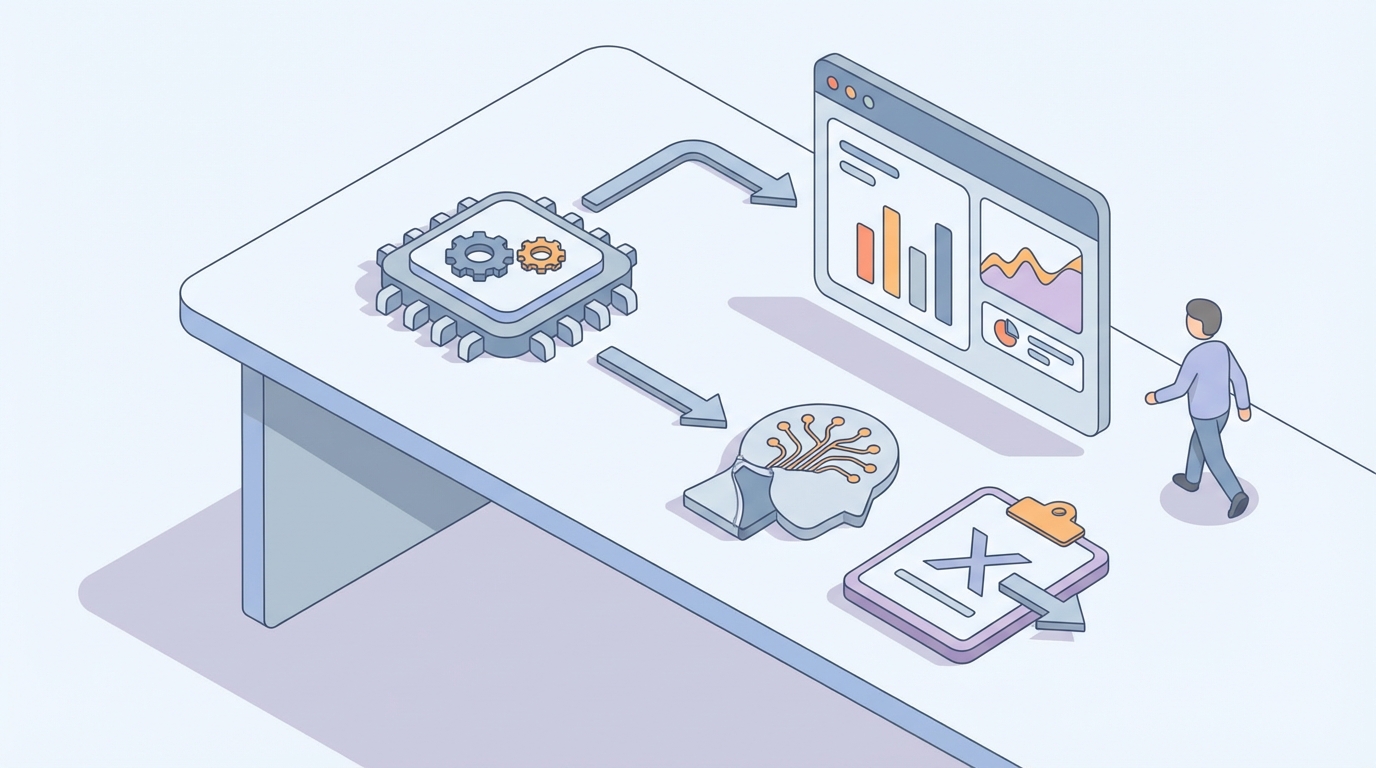
Most HR teams I talk to have the same dirty secret: they collect exit surveys religiously and do almost nothing useful with the data.
It's not laziness. It's that the actual analysis—especially the open-ended responses where the real insights live—is a brutal, manual slog. So the surveys pile up in a spreadsheet somewhere, someone pulls together a quarterly deck with surface-level pie charts, leadership nods politely, and nothing changes.
Meanwhile, your best people keep leaving for the same reasons the last best people left.
Here's the thing: this is a solved problem now. Not with some enterprise platform that costs six figures and takes nine months to implement. With an AI agent you can build yourself on OpenClaw in a weekend. Let me walk you through exactly how.
The Manual Workflow (And Why It's Broken)
Let's be honest about what "exit survey analysis" actually looks like at most companies today.
Step 1: Collection. Someone in HR sets up an exit survey in Google Forms, SurveyMonkey, or their HRIS (BambooHR, Workday, whatever). This part is mostly automated. Fine.
Step 2: Aggregation. Responses trickle into different systems. Maybe some come through your HRIS, some through a standalone survey tool, some are notes from live exit interviews that an HR generalist typed up. Someone has to export all of this into a single spreadsheet. Time: 1–3 hours per batch, depending on how fragmented your systems are.
Step 3: Quantitative analysis. Calculating percentages. "42% cited compensation as a factor." Pivot tables by department, tenure, manager. This is tedious but straightforward. Time: 2–4 hours per reporting cycle.
Step 4: Qualitative analysis. This is where everything falls apart. Someone—usually an HR business partner who has 47 other things to do—has to read every single open-ended response. They manually code themes: "lack of growth," "bad manager," "compensation," "work-life balance." They create a tally. They try to be consistent but inevitably aren't, because "my manager doesn't support my development" could be coded as a manager issue or a growth issue depending on who's reading it and what time of day it is. Time: 45–90 minutes per complex survey response. For 50 exits a month, you're looking at 40–75 hours.
Step 5: Cross-tabulation. Breaking themes down by segment. Are engineering departures driven by different issues than sales? Is the Austin office hemorrhaging people for different reasons than New York? Time: 3–8 hours.
Step 6: Report creation. PowerPoint decks. Charts. Pull quotes. Executive summary. Time: 4–8 hours.
Step 7: "Action planning." A meeting where leadership looks at the deck and says, "Interesting. Let's keep an eye on this." Time: wasted.
Total for a mid-market company (50–100 exits/month): 30–60+ hours per month. That's nearly a full-time equivalent doing nothing but reading and categorizing exit surveys.
And the kicker? The insights are still mediocre because humans are inconsistent coders, the analysis is always delayed, and by the time anyone sees the report, the trends have been festering for months.
What Makes This Particularly Painful
Three things turn this from "annoying" to "actually damaging your business":
1. Subjectivity kills consistency. SHRM data consistently shows that different HR professionals code the same open-ended response into different categories. One person reads "I didn't feel like there was a path forward here" and tags it as "career development." Another tags it as "organizational structure." A third tags it as "manager effectiveness" because they know the employee's manager never discussed promotions. Your trend data is only as reliable as the person reading at 4:30 PM on a Friday.
2. The delay is the real killer. Most companies analyze exit data quarterly, sometimes annually. That means if a toxic manager started driving people out in January, leadership might not see the pattern until April—after three or four more people have already left. At an average replacement cost of 50–200% of annual salary (depending on role level), those months of delay are enormously expensive.
3. Nuance gets flattened. "Compensation" shows up as the top theme in nearly every exit survey analysis ever conducted. But that tells you nothing useful. Are people saying base pay is below market? That the equity structure is unfair? That they got a competing offer they couldn't refuse? That they feel underpaid relative to their workload, which is really a headcount problem? Manual analysis rarely gets past the top-level category because there isn't time.
The result: only 29% of employees believe their organization takes action on survey results (Gallup). It's not because leadership doesn't care. It's because the insights they receive aren't specific or timely enough to act on.
What AI Can Handle Right Now
Let's be precise about what's realistic with current technology—no hand-waving.
High confidence, fully automatable today:
- Sentiment analysis — Not just positive/negative, but intensity and mixed sentiment detection. "I loved my team but the lack of growth made it impossible to stay" contains both.
- Theme detection and clustering — Modern LLMs don't just match keywords. They understand that "my manager never gave me feedback," "I had no idea where I stood," and "performance reviews were a joke" are all manifestations of the same underlying issue.
- Hierarchical categorization — Instead of just tagging "compensation," an AI agent can distinguish between base pay, equity, benefits, pay equity/fairness, and total compensation concerns.
- Trend detection — Automatically comparing this month's themes against the trailing 6-month baseline and flagging statistically significant shifts.
- Segmented analysis — Slicing by department, manager, location, tenure band, role level—simultaneously, not one pivot table at a time.
- Report generation — Executive summaries, detailed breakdowns, pull quotes, and visualizations generated automatically.
- Anomaly alerting — Surfacing things like "departures citing 'management' in the engineering org jumped from 12% to 34% in the last 8 weeks."
What AI achieves on accuracy: MIT Sloan research from 2023 shows modern LLMs hit 80–87% agreement with human coders on theme classification. That's comparable to inter-rater reliability between two human coders (which typically runs 75–85%). In other words, the AI is about as consistent as a well-trained human—and dramatically faster.
Step-by-Step: Building This on OpenClaw
Here's how to build an exit survey analysis agent on OpenClaw that replaces 30–60 hours of monthly manual work. I'll be specific.
Step 1: Define Your Data Pipeline
Your agent needs to ingest exit survey responses. In OpenClaw, you'll set up an input connector. Most companies will use one of these approaches:
- CSV/Excel upload — Export from your survey tool or HRIS monthly (or more frequently).
- API connection — If your survey tool has an API (most do), connect it directly so responses flow in automatically.
- Google Sheets/Airtable sync — For teams that aggregate in spreadsheets.
In your OpenClaw agent configuration, define the input schema:
input_schema:
  employee_id: string (anonymized)
  department: string
  role_level: string
  tenure_months: integer
  manager_id: string (anonymized)
  location: string
  exit_date: date
  rating_questions:
    - overall_satisfaction: integer (1-5)
    - manager_effectiveness: integer (1-5)
    - growth_opportunities: integer (1-5)
    - compensation_fairness: integer (1-5)
    - workload_sustainability: integer (1-5)
  open_ended_responses:
    - primary_reason_for_leaving: text
    - what_could_we_have_done_differently: text
    - additional_comments: text
Step 2: Build the Qualitative Analysis Module
This is where the real value lives. In OpenClaw, configure your agent's analysis prompt with a detailed taxonomy. Don't let the AI freestyle its categories—give it your framework:
You are an HR analytics expert analyzing employee exit survey responses.

For each open-ended response, perform the following:

1. SENTIMENT: Rate overall sentiment (-1.0 to 1.0) and identify mixed sentiment where present.

2. PRIMARY THEMES: Classify into one or more primary categories:
   - Compensation (subcategories: base pay, equity/stock, benefits, pay equity, total rewards)
   - Career Development (subcategories: promotion path, skill development, lateral mobility, mentorship)
   - Management (subcategories: feedback quality, trust/psychological safety, communication, support, micromanagement)
   - Culture (subcategories: values alignment, DEI, collaboration, recognition, toxicity)
   - Workload (subcategories: volume, sustainability, resource constraints, work-life balance)
   - Role Fit (subcategories: job expectations vs reality, autonomy, impact/meaning)
   - External Factors (subcategories: relocation, personal, better offer, career change)
   - Organizational (subcategories: strategy/direction, restructuring, leadership trust, bureaucracy)

3. ROOT CAUSE: Beyond the surface theme, identify the underlying driver. "Compensation" might really be about feeling undervalued relative to workload.

4. SEVERITY: Rate 1-5 how likely this issue was the decisive factor vs. a contributing factor.

5. ACTIONABILITY: Rate 1-5 how addressable this issue is by the organization.

6. KEY QUOTES: Extract the most illustrative direct quotes.

Return structured JSON.
The specificity matters. Vague prompts produce vague analysis. Detailed taxonomies produce analysis that's actually useful for decision-making.
Step 3: Build the Trend Detection Layer
This is where you move from "analyzing individual surveys" to "identifying organizational patterns." Configure a second agent module in OpenClaw that takes the individual analysis outputs and performs cross-response pattern detection:
Given the analyzed exit survey responses for [time_period], compared against the baseline data from [comparison_period]:

1. Identify the top 5 themes by frequency, with quarter-over-quarter trend direction.
2. Flag any theme that has increased by more than 20% relative to the prior period.
3. Segment all themes by: department, role level, tenure band (<1yr, 1-3yr, 3-5yr, 5+yr), location, and manager.
4. Identify any manager or department where a single theme appears in 3+ exit surveys within a 90-day window.
5. Detect emerging themes that didn't appear in the prior period's top 10.
6. Calculate a composite "turnover risk score" by department based on theme severity and frequency.

Output: structured report with executive summary, detailed findings, and recommended investigation areas.
Step 4: Automate Report Generation
Set up OpenClaw's output module to produce two deliverables:
Weekly alert email — Short, focused. "3 new exit surveys processed. Emerging signal: 2 of 3 departures from Product Design cited 'lack of strategic direction' — this theme has appeared in 5 of the last 8 Product Design exits. Recommend investigation."
Monthly comprehensive report — Full trend analysis, segmentation, quarter-over-quarter comparisons, top themes with supporting quotes, risk scores by department, and a prioritized list of recommended focus areas.
You can configure these as scheduled outputs in OpenClaw, pulling from the accumulated analysis data.
Step 5: Build the Feedback Loop
This is what separates a useful tool from a toy. Add a human review interface where your HR team can:
- Confirm or override theme classifications (this trains better outputs over time).
- Add context the AI can't know ("This department just went through a reorg, which explains the 'organizational' theme spike").
- Flag sensitive responses that need legal review.
- Mark actions taken so you can eventually correlate interventions with retention outcomes.
In OpenClaw, you can set up this review workflow so that flagged items (high severity, legal risk indicators, anomalous patterns) are routed to specific team members automatically.
What Still Needs a Human
I'm not going to pretend AI solves everything here. These things require a person:
Contextual interpretation. The AI might correctly identify that "compensation" is trending up as an exit theme in engineering. But a human needs to know that you just lost a funding round and paused equity refreshes, or that a competitor opened an office nearby and is poaching aggressively. Context determines response.
Legal and risk assessment. When an exit survey mentions discrimination, harassment, retaliation, or safety issues, that's not an analytics problem. That's a legal and ethical obligation. Your agent should flag these automatically (and you should configure it to do so), but a human needs to handle them.
Severity calibration. Five people mentioning "parking" is not the same as five people mentioning "I don't trust leadership." The AI can rate severity, but humans need to validate that rating against business reality.
Action decisions. The AI can tell you what people are saying. It cannot tell you whether the right response is a compensation adjustment, a manager coaching program, a reorg, or nothing at all. That requires business judgment.
Bias auditing. Check your AI's outputs periodically. Is it consistently misclassifying responses from certain demographics? Is it underweighting certain themes? The AI reflects its training, and you need to verify it's reflecting your reality.
Expected Time and Cost Savings
Let's do real math for a mid-market company processing 50–100 exit surveys per month:
| Task | Manual Hours/Month | With OpenClaw Agent | Savings |
|---|---|---|---|
| Data aggregation | 3–5 hrs | ~0 (automated) | 3–5 hrs |
| Quantitative analysis | 3–5 hrs | ~0 (automated) | 3–5 hrs |
| Qualitative coding | 40–75 hrs | 2–4 hrs (review only) | 38–71 hrs |
| Cross-tabulation | 4–8 hrs | ~0 (automated) | 4–8 hrs |
| Report creation | 4–8 hrs | 1–2 hrs (review/edit) | 3–6 hrs |
| Total | 54–101 hrs | 3–6 hrs | 51–95 hrs |
That's a 70–90% reduction in time spent, consistent with what Qualtrics reports from organizations using their Text iQ feature, but achievable without the enterprise price tag.
Beyond time savings:
- Faster insights. Weekly instead of quarterly. You catch the toxic manager problem in February, not April.
- Better consistency. The AI codes "I didn't get feedback" the same way every time, regardless of who's running the analysis.
- Deeper analysis. Subcategory detection and root cause analysis that manual coding almost never achieves at scale.
- Actual retention impact. Companies using AI-powered feedback analysis are 2.3× more likely to report taking action on survey data (Lattice, 2026). Because the insights are specific enough to act on.
For a company with 500 employees and 15% annual turnover, reducing turnover by even 2–3 percentage points through better exit analysis translates to 10–15 fewer departures per year. At conservative replacement costs of $50,000–$75,000 per departure, that's $500K–$1.1M in annual savings. The agent costs a rounding error by comparison.
Getting Started
If you want to browse pre-built HR analytics agents or grab components to customize your own exit survey workflow, check out the Claw Mart marketplace. There are agent templates for survey analysis, trend reporting, and HR data pipelines that you can deploy and modify rather than building from zero.
And if you'd rather have someone build this for you—or if you're an AI builder who wants to sell agents like this—look into Clawsourcing. It connects businesses that need custom AI agents with builders who specialize in exactly this kind of workflow automation. Post the project, get matched with a builder, get it done.
The exit survey data is already sitting in your systems. The question is whether you're going to keep reading it manually in spreadsheets—or let an agent surface the patterns that actually save people from leaving.