Replace Your Talent Acquisition Manager with an AI Talent Acquisition Manager Agent
Replace Your Talent Acquisition Manager with an AI Talent Acquisition Manager Agent
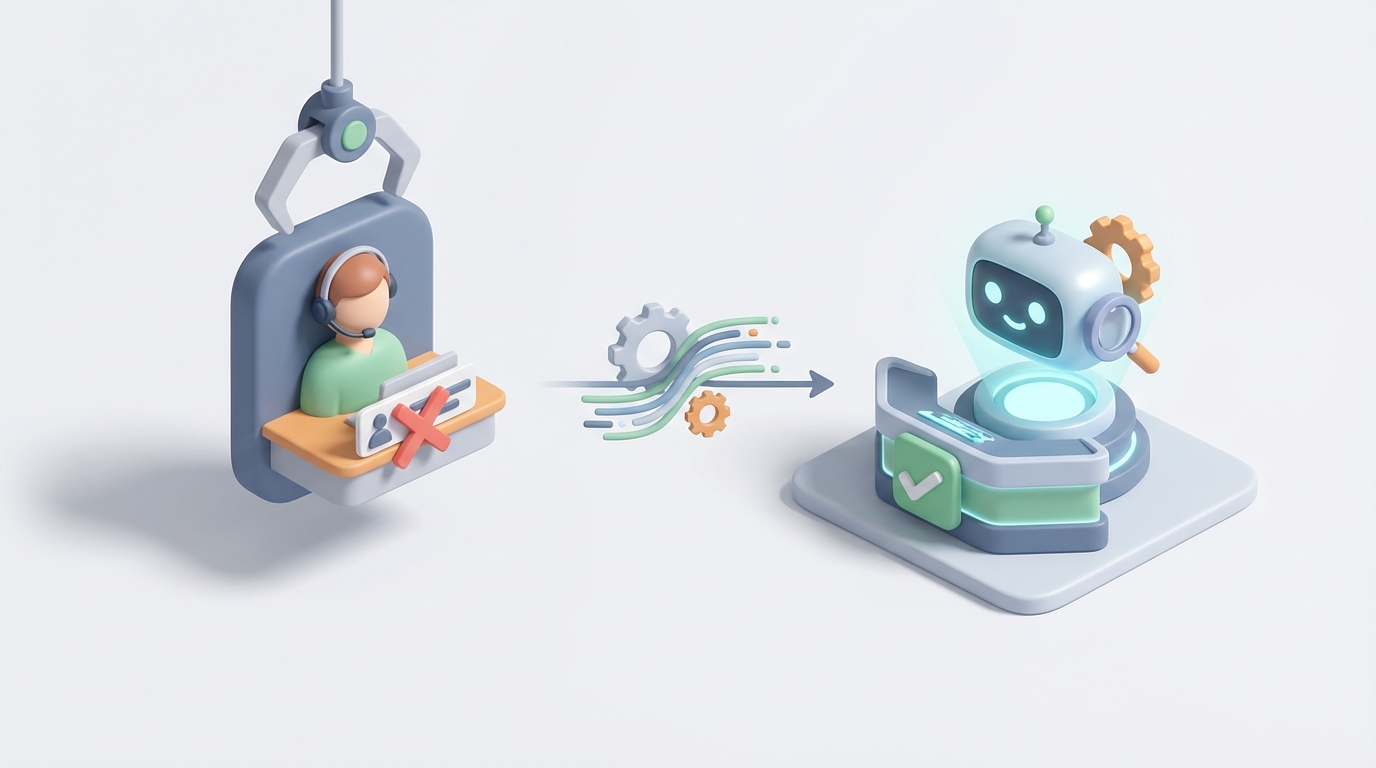
Most companies hire a Talent Acquisition Manager and then watch them spend half their day doing things a well-configured AI agent could handle in minutes. Resume screening, candidate sourcing, interview scheduling, follow-up emails — these are pattern-matching and coordination tasks dressed up as strategic work.
I'm not saying the role is useless. I'm saying about 60-70% of what fills a TAM's day is automatable right now, and the remaining 30-40% — the judgment calls, the relationship building, the gut-feel decisions — can be handled by a single senior recruiter or hiring manager working alongside an AI agent instead of an entire dedicated headcount.
Let me walk through what this actually looks like.
What a Talent Acquisition Manager Actually Does All Day
Forget the sanitized job description. Here's how a typical TAM's week actually breaks down:
~40% Sourcing and Screening They're on LinkedIn Recruiter, Indeed, internal databases, and referral pipelines trying to find people who match open requisitions. For each role, they're reviewing anywhere from 100 to 500+ applications. Most are unqualified. They're scanning resumes, parsing cover letters, checking for deal-breakers, and building shortlists. This is the single biggest time sink in the role.
~25% Scheduling and Administrative Coordination Back-and-forth emails to align candidate availability with hiring manager calendars. Confirmation emails. Rescheduling. Sending assessment links. Updating the ATS. Moving candidates through pipeline stages. Data entry. It's coordination work — necessary, but mindless.
~20% Interviews and Stakeholder Meetings Conducting phone screens, facilitating panel interviews, debriefing with hiring managers, aligning on candidate scorecards. This is where actual human judgment starts to matter.
~15% Strategy, Reporting, and Employer Branding Tracking time-to-hire, cost-per-hire, source-of-hire metrics. Updating dashboards. Writing job descriptions. Maybe posting on LinkedIn about company culture. Attending the occasional career fair.
If you're being honest about it, most of the high-volume, repetitive work sits in those first two categories. That's 65% of the role that's fundamentally about processing information and coordinating logistics.
The Real Cost of This Hire
Let's talk numbers, because this is where the math gets uncomfortable.
A mid-level Talent Acquisition Manager in the US (3-7 years experience) commands a base salary of $110,000 to $140,000. Total compensation with bonuses and equity can push that to $130,000-$170,000. In tech hubs like San Francisco or New York, add another 20-30%.
But base comp is only part of the story. The total cost to the company is typically 1.25x to 1.5x the salary once you factor in:
- Benefits (health insurance, 401k match, PTO): $20,000-$35,000/year
- Payroll taxes: ~7.65% employer-side FICA
- Recruiting tools and licenses: LinkedIn Recruiter ($10,000-$15,000/seat/year), ATS subscriptions, assessment platforms
- Training and onboarding: 2-3 months to full productivity
- Management overhead: Someone has to manage them
A $140,000 base salary TAM actually costs the organization $187,000 to $225,000 per year, all-in.
And here's the kicker: recruiter turnover is 28% annually (SHRM data). So there's a meaningful chance you're re-hiring and re-training this role every three to four years, eating another $15,000-$25,000 in replacement costs each time.
Compare that to an AI agent that costs a fraction of this, runs 24/7, doesn't need PTO, and gets better over time instead of burning out.
What AI Handles Right Now (No Handwaving)
This isn't a "someday AI will..." argument. These are capabilities that exist today and that you can build into an AI agent on OpenClaw. Let me be specific about what's automatable and what's not.
High Automation — AI Does This Well Today
Resume Screening and Ranking Natural language processing can parse resumes, extract skills and experience, match against job requirements, and rank candidates by fit. This alone eliminates 75% of the time spent on initial screening. An OpenClaw agent can ingest a job description, pull in applications from your ATS via API, and return a ranked shortlist with reasoning for each ranking — in minutes, not days.
Candidate Sourcing AI agents can search LinkedIn profiles, GitHub repositories, professional databases, and public portfolios to identify passive candidates matching specific criteria. On OpenClaw, you can build a sourcing agent that continuously monitors these channels and surfaces candidates who match your hiring criteria, complete with outreach drafts personalized to each candidate's background.
Initial Candidate Qualification Chatbot-style screening — asking candidates about salary expectations, availability, visa status, must-have qualifications — can be fully automated. An OpenClaw agent can conduct these conversations via email or SMS, 24/7, and route qualified candidates forward while politely disqualifying others.
Interview Scheduling Calendar coordination is a solved problem. An OpenClaw agent can access hiring manager calendars, propose available slots to candidates, handle rescheduling, send confirmations and reminders, and update your ATS — all without a human touching it. This replaces what's currently 5-10 hours per week of pure admin work.
Job Description Generation and Optimization Give the agent a role title, team context, and a few bullet points. It produces a complete, optimized job description with inclusive language, SEO-friendly formatting, and compliance-checked content. You review and post. Five minutes instead of an hour.
Analytics and Reporting An OpenClaw agent can pull data from your ATS, calculate time-to-hire, cost-per-hire, source effectiveness, diversity pipeline metrics, and generate weekly reports automatically. It can flag anomalies — like a role that's been open 30% longer than average — and suggest interventions.
Candidate Communication Status updates, rejection emails, next-step instructions, offer letter delivery — all templated, personalized, and sent at the right time. No candidate falls through the cracks because someone forgot to send a follow-up.
Medium Automation — AI Assists, Humans Decide
Technical and Behavioral Assessments AI can administer and score standardized assessments — coding challenges, personality inventories, situational judgment tests. But interpreting edge cases and determining cultural fit from assessment results still benefits from human judgment. Build the agent to score and flag; have a human make the call.
Interview Support An OpenClaw agent can generate role-specific interview questions, provide candidate briefing documents for interviewers, transcribe interviews in real-time, and summarize key takeaways. The human still conducts the conversation, but the prep and post-processing are automated.
Salary Benchmarking AI can pull compensation data from multiple sources and recommend offer ranges based on role, location, experience, and market conditions. But the actual negotiation — reading a candidate's hesitation, knowing when to flex on equity versus base — that's human territory.
Low Automation — Humans Still Own This
Final Hiring Decisions No AI should make the final call on whether to extend an offer. This requires synthesizing interview performance, team dynamics, growth potential, and organizational needs in ways that require genuine judgment.
Relationship Building Executive recruiting, passive candidate courting, internal stakeholder alignment — these rely on trust, rapport, and political awareness that AI can't replicate.
Strategic Workforce Planning Deciding which roles to open, how to restructure teams, where to invest in talent versus technology — this is leadership work, not agent work.
Bias Oversight AI can reduce certain biases (consistent screening criteria), but it can also amplify them if trained on skewed data. A human needs to audit the agent's outputs regularly, review demographic patterns in shortlists, and ensure EEOC/OFCCP compliance.
I want to be straight about this: you're not eliminating the need for human judgment in hiring. You're eliminating the need for a full-time human to do the 65% of the work that doesn't require judgment. That's a fundamentally different — and much more honest — proposition.
How to Build This on OpenClaw
Here's where it gets practical. OpenClaw lets you build AI agents as modular workflows — each task becomes a node, and you chain them together into a complete talent acquisition pipeline.
Architecture Overview
Your AI Talent Acquisition Manager agent consists of five core modules:
- Sourcing Agent — Continuously scans configured channels for candidate profiles matching active requisitions
- Screening Agent — Ingests applications, parses resumes, scores against job requirements, generates shortlists
- Coordination Agent — Handles scheduling, candidate communication, and ATS updates
- Assessment Agent — Administers and scores technical/behavioral evaluations
- Reporting Agent — Aggregates pipeline data, generates dashboards, flags bottlenecks
Each module runs independently but shares context through OpenClaw's agent memory system, so the Coordination Agent knows what the Screening Agent decided and why.
Step-by-Step Build
Step 1: Define Your Requisition Schema
Start by creating a structured format for job requisitions that your agent can work with:
requisition:
  id: "REQ-2026-0147"
  title: "Senior Backend Engineer"
  department: "Engineering"
  hiring_manager: "sarah.chen@company.com"
  requirements:
    must_have:
      - "5+ years backend development"
      - "Python or Go proficiency"
      - "Distributed systems experience"
    nice_to_have:
      - "Kubernetes experience"
      - "ML pipeline familiarity"
  compensation:
    range: "$160,000 - $195,000"
    equity: true
  timeline:
    target_fill_date: "2026-09-01"
    urgency: "high"
  sources:
    - linkedin
    - github
    - internal_referrals
This schema feeds every downstream module. When a hiring manager submits a new requisition (via form, Slack command, or email), the agent parses it into this structure and kicks off the pipeline.
Step 2: Configure the Screening Agent
In OpenClaw, set up your screening agent with explicit scoring criteria tied to the requisition:
screening_config = {
    "agent": "talent_screener",
    "input": "ats_application_feed",
    "scoring": {
        "must_have_match": 0.5,    # 50% weight
        "experience_relevance": 0.25,  # 25% weight
        "nice_to_have_match": 0.15, # 15% weight
        "career_trajectory": 0.10   # 10% weight
    },
    "thresholds": {
        "auto_advance": 0.85,      # Score >= 85%: advance to screen
        "human_review": 0.65,      # 65-84%: flag for human review
        "auto_reject": 0.64        # Below 65%: send rejection
    },
    "bias_checks": {
        "blind_mode": true,         # Strip names, photos, dates
        "demographic_audit": "weekly"
    }
}
The blind_mode flag is important — it strips identifying information during scoring to reduce bias. The weekly demographic audit generates a report on the demographic distribution of candidates at each pipeline stage so a human can catch patterns.
Step 3: Build the Coordination Workflow
This is where you connect the agent to your calendar systems and communication channels:
coordination_workflow = {
    "triggers": {
        "candidate_advanced": "schedule_phone_screen",
        "phone_screen_complete": "schedule_panel_interview",
        "interview_complete": "send_debrief_request"
    },
    "calendar_integration": {
        "provider": "google_calendar",  # or outlook, calendly
        "hiring_manager_access": true,
        "buffer_between_interviews": "15min",
        "candidate_timezone_aware": true
    },
    "communications": {
        "channel": "email",
        "templates": {
            "screening_invite": "templates/phone_screen_invite.md",
            "interview_confirmation": "templates/interview_confirm.md",
            "rejection_graceful": "templates/rejection.md",
            "offer_next_steps": "templates/offer_prep.md"
        },
        "personalization": true,
        "tone": "warm_professional"
    }
}
Every state transition in the pipeline triggers the appropriate action — no manual intervention needed for standard flows. The agent sends the email, books the calendar slot, updates the ATS record, and moves on.
Step 4: Set Up the Reporting Agent
reporting_config = {
    "metrics": [
        "time_to_hire",
        "cost_per_hire",
        "source_effectiveness",
        "screening_pass_rate",
        "offer_acceptance_rate",
        "diversity_pipeline_ratio"
    ],
    "frequency": "weekly",
    "delivery": "slack_channel",  # or email, dashboard
    "alerts": {
        "role_open_over_30_days": "notify_hiring_manager",
        "pass_rate_below_10pct": "review_job_description",
        "diversity_ratio_imbalanced": "flag_for_audit"
    }
}
The alerts are what make this valuable — instead of someone manually checking dashboards, the agent proactively surfaces problems before they compound.
Step 5: Connect Everything to Your ATS
OpenClaw supports API connections to major ATS platforms (Greenhouse, Lever, Workday, iCIMS, etc.). You configure the integration once, and the agent reads from and writes to your existing system. No rip-and-replace required.
ats_integration = {
    "provider": "greenhouse",
    "api_key": "env:GREENHOUSE_API_KEY",
    "sync_frequency": "realtime",
    "actions": [
        "read_applications",
        "update_candidate_stage",
        "add_interview_scorecard",
        "attach_screening_notes"
    ]
}
What This Looks Like in Practice
Day one after deployment:
- New applications come in → Screening Agent scores and sorts them within minutes
- Top candidates receive a personalized email inviting them to a phone screen, with calendar links already synced to the hiring manager's availability
- Candidates who don't meet minimum requirements get a respectful rejection email within 24 hours (instead of ghosting them for three weeks)
- The hiring manager gets a morning Slack digest: "3 new qualified candidates for Senior Backend Engineer. Top candidate: [Name], 92% match. Resume and screening notes attached."
- Weekly reports land automatically with pipeline health metrics
The hiring manager's only job is to show up for interviews and make decisions. Everything else is handled.
The Honest Math
Let's compare costs directly.
Traditional TAM: $187,000-$225,000/year all-in, handles 20-40 requisitions, works business hours, takes 2-3 months to onboard, 28% annual turnover risk.
OpenClaw AI Agent: A fraction of that annual cost, handles unlimited requisitions in parallel, operates 24/7, deploys in days, improves continuously.
Even if you keep a senior recruiter on staff at $80,000-$100,000 to handle the human-judgment tasks (final interviews, negotiations, relationship building, bias audits), you're still saving $87,000-$145,000 per year while getting faster and more consistent results on the automatable work.
And that senior recruiter? They're now doing the work they actually enjoy and are good at — the strategic, human stuff — instead of drowning in resume screening and scheduling ping-pong.
What This Doesn't Replace
I want to be clear about the edges.
An AI agent won't convince a passive VP of Engineering to leave Google. It won't read the room in a compensation negotiation when a candidate's spouse just got a job offer in a different city. It won't know that two people on the team have conflicting working styles and the new hire needs to bridge that gap.
It also needs ongoing oversight. You should audit its screening decisions monthly. Check for bias drift. Update scoring criteria as roles evolve. Treat it like a high-performing junior employee who's great at execution but needs strategic direction.
The companies doing this well — Unilever, Hilton, PepsiCo — all kept humans in the loop for final decisions. Unilever uses AI for their initial 250,000+ entry-level applications per year, but humans still make the hire/no-hire call. Hilton's Paradox chatbot handles 2 million applications annually, cutting screening from 40 hours to 30 minutes per role — but a human still runs the final interview.
That's the model. AI handles volume and coordination. Humans handle judgment and relationships.
Next Steps
You've got two options.
Build it yourself on OpenClaw. The platform gives you the tools to construct each module, connect your existing tech stack, and deploy iteratively. Start with the Screening Agent — that's where the biggest time savings hit first. Add Coordination and Reporting once screening is stable. The architecture above is a real starting point, not a theoretical exercise.
Or let us build it for you. If you'd rather hand this off to a team that's built these agents before and skip the learning curve, that's what Clawsourcing is for. We'll scope your current TA workflow, identify the automation opportunities, build the agent on OpenClaw, integrate it with your ATS and tools, and hand you a working system — typically in weeks, not months.
Either way, the status quo — paying $200,000+ for someone to spend most of their time on work a machine does better — is an expensive choice to keep making.