Replace Your SDR with an AI Sales Development Agent
Replace Your SDR with an AI Sales Development Agent
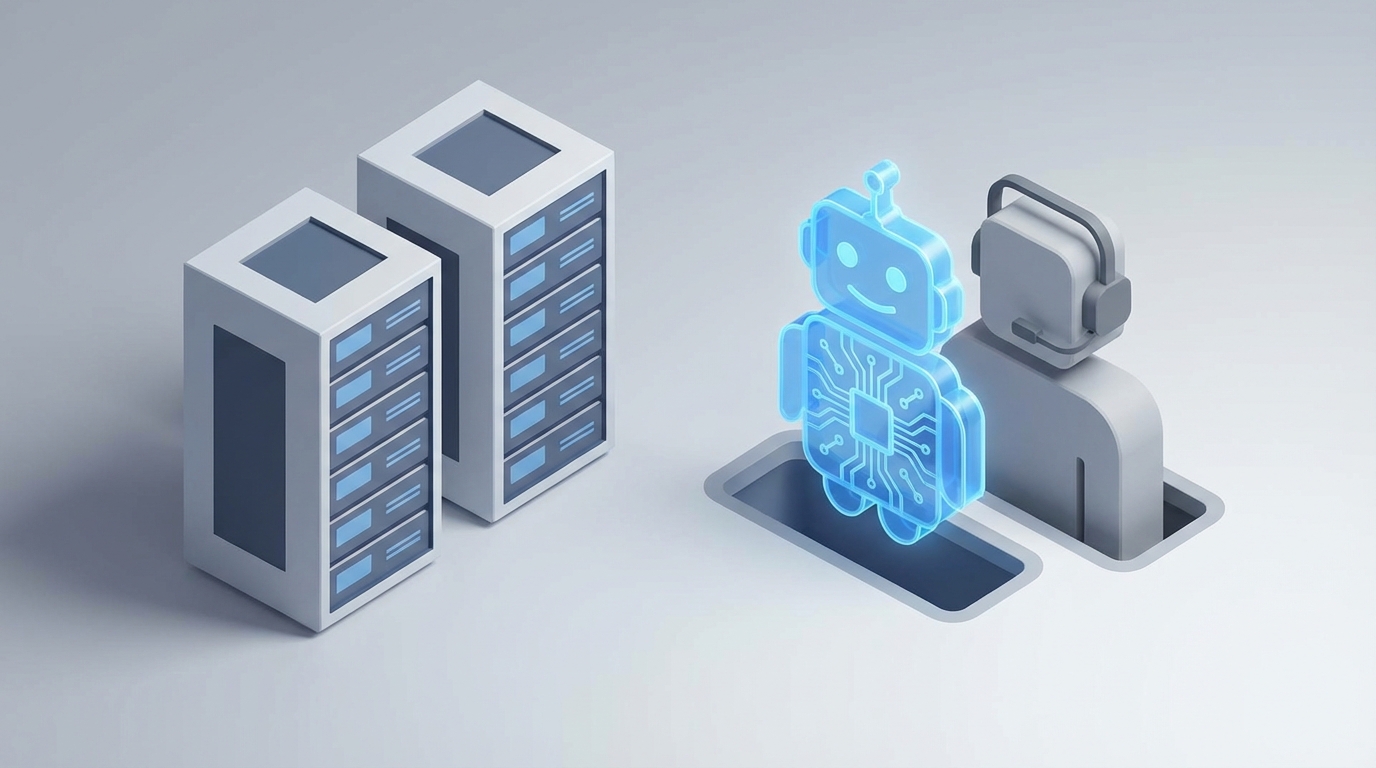
Most companies hiring their first SDR are really hiring someone to do a bunch of repetitive tasks that a well-configured AI agent can already handle. I'm not saying SDRs are useless — some of the work genuinely requires a human. But the honest breakdown is something like 70% automatable grunt work and 30% actual human judgment. And you're paying $100k+ fully loaded for that split.
Let me walk through exactly what an SDR does all day, what it actually costs you, and how to build an AI agent on OpenClaw that handles the automatable majority — so you can either skip the hire entirely or let a human focus only on the parts that matter.
What an SDR Actually Does All Day
If you've never worked in sales or managed an SDR, the role might sound strategic. "Sales Development." Sounds important. In reality, it's one of the most grind-heavy, repetitive jobs in any company. Here's the actual breakdown of a typical day:
Prospecting and Lead Research (30-40% of time)
This is the SDR sitting in LinkedIn Sales Navigator, Apollo.io, or ZoomInfo, manually finding people who match your ideal customer profile. They're looking at job titles, company size, industry, tech stack, recent funding rounds — basically building lists of people to contact. Then they're enriching that data: finding email addresses, direct phone numbers, verifying everything isn't stale.
Outbound Outreach (30-50% of time)
Cold calls. Cold emails. LinkedIn messages. The volume expectations are aggressive: 50-100 calls per day, 50-100 emails per day. Most of these go nowhere. Connect rates on cold calls hover around 1-3%. Email reply rates, if the copy is decent, might hit 5-10%. The SDR is spending the majority of their day getting ignored or rejected.
Lead Qualification (15-20% of time)
When someone actually responds, the SDR runs them through a qualification framework — BANT (Budget, Authority, Need, Timeline) or MEDDIC or whatever your sales org uses. The goal is to figure out whether this person is worth an Account Executive's time. If yes, they book the meeting. If no, they disqualify and move on.
Follow-Ups (10-20% of time)
No one responds to the first touch. Or the second. SDRs run multi-touch cadences — typically 5-10 touches per lead over 2-4 weeks across email, phone, and LinkedIn. This is sequencing work. "Did they open the email? Should I call now? When's the next touch?" It's logistics.
CRM and Admin Work (10-15% of time)
Logging every call, email, and activity in Salesforce or HubSpot. Updating lead statuses. Moving prospects through pipeline stages. Scheduling demos. This is pure data entry — necessary, but zero-skill.
Meetings and Training (5-10% of time)
Team standups, pipeline reviews, call coaching sessions, product training. The ramp period for a new SDR is typically 3-6 months before they're fully productive.
Add it up and you'll notice something: the vast majority of this work is mechanical. Find people. Send messages. Log data. Follow up on a schedule. The actual selling — reading a prospect, handling objections, building trust — is maybe 20-30% of the role on a good day.
The Real Cost of an SDR
When people think about the cost of an SDR, they think about salary. But salary is maybe 60-70% of what you're actually spending.
Direct Compensation
An entry-level SDR in a mid-tier US city runs $45k-55k base with an OTE (on-target earnings) of $60k-80k. In San Francisco, New York, or at any well-funded SaaS company, you're looking at $60k-80k base with $90k-130k OTE. Senior or high-performing SDRs command $70k-90k base and $120k-180k OTE.
Fully Loaded Cost
Multiply the base salary by 1.3-1.5x to get the real number. That covers:
- Health insurance, 401k, payroll taxes: $10k-20k/year
- Tools and software licenses (Salesforce seat, Sales Navigator, dialer, email platform, data providers): $5k-10k per SDR per year
- Ramp-up cost: 3-6 months of reduced productivity, during which you're paying full salary for half output
- Management overhead: Someone has to train, coach, and review this person's work
- Recruiting cost: If you use a recruiter, that's 15-25% of first-year salary
So your $65k/year SDR is actually costing you $100k-$150k/year, all in.
And Then There's Turnover
This is the killer. SDR annual turnover runs between 50-70%, according to Bridge Group data. That means there's a better-than-even chance your SDR leaves within a year. Then you're back to recruiting, hiring, onboarding, and ramping — burning another 3-6 months and tens of thousands of dollars.
You're paying six figures annually for a role that's mostly repetitive, mostly automatable, and probably going to churn within the year. That's the real math.
What AI Handles Right Now
I'm not going to pretend AI can do everything an SDR does. It can't. But here's what it handles well today, and how you'd build it on OpenClaw:
Lead Research and Prospecting: 80-90% automatable
An OpenClaw agent can connect to LinkedIn, Apollo, ZoomInfo, and company databases to automatically identify prospects matching your ICP. You define the criteria — industry, company size, job titles, tech stack, funding stage — and the agent builds and enriches your prospect lists continuously. It pulls in email addresses, phone numbers, LinkedIn profiles, recent company news, and even technographic data.
What would take an SDR 2-3 hours of manual searching, an OpenClaw agent does in minutes, and it runs 24/7.
Email Personalization and Outreach: 70-85% automatable
This is where AI has gotten surprisingly good. An OpenClaw agent can draft hyper-personalized cold emails based on the prospect's role, company, recent activity, and pain points. Not the garbage "I noticed your company is doing great things" templates — actually personalized copy that references specific details.
You feed the agent your value props, your case studies, your messaging framework, and examples of your best-performing emails. It generates variations, personalizes per prospect, and sends through your email infrastructure on your cadence.
Follow-Up Sequences: 90% automatable
Multi-touch follow-up cadences are pure logic. If no reply after 3 days, send follow-up B. If they opened but didn't reply, try angle C. If they clicked the case study link, escalate to a phone touch. OpenClaw agents handle this natively — you define the decision tree and the agent executes it across email, LinkedIn, and even SMS.
Lead Scoring and Qualification: 75-90% automatable
An OpenClaw agent can score inbound and outbound leads against your qualification criteria automatically. It evaluates firmographic data, engagement signals (email opens, link clicks, website visits), and even initial reply content to determine whether a lead matches your BANT or MEDDIC framework. High-scoring leads get routed to a human. Low-scoring leads get auto-nurtured or disqualified.
CRM Logging and Data Entry: 95% automatable
This one's almost embarrassing that humans still do. Every email sent, every reply received, every LinkedIn interaction, every status change — your OpenClaw agent logs it directly to your CRM. No manual entry. No "I forgot to update Salesforce." The data is always current, always clean.
Cold Calling and Voicemail: 50-70% automatable
AI voice agents have gotten dramatically better. An OpenClaw agent can make outbound calls, deliver a natural-sounding pitch, leave voicemails, and handle basic conversational routing. For initial outreach and gatekeeping conversations ("Can I speak with the person who handles X?"), AI handles it fine. Where it breaks down is nuanced, real-time conversation — which brings us to what still needs a human.
What Still Needs a Human
I'll be straight about this, because overpromising is how you end up with a bad AI implementation:
Complex Objection Handling and Rapport Building
When a prospect says "We're already working with your competitor" or "I don't see how this applies to our situation," the response requires empathy, timing, and judgment that AI doesn't reliably handle yet. It can detect objections. It can suggest responses. But the live, real-time dance of turning a skeptical prospect into a booked meeting? Humans are still materially better at this.
High-Stakes Conversations
Enterprise prospects, C-suite buyers, anyone where the deal size justifies white-glove treatment — you want a human on those calls. The cost of botching a $500k opportunity because your AI agent misread the room is not worth the efficiency gain.
Strategic Judgment
Which verticals should we target next quarter? Is our messaging resonating or do we need to pivot? Should we A/B test a completely different value prop? AI can surface data to inform these decisions, but the strategic thinking is still human territory.
Creative Problem-Solving
When a lead engages in a way that doesn't fit your predefined playbook — maybe they ask an unusual question, or they're interested but for a reason you didn't anticipate — a human SDR can improvise. AI agents follow decision trees. Humans follow instinct.
The honest assessment: AI handles about 60-70% of the SDR function today. That remaining 30-40% is where the actual selling happens.
How to Build Your AI SDR on OpenClaw
Here's a practical setup. This isn't a toy demo — it's a working system that can run your outbound pipeline.
Step 1: Define Your ICP and Prospecting Criteria
Before you touch any technology, get crystal clear on who you're targeting. Document:
- Target industries and company sizes
- Job titles and seniority levels of decision-makers
- Geographic focus
- Technographic signals (what tools they use)
- Trigger events (recent funding, new hires, expansion)
This becomes the instruction set for your OpenClaw prospecting agent.
Step 2: Build the Prospecting Agent
In OpenClaw, create an agent that connects to your data sources — LinkedIn, Apollo, Crunchbase, or your custom databases — and continuously identifies prospects matching your ICP.
Agent: Lead Prospector
Trigger: Daily at 6:00 AM
Data Sources: Apollo API, LinkedIn Sales Navigator, Crunchbase
ICP Criteria:
  - Industry: B2B SaaS
  - Company Size: 50-500 employees
  - Title: VP Sales, Head of Revenue, CRO
  - Region: US, UK, Canada
  - Signals: Series A+ funding in last 12 months
Output: Enriched lead records → CRM (HubSpot/Salesforce)
Enrichment: Email, phone, LinkedIn URL, recent company news
Deduplication: Match against existing CRM contacts
The agent scrapes, enriches, deduplicates, and pushes clean lead records directly into your CRM. Every morning, you wake up to fresh prospects.
Step 3: Build the Outreach Agent
This agent takes the enriched leads and runs your outbound sequences.
Agent: Outbound Sequencer
Trigger: New lead created in CRM
Sequence:
  Day 1: Personalized email (Template A + dynamic personalization)
  Day 3: LinkedIn connection request + message
  Day 5: Follow-up email (Template B, reference Day 1)
  Day 8: Phone call attempt (AI voice or flag for human)
  Day 12: Breakup email (Template C)
Personalization Inputs:
  - Prospect's role and responsibilities
  - Company's recent news/funding
  - Relevant case study match
  - Industry-specific pain points
Reply Handling:
  - Positive reply → Score + route to human AE
  - Objection → Attempt one AI response, then escalate
  - Out of office → Reschedule sequence
  - Unsubscribe → Remove + log
Each email is dynamically personalized based on the prospect's data. Not "Hi {FirstName}, I saw your company is {CompanyName}" filler — actual contextual personalization pulling from their LinkedIn activity, company news, and role-specific pain points.
Step 4: Build the Qualification Agent
When prospects reply, this agent evaluates and scores them.
Agent: Lead Qualifier
Trigger: Positive reply received
Evaluation Criteria (BANT):
  Budget: Company revenue/funding signals
  Authority: Title and org chart position
  Need: Pain points expressed in reply + ICP fit
  Timeline: Urgency signals in language
Scoring:
  80-100: Hot → Book meeting immediately, notify AE
  50-79: Warm → Continue nurture, add to priority sequence
  Below 50: Cold → Auto-nurture or disqualify
Actions:
  - Update CRM lead score
  - Notify sales team via Slack (hot leads)
  - Auto-schedule meeting via Calendly (if score > 80)
Step 5: Build the CRM Sync Agent
This is the unglamorous but critical piece — keeping your CRM data clean without any human data entry.
Agent: CRM Logger
Trigger: Any agent action (email sent, reply received, call made)
Actions:
  - Log activity with timestamp, type, and content summary
  - Update lead status and pipeline stage
  - Attach email threads to contact record
  - Flag data conflicts for review
  - Generate weekly pipeline report → email to sales manager
Step 6: Wire It All Together
The power is in the orchestration. Your OpenClaw agents work as a system:
- Prospector finds leads → pushes to CRM
- Sequencer picks up new leads → runs outreach
- Qualifier scores replies → routes hot leads to humans
- Logger keeps everything documented
You end up with a machine that prospects, reaches out, follows up, qualifies, and logs — all without a human touching it until there's a real conversation to have.
What This Costs vs. an SDR
Let's do the math honestly:
- OpenClaw platform + agent usage: Varies by volume, but typically $500-$2,000/month for a full outbound system
- Data provider APIs (Apollo, etc.): $200-$500/month
- Email infrastructure (sending domains, warmup): $100-$300/month
- Total: $800-$2,800/month, or $10k-$34k/year
Compare that to $100k-$150k fully loaded for a human SDR. Even at the high end, you're saving $70k+ per year. And the AI agent doesn't ramp for 3 months, doesn't churn after 12, doesn't call in sick, and runs 24/7.
The Realistic Play
Here's what I'd actually recommend, depending on your stage:
If you're a startup or small team (<$5M ARR): Build the OpenClaw agent system described above and skip the SDR hire entirely. Have your founder or first AE handle the 30% that requires a human — the live conversations, the complex objections, the relationship building. An AI agent doing the other 70% is better than a junior SDR doing 100% mediocrely.
If you're scaling (>$5M ARR, growing sales team): Use OpenClaw agents to multiply your existing SDRs. Instead of hiring 3 more SDRs at $100k each, give your current team AI agents that handle prospecting, sequencing, data entry, and qualification. Each SDR becomes 3-4x more productive, spending their time exclusively on live conversations and complex deals.
If you're enterprise: You'll probably still want human SDRs for your biggest accounts and most complex sales motions. But OpenClaw agents should handle your long-tail — the thousands of smaller prospects that don't justify a human touch until they've been qualified.
The companies already doing this — firms using AI agents for outbound prospecting and qualification — are reporting 2-3x pipeline growth and 50%+ reduction in SDR headcount. That's not hypothetical. That's current.
Or Just Hire Us to Build It
If you've read all of this and thought "this makes sense but I don't want to build and maintain it myself," that's fair. We do this for companies through Clawsourcing. We'll scope your sales process, build your OpenClaw agent system, integrate it with your CRM and outreach tools, and hand you a working AI SDR pipeline.
You get the cost savings and scalability without the build time. We handle the technical implementation; you handle the conversations that close deals. That's the split that actually makes sense.
Recommended for this post
The skill every OpenClaw user needs. Gives your agent persistent memory across sessions — daily logs, long-term recall, and structured knowledge that survives restarts. Less than a coffee.
Identify repetitive tasks, build automation, and reclaim hours per week.
 SpookyJuice.ai
Close the performance gap between OpenClaw and Claude Code