Replace Your Influencer Marketing Manager with an AI Influencer Marketing Manager Agent
Replace Your Influencer Marketing Manager with an AI Influencer Marketing Manager Agent
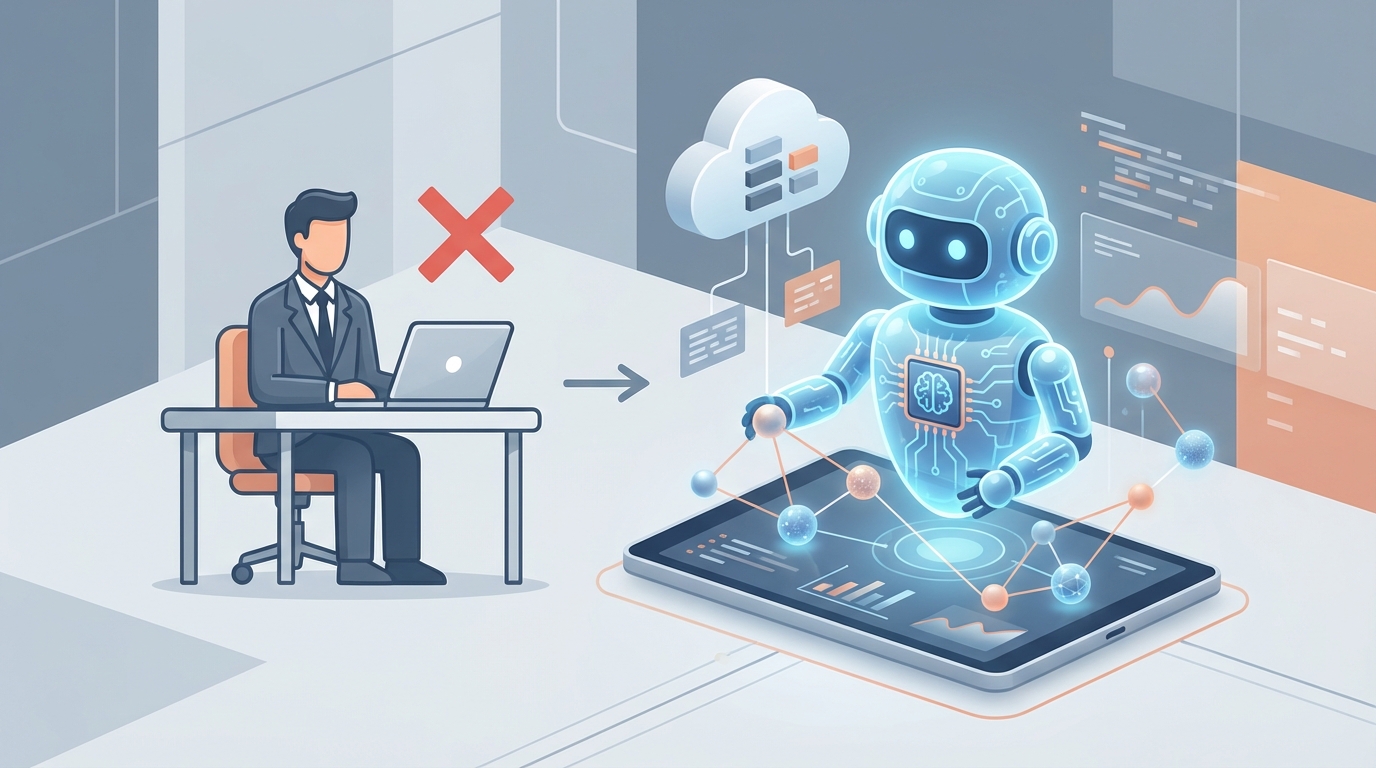
Most companies hiring an Influencer Marketing Manager are paying six figures for someone who spends 40% of their day copying and pasting data between spreadsheets, sending templated DMs, and Googling whether @fitnessguru2847 has real followers or bought them from a bot farm in Jakarta.
That's not a knock on the people in this role. It's a knock on the role itself — or rather, on the fact that we've been asking humans to do work that machines now handle better, faster, and without needing a mental health day after negotiating rates with 200 micro-influencers in a single quarter.
Here's the thing: you probably don't need to hire an Influencer Marketing Manager. You need to build an AI agent that does 70% of the job, then have a human handle the 30% that actually requires a brain. Let me walk you through exactly how this works.
What an Influencer Marketing Manager Actually Does All Day
Let's get specific, because vague job descriptions hide the reality of where the time goes.
An Influencer Marketing Manager's week breaks down roughly like this:
Influencer Discovery and Vetting (30-40% of time): Searching Instagram, TikTok, and YouTube for creators who match the brand. Checking follower counts, engagement rates, audience demographics, content quality, and whether those 500K followers are actual humans. This involves toggling between platform native analytics, third-party tools like HypeAuditor or Social Blade, and a lot of gut instinct. For a single campaign targeting 20-30 influencers, your manager might evaluate 200-400 profiles.
Outreach and Relationship Management (20-25%): Writing personalized DMs and emails. Following up. Following up again. Managing conversations across Instagram DMs, email, WhatsApp, and whatever platform the influencer prefers. Negotiating rates that can range from $500 for a nano-influencer's Instagram Story to $50,000+ for a single YouTube integration. Every influencer wants something different — some want free product, some want flat fees, some want revenue share, and some want all three.
Analytics and Reporting (15-20%): Pulling data from Google Analytics, UTM-tagged links, platform insights, coupon code redemptions, and affiliate dashboards. Combining all of this into a coherent story for stakeholders who want to know one thing: did this make us money? This involves exporting CSVs, building pivot tables, and formatting slides that a VP will glance at for 90 seconds.
Content Review and Approvals (10-15%): Reviewing drafts, requesting revisions ("Can you make the product more visible?"), ensuring FTC compliance (#ad disclosures, proper tagging), and coordinating timelines so posts go live during peak engagement windows.
Strategy and Trend Monitoring (remainder): Keeping up with algorithm changes, emerging platforms, trending content formats, and what competitors are doing. This is the actually valuable part. It's also the part that gets squeezed out by everything above.
See the problem? The highest-value work — strategy, creative direction, relationship building — gets the least time because the grunt work eats the day alive.
The Real Cost of This Hire
Let's talk money, because this is where the math gets uncomfortable.
Base salary for a mid-level Influencer Marketing Manager in the US: $75,000–$105,000. In New York or San Francisco, push that to $110,000+.
Total compensation with bonuses: $85,000–$125,000.
Actual cost to your company: Add 30-50% for benefits, payroll taxes, equipment, software licenses, and office space. You're looking at $120,000–$200,000 per year for a mid-level hire.
And that doesn't include:
- Recruiting costs: $15,000–$30,000 if you use an agency, or 40+ hours of internal time if you don't
- Onboarding and training: 2-3 months before they're fully productive, during which you're paying full salary for partial output
- Turnover risk: The average tenure for marketing roles is 2.5 years. When they leave, you start the cycle over
- Tool subscriptions they'll need: CreatorIQ ($30K+/year), Traackr ($20K+/year), Grin ($15K+/year), plus analytics tools. These costs exist whether you hire a human or not, but they add to the total
So the real question isn't "can I afford an AI agent?" It's "can I afford to keep paying $150K+ for someone to manually search Instagram?"
What AI Handles Right Now (Not Theoretically — Right Now)
Let me be honest about what's actually possible today, not what some pitch deck promises for 2027.
Influencer Discovery and Fraud Detection — 80%+ Automatable
This is the single biggest time sink, and it's the most obviously automatable. An AI agent built on OpenClaw can:
- Scrape and analyze public profiles across Instagram, TikTok, and YouTube based on criteria you define (niche, follower range, engagement rate thresholds, location, audience demographics)
- Cross-reference follower growth patterns to flag bought followers (sudden spikes of 50K followers overnight = bot farm)
- Score influencers on brand alignment using natural language analysis of their captions, bios, and comment sentiment
- Maintain a live database of vetted influencers that updates automatically as their metrics change
What used to take your manager two weeks of manual searching becomes a continuously running pipeline that surfaces candidates in minutes.
Outreach at Scale — 50-60% Automatable
Your OpenClaw agent can draft personalized outreach messages that reference specific content the influencer has posted, their recent engagement trends, and why they'd be a fit. Not the "Dear Creator, we love your content!" garbage. Actually personalized messages.
It can also handle:
- Initial contact across email and platform DMs
- Follow-up sequences on a schedule you define
- Sorting responses into categories (interested, negotiating, declined, no response)
- Routing conversations that need human attention (like a creator who's interested but wants to modify the deal)
The human steps in when it's time to actually build a relationship. The agent handles the top of the funnel.
Analytics and Reporting — 90% Automatable
This is where AI agents shine brightest. Your OpenClaw agent can:
- Pull performance data from every platform and tracking source automatically
- Calculate true ROI by connecting influencer posts to conversion events (not just vanity metrics)
- Generate executive-ready reports on whatever cadence you want — daily, weekly, per campaign
- Flag underperforming influencers or content in real time so you can make adjustments mid-campaign
- Predict expected performance for future campaigns based on historical data
No more spending Friday afternoon building a PowerPoint. The report builds itself.
Compliance Monitoring — 85% Automatable
Your agent can scan every piece of published influencer content and check for:
- Proper FTC/ASA disclosure (#ad, #sponsored, paid partnership tags)
- Brand guideline adherence (logo usage, messaging, restricted claims)
- Competitor mentions or conflicting brand partnerships
- Content that's gone live outside the agreed-upon timeline
It flags violations instantly instead of discovering them three days later when your legal team sends a panicked Slack message.
Rate Benchmarking — Mostly Automatable
When an influencer quotes $8,000 for a single TikTok, your agent can pull comparable rates for creators with similar follower counts, engagement rates, and niches. It gives your negotiator (human or otherwise) actual data to work with instead of a gut feeling that "seems high."
What Still Needs a Human
I'm not going to pretend AI replaces this role entirely. It doesn't. Here's what still requires a person:
Creative Strategy and Brand Voice: AI can suggest content formats based on what's performing, but it can't tell you that your brand should lean into self-deprecating humor this quarter because the cultural moment calls for it. Strategic taste is human.
Relationship Building: The influencers who drive the most value for your brand over time are the ones who genuinely like working with you. That requires empathy, trust, and the kind of rapport that comes from actual human connection. An AI can get someone to respond; a human makes them want to stay.
Negotiation Nuance: AI can benchmark rates and even draft counter-offers. But when an influencer says "I'll do it for $5K but only if I get creative control and exclusivity doesn't apply to my skincare brand deals," that's a judgment call that requires understanding the full context of the relationship and business priorities.
Crisis Management: When an influencer posts something off-brand, offensive, or just plain wrong, you need a human making real-time decisions about how to respond.
Edge Case Compliance: FTC rules are mostly straightforward, but edge cases — like whether a gifted product requires disclosure six months later — need human legal judgment.
The play here isn't full replacement. It's turning a $150K full-time role into a $40K part-time strategic advisor who's supported by an AI agent that handles the operational grind.
How to Build This with OpenClaw
Here's where it gets practical. OpenClaw lets you build custom AI agents that chain together multiple capabilities into workflows. Here's how to architect an Influencer Marketing Manager agent.
Step 1: Define Your Agent's Core Workflows
Break the role into discrete workflows your agent will handle:
- Discovery Pipeline — Continuous influencer scouting based on your criteria
- Outreach Sequencer — Personalized contact and follow-up automation
- Campaign Tracker — Real-time performance monitoring and reporting
- Compliance Scanner — Automated content review post-publication
- Rate Analyzer — Benchmarking and negotiation support
Each of these becomes a module in your OpenClaw agent.
Step 2: Configure the Discovery Pipeline
In OpenClaw, set up your agent with instructions like:
Agent Role: Influencer Discovery
Objective: Identify and score potential influencer partners

Criteria:
- Platform: Instagram, TikTok
- Niche: [your niche, e.g., fitness, beauty, SaaS]
- Follower range: 10K-500K
- Minimum engagement rate: 3%
- Audience location: 60%+ US-based
- Red flags: Follower/following ratio below 1:5, engagement rate above 20% (likely engagement pods), follower growth spikes exceeding 15% in a single week

Output: Ranked list with profile URL, follower count, engagement rate, audience demographics summary, brand alignment score (1-10), and fraud risk flag

Update frequency: Weekly
Connect this to social platform APIs and data sources through OpenClaw's integration layer. The agent runs continuously and deposits new candidates into your pipeline.
Step 3: Build the Outreach Sequencer
Configure your agent to generate personalized outreach based on the discovery data:
Agent Role: Influencer Outreach
Objective: Send personalized initial contact and manage follow-ups

Inputs: Vetted influencer profiles from Discovery Pipeline

Message Template Framework:
- Reference 1-2 specific recent posts by the influencer
- Explain brand alignment in one sentence
- State offer clearly (compensation range, deliverables, timeline)
- Include one clear CTA

Sequence:
- Day 0: Initial outreach (email preferred, DM fallback)
- Day 3: Follow-up if no response
- Day 7: Final follow-up with modified angle
- Day 10: Mark as "no response" and archive

Routing Rules:
- Positive response → Route to human for relationship building
- Rate negotiation → Provide benchmark data, draft counter-offer, route to human for approval
- Declined → Log reason, add to re-engagement list for future campaigns
Step 4: Set Up Campaign Tracking
Your OpenClaw agent monitors live campaigns:
Agent Role: Campaign Performance Tracker
Objective: Monitor influencer content performance in real time

Data Sources:
- Instagram/TikTok/YouTube native analytics (via API)
- Google Analytics (UTM parameters)
- Coupon code / affiliate link redemption data
- Shopify/WooCommerce conversion data (if applicable)

Tracked Metrics:
- Impressions, reach, engagement rate per post
- Click-through rate on tracked links
- Conversion rate and revenue attributed
- Cost per engagement and cost per acquisition
- Earned media value estimate

Alerts:
- Notify if any influencer's content underperforms by >30% vs. predicted
- Notify if engagement pattern suggests artificial inflation
- Weekly summary report auto-generated every Monday 8am

Report Format: Executive summary (3 paragraphs max) + detailed data table + recommendations for next campaign iteration
Step 5: Compliance and Rate Analysis Modules
Add these as supporting modules:
Agent Role: Compliance Scanner
Trigger: New influencer post detected (via social listening integration)
Checks:
- FTC disclosure present (#ad, #sponsored, or platform partnership label)
- Brand name/product correctly tagged
- No competitor products visible
- Content matches approved brief
Action: Flag violations immediately via Slack/email to human reviewer
Agent Role: Rate Benchmarker
Trigger: Influencer submits rate quote
Process:
- Pull comparable rates for same platform, niche, follower range, and engagement tier
- Calculate suggested counter-offer range based on campaign budget and expected ROI
- Generate one-page rate comparison for human negotiator
Step 6: Connect Everything
In OpenClaw, these modules feed into each other. Discovery populates Outreach. Outreach hands off to Campaign Tracking. Compliance runs in parallel. Rate Analysis activates on demand.
The result: a system that handles the operational backbone of influencer marketing while surfacing decisions that need human judgment.
What This Costs vs. a Full-Time Hire
Your OpenClaw agent plus the supporting tool subscriptions will run you roughly $20,000–$40,000 per year, depending on scale. Add a part-time strategist at 15-20 hours per week ($30,000–$50,000), and you're looking at $50,000–$90,000 total — compared to $150,000–$200,000 for a full-time manager plus tools.
That's a 40-60% cost reduction, and your campaigns run 24/7 instead of 9-to-5.
The Companies Already Doing This
This isn't speculative. Major brands are already using AI to gut the manual work from influencer marketing:
- Nike uses AI-powered platforms for discovery and performance prediction, reporting 50% time savings on influencer vetting alone
- Glossier reduced their discovery phase from weeks to hours using AI-optimized matching, with a 30% lift in campaign ROI
- Unilever manages 1,000+ influencer relationships with AI handling scoring and predictive analytics while humans focus purely on strategy
- Fashion Nova automated 70% of their outreach and contract management through AI workflows
These companies are using various enterprise tools. With OpenClaw, you can build the same capabilities as a custom agent tailored to your exact brand, niche, and workflow — without paying enterprise SaaS prices or being locked into someone else's feature roadmap.
What To Do Next
You have two paths:
Path 1: Build it yourself. Take the architecture above, sign up for OpenClaw, and start building. The discovery and analytics modules are the easiest wins — start there. You'll see ROI within the first campaign.
Path 2: Have us build it for you. If you'd rather skip the implementation curve and have a working AI Influencer Marketing Manager agent deployed within weeks, that's exactly what Clawsourcing does. We build custom AI agents on OpenClaw for companies that want the result without the build time. You tell us what your influencer program looks like, and we deliver an agent that runs it.
Either way, stop paying $150K for someone to search Instagram manually. That era is over.