Replace Your Event Marketing Manager with an AI Event Marketing Manager Agent
Replace Your Event Marketing Manager with an AI Event Marketing Manager Agent
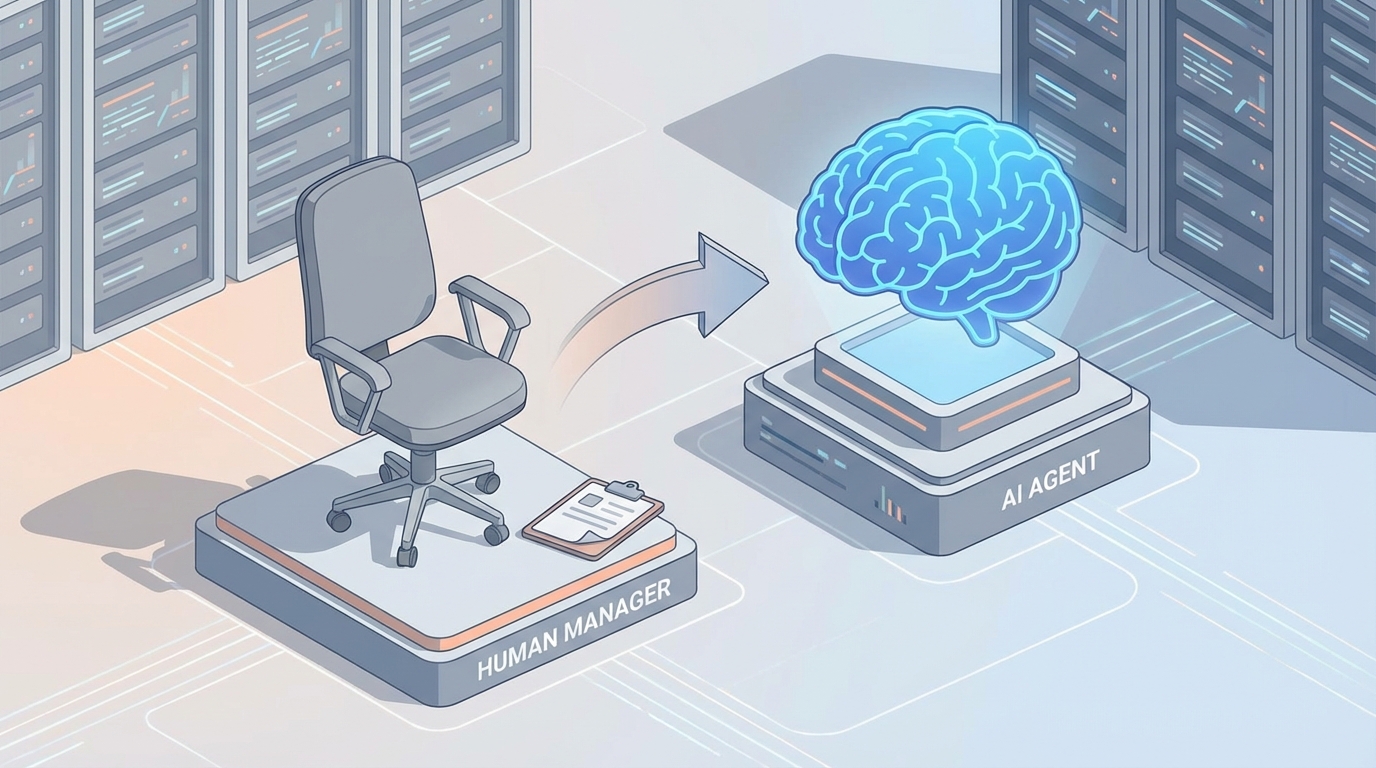
Most event marketing managers spend their weeks doing things a well-configured AI agent could handle in minutes. That's not a dig at the role — it's an observation about where the work actually lives.
I've watched companies hire $90K-$120K event marketing managers, load them up with 20-40 events per year, and then wonder why half the work is sloppy. It's not a talent problem. It's a bandwidth problem. When one person is simultaneously writing promotional emails, chasing vendor quotes, building registration pages, segmenting attendee lists, and pulling post-event ROI reports, something's going to slip.
The fix isn't hiring two people. It's offloading the 40-60% of the role that's essentially data processing, content generation, and workflow automation to an AI agent — and letting the human focus on the stuff that actually requires a human.
Here's how to think about it, and how to build it on OpenClaw.
What an Event Marketing Manager Actually Does All Day
Let's get specific, because "event marketing" sounds simple until you break it down into the 47 things that have to happen for a single webinar to not be a disaster.
Planning and strategy eats the first chunk. This means defining goals (lead gen? brand awareness? customer retention?), picking the format, setting the budget, aligning the event with whatever the broader marketing team is doing that quarter. For a mid-size company running 30 events a year, this is a constant background process.
Promotion and content creation is the next time sink. Every event needs an email sequence (usually 4-7 touches), social posts across 2-4 platforms, maybe paid ads, a landing page, partner co-marketing assets, and internal enablement materials so sales actually tells people about the event. According to EventMB's 2026 State of Events Report, this phase alone consumes 20-30% of an EMM's total working hours.
Logistics coordination is the unglamorous core of the job. Booking venues, negotiating with 10-20 vendors per event, managing AV setup, handling permits, coordinating speakers, setting up registration tech through Eventbrite or Cvent or whatever the company uses. This is where 30-40% of the time goes, and most of it is back-and-forth emails that could put anyone in a coma.
On-site execution spikes during event weeks — troubleshooting the projector that won't connect, managing the speaker who showed up late, dealing with the 25% of registrants who no-showed (that's the industry average, by the way).
Post-event analysis rounds it out. Compiling attendance data, calculating cost-per-lead, building ROI reports for leadership, scoring and routing leads to sales, sending follow-up nurture sequences. This should be the most valuable phase, but it's usually the most rushed because the next event is already breathing down their neck.
A typical week breaks down roughly 40-50% planning and logistics, 20-30% promotion, and the remainder split between execution and analysis. Time-tracking data from marketers using tools like Toggl shows planning phases alone can eat 50+ hours per event. Multiply that by 30 events a year and you start to see why burnout rates in this role hover around 40%.
The Real Cost of This Hire
Let's talk money, because this is where the math gets interesting.
A mid-level event marketing manager in the US (3-7 years of experience) pulls a base salary of $75K-$105K, with total comp landing between $85K-$120K once you factor in bonuses. In San Francisco or New York, add 20-30%. Senior directors at tech companies push $150K+ base.
But salary is just the starting point. The actual cost of this employee includes:
- Benefits: Health insurance, 401(k) match, PTO — typically adds 25-35% on top of base salary
- Tools and software: Eventbrite, Cvent, HubSpot, social scheduling tools, design subscriptions — $500-$2,000/month per seat
- Training and ramp time: A new EMM takes 3-6 months to fully ramp. During that period, you're paying full salary for partial output
- Turnover costs: Average marketing tenure is 2-3 years. Replacing someone costs 50-200% of their annual salary when you factor in recruiting, lost productivity, and ramp time for the replacement
- Management overhead: Someone has to manage this person, review their work, sit in alignment meetings
All-in, a mid-level event marketing manager costs a company $120K-$170K per year in real dollars. A senior one can push past $200K.
If you could automate half their task load — the repetitive, data-heavy, content-generation half — you're either saving $60K-$100K, or you're freeing up that person to run twice as many events at twice the quality. Either way, the ROI math works.
What AI Handles Right Now (And How OpenClaw Does It)
Let me be honest: AI isn't replacing the entire event marketing function today. But it's handling a surprisingly large portion of it, and the portion it handles well maps almost perfectly to the tasks that eat the most time.
Here's where an AI agent built on OpenClaw can take over immediately.
Promotional Content Generation
This is the lowest-hanging fruit and the highest time savings. An OpenClaw agent can generate:
- Complete email sequences (invite, reminder, last-chance, follow-up) personalized by attendee segment
- Social media posts across platforms, adapted for each platform's format and tone
- Landing page copy with multiple headline variants for testing
- Partner co-marketing briefs and suggested copy
- Internal sales enablement blurbs
What used to take an EMM 6-10 hours per event now takes minutes. You feed the agent event details — topic, audience, goals, date, speakers — and it produces a full promotional package. Not generic template garbage, either. OpenClaw lets you train agents on your brand voice, past high-performing content, and audience data so the output actually sounds like your company.
Jasper and Copy.ai can do pieces of this, but they're point tools. An OpenClaw agent handles the entire workflow end-to-end: generating the content, formatting it for each channel, and sequencing it into your promotion timeline.
Attendee Segmentation and Personalization
Most EMMs spend hours manually segmenting registration lists and crafting different messaging for different audiences. An OpenClaw agent connected to your CRM can:
- Auto-segment registrants by industry, company size, job title, past event attendance, and engagement score
- Generate personalized pre-event communications for each segment
- Recommend session tracks or agenda items based on attendee profiles
- Predict no-show likelihood based on historical patterns and trigger re-engagement campaigns for high-risk registrants
Eventbrite's forecasting tools can predict attendance at a macro level, but an OpenClaw agent does it at the individual level and takes action on it — sending a personal nudge to the VP who registered but hasn't opened any emails, or escalating a high-value prospect to sales for a personal outreach.
Post-Event Analytics and Lead Processing
This is where most event marketing teams drop the ball, not because they don't care, but because they're already neck-deep in the next event by the time the data comes in.
An OpenClaw agent can:
- Compile attendance data, engagement metrics, and survey responses into a unified dashboard within hours of event close
- Score leads based on event behavior (sessions attended, questions asked, booth visits, content downloaded)
- Auto-generate ROI reports mapped to the goals defined in the planning phase
- Draft and trigger post-event nurture sequences personalized to each attendee's engagement level
- Route hot leads to sales with context summaries so reps don't walk into calls blind
HubSpot reported that using AI for post-event lead prioritization cut manual analysis by 70% at their INBOUND conference. You can build the same capability — customized to your specific scoring criteria and sales process — with an OpenClaw agent.
Registration and Attendee Support
Chatbots aren't new, but most event chatbots are painfully dumb. An OpenClaw agent functioning as your event's front-line support can:
- Handle registration questions, logistics queries, and speaker info requests 24/7
- Process registration changes, cancellations, and waitlist management
- Provide real-time answers during events (schedule changes, room locations, WiFi passwords — the stuff that floods your inbox every event day)
- Match attendees for networking based on shared interests, industry, or goals (Bizzabo reports this alone cuts manual matchmaking work by 90%)
Budget Tracking and Vendor Coordination Support
An OpenClaw agent won't negotiate your catering contract (more on that below), but it can:
- Track spending against budget in real time and flag overruns before they become problems
- Generate RFP templates and comparison matrices when you're evaluating vendors
- Monitor vendor deliverable timelines and send automated follow-ups when deadlines approach
- Forecast budget scenarios based on different attendance projections
What Still Needs a Human
Here's where I'm going to be straight with you, because overselling AI capabilities is how you end up with a worse outcome than what you started with.
Vendor negotiations and relationship management. Contracts involve nuance, leverage, trust, and sometimes a well-timed lunch. AI can prepare your negotiation brief and track terms, but the actual negotiation is human territory.
On-site crisis management. When the keynote speaker's flight gets canceled two hours before the event, or the AV system dies mid-presentation, you need a human who can improvise, make judgment calls under pressure, and manage the emotional temperature in the room. AI is terrible at this.
Creative strategy. AI can generate content all day, but deciding that your developer conference should have an unconference track, or that your product launch should be an immersive experience instead of a keynote — that's creative vision. It comes from understanding your audience at a level that goes beyond data.
Executive and stakeholder management. Convincing your CMO to increase the events budget, aligning with sales leadership on lead definitions, managing a difficult speaker relationship — these are political and interpersonal tasks that require emotional intelligence.
Ethical and privacy decisions. How much attendee data to collect, how to handle GDPR compliance for international events, whether to use facial recognition for check-in — these decisions have real consequences and need human judgment.
The honest split is roughly this: AI handles 40-60% of the work today (the data processing, content generation, and workflow automation), while humans handle the remaining 40-60% (strategy, relationships, crisis management, and judgment calls). That ratio will shift over time, but it's where we are now.
How to Build Your AI Event Marketing Agent on OpenClaw
Here's the practical part. OpenClaw lets you build specialized agents that handle specific workflow domains. For event marketing, I'd recommend building three interconnected agents rather than one monolithic one.
Agent 1: The Promoter
This agent handles all content generation and campaign execution.
Setup in OpenClaw:
Agent: Event Promoter
Role: Generate and manage all promotional content for events

Knowledge Base:
- Brand style guide and voice documentation
- Past event promotional materials (last 12 months)
- Top-performing email subject lines and social posts
- Audience persona documents

Integrations:
- CRM (HubSpot, Salesforce)
- Email platform (Mailchimp, Marketo)
- Social scheduling (Buffer, Hootsuite)

Core Workflows:
1. Event Brief Intake → Generate full promotional package
2. Registration milestone triggers → Adjust messaging cadence
3. Segment-specific personalization → Auto-variant generation
4. A/B test setup → Auto-select winners based on performance data
Feed this agent your event brief — date, topic, audience, goals, speakers, key selling points — and it produces a complete promotional plan with ready-to-deploy assets. Review, tweak what needs tweaking, and deploy.
Agent 2: The Analyst
This agent handles data processing, lead scoring, and reporting.
Agent: Event Analyst
Role: Process event data, score leads, and generate actionable reports

Knowledge Base:
- Historical event performance data
- Lead scoring criteria and sales qualification framework
- ROI calculation methodology
- Benchmark data by event type

Integrations:
- Registration platform (Eventbrite, Cvent)
- CRM
- Survey tools (Typeform, SurveyMonkey)
- Analytics (Google Analytics, attribution tools)

Core Workflows:
1. Pre-event: Attendance prediction → Staffing/resource recommendations
2. During event: Real-time engagement tracking → Alert on anomalies
3. Post-event: Auto-compile metrics → Generate ROI report
4. Lead processing: Score → Segment → Route to sales with context
5. Trend analysis: Cross-event patterns → Strategy recommendations
The real power here is in the post-event workflow. Within hours of an event ending, this agent can have a full report ready and leads scored and routed — a process that typically takes EMMs 1-2 weeks.
Agent 3: The Concierge
This agent handles attendee-facing communication and support.
Agent: Event Concierge
Role: Manage attendee communications, support, and engagement

Knowledge Base:
- Event details (schedule, speakers, venue info, FAQs)
- Registration data
- Attendee profiles and preferences

Integrations:
- Registration platform
- Chat/messaging tools
- Event app (if applicable)

Core Workflows:
1. Pre-event: Answer registration queries → Process changes
2. During event: Real-time support → Session recommendations
3. Networking: Attendee matching based on profiles and goals
4. Post-event: Satisfaction surveys → Personalized follow-up content
Connecting the Three
The beauty of building on OpenClaw is that these agents communicate with each other. The Promoter knows registration numbers from the Concierge's data and adjusts campaign intensity. The Analyst pulls engagement data from the Concierge to improve lead scoring. The Concierge uses the Analyst's predictions to personalize recommendations.
You're not managing three separate tools. You're managing one system with specialized components.
Implementation Timeline
Week 1-2: Set up the Promoter agent. Feed it your brand materials, connect your email and social tools, and run it on your next event's promotional cycle. Have your human EMM review all output before it goes live.
Week 3-4: Add the Analyst agent. Connect your registration platform and CRM. Run it alongside your existing reporting process and compare outputs.
Week 5-6: Deploy the Concierge agent for your next event. Start with FAQ handling only, then expand to attendee matching and personalized recommendations.
Ongoing: Refine based on results. The agents learn from corrections and improve over time. After 2-3 event cycles, you'll have a system that handles the bulk of routine work with minimal oversight.
The Bottom Line
You're not replacing your event marketing manager. You're replacing the 50% of their job that's repetitive data processing and content grinding — the part that burns them out and leaves no time for the strategic work that actually moves the needle.
The companies getting this right (HubSpot, Cisco, Salesforce) aren't eliminating event marketing roles. They're restructuring them. The humans do strategy, relationships, and creative vision. The AI handles volume, data, and execution speed.
An OpenClaw-powered event marketing agent costs a fraction of a full-time hire and runs 24/7 without burning out, taking PTO, or spending three months ramping up. For companies running 15+ events a year, the math isn't even close.
You can build this yourself using the framework above and OpenClaw's platform. Start with the Promoter agent, prove the value on one event cycle, and expand from there.
Or, if you'd rather have someone who's built these before handle it — hire us to build it through Clawsourcing. We'll scope your event marketing workflow, identify the highest-ROI automation opportunities, and deploy a custom agent system tuned to your specific tech stack, brand, and event cadence.
Either way, stop paying six figures for someone to spend half their time writing email subject lines and pulling CSV exports. That's not what humans are for.
Recommended for this post

Akira
Product Expert
Your product expert that turns user signal into roadmap decisions, not feature lists. 20+ Core Capabilities.
 Clarence Maker
Your AI chief of staff delivers a 60-second executive briefing every morning — weather, email triage, calendar, market signals, and revenue metrics, all before your first coffee.
 James
James