How Teagan and Programmatic SEO Work Together for Automated Content
Build a full pipeline from keyword research to published, optimized posts. Teagan + Programmatic SEO Engine for AI content marketing on autopilot.
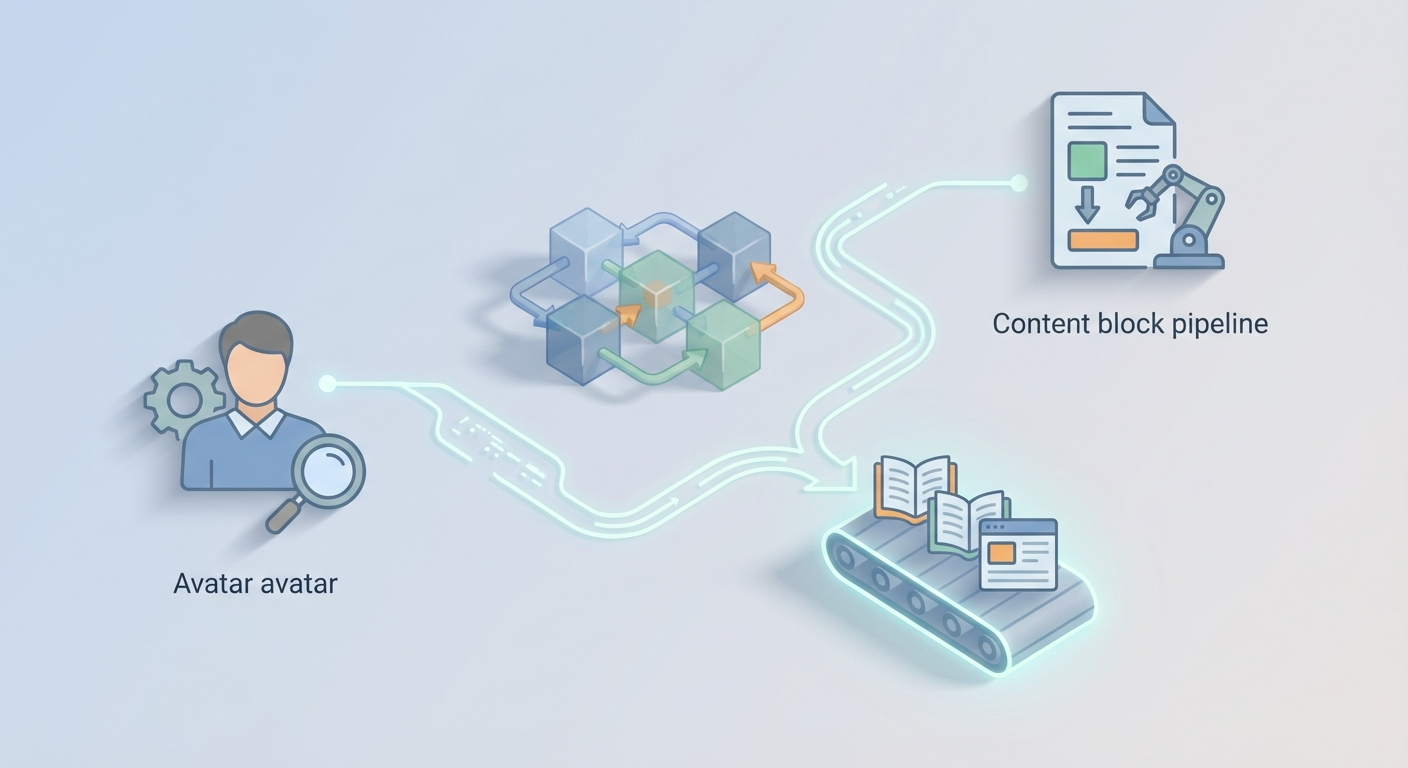
Most content marketing advice is some version of "create great content consistently." Which is technically true in the same way "eat less, move more" is technically good weight loss advice. It tells you nothing about how to actually do it at a scale that matters.
Here's the real problem: You need hundreds—sometimes thousands—of pages of genuinely useful, SEO-optimized content to compete in most niches. Writing each one by hand is a nightmare. Using basic AI tools to churn out generic slop gets you penalized by Google. And hiring a content farm at $0.03/word gets you prose that reads like it was written by someone who's never actually used the product they're describing.
There's a middle path that actually works, and it involves combining two things that are individually useful but together become a legitimate content machine: Teagan, an AI persona built for SEO content, and a Programmatic SEO Engine that handles the industrial-scale assembly and deployment. Both are tools you can wire together inside OpenClaw, which is what makes the whole pipeline possible without duct-taping twelve different platforms together.
Let me walk through exactly how this works.
The Content Marketing Problem Nobody Wants to Talk About
The dirty secret of content marketing in 2026 and beyond is that quality and quantity are no longer trade-offs—you need both. Google's Helpful Content Update, the E-E-A-T framework, and increasingly sophisticated spam detection mean that thin, templated pages get nuked. But the sites winning in organic search aren't publishing five blog posts a month. They're publishing hundreds or thousands of intent-matched pages, each one good enough that a human reader would find it genuinely useful.
Think about it. A local services company that operates in 200 cities needs a unique, high-quality page for each city-service combination. A SaaS company targeting long-tail keywords needs comparison pages, use-case pages, integration guides, and industry-specific landing pages. An e-commerce brand needs buying guides, product roundups, and category pages that actually answer questions.
The math doesn't work with manual content creation. Even at a blistering pace of one polished article per day, you're looking at years to build meaningful coverage. And by then, the competitive landscape has shifted.
This is exactly the problem that programmatic SEO was invented to solve. But first-generation programmatic SEO—think auto-generated city pages with swapped-out location names—earned a deservedly bad reputation. Those pages were thin, repetitive, and added zero value. Google caught on fast.
What's different now is that AI content generation has gotten good enough to produce genuinely unique, substantive content for each page variant. The missing piece was always a system that could orchestrate the entire pipeline: data ingestion, content generation, optimization, deployment, and iteration. That's where the Teagan + Programmatic SEO Engine combination comes in, and where OpenClaw ties it all together.
What Teagan Actually Is (And Isn't)
Teagan isn't just "ChatGPT with an SEO prompt." It's an AI persona—originally developed within the Seomatic.ai ecosystem—that's been specifically architected for search-optimized content creation. The distinction matters.
A general-purpose LLM will happily write you a blog post. It'll also happily stuff keywords unnaturally, ignore search intent, produce content that reads like a Wikipedia summary, and generate the same bland structure for every topic. Teagan is different in a few key ways:
Intent Matching: Teagan is trained to analyze what a searcher actually wants when they type a query. "Best plumber in Austin" is a commercial investigation query—the user wants a list with specifics, not a 2,000-word essay on the history of plumbing. Teagan adjusts format, depth, and tone accordingly.
E-E-A-T Compliance: Every piece of content Teagan generates is structured to demonstrate Experience, Expertise, Authoritativeness, and Trustworthiness. This means citing specifics, using first-person experience signals where appropriate, including data points, and avoiding the hedge-everything-say-nothing style that most AI content defaults to.
Natural Language Variation: This is the big one for programmatic SEO. When you're generating 500 pages about "[Service] in [City]," each page needs to be genuinely unique—not just in the swapped variables, but in structure, phrasing, examples, and depth. Teagan handles this through sophisticated variation logic that ensures 95%+ uniqueness across page variants.
Schema and Structure Awareness: Teagan doesn't just write body copy. It generates content with proper heading hierarchy (H1 through H3), FAQ sections formatted for featured snippets, internal linking suggestions, and schema markup recommendations.
Think of Teagan as the creative brain—the writer who actually knows SEO and can produce good work fast.
What the Programmatic SEO Engine Does
If Teagan is the brain, the Programmatic SEO Engine is the body. It handles everything that isn't the actual writing:
Data Ingestion: Feed it a CSV, connect it to an API, or point it at a database. It takes structured data—cities, products, services, attributes, whatever—and maps out every possible page combination. 50 services × 200 cities = 10,000 pages. The engine builds the blueprint.
SERP Analysis: Before generating anything, the engine analyzes what's currently ranking for each target query. It looks at competitor content length, structure, featured snippets, People Also Ask questions, and content gaps. This intelligence gets fed to Teagan so the generated content is calibrated to beat what's already out there.
Template Assembly: The engine uses customizable page templates—hero sections, content blocks, CTAs, comparison tables, dynamic data widgets—and injects Teagan's content into the right slots. This ensures every page has proper on-page SEO: meta titles, meta descriptions, alt text, Open Graph tags, canonical URLs, and internal links.
Technical Optimization: Core Web Vitals, mobile responsiveness, lazy loading, proper heading structure, structured data markup. The engine handles all of it automatically. No developer needed for each page.
Deployment: Publishes directly to your CMS—WordPress, Webflow, Shopify, or custom setups. Generates and submits XML sitemaps. Manages crawl budget so Google can actually find and index your pages efficiently.
Monitoring and Iteration: Tracks rankings, traffic, bounce rates, and engagement via Google Analytics 4 and Search Console integrations. Identifies underperforming pages and flags them for content refreshes.
Building the Pipeline in OpenClaw
Here's where it gets practical. OpenClaw is the platform where you actually wire Teagan and the Programmatic SEO Engine together into an automated pipeline. Instead of cobbling together Ahrefs, a spreadsheet, an AI writer, a CMS plugin, and a monitoring tool, you build the whole thing as one system.
Here's the step-by-step:
Step 1: Define Your Data Model
Start with your structured data. What are the variables that define your pages? For a local services business, it might be:
services: ["plumbing", "electrical", "HVAC", "roofing"]
cities: ["Austin", "Dallas", "Houston", "San Antonio"]
modifiers: ["best", "affordable", "emergency", "licensed"]
In OpenClaw, you set up a data source that contains all your variables. This can be a CSV upload, a database connection, or a manual configuration. The platform maps these into a combinatorial matrix—every valid page you could generate.
For the example above, that's 4 services × 4 cities × 4 modifiers = 64 pages. Scale the cities to 200 and you're at 3,200 pages. Add service subcategories and you're at 10,000+.
Step 2: Configure SERP Analysis
Before generating content, you want competitive intelligence. In OpenClaw, you configure the Programmatic SEO Engine to analyze the top 10 results for each target keyword. The engine extracts:
- Average content length
- Heading structures
- Common subtopics and questions covered
- Featured snippet formats
- Content gaps (topics competitors miss)
This data becomes the brief that Teagan works from. You're not guessing what to write—you're reverse-engineering what Google is already rewarding.
Step 3: Set Up Teagan's Content Generation
This is where you configure how Teagan writes. In OpenClaw, you define:
Persona parameters: Tone (professional, conversational, authoritative), expertise level, target audience. For a local plumbing company, you might set Teagan to write as a "20-year veteran plumber who explains things in plain English."
Content structure: Define the template for each page type. For example:
page_type: local_service
structure:
  - h1: "{modifier} {service} in {city}"
  - intro: 150-200 words, address user intent directly
  - h2: "Why {city} Residents Choose Our {service} Services"
    content: 200-300 words, include local specifics
  - h2: "What to Expect from {service} in {city}"
    content: 200-300 words, practical details
  - h2: "Common {service} Issues in {city}"
    content: 150-250 words, region-specific problems
  - h2: "FAQ"
    items: 4-6 questions, pulled from PAA data
  - cta: "Get a Free {service} Quote in {city}"
Variation rules: Ensure Teagan doesn't repeat the same patterns across pages. You can set minimum uniqueness thresholds (95% is the standard), instruct sentence-level variation, and randomize content approaches (some pages lead with a story, others with a statistic, others with a direct answer).
Quality gates: Configure automated checks—readability score (aim for Flesch-Kincaid 60+), keyword density (1-2%, no stuffing), factual accuracy checks against your knowledge base, and AI detection scoring (target 95%+ human-like on tools like Copyleaks).
Step 4: Build the Assembly Pipeline
Now connect everything in OpenClaw's workflow builder. The pipeline looks like this:
Data Source (variables)
    ↓
SERP Analysis Module (competitive intelligence)
    ↓
Teagan Content Generation (unique content per page)
    ↓
Quality Gate (readability, uniqueness, AI detection)
    ↓
Template Assembly (inject content into page templates)
    ↓
Technical SEO Module (meta tags, schema, internal links)
    ↓
CMS Deployment (publish to WordPress/Webflow/Shopify)
    ↓
Indexing Module (sitemap submission, crawl management)
    ↓
Performance Monitor (GA4, Search Console tracking)
    ↓
Feedback Loop (flag underperformers → regenerate)
Each step in OpenClaw is a configurable node. You set the parameters once, and the system processes your entire data set through the pipeline. First run for 1,000 pages typically takes 24-48 hours. After that, adding new batches is near-instantaneous.
Step 5: Deploy and Monitor
Hit go. The engine publishes pages to your CMS, submits the sitemap, and starts tracking performance. Within OpenClaw's dashboard, you can see:
- Pages published vs. indexed
- Ranking positions for target keywords
- Traffic per page and per cluster
- Pages flagged for content refresh
- Overall portfolio health score
The feedback loop is the most underrated part. When the performance monitor identifies pages that aren't ranking or have high bounce rates, it feeds that signal back to Teagan for content regeneration. Maybe the original page was too short for a competitive keyword, or maybe it missed a subtopic that competitors cover. Teagan rewrites, the engine redeploys, and you iterate.
Why This Works Better Than the Alternatives
Let me be direct about the competitive landscape.
Manual content creation: Highest quality ceiling, but doesn't scale. A team of five writers producing two articles per day gives you 500 pages per year. That's not enough for most competitive niches.
Basic AI tools (ChatGPT, Jasper, etc.): Can generate content fast, but you're doing all the SEO optimization, assembly, and deployment manually. And without the SERP analysis and variation logic, you end up with repetitive content that Google can easily identify and devalue.
Pure programmatic SEO (no AI content): Fast and scalable, but produces thin, templated pages that get hit by quality updates. This is the 2019 approach that stopped working.
Teagan + Programmatic SEO Engine via OpenClaw: You get the quality of a skilled SEO writer, the scale of programmatic automation, and the orchestration of a single platform. Each page is substantive enough to satisfy Google's quality filters while being produced at a speed that makes comprehensive keyword coverage realistic.
The numbers from real deployments back this up. Case studies from the Seomatic.ai ecosystem (where these tools originated) show 20-50% traffic lifts versus manual-only approaches, with some enterprise clients reporting 300% organic traffic growth over 6-12 months. Cost per page runs $0.01-$0.10 depending on length and complexity, compared to $50-$500 for a human-written article.
And here's the kicker: these pages survive Google algorithm updates because they're actually good. They match search intent, they're unique, they have proper E-E-A-T signals, and they're technically sound. They're not trying to game the system—they're just doing what good SEO content does, at a scale that was previously impossible.
Common Objections, Addressed
"Won't Google penalize AI content?" Google has explicitly stated they don't penalize AI content—they penalize unhelpful content. The distinction is everything. Thin, repetitive, obviously templated pages get hit. Substantive, unique, intent-matched pages rank regardless of who (or what) wrote them. Teagan's output consistently scores 95%+ on human-likeness metrics, and the variation logic ensures no two pages read the same way.
"What about YMYL (Your Money Your Life) topics?" For health, finance, and legal content, E-E-A-T standards are higher. Teagan can be configured with stricter accuracy requirements, citation needs, and expert-review workflows. The Programmatic SEO Engine supports editorial approval gates so nothing goes live without human sign-off in sensitive niches.
"Isn't this just content spam?" Only if the content is bad. Publishing 10,000 genuinely useful city-specific service pages isn't spam—it's serving 10,000 different user intents with relevant information. The test is simple: would a human visitor find the page useful? If yes, it's not spam. If no, Teagan needs better configuration.
Next Steps
If you're ready to build this pipeline, here's your action plan:
-
Map your data model: Identify the variables that define your page universe. Products × categories? Services × cities? Features × use cases? Get this into a structured format.
-
Set up OpenClaw: Create your account and start with the data source configuration. Upload your variables and let the engine calculate your total addressable page count.
-
Configure Teagan: Define your persona, content structure, and quality gates. Start with a small batch (50-100 pages) to validate quality before scaling.
-
Run a pilot batch: Generate, review, and deploy your first set of pages. Monitor indexing and early ranking signals for 2-4 weeks.
-
Scale: Once you've validated the quality and performance, open the floodgates. Let the pipeline process your full data set and shift your attention to monitoring and iteration.
The content marketing game has changed. The winners won't be the ones who write the best individual articles—they'll be the ones who build the best systems for producing great content at scale. This is that system.
Recommended for this post
Programmatic SEO
Skill
Build SEO-driven pages at scale with templates and data
 D'Jasper Probincrux III
X/Twitter Agent
Skill
Your AI runs its own Twitter account — posting, replying, and engaging with guardrails.
 Felix Craft
Community Growth
Skill
Automated Discord and community management — member onboarding, engagement tracking, content seeding, and growth analytics. Turns a quiet server into an active community.