How to Automate Weekly Client Status Updates
How to Automate Weekly Client Status Updates
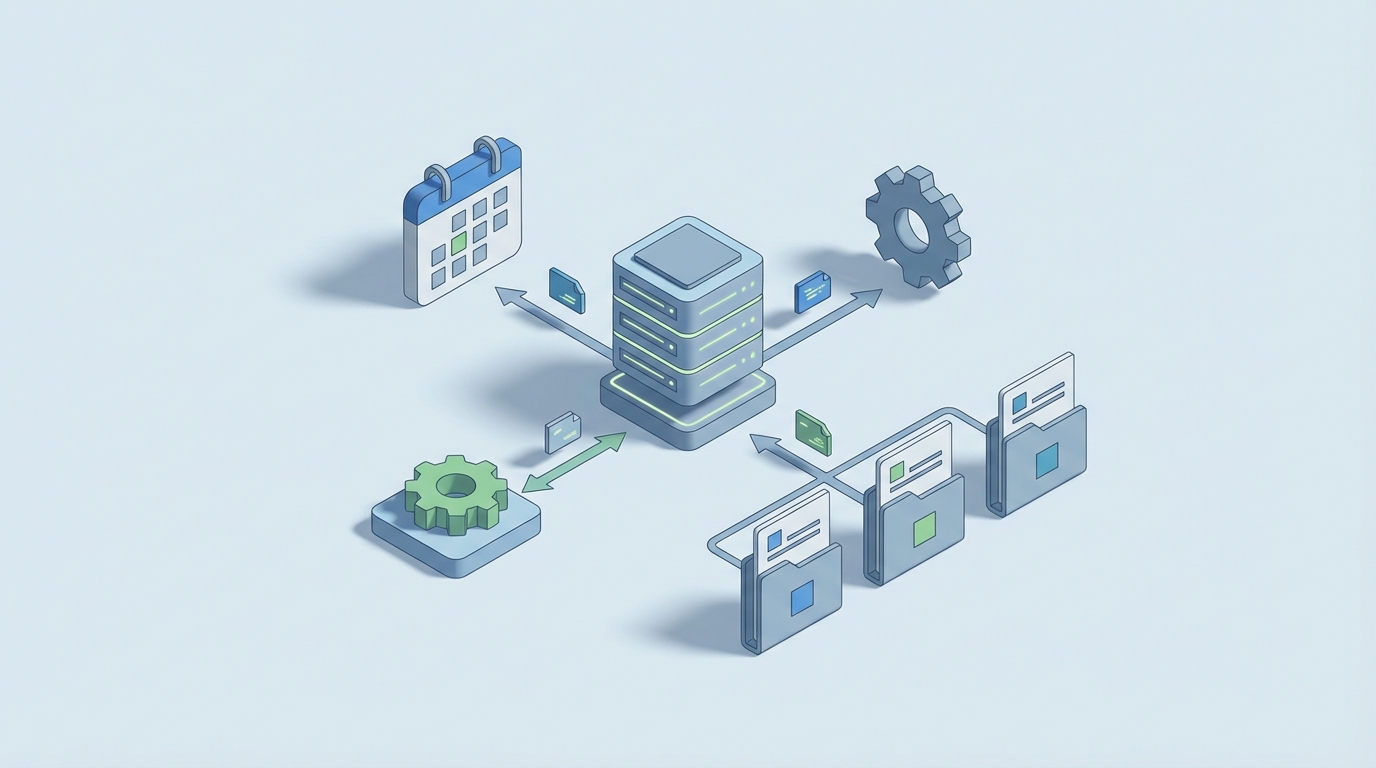
Every Monday morning, the same ritual plays out across thousands of agencies, consultancies, and service businesses. Someone—usually a project manager or account lead—opens a dozen tabs, cross-references three tools, squints at a Slack thread from last Thursday, and starts typing a status update that looks almost identical to last week's. Multiply that by fifteen clients, and you've just burned an entire day on work that feels important but generates zero new revenue.
I've watched teams spend 120+ hours a month on client reporting. That's a full-time employee doing nothing but telling clients what happened. Not making things happen. Just describing what happened.
Here's the thing: about 80% of that work is mechanical. Pull data, summarize progress, flag risks, format it nicely, send it out. The other 20%—the relationship nuance, the strategic framing, the "how do we tell this client their project is behind without them panicking"—that's genuinely human work.
The goal isn't to remove humans from client communication. It's to stop wasting human brainpower on the mechanical 80% so they can focus on the 20% that actually matters.
Let's break down exactly how to do that with an AI agent built on OpenClaw.
The Manual Workflow (and Why It's Eating Your Margins)
Here's what a typical weekly client status update looks like when done manually. I'm being specific because the details matter when you're figuring out what to automate.
Step 1: Data Collection (30–45 minutes per client) You're pulling from project management tools (Monday.com, Asana, Jira, ClickUp), time trackers, Google Drive or Notion docs, Slack threads, maybe a shared spreadsheet someone forgot to update. Half the time is spent hunting for information that lives in someone else's head.
Step 2: Synthesis and Analysis (20–30 minutes per client) Now you have raw data. You need to figure out what actually matters to this client. Are they behind on the Phase 2 deliverable? Is the budget tracking okay? Did the dev team hit the sprint goal? You're making judgment calls about what to include and what to skip.
Step 3: Writing the Update (20–40 minutes per client) Drafting the actual report. Summary, progress against milestones, risks and blockers, next steps. Some teams use PowerPoint decks. Some use email. Some use Google Docs templates they copy-paste every week.
Step 4: Personalization and Tone Review (10–15 minutes per client) Adjusting language for the audience. The CFO wants numbers. The marketing director wants narrative. Client X gets nervous about any mention of "delay" so you reframe it as "timeline adjustment." This is relationship management disguised as editing.
Step 5: Internal Approval (15–30 minutes, often with waiting) The account lead or partner reviews, requests changes, or sits on it for half a day because they're in meetings.
Step 6: Delivery and Follow-up (10–15 minutes per client) Send the email, upload to the portal, ping on Slack, then wait. Sometimes chase a response. Sometimes schedule a call to walk through it.
Step 7: Documentation (5–10 minutes per client) Log the update in your CRM. Note any client feedback. Update internal tracking.
Total per client per week: 2–3 hours. For 20 clients: 40–60 hours per week. That's one to one-and-a-half full-time employees.
According to PMI research, project managers spend 15–25% of their time on status reporting. A 2023 ClickUp study found knowledge workers burn 1.8 days per week on manual status updates and information gathering. Agency Management Institute surveys put agency reporting time at 4–8 hours per client per month.
This isn't a minor inefficiency. It's a structural drag on your business.
What Makes This Painful (Beyond Just the Time)
The time cost is obvious. The hidden costs are worse.
Inconsistency kills trust. When five different account managers write status updates, you get five different quality levels. One is thorough and data-driven. Another is vague and two sentences long. Clients notice. A Gartner study found that companies with poor visibility into project status see 2.5x higher churn risk. Your status updates are a retention tool whether you treat them that way or not.
Data staleness creates liability. By the time someone manually compiles data from three tools, writes it up, gets it approved, and sends it, the information might be two to three days old. If a risk emerged on Wednesday and the report goes out Friday morning with Tuesday's data, you look like you weren't paying attention.
It's non-billable time that scales linearly. Win five new clients? Congratulations, you just added 10–15 more hours of reporting per week. Your margins get worse as you grow. That's backwards.
Human error in sensitive areas. Manually communicating budget overruns, timeline delays, or scope changes is high-stakes. A typo, a wrong number, a poorly worded sentence—these can damage relationships or create contractual issues.
The "radio silence" failure mode. When reporting is manual and painful, it's the first thing that slips when teams get busy. Which is exactly when clients need updates most. SPI Research found that 37% of professional services firms cite client reporting as a top-three operational bottleneck. Bottlenecks create silence. Silence creates churn.
What AI Can Handle Right Now
Let's be honest about what's realistic. AI isn't going to manage your client relationships. But it can handle the mechanical majority of status reporting extremely well.
Fully automatable with current AI capabilities:
- Pulling structured data from project management tools, time trackers, and CRMs via APIs
- Aggregating and summarizing task completion, milestone progress, and time spent
- Generating first-draft status reports with executive summaries
- Creating progress visualizations and flagging metrics that are off-track
- Translating technical jargon into plain-language summaries
- Formatting reports consistently across all clients
- Scheduling delivery and sending via email or posting to client portals
- Logging the update back into your CRM
Requires human judgment (AI assists, human decides):
- Framing bad news or scope changes appropriately for the specific client relationship
- Reading interpersonal dynamics ("the VP doesn't trust our dev lead—downplay that section")
- Making strategic recommendations that go beyond what the data shows
- Approving anything with financial, contractual, or legal implications
- Handling truly unusual situations the agent hasn't seen before
The emerging best practice is clear: AI generates the objective data and narrative (that 70–80% of the report), then a human spends 10–15 minutes adding context, adjusting tone, and approving. Instead of 2–3 hours per client, you're at 15–20 minutes of high-value human time.
Step-by-Step: Building This with OpenClaw
Here's how to build a client status update agent on OpenClaw. I'm going to be specific about the architecture because vague "just use AI" advice helps no one.
Step 1: Define Your Data Sources and Connect Them
Your agent needs access to the systems where project data lives. Common integrations:
- Project management: Monday.com, Asana, Jira, or ClickUp API
- Time tracking: Harvest, Toggl, or your PM tool's built-in tracker
- CRM: HubSpot, Salesforce, or Pipedrive
- Communication: Slack (for relevant channel summaries)
- Documents: Google Drive or Notion (for deliverable tracking)
In OpenClaw, you'll set up these connections as data sources your agent can query. The agent needs read access to pull current project status, task completion rates, logged hours, upcoming deadlines, and any flagged blockers or risks.
Start with your primary project management tool and CRM. You can add more sources iteratively—don't try to connect everything on day one.
Step 2: Create Your Report Template Structure
Before the agent can write anything useful, it needs to know what a good status update looks like for your business. Define the template:
## Weekly Status Update: [Client Name]
### Period: [Date Range]

**Executive Summary**
[2-3 sentence overview: on track / at risk / behind. Key highlight.]

**Progress This Week**
- [Milestone/task updates with completion %]
- [Hours logged vs. budget]
- [Key deliverables completed or in progress]

**Risks & Blockers**
- [Active risks with severity: High/Medium/Low]
- [Blockers and who owns resolution]

**Upcoming (Next 7 Days)**
- [Planned work and milestones]
- [Decisions needed from client]

**Budget & Timeline Snapshot**
- Budget used: X% | Remaining: $X
- Timeline status: On track / X days ahead/behind

**[HUMAN REVIEW SECTION - internal only]**
- Tone adjustments needed?
- Anything to add/remove for this client?
- Approval: [Name]
Configure your OpenClaw agent with this template as its output format. The internal review section is crucial—it's where the agent flags things for human attention and where your team adds the relationship layer.
Step 3: Build the Agent Logic
Here's where OpenClaw does the heavy lifting. Your agent's workflow should follow this sequence:
Trigger: Scheduled (e.g., every Monday at 7 AM) or manual ("generate update for Client X").
Data Pull: Agent queries each connected data source for the relevant client and time period. It pulls:
- Tasks completed, in progress, and overdue
- Hours logged against budget allocation
- Any items flagged as blocked or at risk
- Upcoming deadlines within the next 7–14 days
- Recent notes or updates in the CRM
Analysis: The agent compares current data against baselines:
- Is the project ahead, on track, or behind the planned timeline?
- Is budget burn rate aligned with progress percentage?
- Are there any new risks that weren't in last week's report?
- Has the client been waiting on anything from your team for more than X days?
Draft Generation: Using the template and analyzed data, the agent writes the status update. Configure it to:
- Use plain language (no jargon unless the client is technical)
- Be specific with numbers and dates rather than vague ("completed 4 of 6 sprint tasks" vs. "good progress")
- Flag any metric that's more than 10% off plan
- Include a "changes since last update" note so the client doesn't have to compare reports
Internal Flagging: Before any human sees the client-facing draft, the agent should flag:
- Any risk rated High
- Budget variance above a threshold you set (e.g., 15%)
- Timeline delays exceeding X days
- Missing data (e.g., "No time entries found for Team Member Y this week—may need manual input")
Step 4: Set Up the Review and Approval Flow
This is the human-in-the-loop step, and it's non-negotiable. The agent delivers the draft to the account manager or project lead via their preferred channel—email, Slack, or a review queue within your workflow.
The human reviewer should:
- Read the executive summary and flagged items (2 minutes)
- Check if any relationship context needs to be added (3 minutes)
- Adjust tone where needed—especially around risks and delays (5 minutes)
- Approve or request the agent regenerate a section with different framing (2 minutes)
Total human time: 10–15 minutes. Down from 2–3 hours.
Step 5: Automate Delivery and Documentation
Once approved, the agent handles the last mile:
- Sends the formatted report via email to the client's preferred contacts
- Posts to the client portal if you use one (SharePoint, Notion shared workspace, etc.)
- Logs the update in your CRM with a summary and any flagged items
- Archives the report for historical reference
- If the client hasn't acknowledged receipt within 48 hours, optionally sends a gentle follow-up
Step 6: Iterate Based on Feedback
After the first two to three weeks, review the agent's output quality. Common early adjustments:
- Refining how the agent prioritizes which tasks to highlight (not everything is equally important)
- Adjusting the level of detail per client (some want granular, some want executive-level only)
- Adding client-specific instructions ("Client Y always wants the design section first" or "Never mention vendor Z by name")
- Tuning risk thresholds based on what actually matters vs. what creates noise
OpenClaw lets you update these configurations without rebuilding the agent from scratch. Treat it like training a new team member—the first few reports need more oversight, then it gets dialed in.
What Still Needs a Human (Don't Skip This Section)
I want to be direct about this because overpromising on AI automation is how you damage client relationships.
Always keep a human in the loop for:
-
Delivering bad news. The agent can identify that a project is three weeks behind. It should not decide how to communicate that to a client who's already frustrated. That's a phone call, not an automated email.
-
Strategic recommendations. "Based on the data, here's what I'd recommend we do next quarter" is human territory. The agent can surface the data that informs the recommendation, but the recommendation itself requires business judgment and client knowledge.
-
Relationship calibration. Every client relationship has unwritten rules. One client wants radical transparency. Another wants you to present challenges as opportunities. A third needs everything run past their boss before they can respond. No AI agent knows this. Your account team does.
-
Contractual or financial implications. If the status update involves change orders, budget overruns, or scope modifications that affect the contract, a human must review and approve the communication. Full stop.
-
First-time situations. If something genuinely novel happens—a major personnel change, a pivot in project direction, an external crisis affecting the work—the agent's pattern-matching won't be enough. Escalate to a human.
The pattern is simple: the agent handles the known and repeated, humans handle the novel and nuanced.
Expected Time and Cost Savings
Let's do the math with conservative estimates.
Before automation (20 clients, weekly updates):
- 2.5 hours average per client per week × 20 clients = 50 hours/week
- At a blended cost of $75/hour (salary + overhead for a mid-level PM or account manager), that's $3,750/week or roughly $195,000/year in labor cost for reporting alone
- Plus the opportunity cost: those 50 hours could be spent on billable work, business development, or actually improving client outcomes
After automation with OpenClaw:
- Agent handles data collection, drafting, formatting, delivery, and logging
- Human review: 15 minutes per client per week × 20 clients = 5 hours/week
- Same blended rate: $375/week or roughly $19,500/year
- Net savings: ~$175,000/year and 45 hours/week of recovered capacity
Even if you cut those savings in half to account for setup time, agent maintenance, and the occasional report that needs significant human rework, you're still looking at $80,000–$90,000 in annual savings and 20+ hours per week of freed-up capacity. For a mid-sized agency, that's the equivalent of hiring a senior account manager—except instead of adding headcount, you're making your existing team more effective.
The real-world results track with this. The agency example I mentioned earlier—120 hours per month on reporting for 25 clients—got down to 65 hours with better dashboards alone. With an AI agent handling the narrative drafting on top of automated dashboards, teams are reporting 75–85% time reduction on the mechanical work.
Beyond the raw numbers, there are compounding benefits:
- Consistency: Every client gets the same quality of update, every week, on time
- Speed: Reports can be generated and reviewed on Monday morning, delivered by noon, instead of trickling out through Wednesday
- Accuracy: Data pulled directly from source systems eliminates transcription errors
- Client satisfaction: Regular, timely, data-rich updates reduce "what's happening with my project?" emails by a significant margin
- Scalability: Adding five new clients doesn't add 12+ hours of weekly reporting work
Getting Started
You don't need to automate everything at once. Here's the practical sequence:
- Pick three clients with straightforward, recurring status updates. Don't start with your most complex or politically sensitive account.
- Map your data sources for those clients. Where does project status, time tracking, and budget data live? Can you access it via API?
- Build your first agent on OpenClaw following the steps above. Start with the template, connect one or two data sources, and generate your first draft report.
- Run in parallel for two weeks. Generate the AI draft and your manual report side by side. Compare. Adjust the agent's instructions based on what's missing or wrong.
- Switch to AI-first for those three clients. Human reviews and approves only.
- Expand gradually. Add more clients, more data sources, and more sophisticated logic as you learn what works.
If you want to skip the build-from-scratch phase, check out Claw Mart for pre-built agent templates designed for client reporting workflows. There are templates specifically structured for agency status updates, consulting engagement reports, and SaaS customer success check-ins that you can customize to your stack and deploy quickly.
The gap between "we know we should automate this" and "we actually did it" is usually about three things: time, confidence, and a clear starting point. You now have the starting point. OpenClaw gives you the platform. The only question is whether you'll keep spending 50 hours a week on copy-paste reporting or redirect that time toward work that actually grows your business.
Need this built for you? Submit a Clawsourcing request and describe your client reporting workflow—tools you use, what your updates look like, how many clients you manage. The community will scope and build a custom OpenClaw agent tailored to your stack. Stop spending Monday mornings in tab-switching hell.
Recommended for this post

Your Notion expert that builds databases, automates workflows, and connects your knowledge base.
 SpookyJuice.ai
Your Linear expert that automates issue tracking, builds workflows, and streamlines project management.
SpookyJuice.ai
Your orchestrator that coordinates agent swarms with task decomposition and consensus protocols -- agents working together.
SpookyJuice.ai