How to Automate Competitor Mention Tracking in Sales Conversations
How to Automate Competitor Mention Tracking in Sales Conversations
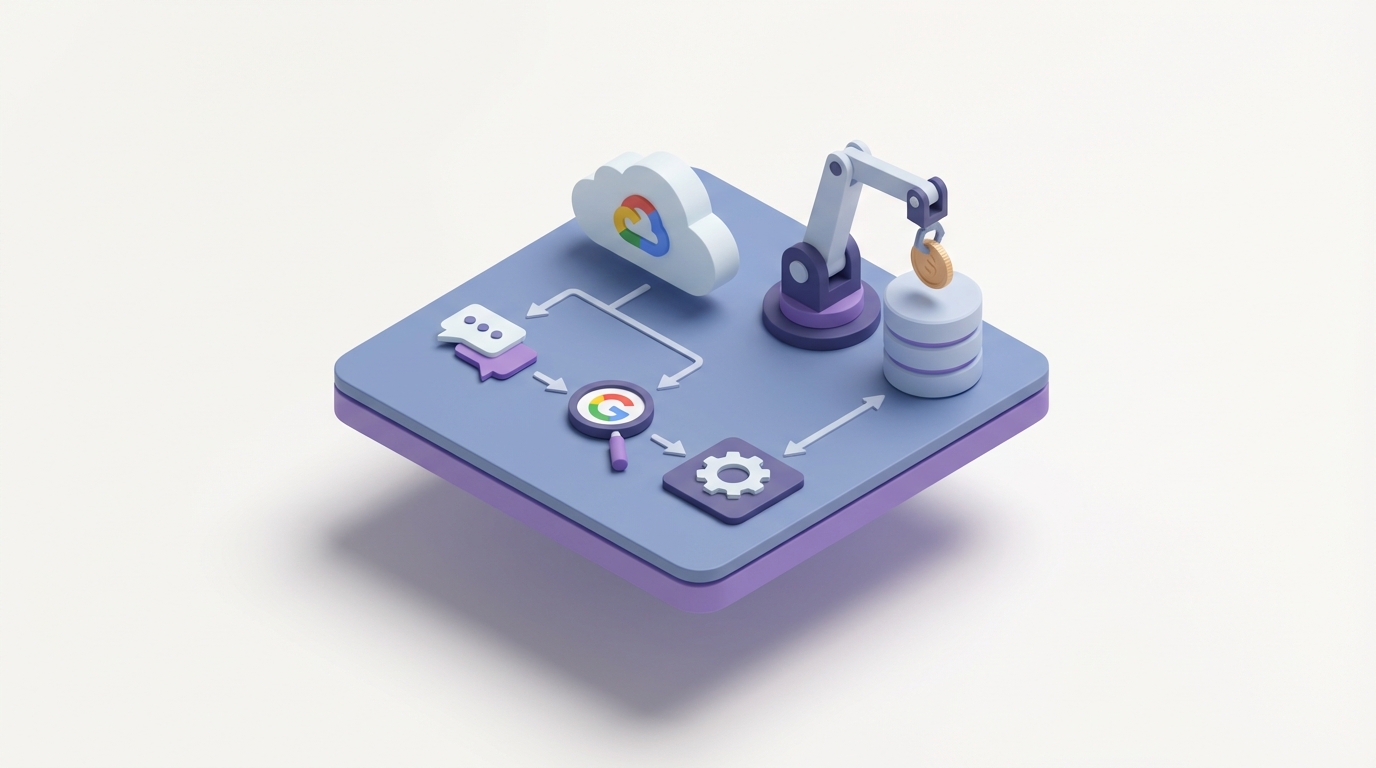
Most sales teams think they're tracking competitor mentions. They're not. They're capturing maybe a quarter of them, weeks late, in a CRM field that says something helpful like "Competitor: Other."
Meanwhile, your competitors are running conversation intelligence that tells them exactly what prospects say about you — in real time, categorized by objection type, with trend lines and automatic battle card updates.
The gap between these two realities is where deals go to die. Let's close it.
I'm going to walk through exactly how to automate competitor mention tracking using an AI agent built on OpenClaw — from the manual workflow you're probably running today, through the pain points that make it unsustainable, to a step-by-step build that replaces most of the grunt work while keeping humans where they actually matter.
The Manual Workflow Today (And Why It's Bleeding You Dry)
Let's be honest about what "tracking competitor mentions" actually looks like at most B2B companies. Here's the typical process, step by step:
Step 1: The call happens. A sales rep has a 35-minute discovery call. The prospect mentions three competitors — one by name, one by implication ("we're also looking at the market leader in your space"), and one buried in a feature comparison ("we need something that does X like [Competitor] does").
Step 2: The rep logs something. After the call, if you're lucky, the rep opens Salesforce or HubSpot and types a competitor name into a picklist or free-text field. This takes 2–5 minutes and happens maybe 60% of the time. The entry usually captures one of the three competitors mentioned. The implied mention and the feature comparison? Gone.
Step 3: Someone reviews the recording. A sales manager or enablement lead listens to the call recording. A 35-minute call takes 20–40 minutes to review properly — you can speed it up, but then you miss nuance. If your team runs 50 reps doing 8 calls per week, that's 400 calls. Nobody is reviewing 400 calls. Most teams review 5–10% of them, heavily biased toward closed-won deals.
Step 4: Notes go into a spreadsheet. The competitive intelligence person (if you have one) compiles mentions from CRM fields, call reviews, post-deal surveys, and Slack messages into a Google Sheet or PowerPoint. This happens monthly or quarterly.
Step 5: Battle cards get updated. Eventually. Maybe. The enablement team takes the spreadsheet, cross-references it with G2 reviews and Crayon alerts, and updates the battle cards. By the time reps see the new cards, the competitive landscape has shifted.
Total time per call (when it happens at all): 25–50 minutes of human effort across multiple people. Multiply by hundreds of calls per month.
Total cycle time from mention to actionable insight: 2–8 weeks.
This isn't a workflow. It's an archaeological dig.
What Makes This Painful (Beyond the Obvious)
The time cost is brutal, but it's actually not the worst part. Here's what really kills you:
Inconsistency destroys your data. One rep logs "Salesforce." Another writes "SFDC." A third says "the incumbent." A fourth mentions it verbally on the call but never logs it. When you try to run a report on how often Salesforce comes up in competitive deals, you get garbage. Gong's research shows competitors appear in 40–60% of sales calls, but most companies only capture 20–30% of those mentions in structured data. That means you're making strategic decisions based on less than half the picture.
Context evaporates. A CRM field that says "Competitor: Acme Corp" tells you nothing. Was the prospect currently using Acme? Actively evaluating them? Complaining about them? Praising them? The difference between "we're evaluating Acme and they're cheaper" and "we used Acme and their support was terrible" is the difference between a pricing problem and a massive opportunity. Free-text fields don't capture this. Even detailed notes lose the tone and the flow of the conversation.
Delayed insights cost real money. Crayon estimates that manual competitive intelligence processes cost mid-market companies $150K–$400K+ per year in lost productivity. But the bigger cost is invisible: by the time a pattern reaches your product team or your messaging gets updated, you've already lost the deals that would have told you about the problem. A public Gong customer story describes a Series B SaaS company that discovered 43% of their losses to one competitor were driven by "ease of use" objections. They didn't know this for months. After implementing automated tracking, they built targeted demos addressing those objections and reduced that loss rate by 19 percentage points in two quarters. How many deals did they lose during the months they didn't know?
It doesn't scale. At all. If you have 10 reps, you can maybe keep up with manual tracking through sheer willpower. At 30 reps, it's a full-time job for someone. At 100 reps, you need a team — or you just accept that most competitive intelligence from sales conversations is lost.
Forrester and Gartner data backs this up: only 22–35% of lost deals at most B2B companies are properly analyzed. The rest are just... gone. You lost, you don't really know why, and you move on.
What AI Can Handle Right Now
Here's where I want to be precise, because the AI hype machine tends to oversell. Let me split this into what works reliably today versus what still needs a human.
AI handles detection extremely well. Identifying every mention of a competitor name, product, pricing reference, or feature comparison across transcribed calls is a solved problem. Not a "kind of works" problem — a solved one. Modern NLP catches synonyms, abbreviations, implied references, and contextual mentions with high accuracy.
Transcription and summarization are production-ready. Turning a 35-minute call into searchable, structured text with highlighted competitor segments is reliable and fast.
Categorization works. Tagging mentions by type — pricing, features, support quality, integration, brand reputation — is something AI does well when given clear taxonomies and enough training examples.
Trend analysis is where it gets genuinely powerful. "Competitor X mentions spiked 340% this month in the healthcare vertical" is the kind of insight that takes a human analyst weeks to surface. An AI agent surfaces it in hours.
Alerting and routing are straightforward automation. When a new objection pattern emerges, notify the right people immediately. When a competitor's name starts showing up in a segment where they weren't previously active, flag it.
Battle card population is achievable. Auto-populating sections like "What prospects say about Competitor X" with real, timestamped quotes from actual calls gives your enablement team raw material that would take days to compile manually.
This is exactly the kind of multi-step, data-heavy, pattern-recognition workflow that OpenClaw agents are built for. Let me show you how to set it up.
Step-by-Step: Building the Automation on OpenClaw
Here's how to build a competitor mention tracking agent on OpenClaw that replaces the manual workflow above. I'll break it down into components.
Component 1: Ingestion and Transcription Pipeline
Your agent needs to ingest call recordings automatically. Most teams use Zoom, Google Meet, Microsoft Teams, or a dialer like Outreach or Salesloft.
On OpenClaw, you configure an agent with connectors to your call recording source. The agent watches for new recordings, pulls them in, and runs transcription. You define the trigger:
Trigger: New call recording uploaded to [Zoom Cloud / Gong / your recording tool]
Action: Transcribe audio → Store transcript with metadata (rep name, account, deal stage, date)
The key metadata to attach at ingestion: rep name, account name, opportunity ID, deal stage, call type (discovery, demo, negotiation, renewal). This is what makes downstream analysis useful. Without it, you just have a pile of text.
Component 2: Competitor Detection and Extraction
This is the core intelligence layer. You define your competitor taxonomy for the agent — not just company names, but aliases, product names, common misspellings, and contextual references.
Competitor Taxonomy:
- Acme Corp: ["Acme", "ACME", "acme corp", "acme platform", "acme's tool"]
- BigCo CRM: ["BigCo", "BigCo CRM", "the enterprise option", "the 800lb gorilla"]
- StartupX: ["StartupX", "Startup X", "that YC company", "the new player"]

Detection Rules:
- Match exact names and aliases
- Flag contextual references: "their current vendor," "the tool they're evaluating," "what they use now"
- Extract surrounding context: 3 sentences before and after each mention
The OpenClaw agent processes each transcript against this taxonomy and extracts every mention with its surrounding context. This is where you catch the mentions reps never log — the implied references, the feature comparisons, the offhand comments.
Component 3: Categorization and Sentiment
For each extracted mention, the agent classifies it:
Categories:
- Pricing / Cost comparison
- Feature comparison (specify feature)
- Support / Service quality
- Integration / Ecosystem
- Brand / Reputation
- Switching cost / Migration concern
- General evaluation (prospect is comparing)

Sentiment: Positive / Negative / Neutral (toward the competitor)

Prospect relationship to competitor: Current user / Actively evaluating / Former user / Aware of
This turns raw mentions into structured, queryable data. Instead of "someone said something about Acme on a call last week," you get: "In 14 calls this month, prospects evaluating Acme cited pricing advantage (9 mentions, negative sentiment toward us) and integration limitations (6 mentions, negative sentiment toward Acme)."
Component 4: CRM and Data Warehouse Sync
The agent pushes structured data back to your CRM automatically:
Action: Update Salesforce Opportunity
- Field: "Competitors Detected" → [Acme Corp, StartupX]
- Field: "Primary Competitive Objection" → Pricing
- Field: "Competitor Mention Count" → 7
- Field: "Competitive Risk Score" → High (based on frequency + sentiment + deal stage)
No more relying on reps to log this. It happens automatically after every call. Every deal gets accurate competitor data whether the rep remembers to enter it or not.
Component 5: Alerting and Distribution
Configure the agent to send real-time alerts based on rules you define:
Alert Rules:
- New competitor detected in >5 deals this week → Notify Head of Sales + Enablement
- Competitor mention spike (>200% above 30-day average) → Notify CI team
- High-value deal ($100K+) with strong competitor presence → Notify deal owner's manager
- New objection pattern detected → Notify Enablement + Product Marketing

Distribution:
- Slack channel: #competitive-intel
- Weekly digest email to sales leadership
- Monthly trend report to Product and Marketing
Component 6: Battle Card Auto-Population
This is the loop-closer. The agent maintains living battle card documents that update as new data comes in:
Battle Card: Acme Corp (Auto-Updated)

## What Prospects Say About Acme
- "Their pricing is about 30% lower for the base tier" (Discovery call, Enterprise segment, March 2026)
- "We liked Acme's onboarding but their reporting is weak" (Demo call, Mid-market, March 2026)
- [15 more real quotes, sorted by recency]

## Top Objections When Competing Against Acme
1. Price (mentioned in 62% of competitive deals)
2. Ease of setup (mentioned in 34%)
3. Integration with Salesforce (mentioned in 28%)

## Win Rate vs. Acme: 44% (down from 51% last quarter)
## Average Deal Cycle vs. Acme: 47 days (vs. 38 days non-competitive)
This is the kind of document that takes a competitive intelligence analyst a full week to build manually. The OpenClaw agent keeps it current automatically.
You can browse pre-built agent components and templates for workflows like this on Claw Mart, which saves significant setup time — especially for the CRM sync and categorization layers that benefit from community-tested configurations.
What Still Needs a Human
I promised no hype, so here's where AI stops and human judgment begins:
Strategic interpretation. The agent tells you "Acme mentions spiked 340% in healthcare this quarter and 73% of mentions are pricing-related." A human decides whether to respond with a pricing change, a value narrative, a vertical-specific package, or nothing at all.
Nuance and sarcasm. "Oh sure, Acme's 'AI-powered' analytics are really something" — is that genuine or sarcastic? AI sentiment analysis is getting better but still misses dry humor, cultural context, and implications. Human reviewers should audit the sentiment layer periodically.
Creating the actual response. Turning data into a compelling sales narrative, a new demo flow, or a training session requires human creativity. The agent gives you the raw material. A human shapes it into something a rep can actually use in a live conversation.
Verification. When a prospect says "Acme just launched a feature that does X," is that true? Did they actually launch it, or is the prospect confused? AI surfaces the claim; a human confirms it.
Deciding what matters. Not every competitive insight requires action. A human filters signal from noise at the strategic level. The agent's job is to make sure nothing gets missed. The human's job is to decide what to do about it.
The best setup: AI surfaces, scores, categorizes, and distributes. Humans analyze, strategize, and create.
Expected Time and Cost Savings
Let me put real numbers on this:
| Metric | Manual Process | With OpenClaw Agent |
|---|---|---|
| Mentions captured per call | ~30% of actual mentions | ~90%+ |
| Time to log competitor data per call | 5–15 min (rep) + 20–40 min (reviewer) | ~0 min (automated) |
| Time from mention to insight | 2–8 weeks | Hours to days |
| Battle card update frequency | Monthly or quarterly | Continuous |
| Calls analyzed | 5–10% of total volume | 100% |
| Competitive intelligence coverage | Biased toward closed-won deals | All deals, all stages |
For a 50-rep team doing 400 calls per month, the manual process requires roughly 80–120 hours of human review time monthly (assuming you review 25% of calls). The OpenClaw agent processes all 400 calls automatically. Even accounting for the human review layer on top (strategic analysis, battle card refinement), you're looking at 10–15 hours of high-value human work instead of 80–120 hours of grunt work.
Klue data shows that teams using dedicated CI tools close deals 18–31% faster. Gong data shows 27% higher win rates when reps directly address competitors with current intelligence. These aren't marginal improvements — on a $10M pipeline, even a 10% improvement in competitive win rate is seven figures of revenue impact.
What to Do Next
If you're still running the manual version of this workflow — reps half-logging competitors in CRM fields, managers skimming a handful of recordings, battle cards that were last updated when someone had a slow Friday — you're operating with a fraction of the competitive intelligence you're actually generating every day.
The calls are already happening. The data is already there. You just need to capture it.
Start by scoping your competitor taxonomy (be thorough — aliases, product names, contextual references), defining your categorization framework, and mapping your CRM fields. Then build the agent on OpenClaw to handle detection, categorization, sync, and alerting.
If you want to skip the blank-canvas setup, head to Claw Mart where you'll find pre-built agent templates and components for competitive intelligence workflows. You can also Clawsource the build — post your specific workflow requirements and let the OpenClaw community's agent builders scope and deliver a custom solution. It's the fastest way to go from "we should really be tracking this" to actually tracking it, across every call, every deal, every day.
The competitive intelligence is already in your sales conversations. Stop leaving it there.
Recommended for this post
Your orchestrator that coordinates agent swarms with task decomposition and consensus protocols -- agents working together.
 SpookyJuice.ai
Your agent builder that designs self-healing autonomous systems with perception-action loops -- agents that run themselves.
SpookyJuice.ai
Your memory engineer that builds persistent context, tiered storage, and retrieval systems -- agents that remember.
SpookyJuice.ai