Automate Renewal Negotiation Prep: AI Agent That Prepares Renewal Packets
Automate Renewal Negotiation Prep: AI Agent That Prepares Renewal Packets
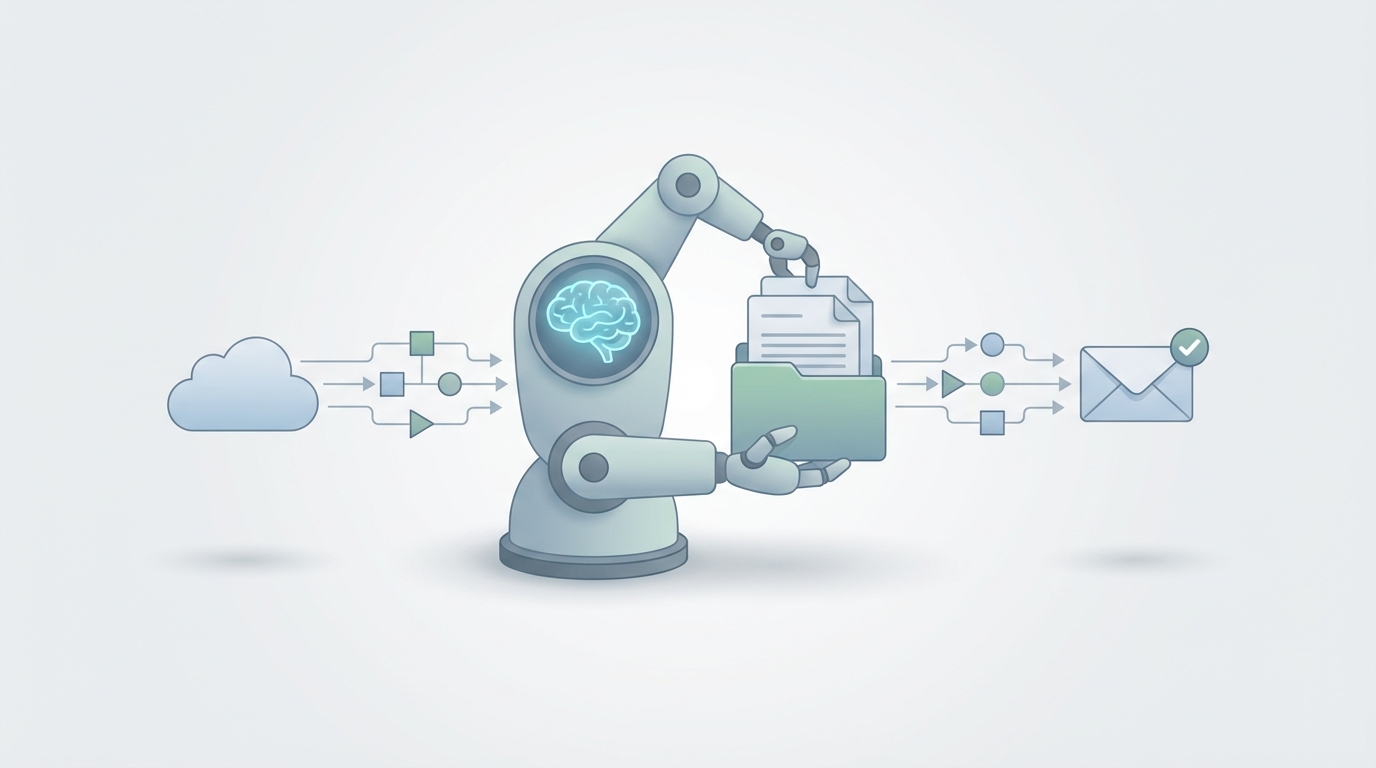
Every quarter, the same ritual plays out across thousands of B2B companies: a renewal date approaches, and an account manager scrambles to pull together everything they need to have a competent negotiation. Usage data from one system. Billing history from another. The original contract terms from a PDF buried in someone's email. Discount history from a spreadsheet that may or may not be current. Competitive intel from... memory, mostly.
Then they spend hours assembling this into something presentable, run it by finance and legal, and finally show up to the negotiation table hoping they didn't miss anything important.
This is insane. Not because the negotiation itself should be automated — it shouldn't — but because the preparation is almost entirely data assembly and synthesis work. It's exactly the kind of thing an AI agent should handle while humans focus on strategy and relationships.
Here's how to build an AI agent on OpenClaw that automates the entire renewal packet preparation process, from flagging upcoming renewals to delivering a ready-to-use negotiation brief.
The Manual Workflow Today (And Why It Takes So Long)
Let's be honest about what renewal prep actually looks like at most companies. Even ones with decent tooling.
Step 1: Renewal Identification (Ongoing, but often late) Someone — a CSM, an ops person, a Salesforce report — flags that a contract is coming up for renewal in 90-180 days. At many companies, this step alone fails regularly. Auto-renewals get missed. Alerts fire but get buried. A WorldCC study found the average contract negotiation cycle runs 42 days for mid-complexity deals, and that clock doesn't start until someone notices the renewal is coming.
Step 2: Data Gathering (4-18 hours per account) This is where the real time sink lives. The account manager needs to pull together:
- Current contract terms (pricing, SLAs, termination clauses, auto-renewal language)
- Usage and adoption data (are they actually using what they're paying for?)
- Billing and payment history (late payments? disputes?)
- Historical discount and concession records
- Customer health scores and support ticket history
- Competitive landscape (who else is the customer evaluating?)
- Cost-to-serve analysis
- Previous negotiation notes and outcomes
A Gainsight case study found CSMs at a large enterprise software company spent 18 hours per renewal on data collection alone. That's more than two full working days just gathering information before any analysis happens.
Step 3: Analysis and Strategy (2-4 hours) Once data is gathered, the AM and their manager (sometimes with finance and legal) review the account to determine:
- Whether to push for a price increase and how much
- What concessions to offer if pushed back
- Whether to propose upsells or cross-sells
- Walk-away points
- Risk assessment (how likely is churn?)
Step 4: Packet Assembly (2-4 hours) Creating the actual renewal proposal document, internal strategy brief, pricing scenarios, and any supporting materials. Usually in Word, Excel, and PowerPoint because that's what everyone defaults to.
Step 5: Internal Approvals (1-5 days) Routing the proposed terms through discount approval workflows, legal review, and finance sign-off. This often stalls because approvers are busy and the request sits in a queue.
Total time per renewal: 20-40 hours of human effort spread across 2-6 weeks. For a company managing 200 renewals per quarter, that's 4,000-8,000 hours of work — roughly 2-4 full-time employees doing nothing but renewal prep.
What Makes This Painful (Beyond Just Time)
The time cost is obvious. The hidden costs are worse.
Revenue leakage is real and measurable. Aberdeen Group data shows companies with manual renewal processes lose 11-17% of renewal value through unplanned discounts and concessions. When your AM doesn't have the data to justify pricing, they fold. When they can't quickly show a customer their actual usage growth, they can't defend a price increase. The customer says "this is too expensive," and without ammunition, the AM offers a discount to close the deal.
WorldCC puts the broader number at 5-9% value leakage from poor contract management overall. On a $10M book of renewals, that's $500K-$900K walking out the door annually because of bad process, not bad strategy.
Inconsistency kills your margins. Without standardized playbooks, different AMs offer wildly different terms to similar customers. One AM gives away 20% discounts like candy. Another holds firm but loses deals they should have saved with a modest concession. Only 38% of organizations have standardized renewal processes according to Gartner's 2026 data.
Data fragmentation is the root cause. Information lives in your CRM, billing system, ERP, email threads, Slack conversations, old PDFs, and people's heads. A 2023 Forrester study found customer success teams spend roughly 40% of their time on administrative tasks instead of value delivery. Data gathering accounts for 40-60% of total renewal time across the industry.
Customer experience suffers. Nothing erodes trust faster than showing up to a renewal conversation and not knowing basic facts about the customer's account. Or surprising them with an 18% price increase you can't contextualize with their usage growth. The negotiation becomes adversarial instead of collaborative.
What AI Can Handle Now
Here's where I want to be precise about what's realistic versus what's vaporware. AI in 2026-2026 is genuinely good at some parts of this workflow and genuinely bad at others. Let's focus on what works.
Data aggregation and synthesis — this is the sweet spot. An AI agent can connect to your CRM, billing platform, usage analytics, support ticketing system, and contract repository, then pull and synthesize relevant data into a structured renewal brief. This is mechanical work that AI handles well because it's pattern-matching and summarization across structured and semi-structured data sources.
Contract analysis — mature and reliable. Extracting key terms from existing contracts, identifying unfavorable clauses, and benchmarking against your standard terms is well-established AI territory. Companies using AI-powered CLM tools report 30-50% reduction in contract review time.
Pricing recommendations — good with guardrails. Given historical data on similar accounts, usage trends, market benchmarks, and your pricing rules, an AI agent can generate defensible pricing scenarios with concession ladders. It won't replace the VP of Sales making the final call, but it can present three well-reasoned options instead of making a human build them from scratch.
Risk scoring — useful directional signal. Combining churn indicators (declining usage, support ticket spikes, champion departure, competitive mentions) into a renewal risk score. Not perfect, but consistently better than gut feel.
First-draft proposals — faster iteration. Generating initial renewal proposals based on templates, account data, and recommended terms. Humans review and adjust, but the 80% that's boilerplate gets handled automatically.
Step-by-Step: Building the Renewal Prep Agent on OpenClaw
Here's the practical implementation. This assumes you have a CRM (Salesforce, HubSpot, or similar), a billing system, and some form of usage analytics.
Step 1: Define the Agent's Scope and Triggers
Start in OpenClaw by creating a new agent workflow. Your trigger is time-based: the agent should activate when a contract hits 120 days before renewal (adjust for your sales cycle length).
In OpenClaw, you'd configure the trigger like this:
trigger:
  type: scheduled
  source: crm_contracts
  condition: renewal_date <= today + 120 days
  frequency: daily
  filter:
    contract_status: active
    arr_minimum: 10000  # Focus on accounts worth preparing for
This runs daily, scanning your contract records for upcoming renewals that meet your threshold. Small accounts with low ARR might not justify a full renewal packet — set that floor based on your business.
Step 2: Connect Your Data Sources
This is where OpenClaw earns its keep. You need integrations pulling from multiple systems. Configure your agent's data connections:
data_sources:
  crm:
    platform: salesforce
    objects: [Account, Opportunity, Contact, Task, Note]
    lookback: 24_months
  billing:
    platform: stripe  # or Zuora, Recurly, etc.
    data: [invoices, payments, usage_records, disputes]
    lookback: 24_months
  usage:
    platform: mixpanel  # or your product analytics
    metrics: [dau, feature_adoption, seat_utilization]
    lookback: 12_months
  support:
    platform: zendesk
    data: [tickets, satisfaction_scores, escalations]
    lookback: 12_months
  contracts:
    platform: google_drive  # or your CLM/doc repository
    file_types: [pdf, docx]
    folder: /contracts/active
OpenClaw handles the API connections and authentication. The key design decision here is lookback period — you want enough history to identify trends without drowning the agent in irrelevant data. Twenty-four months for financial data, twelve months for usage and support is a good starting point.
Step 3: Build the Analysis Pipeline
This is the core logic. Your OpenClaw agent needs to process the raw data into actionable insights. Structure this as a sequential pipeline:
analysis_pipeline:
  - step: contract_extraction
    action: parse_contract_terms
    extract: [pricing, term_length, auto_renewal, sla_commitments,
              discount_history, special_terms, termination_clauses]

  - step: usage_analysis
    action: calculate_trends
    metrics:
      - seat_utilization_rate
      - feature_adoption_score
      - usage_growth_rate
      - engagement_trend  # increasing, stable, declining

  - step: financial_summary
    action: compile_financials
    include:
      - total_contract_value
      - effective_discount_from_list
      - payment_history_score
      - revenue_growth_potential
      - cost_to_serve_estimate

  - step: health_assessment
    action: calculate_risk_score
    inputs:
      - usage_trend
      - support_ticket_velocity
      - nps_or_csat_scores
      - champion_status  # still at company? still in role?
      - competitive_mentions  # from CRM notes/emails

  - step: pricing_recommendation
    action: generate_scenarios
    scenarios:
      - standard_renewal  # same terms
      - growth_aligned    # price increase tied to usage growth
      - expansion         # upsell/cross-sell opportunity
    constraints:
      - max_increase_percentage: 15
      - min_margin_threshold: 65
      - competitive_price_ceiling: true
Each step feeds the next. The contract extraction gives you the baseline. Usage analysis tells you whether the customer is getting value. Financial summary tells you the commercial picture. Health assessment tells you how much leverage you have. Pricing recommendation puts it all together.
Step 4: Generate the Renewal Packet
Now the agent assembles everything into a usable output. In OpenClaw, define your output template:
output:
  format: structured_document
  template: renewal_packet_v2
  sections:
    - executive_summary:
        length: 250_words
        include: [risk_level, recommended_action, key_metrics]
    - account_overview:
        include: [company_info, key_contacts, relationship_history]
    - usage_and_adoption:
        include: [utilization_charts, feature_adoption, trends]
        visualizations: true
    - financial_history:
        include: [billing_summary, discount_history, revenue_trajectory]
    - contract_analysis:
        include: [current_terms, flagged_clauses, benchmark_comparison]
    - competitive_landscape:
        include: [known_competitors, switching_risk, market_positioning]
    - pricing_scenarios:
        include: [three_options_with_rationale, concession_ladder]
    - negotiation_playbook:
        include: [opening_position, anticipated_objections,
                  response_suggestions, walk_away_point]
    - recommended_next_steps:
        include: [timeline, stakeholders, approval_requirements]
  delivery:
    - channel: email
      recipients: [account_manager, csm]
    - channel: crm
      action: attach_to_opportunity
    - channel: slack
      channel: "#renewals"
      summary_only: true
The agent delivers the packet to the AM via email, attaches it to the CRM opportunity, and posts a summary in your renewals Slack channel. The packet includes everything the AM needs to walk into a strategy session — or directly into a negotiation — without spending days on data assembly.
Step 5: Add a Feedback Loop
This is what separates a useful tool from a great one. After each renewal closes, feed the outcome back into OpenClaw:
feedback:
  trigger: opportunity_closed
  capture:
    - final_terms_vs_recommended
    - negotiation_duration
    - discount_given_vs_suggested
    - customer_retained: boolean
    - am_satisfaction_rating: 1-5
  use_for:
    - improve_pricing_models
    - refine_risk_scoring
    - adjust_concession_recommendations
Over time, the agent learns which pricing strategies work for which customer segments, which concessions actually save deals, and which risk signals are most predictive. This is where the compounding returns happen.
What Still Needs a Human
I want to be direct about this because overpromising is how automation projects fail.
The negotiation itself. AI can prepare you beautifully, but the actual conversation — reading body language on a Zoom call, knowing when to push and when to concede, managing the politics inside a customer's organization — that's human work. Probably for a long time.
Strategic account decisions. Should you keep a below-margin customer because they're a reference logo in a target vertical? Should you walk away from a difficult negotiator to free up capacity? These require business judgment that considers factors no data model captures fully.
Creative deal structuring. When standard levers don't work, the best AMs invent new ones: multi-year commitments with step-up pricing, usage-based models for growing customers, bundling with new products. AI can suggest these based on historical patterns, but the truly creative structures come from humans who understand the customer's business.
Final pricing authority. Most companies require VP or C-level approval above certain discount thresholds. This governance should stay human.
Relationship repair. If a customer is angry — really angry, not just "their CSAT dipped" — the response needs to be personal and authentic. An AI-prepared brief helps, but the recovery is human work.
Expected Time and Cost Savings
Based on current data from companies using AI-powered renewal workflows (and extrapolating from what OpenClaw's architecture enables):
Time savings per renewal:
- Data gathering: from 4-18 hours → 15-30 minutes of review (85-95% reduction)
- Analysis and strategy prep: from 2-4 hours → 30-60 minutes of refinement (65-75% reduction)
- Packet assembly: from 2-4 hours → near zero (fully automated)
- Total: from 20-40 hours → 3-6 hours per renewal
At scale (200 renewals per quarter):
- Before: 4,000-8,000 hours per quarter
- After: 600-1,200 hours per quarter
- Savings: 3,400-6,800 hours per quarter, or roughly 2-4 FTEs redeployed to higher-value work
Revenue impact:
- Reducing value leakage from 11-17% to 3-5% through better data-driven negotiations
- On a $10M renewal book: $600K-$1.2M in preserved revenue annually
- Faster cycle times (30-50% reduction) mean less customer uncertainty and fewer "let's just downgrade while we figure this out" outcomes
Implementation timeline:
- Basic agent (CRM + billing data, simple packet): 2-4 weeks on OpenClaw
- Full agent (all data sources, risk scoring, pricing scenarios): 6-10 weeks
- Optimized agent (with feedback loops and refined models): 3-6 months of iteration
The ROI math is straightforward. If you're managing more than 50 meaningful renewals per quarter, the agent pays for itself within the first quarter through time savings alone. Revenue preservation is gravy on top.
Getting Started
You don't need to build the full system on day one. Start with the highest-pain step: data gathering and synthesis. Get an OpenClaw agent that pulls together a basic renewal brief — account overview, usage summary, contract terms, and billing history — for your next batch of renewals. Let your AMs use it for a quarter. Collect feedback. Then layer on pricing recommendations and risk scoring.
The companies winning at renewals in 2026 aren't the ones with the fanciest negotiation tactics. They're the ones whose AMs walk into every conversation with complete, current, well-organized information and a clear strategy. That's what this agent delivers.
If you want to skip building from scratch, browse Claw Mart for pre-built agent templates that handle renewal workflows. Several are specifically designed for this use case and can be customized to your stack.
And if you'd rather have someone build and optimize this for you — because let's be honest, not every team has the bandwidth to stand up a new agent workflow while simultaneously running renewals — check out our Clawsourcing service. We'll match you with a specialist who can get your renewal prep agent running within weeks, configured for your specific CRM, billing system, and process. You focus on the negotiations. Let the agent handle the prep.