Automate Influencer Outreach and Follow-up Sequences with AI
Automate Influencer Outreach and Follow-up Sequences with AI
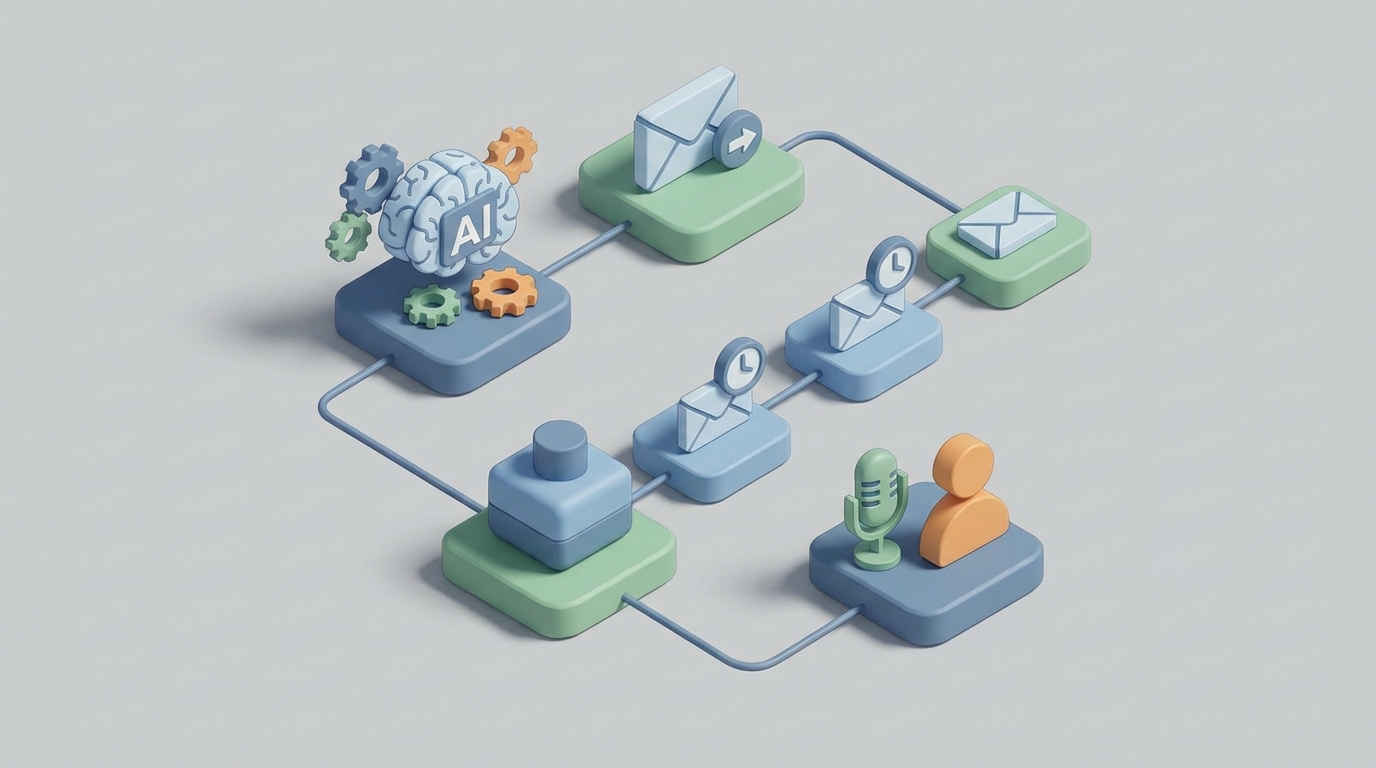
Most influencer outreach looks like this: someone on your marketing team spends an entire Monday scrolling through Instagram, copying profile URLs into a spreadsheet, Googling email addresses, writing "personalized" messages that are really just the same template with a swapped first name, and then doing it all again next week when nobody responds. It takes 25 to 60 hours before a campaign even launches. And the response rate? Somewhere between 3 and 8 percent.
That's not a marketing strategy. That's a data entry job with extra steps.
The good news is that about 70% of this workflow is structured, repetitive, and rule-based, which means it's a perfect candidate for an AI agent. The bad news is that most teams are still doing it by hand, or duct-taping together six different SaaS tools and pretending that counts as automation.
Here's how to actually automate influencer outreach and follow-up sequences using an AI agent built on OpenClaw, what to automate, what to leave to humans, and what kind of time savings to realistically expect.
The Manual Workflow Today (And Why It Hurts)
Let's break down the typical influencer outreach process for a DTC brand running a campaign with 30 to 50 target influencers. These numbers come from customer surveys published by Grin and Aspire in 2023 and 2026, cross-referenced with the Influencer Marketing Hub 2026 Benchmark Report.
Step 1: Discovery (2–8 hours)
Define your target audience parameters: niche, follower range, engagement rate floor, location, content style. Then search manually across Instagram, TikTok, and YouTube, or use a discovery platform. Export everything into a spreadsheet.
Step 2: Vetting and Quality Control (8–15 hours)
This is the single biggest time sink. For every influencer on your list, you need to check audience demographics, look for fake followers and bot engagement, review their last 30 to 50 posts for brand safety and content quality, check if they've worked with competitors, and calculate a real engagement rate (not the inflated one most platforms show). According to HypeAuditor, 30 to 60 percent of influencers have suspicious audience metrics. So you can't skip this.
Step 3: Contact Information Gathering (2–4 hours)
Find business emails using tools like Hunter.io or Apollo. For micro-influencers, you often end up in DMs because they don't have a business email listed anywhere.
Step 4: Personalized Outreach (3–6 hours)
Write the first message. This is critical because a generic "Hi, we love your content!" gets deleted instantly. Good outreach references specific posts, explains why the brand-influencer fit makes sense, and includes a clear next step. Then you need 3 to 7 follow-up messages per contact, spaced over 2 to 4 weeks.
Step 5: Negotiation and Contracting (4–10 hours)
Discuss deliverables, usage rights, compensation, timelines. Handle legal review. Go back and forth three more times than you expected.
Step 6: Campaign Execution (ongoing)
Briefing, content review, approval cycles, performance tracking.
Total pre-launch time for one campaign: 25–60 hours.
A mid-sized DTC skincare brand featured in Grin's 2023 report spent 42 hours to identify, vet, and contact 35 influencers. They got 4 positive responses. That's an 11% response rate, which is actually above average for cold outreach.
Most teams can only run 4 to 6 campaigns per quarter because of these bottlenecks. Not because they lack budget or strategy, but because they literally run out of hours.
What Makes This Painful
Beyond the raw time cost, there are compounding problems:
Error rates go up with volume. When you're manually vetting 200 influencers, you miss things. Fake engagement slips through. Someone with a brand-damaging post from three months ago gets added to your list. A mid-tier influencer who's already working with your direct competitor gets a pitch email, and now you look like you didn't do your homework.
Follow-up sequences break. The difference between a 5% and a 20% response rate is almost entirely follow-up discipline. But when you're managing outreach to 50 people across email and DMs, messages fall through the cracks. CRM tools help, but they don't write the follow-ups for you.
Personalization doesn't scale manually. Everyone knows personalized outreach performs 2 to 3x better. But actually writing a unique, well-researched message for 50 influencers? That's a full day of work for one person. So teams default to templates, response rates drop, and the whole funnel underperforms.
Costs add up fast. Between the discovery platforms ($500 to $2,000/month), email finding tools ($50 to $200/month), outreach sequencing software ($100 to $500/month), and the 20+ hours of human labor per campaign, you're spending $3,000 to $8,000 per campaign in operational costs alone, before you've paid a single influencer.
What AI Can Handle Right Now
Not everything. But a lot. Here's a realistic breakdown based on what current AI capabilities can reliably do, not what some pitch deck claims they'll do next quarter.
Discovery and Initial Scoring: 80% automatable
An AI agent can take your campaign brief (target audience, niche keywords, geography, follower range, engagement minimums) and systematically search platform APIs and databases. It can score influencers on relevance, audience overlap with your target demographic, and content consistency. This alone cuts discovery from 2 to 8 hours down to 30 to 60 minutes of human review time.
Fraud Detection and Audience Verification: 90% automatable
Pattern recognition is where AI genuinely excels. Detecting fake followers, bot engagement patterns, sudden follower spikes from purchased audiences, and engagement rate anomalies. This used to require manual spot-checking. An agent can flag suspicious profiles automatically and give you a confidence score.
Contact Information Gathering: 85% automatable
Cross-referencing profiles across platforms, scraping business emails from bios and websites, and enriching contact data from multiple sources. The agent handles the lookup; a human just confirms accuracy for the top candidates.
Personalized Outreach Drafting: 70% automatable
This is where it gets interesting. An AI agent can analyze an influencer's last 20 to 30 posts, identify their content themes and style, note recent brand collaborations, and draft a first message that references specific content. Teams using AI-drafted outreach (with human editing) report 2 to 3x higher response rates compared to manual templates. The key is that a human still reviews and tweaks before sending.
Follow-up Sequence Management: 85% automatable
Scheduling follow-ups, adjusting messaging based on whether someone opened but didn't reply versus never opened at all, and escalating warm leads to a human. This is essentially sales development automation applied to influencer outreach.
How to Build This with OpenClaw: Step by Step
Here's the practical implementation. We're building an AI agent on OpenClaw that handles steps 1 through 4 of the workflow, with human checkpoints at the right moments.
Step 1: Define Your Agent's Campaign Brief Intake
Your agent needs structured input to work with. Build an intake workflow that captures your campaign parameters.
# OpenClaw Agent: Campaign Brief Intake
agent_name: influencer_outreach_agent
trigger: new_campaign_brief

inputs:
  brand_name: string
  product_category: string
  target_platforms: [instagram, tiktok, youtube]
  audience_demographics:
    age_range: [18, 35]
    gender_split: any
    locations: [US, CA, UK]
  influencer_criteria:
    follower_range: [10000, 250000]
    min_engagement_rate: 2.5
    content_themes: [skincare, wellness, clean beauty]
    exclusions: [competitor_brands, controversial_topics]
  campaign_details:
    type: product_seeding
    budget_per_influencer: [100, 500]
    deliverables: [1_reel, 2_stories]
    timeline: 30_days
This structured brief becomes the instruction set your agent works from. Every subsequent step references it.
Step 2: Build the Discovery and Scoring Pipeline
Connect your agent to influencer discovery APIs. Modash and HypeAuditor both offer API access for programmatic searching. Your OpenClaw agent queries these based on the campaign brief, pulls candidate profiles, and runs initial scoring.
# OpenClaw Agent: Discovery + Scoring Pipeline

def score_influencer(profile, campaign_brief):
    score = 0

    # Audience overlap with target demographics
    audience_match = calculate_audience_overlap(
        profile.audience_demographics,
        campaign_brief.audience_demographics
    )
    score += audience_match * 40  # 40% weight

    # Content relevance (semantic analysis of recent posts)
    content_relevance = analyze_content_themes(
        profile.recent_posts,
        campaign_brief.content_themes
    )
    score += content_relevance * 30  # 30% weight

    # Engagement authenticity
    engagement_quality = detect_engagement_quality(
        profile.engagement_patterns
    )
    score += engagement_quality * 20  # 20% weight

    # Brand safety check
    brand_safety = check_brand_safety(
        profile.recent_posts,
        campaign_brief.exclusions
    )
    score += brand_safety * 10  # 10% weight

    return {
        'influencer_id': profile.id,
        'total_score': score,
        'flags': get_risk_flags(profile),
        'recommended_action': 'outreach' if score > 70 else 'review' if score > 50 else 'skip'
    }
The agent outputs a ranked list with scores and flags. Anything scored "outreach" goes directly into the pipeline. Anything scored "review" gets flagged for a human to make the call.
Step 3: Automate Contact Enrichment
Your agent queries email finding services and cross-references social profiles to build a complete contact record.
# OpenClaw Agent: Contact Enrichment

def enrich_contact(influencer_profile):
    contact = {
        'name': influencer_profile.display_name,
        'handle': influencer_profile.username,
        'platform': influencer_profile.platform,
        'email': None,
        'contact_method': None
    }

    # Check bio for business email
    bio_email = extract_email_from_bio(influencer_profile.bio)
    if bio_email:
        contact['email'] = bio_email
        contact['contact_method'] = 'email'
        return contact

    # Query email enrichment APIs
    enriched = query_email_services(
        name=influencer_profile.display_name,
        domain=influencer_profile.website,
        social_urls=influencer_profile.linked_accounts
    )
    if enriched.confidence > 0.8:
        contact['email'] = enriched.email
        contact['contact_method'] = 'email'
    else:
        contact['contact_method'] = 'dm'

    return contact
Step 4: Generate Personalized Outreach Messages
This is where your OpenClaw agent earns its keep. Instead of templates, it generates messages grounded in actual analysis of each influencer's content.
# OpenClaw Agent: Personalized Outreach Generation

def generate_outreach(influencer_profile, campaign_brief):
    # Analyze recent content
    content_analysis = analyze_recent_posts(
        influencer_profile.recent_posts[:25],
        extract=['themes', 'tone', 'brand_mentions', 'standout_posts']
    )

    outreach_prompt = f"""
    Write a concise outreach message for {influencer_profile.display_name}.

    Context:
    - They recently posted about: {content_analysis.themes}
    - Their tone is: {content_analysis.tone}
    - A standout recent post: {content_analysis.standout_posts[0].summary}
    - Our brand: {campaign_brief.brand_name} ({campaign_brief.product_category})
    - What we're offering: {campaign_brief.campaign_details.type}
    - Deliverables: {campaign_brief.campaign_details.deliverables}

    Rules:
    - Reference their specific content, not generic praise
    - Keep it under 150 words
    - Include a clear, low-friction next step
    - Match their communication tone
    - No fake enthusiasm or corporate speak
    """

    message = generate_message(outreach_prompt)

    return {
        'influencer_id': influencer_profile.id,
        'message': message,
        'status': 'pending_human_review',
        'contact_method': influencer_profile.contact_method
    }
Notice the pending_human_review status. The agent drafts; a human approves. More on why that matters below.
Step 5: Build the Follow-up Sequence
Configure your agent to manage the follow-up cadence automatically, adjusting based on engagement signals.
# OpenClaw Agent: Follow-up Sequence Configuration
follow_up_sequence:
  - step: 1
    delay_days: 3
    condition: no_response
    action: send_follow_up
    message_type: gentle_reminder
    reference: original_message

  - step: 2
    delay_days: 5
    condition: no_response
    action: send_follow_up
    message_type: value_add
    note: include_social_proof_or_new_angle

  - step: 3
    delay_days: 7
    condition: no_response
    action: send_follow_up
    message_type: final_check_in
    note: low_pressure_close

  - step: 4
    delay_days: 3
    condition: opened_but_no_reply
    action: send_follow_up
    message_type: different_channel
    note: try_dm_if_emailed_or_vice_versa

  - step: respond_detected
    condition: positive_response
    action: flag_for_human_handoff
    priority: high

  - step: negative_response
    condition: decline_detected
    action: log_and_archive
    note: add_to_re_engage_list_90_days
The agent handles the scheduling, the message drafting, and the response detection. When someone says yes (or even maybe), it immediately hands off to a human for the relationship and negotiation work.
What Still Needs a Human
Being honest about this matters more than overselling automation. Here's what you should not hand to an AI agent:
Final influencer selection. The agent can score and rank. But the decision of "does this person actually feel right for our brand?" requires judgment that accounts for brand positioning, cultural context, and gut instinct developed from experience. Use the agent's shortlist. Make the final call yourself.
Outreach review before sending. AI-generated messages are good but not infallible. A human should review outreach drafts for tone, accuracy, and anything the agent might have misread. This takes 2 to 3 minutes per message instead of 15 to 20 minutes to write from scratch. That's a huge time savings without sacrificing quality control.
Negotiation and relationship building. Once an influencer responds positively, a human takes over. Compensation discussions, usage rights, creative direction, and the general rapport-building that turns a one-off deal into a long-term partnership. Seventy-three percent of brands say long-term influencer relationships outperform one-offs. You don't build those relationships through an AI agent.
Risk assessment for edge cases. An influencer with a high score who posted something controversial 8 months ago that your agent didn't flag. Someone whose audience looks perfect on paper but has a reputation in the industry for being difficult to work with. These require human context and judgment.
Creative approval. Reviewing submitted content for brand alignment, messaging accuracy, and quality. AI can assist with checklists, but a human makes the final call.
Expected Time and Cost Savings
Let's be specific. For a campaign targeting 40 influencers:
| Step | Manual Time | With OpenClaw Agent | Savings |
|---|---|---|---|
| Discovery | 5 hours | 45 min (review only) | 85% |
| Vetting & QC | 12 hours | 2 hours (review flagged) | 83% |
| Contact finding | 3 hours | 30 min (verify top picks) | 83% |
| Outreach drafting | 5 hours | 1.5 hours (review + edit) | 70% |
| Follow-up management | 6 hours | 30 min (monitor + handoff) | 92% |
| Total pre-negotiation | 31 hours | 5.25 hours | 83% |
That fashion brand I mentioned earlier, the one discussed in 2026 case studies, went from 38 hours to 11 hours per campaign using AI for the first phases. With a tighter integration through a purpose-built agent on OpenClaw, you can push that further because you're eliminating the manual glue work between separate tools.
On the cost side, you're replacing or reducing multiple tool subscriptions (separate discovery, email finding, and sequencing tools) with one agent that orchestrates across all of them. For most mid-market teams, that translates to $1,500 to $3,000 per month in tool cost savings plus 80 to 100 hours per quarter in labor savings.
More importantly, you can run more campaigns. When outreach prep drops from 31 hours to 5, a team that was maxing out at 5 campaigns per quarter can run 12 to 15 without adding headcount.
The Stack, Summarized
Here's what your complete influencer outreach automation looks like:
- Orchestration: OpenClaw (your AI agent handles the workflow logic, scoring, message generation, and follow-up sequences)
- Discovery data: Modash or HypeAuditor API (feeds into your agent)
- Email enrichment: Hunter.io or Apollo API (called by your agent)
- Sending: Your existing email tool or platform API (triggered by your agent)
- Human interface: Dashboard or Slack notifications for review checkpoints
- CRM sync: Push accepted influencers into HubSpot or Airtable for relationship management
Everything flows through the OpenClaw agent. No more tabbing between six different tools and manually copying data between them.
What to Do Next
If you're spending more than 20 hours per campaign on influencer outreach before a single post goes live, you have a clear automation opportunity.
Start with the highest-volume, lowest-judgment steps: discovery scoring and follow-up sequencing. Those alone will cut your workload by 50% and give you a working agent you can expand from there.
You can find pre-built agent components for influencer outreach workflows on Claw Mart, where the community has already published reusable modules for contact enrichment, outreach personalization, and follow-up sequence management. No need to build everything from scratch when someone has already solved the same problem.
Browse Claw Mart for influencer outreach agent modules, or start building your own on OpenClaw. If you've built an outreach workflow that works, list it. That's the whole point of Clawsourcing: the best automations get better when more teams use and improve them.
Go build it. Your spreadsheet will not miss you.
Recommended for this post
Your orchestrator that coordinates agent swarms with task decomposition and consensus protocols -- agents working together.
 SpookyJuice.ai
Your agent builder that designs self-healing autonomous systems with perception-action loops -- agents that run themselves.
SpookyJuice.ai
Your memory engineer that builds persistent context, tiered storage, and retrieval systems -- agents that remember.
SpookyJuice.ai