AI Pharmacy Technician: Process Prescriptions and Manage Inventory
Replace Your Pharmacy Technician with an AI Pharmacy Technician Agent
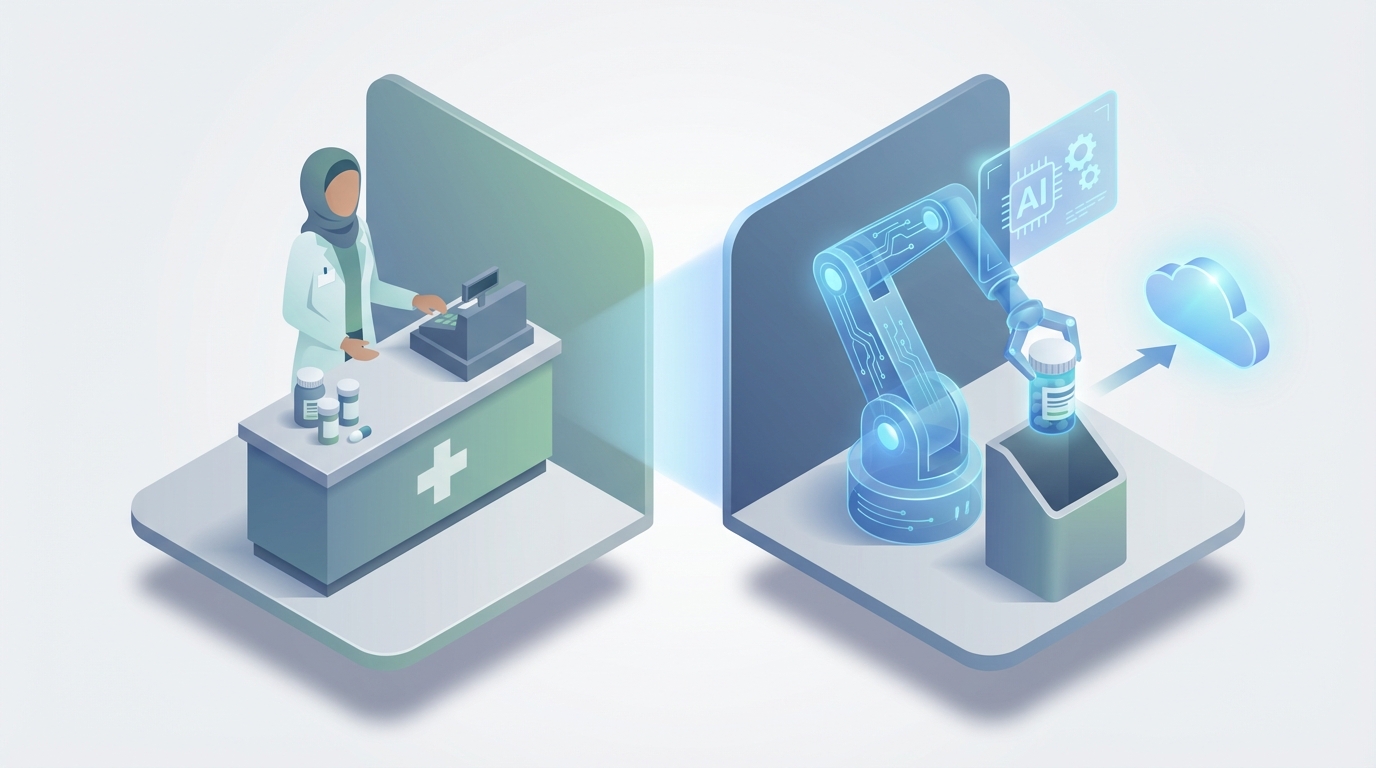
Most pharmacy technicians spend their day doing the same thing over and over: enter a prescription into the system, verify insurance, count pills, bag them, hand them off, repeat. Three hundred to five hundred times a day in a busy retail pharmacy. The work is critical—errors can literally kill people—but the vast majority of it is structured, rule-based, and repetitive. That's exactly the kind of work AI agents are built to eat.
I'm not talking about replacing the pharmacist. Pharmacists make clinical judgments, counsel patients on drug interactions, and carry the legal liability for what leaves the counter. That's staying human for a long time. But the pharmacy technician role—the person doing data entry, counting tablets, chasing insurance companies, restocking shelves, and answering the phone for the fourteenth refill request of the hour—that role is ripe for an AI overhaul.
Let me walk you through what this actually looks like, what it costs, and how you'd build it on OpenClaw.
What a Pharmacy Technician Actually Does All Day
If you've never worked behind a pharmacy counter, the job is more complex than you'd guess and more repetitive than it should be. Here's where a tech's time goes on a typical shift:
Prescription processing (20–25% of time): A script comes in—paper, electronic, faxed, or called in. The tech enters patient demographics, drug name, dosage, quantity, and prescriber info into the pharmacy management system. Then they run insurance verification. If the insurance rejects it (and roughly 30% of scripts need some kind of intervention), the tech starts the prior authorization dance: calling the insurance company, faxing forms, following up, calling again.
Medication counting and packaging (15–20%): For non-automated pharmacies, this means physically counting tablets on a tray, pouring liquids, labeling bottles, and bagging them with patient info sheets. Accuracy is non-negotiable. One wrong pill in the wrong bottle and you're looking at a potential adverse event—medication errors cost the U.S. healthcare system about $42 billion annually.
Inventory management (25–30%): This is the silent time killer. Techs unpack deliveries, stock shelves using FIFO rotation, check expiration dates, track what's running low, and place reorders. With 300+ active drug shortages on the FDA's list at any given time, this also means calling around to find alternatives, updating the system, and notifying the pharmacist.
Customer service (15–20%): Greeting patients, answering phones, processing payments, handling pickup and drop-off, fielding questions about refill status and wait times. In retail, this is constant. The phone never stops ringing.
Administrative and compliance work (10%): Updating patient records, logging controlled substances for DEA compliance, running end-of-day reports, maintaining HIPAA standards, and dealing with audit prep.
A pharmacy tech's day is 70–80% repetitive, structured tasks. The remaining 20–30% involves judgment calls, physical manipulation of medications, and human interaction that requires empathy or nuance.
The Real Cost of This Hire
The median pharmacy technician salary in the U.S. is $40,300 per year, or about $19.38 an hour (BLS, 2023). But that number is misleading because it's not what the tech costs you.
Here's the actual math:
| Cost Component | Annual Amount |
|---|---|
| Base salary (median) | $40,300 |
| Benefits (health, dental, PTO) | $8,000–$12,000 |
| Payroll taxes (FICA, unemployment) | $3,100–$4,000 |
| Training and onboarding | $2,000–$3,000 |
| Turnover cost (recruiting, lost productivity) | $4,000–$6,000 amortized |
| Total employer cost | $57,400–$65,300 |
That's per technician, per year. A busy retail pharmacy employs three to five techs. So you're looking at $170,000 to $325,000 annually in technician labor costs for a single location.
And then there's turnover. Retail pharmacy technician turnover hovers around 40% (NCPA data). That means almost half your techs leave every year, and you're constantly recruiting, hiring, training, and losing institutional knowledge. Half of pharmacy technicians say they plan to leave the profession within five years. The ones who stay are burned out from standing for 8+ hour shifts, dealing with hostile customers, and operating under zero-tolerance accuracy requirements.
This isn't a "nice to automate" situation. It's a labor crisis that's already here.
What AI Handles Right Now
Let's be specific. Here are the pharmacy technician tasks that an AI agent built on OpenClaw can handle today—not theoretically, not in a pilot, but with current technology.
Prescription Data Entry and Verification
This is the lowest-hanging fruit. An OpenClaw agent can:
- Ingest electronic prescriptions (e-scripts) via HL7/FHIR integration and auto-populate pharmacy management system fields
- Use OCR to read paper or faxed prescriptions (current accuracy: ~95%, with confidence scoring to flag uncertain reads for human review)
- Cross-reference patient records to flag allergies, drug interactions, and duplicate therapies using drug knowledge databases like FDB MedKnowledge
- Auto-verify insurance eligibility and coverage in real time by querying payer APIs
In OpenClaw, you'd set this up as a workflow agent with tool integrations. Here's what the skeleton looks like:
agent:
  name: prescription_intake_agent
  description: Processes incoming prescriptions, verifies patient data, and checks insurance eligibility

  tools:
    - name: ocr_scan
      type: vision
      config:
        model: openclaw-vision
        output_format: structured_json
        confidence_threshold: 0.92

    - name: patient_lookup
      type: api_call
      config:
        endpoint: ${PHARMACY_SYSTEM_API}/patients
        method: GET
        auth: bearer_token

    - name: drug_interaction_check
      type: api_call
      config:
        endpoint: ${DRUG_DB_API}/interactions
        method: POST

    - name: insurance_verify
      type: api_call
      config:
        endpoint: ${INSURANCE_GATEWAY}/eligibility
        method: POST
        timeout: 30s

  workflow:
    - step: receive_prescription
      action: ocr_scan OR parse_escript
      on_low_confidence: flag_for_human_review

    - step: match_patient
      action: patient_lookup
      fallback: create_new_patient_record

    - step: clinical_screening
      action: drug_interaction_check
      on_flag: alert_pharmacist

    - step: insurance_verification
      action: insurance_verify
      on_rejection: initiate_prior_auth_workflow
The agent receives the script, reads it, matches the patient, screens for interactions, and verifies insurance—all before a human touches it. When it hits something it can't handle (illegible handwriting below the confidence threshold, a complex prior auth, a clinical flag), it routes to the right human with full context.
Inventory Management and Reordering
An OpenClaw agent can monitor real-time inventory levels, predict demand based on historical dispensing patterns, and auto-generate purchase orders when stock hits reorder points. This is bread-and-butter predictive analytics.
agent:
  name: inventory_management_agent
  description: Monitors pharmacy inventory, predicts demand, and automates reordering

  tools:
    - name: inventory_query
      type: database
      config:
        connection: ${PHARMACY_DB}
        query_type: read

    - name: demand_forecast
      type: ml_model
      config:
        model: openclaw-forecast
        features: [historical_volume, seasonality, shortage_alerts, local_trends]
        horizon: 14_days

    - name: supplier_order
      type: api_call
      config:
        endpoint: ${WHOLESALER_API}/orders
        method: POST

    - name: shortage_monitor
      type: web_scrape
      config:
        source: fda_shortage_database
        frequency: daily

  triggers:
    - type: scheduled
      cron: "0 6 * * *"  # Daily at 6 AM
    - type: event
      condition: stock_level < reorder_point

  workflow:
    - step: check_current_levels
      action: inventory_query

    - step: forecast_demand
      action: demand_forecast

    - step: check_shortages
      action: shortage_monitor
      on_shortage: suggest_therapeutic_alternatives

    - step: generate_orders
      action: supplier_order
      require_approval_above: $5000
CVS and Walgreens are already doing versions of this with proprietary systems. The difference with OpenClaw is you don't need to be CVS. An independent pharmacy or a small hospital system can deploy the same capability without a seven-figure IT budget.
Customer Service and Refill Management
Phone calls and refill requests are the bane of every pharmacy tech's existence. An OpenClaw conversational agent can:
- Handle inbound refill requests via phone (voice), text, or web chat
- Check prescription status and provide estimated ready times
- Answer non-clinical questions (store hours, transfer process, OTC availability)
- Route clinical questions to the pharmacist
- Send proactive notifications when prescriptions are ready or running low on refills
agent:
  name: pharmacy_customer_agent
  description: Handles patient inquiries, refill requests, and status updates

  tools:
    - name: prescription_status
      type: api_call
      config:
        endpoint: ${PHARMACY_SYSTEM_API}/prescriptions/status

    - name: refill_request
      type: api_call
      config:
        endpoint: ${PHARMACY_SYSTEM_API}/refills
        method: POST

    - name: notification_send
      type: messaging
      config:
        channels: [sms, email, push]

    - name: escalate_to_pharmacist
      type: routing
      config:
        queue: pharmacist_review
        priority_fields: [clinical_question, adverse_reaction, controlled_substance]

  guardrails:
    - never_provide_medical_advice: true
    - never_confirm_specific_medications_without_identity_verification: true
    - hipaa_compliant_data_handling: true
    - controlled_substance_queries: always_escalate

  conversation:
    identity_verification:
      required_fields: [date_of_birth, last_name, prescription_number]
      method: match_against_patient_record
The guardrails here matter. This agent needs to be HIPAA-compliant, needs to verify patient identity before disclosing any prescription information, and needs to hard-route any clinical question to a licensed human. OpenClaw's guardrail system lets you define these constraints declaratively so they're enforced at the platform level, not just hoped for in the prompt.
Prior Authorization Processing
This is the one that pharmacy staff will thank you for. Prior authorizations are the single most hated task in pharmacy. An OpenClaw agent can:
- Detect insurance rejections and identify the type of prior auth needed
- Auto-populate PA forms with patient data, diagnosis codes, and prescriber info
- Submit electronically where supported
- Track status and follow up automatically
- Notify the tech or pharmacist when approval comes through or when human intervention is required
This alone saves 5–10 hours per week in a busy pharmacy.
Reporting and Compliance
Controlled substance logs, end-of-day reconciliation, audit trail generation, expiration tracking reports—all of this is structured data manipulation that an OpenClaw agent handles without breaking a sweat. Build a scheduled agent that runs nightly, pulls the day's transactions, flags anomalies (unusual controlled substance patterns, inventory discrepancies), and generates the reports your compliance officer needs.
What Still Needs a Human
I'm not going to pretend AI replaces everything. Here's what stays human, and why:
Physical medication handling. Robots exist for counting and dispensing (ScriptPro, Parata), but they're hardware—not software agents. An AI agent can't physically stock a shelf, compound a sterile IV, or hand a bag to a patient. If your pharmacy has a dispensing robot, an OpenClaw agent can orchestrate it. If it doesn't, you still need hands.
Sterile and hazardous compounding. USP 797 and USP 800 compliant compounding—IV admixtures, chemotherapy drugs—requires trained humans in controlled environments. The liability and safety requirements here are too high for current automation.
Final pharmacist verification. By law, a licensed pharmacist must perform a final check before a prescription leaves the pharmacy. AI can do the screening, flag issues, and pre-verify, but the legal sign-off is human.
Empathetic patient interactions. When a patient is scared about a new cancer diagnosis and has questions about their medication regimen, they need a person. When someone is struggling with adherence because of side effects, that's a conversation, not a transaction. AI can triage, but it can't replace compassion.
Complex clinical judgment. Therapeutic substitutions during drug shortages, evaluating whether an unusual dose is intentional or an error, navigating edge cases in drug interactions—these require pharmacist-level clinical knowledge and human accountability.
DEA inspections and regulatory audits. Someone has to physically be present, answer questions, and exercise judgment. AI prepares the documentation; humans handle the conversation.
How to Build This on OpenClaw
Here's the practical implementation path:
Step 1: Map your workflows. Spend a week documenting every task your techs do, how long each takes, and which ones are rule-based versus judgment-based. You'll likely find 60–70% are automatable.
Step 2: Start with prescription intake. This is the highest-volume, most structured workflow. Build the prescription_intake_agent on OpenClaw, connect it to your pharmacy management system's API (most modern systems—Pioneer Rx, PioneerRx, QS/1, Computer-Rx—have them), and run it in shadow mode alongside your techs for two weeks. Compare accuracy.
Step 3: Add inventory management. Connect your wholesaler's ordering API (McKesson, AmerisourceBergen, Cardinal Health all have electronic ordering interfaces) and let the forecasting agent start learning your pharmacy's demand patterns.
Step 4: Deploy the customer-facing agent. Start with text/chat for refill requests (lower risk than voice), then expand to phone. Use OpenClaw's conversation guardrails to enforce HIPAA compliance and clinical escalation rules.
Step 5: Layer in prior auth automation and compliance reporting. These are the force multipliers that free up your remaining human staff to focus on what they're actually good at.
Step 6: Measure and iterate. Track scripts processed per hour, error rates, customer wait times, and staff satisfaction. Adjust agent configurations based on real data.
The goal isn't zero technicians. It's fewer technicians doing higher-value work—patient-facing service, pharmacist support, complex problem-solving—while the AI handles the repetitive volume that burns them out.
The Math
Let's say you run a retail pharmacy with four techs costing you $240,000/year total (loaded cost). An OpenClaw deployment that handles 60% of their repetitive workload lets you operate with two techs instead of four. That's $120,000 in annual savings, minus the cost of the OpenClaw platform and any integration work.
Even if you keep all four techs and just redirect their time, you're processing more scripts with fewer errors, shorter wait times, and happier staff. In an industry with 40% turnover, keeping your techs from burning out has real dollar value.
Or Just Hire Us to Build It
If you've read this far and you're thinking "I want this but I don't want to build it myself"—that's exactly what Clawsourcing is for. Our team builds production-ready AI agents on OpenClaw for pharmacy operations, handles the integration with your existing systems, and manages the deployment so you don't have to figure out API connections to your PMS or HIPAA-compliant data handling on your own.
You can build it yourself with OpenClaw. Or you can tell us what you need and we'll have it running in weeks, not months. Either way, the pharmacy technician shortage isn't getting better, your prescription volume isn't going down, and the technology to handle this exists right now.