AI Patent Analyst Agent: Research Prior Art and Assess Patentability
Replace Your Patent Analyst with an AI Patent Analyst Agent
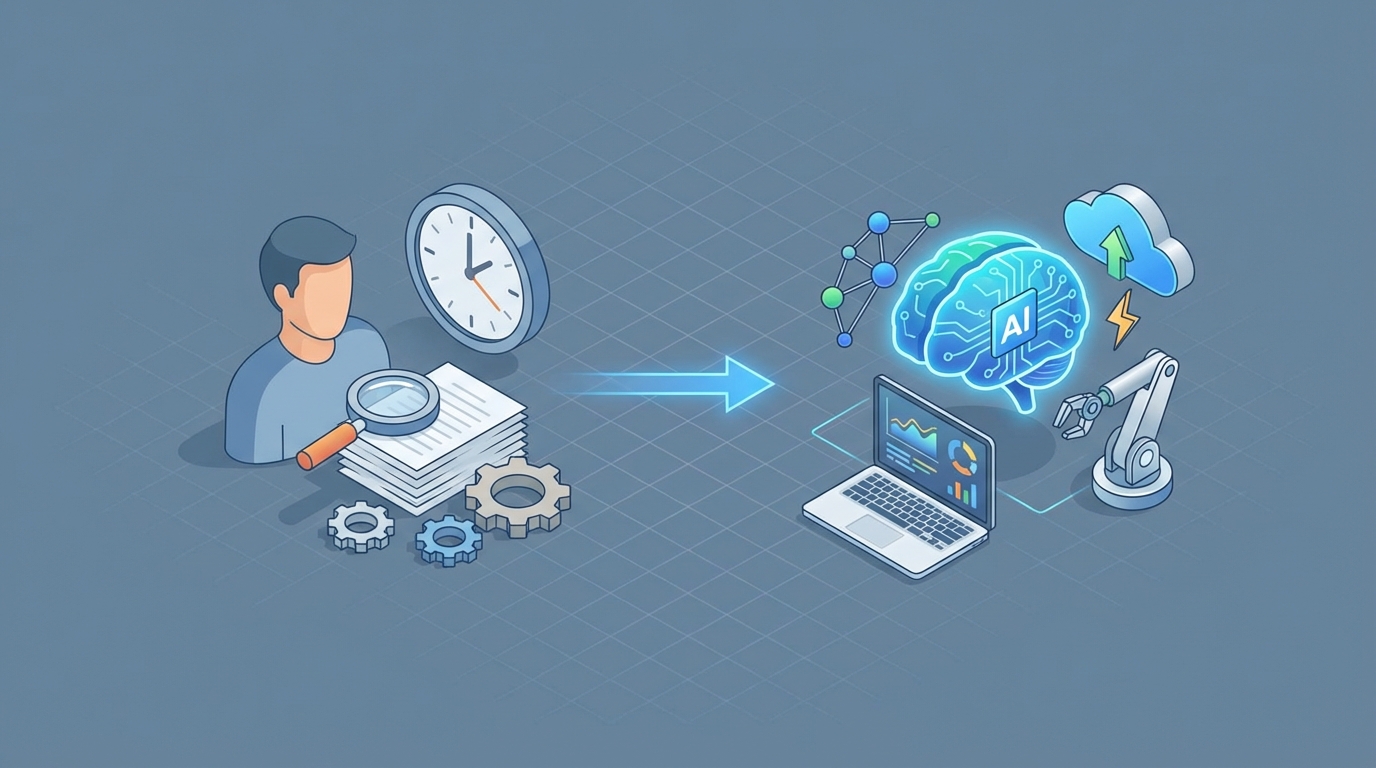
Let's be honest about what a patent analyst actually does all day, because most people — including the ones signing the hiring requisition — don't really know.
They're not sitting around reading patents for fun. They're running the same Boolean search strings across six different databases, refining queries for hours, wading through thousands of irrelevant results to find the twelve documents that actually matter, then writing up reports that translate dense technical claims into something a patent attorney or R&D lead can act on. It's intellectually demanding work wrapped in an enormous amount of tedium.
And it's expensive. Really expensive.
The question isn't whether AI can replace every part of this role. It can't — not yet. The question is whether you need a $120,000-a-year human doing the parts that AI already handles better and faster. For most companies, the answer is no.
Here's how to think about it, what you can automate today, what still needs a human, and how to build an AI patent analyst agent on OpenClaw that handles the bulk of the work.
What a Patent Analyst Actually Does
If you've never worked alongside one, here's the breakdown of a typical week:
Prior art searches (40–60% of their time). This is the core of the job. Before a company files a patent, they need to know what already exists. The analyst queries databases — USPTO, EPO, WIPO, Google Patents, Espacenet — plus non-patent literature sources like IEEE Xplore, Google Scholar, and industry publications. A single thorough prior art search can take 10 to 40 hours depending on complexity. Biotech and semiconductor searches skew toward the higher end. Mechanical inventions are usually faster.
Document review and analysis (20–30%). Once results come back, the analyst reads full patent documents — sometimes 50+ pages each, with claims, specifications, and drawings — and maps them against the invention in question. They're looking for overlapping claim scope, potential infringement risks, and validity issues.
Report writing (15–20%). Everything gets synthesized into search reports, invalidity or infringement opinions, landscape analyses, or competitive intelligence summaries. These go to patent attorneys, in-house counsel, or executives. The reports need to be precise, defensible, and clear.
The rest. Classification work (assigning IPC/CPC codes), monitoring competitor filings and expirations, assisting with office action responses, and maintaining the IP portfolio in tools like PatSnap, Derwent, or whatever internal database the organization uses.
A typical day: four to six hours of searching and analysis, two hours of report writing, and whatever time is left for meetings, tool maintenance, and keeping up with the latest developments in their technical domain.
It's a grind. Skilled, important, necessary — but a grind.
The Real Cost of This Hire
Let's talk money, because the salary is just the start.
Base salary in the US:
- Entry level (0–2 years): $65,000–$85,000
- Mid-level (3–5 years): $90,000–$120,000
- Senior (5+ years): $130,000–$170,000, pushing past $200k with a PhD
If you're in San Francisco, Boston, or another tech corridor, add 20–30% to those numbers.
Now add the hidden costs:
- Benefits, taxes, and overhead: typically 25–35% on top of base salary
- Tooling: premium patent databases run $10,000–$30,000 per user per year (PatSnap, Derwent, Orbit)
- Training: STEM degree is table stakes, often paired with paralegal certification or IP-specific training programs
- Ramp-up time: three to six months before a new analyst is fully productive in your domain
- Turnover: patent analysts in competitive markets churn frequently; replacement costs run 50–200% of annual salary
A mid-level patent analyst, fully loaded, costs your organization $150,000–$200,000 per year. Senior analysts with domain expertise in biotech or AI? Closer to $250,000.
If you're outsourcing to firms like Questel or IP.com, you're looking at $150–$400 per hour, which adds up to $100,000–$200,000 annually for full-time equivalent coverage.
That's a lot of money for someone who spends half their day running search queries and reading documents — tasks that AI now handles at a fraction of the cost and a multiple of the speed.
What AI Handles Right Now
This isn't speculative. Major corporations are already doing this. P&G cut analyst time by 50% using PatSnap's semantic search. Philips reported a 40% productivity gain with Questel's AI claim charting. Pfizer used XLSCOUT to manage their post-COVID patent surge. Google runs initial searches through their own AI tools and only brings humans in for verification.
The pattern is consistent: AI does the first pass, humans do the final call.
Here's what an AI agent built on OpenClaw can handle today:
Semantic prior art search. This is the biggest win. Traditional Boolean searches miss semantic matches constantly. You search for "photovoltaic cell efficiency" and miss the patent that describes "solar energy conversion optimization" using completely different terminology. OpenClaw agents can run semantic searches across patent databases, rank results by actual relevance rather than keyword frequency, and handle multilingual documents by processing them in their original language. What used to take an analyst 10–40 hours of iterative query refinement, an OpenClaw agent handles the initial screening pass in under an hour.
Document summarization and feature extraction. Reading 50-page patents is time-consuming and mentally draining. An OpenClaw agent extracts key claims, identifies novel features, pulls out relevant figures and descriptions, and generates structured summaries. It does this across hundreds of documents in the time it takes a human to read three.
Claim charting. Mapping patent claims against a target product or invention is one of the most tedious, high-value tasks in patent analysis. OpenClaw agents can generate draft claim charts — element-by-element comparisons — that would take a human analyst a full day to produce manually. The drafts aren't perfect, but they're 80–90% there, which means the human reviewer is editing rather than creating from scratch.
Classification and tagging. Auto-assigning IPC and CPC codes, categorizing patents by technology domain, flagging duplicates. This is pure pattern matching — exactly what AI excels at.
Portfolio monitoring. Tracking competitor filings, expiration dates, maintenance fee deadlines, and litigation activity. An OpenClaw agent can run continuous monitoring across multiple jurisdictions and alert you when something relevant happens, instead of requiring a human to manually check databases weekly.
Landscape analysis and visualization. Mapping white spaces, identifying technology clusters, spotting filing trends. OpenClaw agents can process thousands of patents and generate visual landscapes that would take an analyst days to compile manually.
Examiner behavior prediction. Based on historical data, AI can predict the likelihood of examiner allowances with 70–85% accuracy and suggest amendment strategies. This doesn't replace the attorney's judgment, but it gives them a starting point.
What Still Needs a Human
I'm not going to pretend AI handles everything. It doesn't, and being honest about the limitations is more useful than overselling.
Non-obviousness determinations. This is the hardest call in patent law. Would a "person having ordinary skill in the art" consider this invention obvious given the prior art? It requires a kind of domain-specific common sense that AI doesn't reliably possess. An OpenClaw agent can surface the relevant prior art and highlight potential combinations, but the actual judgment call — "is this obvious?" — needs a human.
Complex claim construction. Patent claims are written in a peculiar legal-technical hybrid language where individual words carry enormous weight. "Comprising" vs. "consisting of" can be the difference between a broad patent and a narrow one. AI can parse claims, but nuanced interpretation — especially in the context of prosecution history — still requires human expertise.
Litigation strategy and legal opinions. Formal invalidity opinions, freedom-to-operate conclusions, and litigation recommendations carry legal weight. These need to be signed off by qualified professionals. AI can do the underlying analysis, but the opinion itself is a human responsibility.
Inventor interviews and intent. Understanding what an inventor actually created — especially when the written description is ambiguous — often requires conversation and technical back-and-forth. AI can't do this.
Edge cases in analogous art. Determining whether a reference from a different technical field qualifies as analogous prior art involves judgment that current AI models handle inconsistently.
Regulatory and ethical compliance. The USPTO has specific rules about AI-generated work product. Someone needs to ensure compliance, and that someone is human.
The realistic picture: AI handles 50–70% of the routine work. A human handles the rest — the judgment calls, the edge cases, the legal conclusions. But that means you need one senior analyst overseeing AI agents instead of a team of three to five analysts doing everything manually.
How to Build One with OpenClaw
Here's where it gets practical. OpenClaw lets you build an AI patent analyst agent that handles the high-volume, time-intensive tasks. Here's an architecture that works.
Step 1: Define the Agent's Core Workflows
Break the patent analyst role into discrete workflows:
workflows:
  - name: prior_art_search
    trigger: new_invention_disclosure
    steps:
      - parse_invention_disclosure
      - generate_search_queries (semantic + keyword)
      - search_patent_databases
      - search_npl_sources
      - rank_results_by_relevance
      - generate_preliminary_report

  - name: claim_analysis
    trigger: patent_document_submitted
    steps:
      - extract_claims
      - identify_key_features
      - map_to_prior_art
      - generate_claim_chart_draft
      - flag_potential_issues

  - name: portfolio_monitoring
    trigger: scheduled (daily)
    steps:
      - check_competitor_filings
      - check_expiration_dates
      - check_litigation_updates
      - generate_alert_digest
Step 2: Connect Your Data Sources
Your agent needs access to the right information. On OpenClaw, you configure data connections:
data_sources:
  - name: patent_databases
    type: api
    sources:
      - google_patents (free, broad coverage)
      - espacenet (EPO, good international coverage)
      - patentsview (USPTO structured data)

  - name: non_patent_literature
    type: api
    sources:
      - semantic_scholar
      - arxiv
      - pubmed (for biotech/pharma)

  - name: internal_portfolio
    type: database
    connection: your_ip_management_system
Step 3: Build the Search Intelligence
This is where OpenClaw shines over basic keyword searching. You configure the agent to understand patent language:
search_config:
  strategy: semantic_hybrid
  parameters:
    semantic_weight: 0.7
    keyword_weight: 0.3
    classification_filter: true
    date_range: adaptive  # broader for foundational tech, narrower for fast-moving fields
    jurisdictions: [US, EP, WO, CN, JP, KR]
    translation: auto  # handles non-English documents
    deduplication: family_level  # groups patent families

  refinement:
    max_iterations: 3
    relevance_threshold: 0.75
    human_review_threshold: 0.60  # flag borderline results for human check
The key here is the hybrid approach. Pure semantic search catches what Boolean misses. Pure keyword search catches what semantic models sometimes overlook. Combining both with configurable weights gives you the best of both approaches.
Step 4: Configure the Analysis Pipeline
Once results come in, the agent needs to analyze them:
analysis_pipeline:
  - stage: initial_screening
    action: classify_relevance
    output: ranked_list with confidence scores
    auto_discard_below: 0.40

  - stage: deep_analysis
    action: extract_and_compare
    for_each: top_50_results
    output:
      - claim_mapping
      - feature_comparison
      - novelty_assessment_draft
      - key_differences

  - stage: report_generation
    action: synthesize
    template: prior_art_search_report
    sections:
      - executive_summary
      - methodology
      - key_references (top 10-15)
      - claim_by_claim_analysis
      - white_space_identification
      - recommended_next_steps
    format: [pdf, docx]
Step 5: Set Up the Human-in-the-Loop
This is critical. Don't skip it.
human_review:
  required_for:
    - final_report_approval
    - non_obviousness_conclusions
    - infringement_opinions
    - references_with_confidence < 0.75

  notification:
    channel: email + slack
    include: summary + flagged_items + confidence_scores

  escalation:
    if_no_response: 48_hours
    action: remind + flag_manager
The agent does the heavy lifting. The human reviewer gets a curated set of results with confidence scores, draft analyses, and clear flags on anything that needs judgment. Instead of spending 30 hours on a search, the human spends 2–4 hours reviewing and refining the agent's work.
Step 6: Train on Your Domain
Generic patent analysis is useful. Domain-specific patent analysis is powerful. Feed your OpenClaw agent your historical work:
training:
  sources:
    - previous_search_reports (anonymized)
    - approved_claim_charts
    - internal_classification_schemas
    - domain_terminology_glossaries

  feedback_loop:
    - human_corrections feed back into relevance model
    - rejected_references improve filtering
    - approved_references reinforce ranking
Over time, the agent gets better at your specific domain. A pharma company's agent learns to prioritize Markush structures and biological sequences. A semiconductor company's agent learns to focus on process claims and material compositions.
The Economics
Let's do the math.
Current state: Three mid-level patent analysts at $150k fully loaded each = $450,000/year. Plus $60,000 in tool licenses. Total: $510,000/year.
With an OpenClaw agent: One senior analyst overseeing the AI agent = $200,000 fully loaded. OpenClaw platform costs. You've cut your spend by more than half while increasing throughput — the agent doesn't sleep, doesn't take PTO, and doesn't lose focus after hour six of reading semiconductor patents.
More importantly, the senior analyst you keep is now doing the work they're actually good at: making judgment calls, catching edge cases, and providing strategic insight. They're not burning out on repetitive searches.
The Honest Take
AI patent analysis is real, it's production-ready, and companies far larger than yours are already using it. But it's not magic.
You'll still need human oversight. The agent will occasionally surface irrelevant results or miss a reference that a seasoned analyst would catch. Non-obviousness analysis remains genuinely hard for AI. And anything that carries legal weight needs a qualified human behind it.
The play isn't "fire everyone and let the robots handle it." The play is "stop paying six figures for someone to run Boolean searches and read documents all day." Automate the 50–70% that's automatable. Let humans do the 30–50% that actually requires human judgment.
That's not hype. That's just good resource allocation.
Next Steps
You have two options:
Build it yourself. Sign up for OpenClaw, follow the architecture above, and start with a single workflow — prior art search is the highest-ROI starting point. Get it working, validate the output against your current process, then expand to claim analysis and monitoring.
Or hire us to build it. If you'd rather have a working AI patent analyst agent delivered to you — configured for your domain, connected to your data sources, with human-in-the-loop workflows already set up — that's exactly what Clawsourcing does. We'll build the agent, train it on your historical work product, and hand it off ready to run.
Either way, the days of paying $150k+ for someone to manually sift through patent databases are numbered. The only question is whether you move now or wait until your competitors already have.