AI Medical Biller Agent: Submit Claims and Track Payments Automatically
Replace Your Medical Biller with an AI Medical Biller Agent
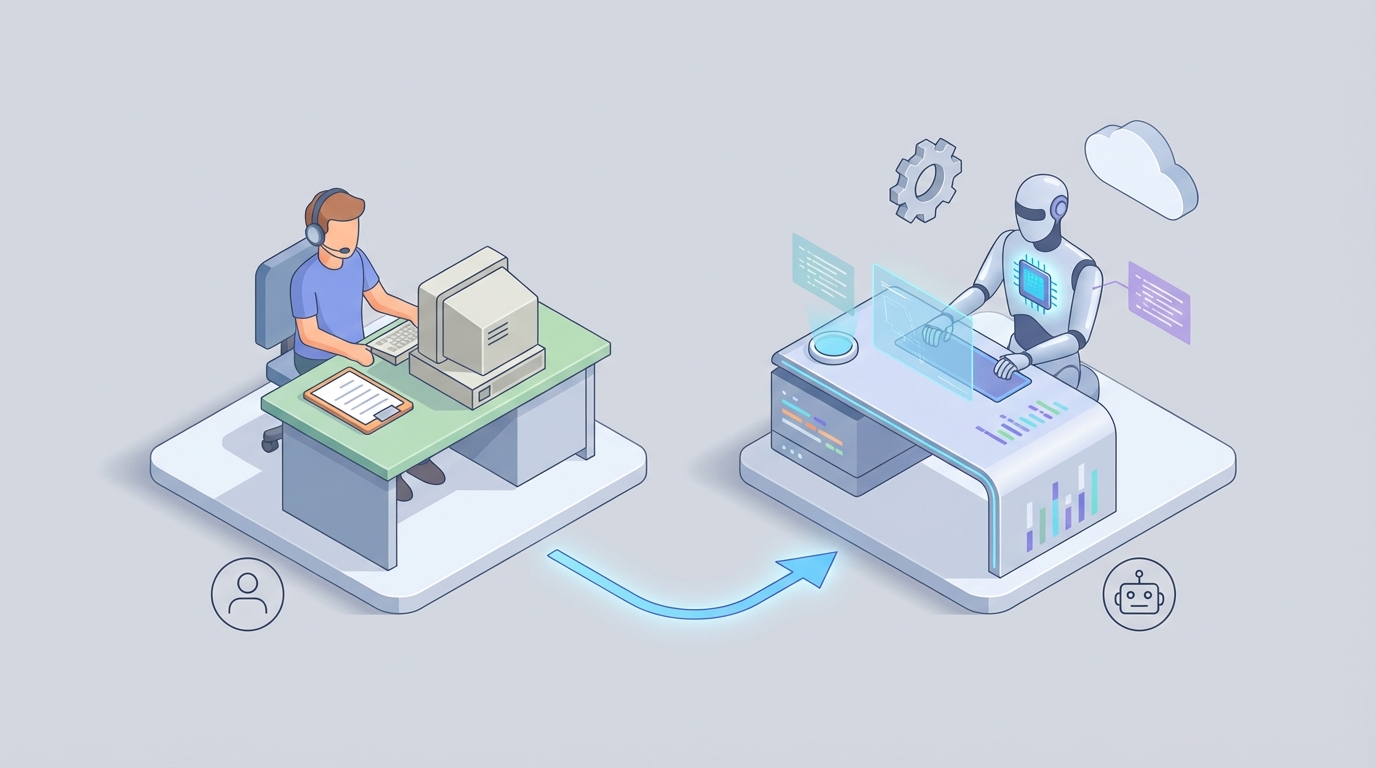
Most medical practices are spending $60,000–$75,000 a year on a medical biller who spends 70% of their day doing work a machine can do faster, more accurately, and without calling in sick. That's not a knock on medical billers — it's a knock on the way we've structured the job.
The reality is that revenue cycle management (RCM) has become so rules-based, so repetitive, and so dependent on pattern matching that it's practically begging to be automated. And with the tools available today — specifically, AI agents built on platforms like OpenClaw — you can automate the vast majority of a medical biller's workflow while keeping a human in the loop for the stuff that actually requires judgment.
Let me walk through exactly what that looks like.
What a Medical Biller Actually Does All Day
If you've never sat next to a medical biller for a full shift, here's the breakdown. Their day is roughly 60–70% computer work and the rest is phone calls and emails. The core responsibilities look like this:
Verifying patient information. Before anything gets billed, someone has to confirm that the patient's demographics, insurance eligibility, and medical records are complete and accurate. This is tedious, repetitive, and error-prone when done manually.
Medical coding. This is the big one. Every diagnosis, procedure, and service needs the right ICD-10-CM/PCS, CPT, or HCPCS code assigned to it. There are tens of thousands of these codes, they get updated every year (2026 alone added 200+ new ICD-10 codes), and getting them wrong is the single biggest cause of claim denials.
Claim preparation and submission. Once coded, claims get packaged into electronic 837 files (or occasionally paper, if you're living in 2005) and submitted to payers — Medicare, Medicaid, Blue Cross, Aetna, the whole zoo. Each payer has its own submission quirks.
Payment posting and reconciliation. When payments come back, someone has to match them to the right claims, record adjustments, and flag discrepancies. This happens in practice management software like Epic or Cerner.
Denial management. This is where the pain lives. Industry-wide, 18–22% of claims get denied. That means for every five claims your biller submits, at least one comes back rejected. They then have to figure out why (coding error? missing info? eligibility issue?), fix it, and resubmit or appeal. This alone eats 25–35% of a biller's day.
Patient billing and collections. With average deductibles now sitting around $1,600, more patients owe more money out of pocket. Billers generate statements, field phone calls, set up payment plans, and chase down balances. Bad debt runs 5–10% of revenue for most practices.
Insurance follow-ups. Calling or emailing payers to check on pending claims. Average claim resolution takes 30–90 days. This is soul-crushing work — sitting on hold with insurance companies for hours.
Compliance and reporting. HIPAA compliance, AR aging reports, financial summaries for practice leadership. Important, but not exactly stimulating.
Here's how the time breaks down according to HFMA surveys and Change Healthcare's 2023 RCM report:
- Denial management and appeals: 25–35%
- Coding and claim scrubbing: 20–30%
- Insurance follow-ups: 15–25%
- Data entry and verification: 10–20%
That's roughly 70% of the job in four buckets, and every single one of those buckets is automatable today — either fully or mostly.
The Real Cost of This Hire
Let's talk money, because this is where the math gets compelling.
The Bureau of Labor Statistics puts the median annual wage for medical billers and coders at $46,660. The AAPC's 2023 salary survey shows certified billers averaging around $49,000. Entry-level runs $35k–$42k. Experienced billers with specializations pull $55k–$70k. In California, you're looking at $55k+ just to get someone in the door.
But salary is never the full cost. Once you factor in benefits, payroll taxes, workers' comp, and overhead, the total cost to employer runs 1.25–1.5x the base salary. That's $60,000–$75,000 per year per biller.
Then there's the stuff that doesn't show up on a spreadsheet:
Training. Every new hire needs weeks of onboarding. They need to learn your specific EHR, your payer mix, your coding preferences, your appeals workflow. And then the codes change every January and you're retraining again.
Turnover. The industry turnover rate for billing staff is 20–25%. That means, statistically, you're replacing one out of every four or five billers every year. Each replacement costs you recruiting fees, training time, and productivity losses during the ramp-up period. Conservative estimates put the cost of replacing a single biller at $8,000–$15,000 when you account for everything.
Errors. Manual workflows have a 10–15% error rate. Each error can delay payment by weeks or months. At scale, that's real money sitting in limbo.
Productivity ceiling. A single biller handles 50–150 claims per day. That's the cap. You can't make them faster. You can only hire more of them.
The alternative? Outsourcing to an RCM firm runs $8–$15 per claim or $25–$40 per hour. Which is fine until you realize you've traded one dependency for another, with less control and less transparency.
There's a better path.
What AI Handles Right Now (Not Theoretically — Right Now)
This isn't speculative. Major health systems are already running AI-powered billing at scale:
- CodaMetrix (used by Mass General Brigham) achieves 92% coding accuracy and reduces coding time by 50–70%.
- AKASA (used by Providence and Banner Health) automates 80% of denial follow-ups and cut AR days by 20%.
- Waystar processes $3B+ in claims annually with AI-driven denial prediction, reducing denials by 25%.
- athenahealth auto-codes 85% of claims across 160,000+ providers.
These are not startups running demos. These are production systems processing millions of claims.
Here's what's automatable today, task by task:
Eligibility verification and claim scrubbing: Fully automatable. Real-time insurance verification APIs exist. An AI agent can check eligibility, flag discrepancies, and scrub claims against payer-specific rules before submission. This alone eliminates a huge chunk of denials caused by eligibility issues (roughly 24% of all denials).
Medical coding: 80–95% automatable. NLP models can read clinical notes and suggest ICD-10/CPT codes with high accuracy. The remaining 5–20% involves complex cases — rare comorbidities, experimental treatments, ambiguous documentation — that need human review.
Claim submission: Fully automatable. EDI submission is a rules-based process. An agent can format, validate, and submit claims 24/7 without human intervention.
Payment posting: 90% automatable. OCR and pattern matching can auto-post payments, match EOBs to claims, and flag exceptions. Only partial payments, disputes, or unusual adjustments need a human look.
Denial prediction and initial management: 70–85% automatable. ML models trained on historical denial data can predict which claims will be denied before submission — and either fix them preemptively or auto-generate appeal letters mapped to specific denial reason codes.
Patient billing: Mostly automatable. Automated statements, payment reminders, and chatbots for common billing questions. The exceptions are empathy-driven conversations — financial hardship, disputes, counseling on payment options.
Reporting and analytics: Fully automatable. AR dashboards, trend forecasting, payer performance analysis — all of this is a natural fit for AI.
What Still Needs a Human
I'm not going to pretend you can fire your entire billing department tomorrow and let robots handle everything. That's not honest, and it's not how this works.
Here's where humans remain essential:
Complex coding decisions. When a patient has six comorbidities and an experimental treatment, the AI will give you suggestions, but a certified coder needs to make the final call. Compliance risk is too high to fully automate edge cases.
Strategic denial appeals. AI can write the first draft of an appeal letter. AI can identify patterns in denial reasons. But when you need to negotiate with a payer, escalate a dispute, or dig through medical records to build a case for medical necessity — that's human work.
Patient-facing collections with sensitivity. A chatbot can handle "when is my payment due?" It cannot handle "I just lost my job and I can't pay this $4,000 bill." Financial counseling requires empathy and judgment.
Payer contract negotiations. AI can tell you which payers are underpaying and by how much. The negotiation itself is a human job.
Regulatory interpretation. When CMS drops a new rule or a state Medicaid program changes its billing requirements, someone needs to interpret that and update workflows accordingly. AI can adapt quickly once told what to do, but the "what to do" decision is human.
The realistic split? An AI agent handles 70–85% of the billing workflow. A human handles the rest, but now instead of drowning in data entry and phone holds, they're focused on the high-value work that actually requires their expertise. One skilled biller overseeing an AI agent can do the work that used to require three or four people.
How to Build an AI Medical Biller Agent with OpenClaw
Here's where it gets practical. OpenClaw lets you build AI agents that can execute multi-step workflows — exactly the kind of sequential, rules-driven processes that define medical billing. Here's how to structure it.
Step 1: Define Your Agent's Core Workflows
Start with the highest-volume, most automatable tasks. For a medical billing agent, that means:
- Eligibility verification — Pull patient insurance data, verify active coverage, flag discrepancies
- Claim coding and scrubbing — Read encounter notes, suggest codes, validate against payer rules
- Claim submission — Format and submit via EDI clearinghouse
- Payment posting — Match incoming payments to claims, flag exceptions
- Denial triage — Categorize denials by reason code, auto-generate appeals for common denial types
- Follow-up scheduling — Track pending claims and trigger follow-up actions at defined intervals
Step 2: Connect Your Data Sources
Your agent needs access to:
- Your EHR/practice management system (Epic, Cerner, AdvancedMD, etc.) via API or integration layer
- Insurance eligibility APIs (e.g., Availity, Eligible, Change Healthcare)
- Your EDI clearinghouse for claim submission and remittance
- A denial reason code database (CARC/RARC codes)
- Your historical claims data for denial prediction training
In OpenClaw, you configure these as data connectors. The agent pulls from and writes to these systems as part of its workflow execution.
Step 3: Build the Workflow Logic
Here's a simplified example of how you'd structure the claim processing workflow in OpenClaw:
Agent: MedicalBillerAgent

Trigger: New encounter finalized in EHR

Step 1: VERIFY ELIGIBILITY
  → Query insurance API with patient ID and date of service
  → If inactive/mismatch → flag for human review, STOP
  → If active → proceed

Step 2: CODE ENCOUNTER
  → Extract clinical notes from encounter
  → Use NLP coding module to suggest ICD-10 and CPT codes
  → Cross-reference against payer-specific coding rules
  → If confidence score > 95% → auto-assign codes
  → If confidence score 80-95% → flag for human review with suggestions
  → If confidence score < 80% → route to human coder, STOP

Step 3: SCRUB CLAIM
  → Validate code combinations (check for bundling errors, modifiers)
  → Verify all required fields populated
  → Run against denial prediction model
  → If denial probability > 40% → flag with reason and suggested fix
  → If clean → proceed

Step 4: SUBMIT CLAIM
  → Format as 837P/837I
  → Submit via EDI clearinghouse
  → Log submission ID and timestamp
  → Set follow-up timer (14 days for commercial, 30 days for Medicare)

Step 5: MONITOR AND POST
  → Watch for 835 remittance
  → On receipt → match payment to claim
  → If full payment → close claim
  → If partial/denied → trigger denial workflow
For the denial management sub-workflow:
Sub-Agent: DenialManager

Trigger: Claim returned with denial code

Step 1: CATEGORIZE
  → Map CARC/RARC codes to denial category
  → Categories: coding error, eligibility, auth required,
    medical necessity, timely filing, duplicate, other

Step 2: AUTO-RESOLVE (if applicable)
  → Coding error with clear fix → correct and resubmit
  → Missing info with available data → append and resubmit
  → Eligibility retroactive change → re-verify and resubmit

Step 3: GENERATE APPEAL (if needed)
  → Pull relevant clinical documentation
  → Draft appeal letter using denial-specific template
  → Attach supporting documents
  → Route to human for review before submission

Step 4: TRACK
  → Log appeal submission
  → Set follow-up timer
  → Escalate if no response within 30 days
Step 4: Set Confidence Thresholds and Human Escalation Rules
This is the most important part. You don't want an AI agent making autonomous decisions on $50,000 surgical claims with ambiguous coding. Set clear rules:
- Auto-process: Claims under $X with coding confidence >95% and denial probability <20%
- Human review required: Claims over $X, confidence 80–95%, any flagged compliance issue
- Human only: Appeals requiring payer negotiation, complex multi-code encounters, patient financial counseling
In OpenClaw, these thresholds are configurable per workflow step, so you can tighten or loosen them as you build confidence in the agent's accuracy.
Step 5: Train on Your Historical Data
Your agent gets dramatically better with your data. Feed it:
- 12+ months of historical claims with outcomes (paid, denied, appealed)
- Your specific payer mix and their denial patterns
- Your coding preferences and documentation standards
The denial prediction model, in particular, needs this data to be useful. A generic model might catch 60% of likely denials. One trained on your practice's specific payer relationships and coding patterns can catch 80%+.
Step 6: Run in Shadow Mode First
Do not flip this on and walk away. Run the agent in shadow mode for 2–4 weeks:
- It processes every claim, but a human reviews every output before submission
- You track agreement rate between AI and human decisions
- You identify edge cases and add rules to handle them
- You tune confidence thresholds based on real performance
Once you're seeing 95%+ agreement on auto-processable claims, start letting it submit autonomously on the easy ones while maintaining human review on flagged items.
The Math That Matters
Let's run the numbers on a mid-sized practice with three billers:
Current cost: 3 billers × $65,000 (fully loaded) = $195,000/year
With an AI billing agent: 1 senior biller overseeing AI workflows × $70,000 + OpenClaw platform costs = ~$85,000–$100,000/year
That's roughly $100,000/year in savings — and that's before accounting for faster claim submission (AI doesn't sleep), lower denial rates (AI catches errors pre-submission), and reduced AR days (automated follow-ups don't forget).
The practices already doing this — the Providences and Banner Healths of the world — are reporting 15–30% revenue uplift and 40% cost savings. You don't have to be a hospital system to access the same capabilities. That's the whole point of building it yourself on a platform like OpenClaw.
Next Steps
You have two options:
Option 1: Build it yourself. Sign up for OpenClaw, map out your billing workflows using the structure above, connect your EHR and clearinghouse, and start iterating. If you have someone technical on your team (or you're willing to learn), this is completely doable. The platform is designed to make agent-building accessible without needing a software engineering degree.
Option 2: Hire us to build it. If you'd rather have someone who's done this before handle the implementation, that's what Clawsourcing is for. We'll build your AI medical billing agent, connect it to your systems, train it on your data, and hand you a working system with human escalation workflows already configured. You focus on patients. We focus on making sure you get paid.
Either way, the era of paying three people to do what one person plus an AI agent can do better is ending. The practices that figure this out first will have a permanent cost advantage. The ones that don't will keep wondering why their margins are shrinking.
The tools exist. The proof points exist. The only question is whether you build it now or wait until your competitors do.