AI Lead Generation for Local Businesses
Automate lead generation for local businesses with AI agents that scrape directories, qualify leads, and schedule outreach.
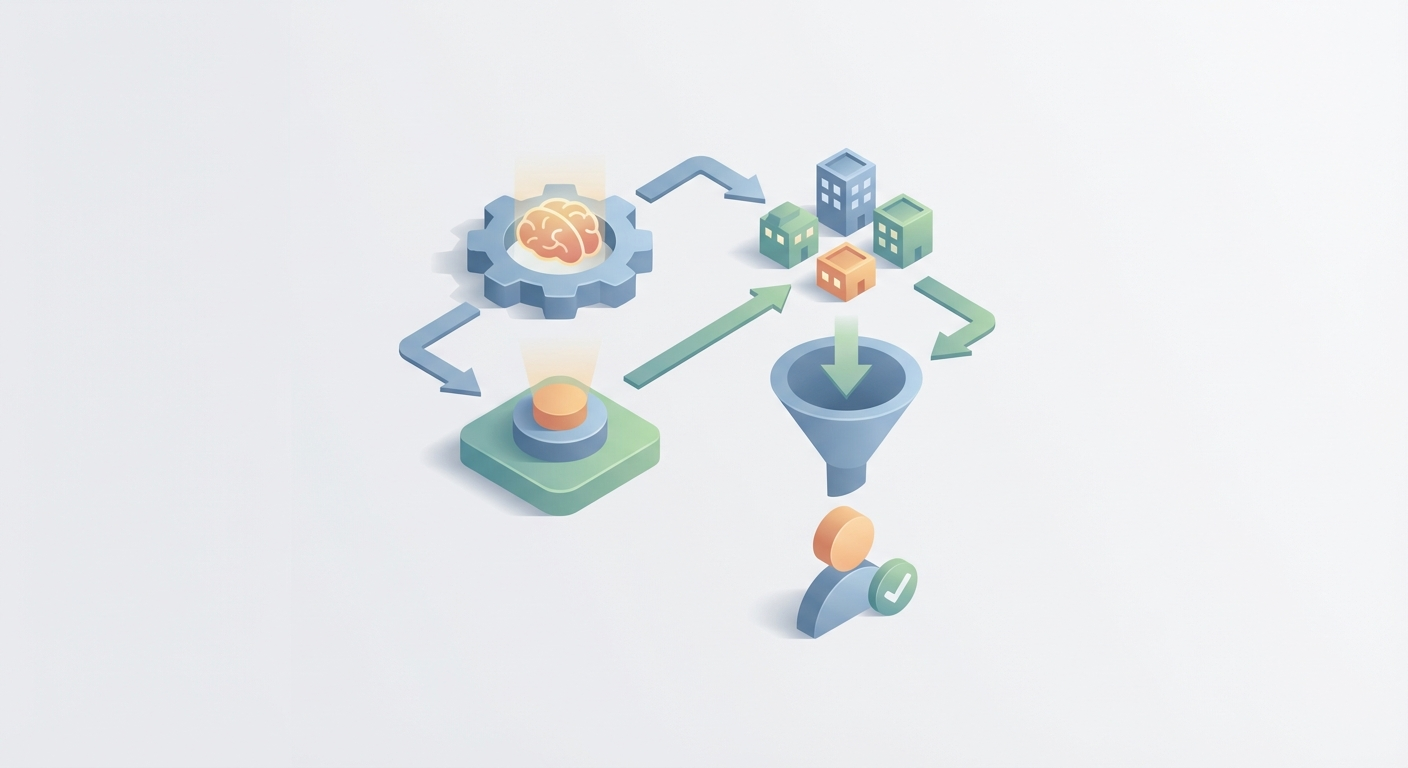
Most local businesses are still generating leads the same way they did in 2015: buying overpriced lists from brokers, running Facebook ads that drain budgets faster than they fill pipelines, or — worst of all — waiting for the phone to ring. Meanwhile, there's a plumber in Seattle whose AI agent scraped 200 qualified prospects from Google Maps last Tuesday, sent personalized emails to the top 40, and booked 11 discovery calls before he finished his morning coffee.
That's not a hypothetical. That's where lead generation is heading for every local business willing to stop doing things the hard way.
The gap between "businesses that use AI for lead gen" and "businesses that don't" is about to become the gap between "businesses that exist" and "businesses that used to exist." So let's close that gap. I'm going to walk you through exactly how to build an AI lead generation agent that finds prospects, qualifies them, and initiates outreach — practically on autopilot. We'll use OpenClaw as the backbone for building and orchestrating these agents, and I'll point you to specific tools on Claw Mart that plug directly into this workflow.
No theory. No hand-waving. Let's build the thing.
The Lead Gen Problem Nobody Talks About
Here's the dirty truth about lead generation for local businesses: it's not that leads don't exist. It's that finding good leads is tedious, manual, and expensive — and most small business owners don't have time for tedious.
Think about what a typical lead gen process looks like for a local HVAC company, a dental practice, or a gym:
- Search Google Maps or Yelp for potential referral partners, commercial clients, or underserved neighborhoods.
- Copy-paste business names, phone numbers, and websites into a spreadsheet.
- Look up decision-makers on LinkedIn.
- Write individual emails or make cold calls.
- Follow up manually. Maybe.
That's 6–10 hours of work to generate maybe 20 leads, of which 5 are actually worth talking to. Multiply that by every week, and you've got a business owner spending a quarter of their time on prospecting instead of, you know, running the business.
The entire process is ripe for automation. Not the crappy "blast 10,000 emails and pray" kind of automation. Intelligent automation — the kind where an AI agent understands who to target, why they're a good fit, and how to reach them with a message that doesn't sound like it was generated by a robot (even though it was).
This is what OpenClaw was built for.
What You're Actually Building
Let me lay out the architecture before we get into code. Your AI lead gen agent has three jobs:
| Stage | What Happens | Tools |
|---|---|---|
| Collect | Pull business data from directories (Google Maps, Yelp, Yellow Pages) | Google Places API, Yelp Fusion API, web scrapers |
| Qualify | Enrich leads with emails/LinkedIn, score them with AI | Hunter.io, Apollo.io, OpenClaw LLM agents |
| Outreach | Send personalized emails or LinkedIn messages | SendGrid, Lemlist, OpenClaw orchestration |
The whole pipeline runs through OpenClaw, which handles the agentic orchestration — meaning your AI doesn't just execute steps sequentially, it reasons about what to do next. If a lead has no email but has an active LinkedIn, the agent pivots. If a business has 2-star reviews and looks like it's closing, the agent skips it. That's the difference between a script and an agent.
You can find pre-built components for each of these stages on Claw Mart — scrapers, enrichment connectors, outreach templates — so you're not building from scratch every time.
Step 1: Collecting Leads from Business Directories
You need data. Specifically: business name, address, phone number, website, and category. The two best sources for local businesses are Google Places and Yelp, both of which have APIs.
The Compliant Way (Do This)
Use official APIs. They're rate-limited but legal, and the data quality is significantly better than scraping.
Google Places API — Python Example:
import requests
import os

API_KEY = os.getenv('GOOGLE_PLACES_API_KEY')
query = 'plumbers near Seattle'

url = f"https://maps.googleapis.com/maps/api/place/textsearch/json?query={query}&key={API_KEY}"
response = requests.get(url).json()

leads = []
for r in response['results']:
    leads.append({
        'name': r['name'],
        'address': r['formatted_address'],
        'rating': r.get('rating'),
        'website': r.get('website', 'N/A'),
        'place_id': r['place_id']
    })

print(f"Found {len(leads)} leads")
for lead in leads[:5]:
    print(lead)
This gives you ~20 results per query. Use the next_page_token in the response to paginate through more. For radius-based searches (e.g., "all gyms within 10 miles of downtown Portland"), use the nearbysearch endpoint with lat/lng coordinates.
Yelp Fusion API:
import requests

headers = {'Authorization': f'Bearer {os.getenv("YELP_API_KEY")}'}
params = {
    'term': 'restaurants',
    'location': 'Austin, TX',
    'limit': 50,
    'sort_by': 'review_count'
}

resp = requests.get('https://api.yelp.com/v3/businesses/search', headers=headers, params=params)
businesses = resp.json()['businesses']

for biz in businesses[:5]:
    print(f"{biz['name']} | {biz['phone']} | {biz['rating']} stars | {biz.get('url')}")
Cost reality check:
- Google Places: 1,000 requests/month free, then $17 per 1,000.
- Yelp Fusion: 5,000 calls/day free.
- For 500 leads/week, you're looking at $30–50/month in API costs. That's less than one garbage Facebook lead.
The Scraping Way (Use Carefully)
Sometimes APIs don't give you everything. Maybe you need data from niche directories, or you need to pull info from business websites directly. In that case, scraping tools exist — but respect robots.txt, use rate limiting, and never scrape behind a login wall.
On Claw Mart, look for directory scraping agents that handle proxy rotation and rate limiting out of the box. These are built specifically for OpenClaw workflows, so they plug right into your pipeline without custom infrastructure.
# Example: Basic Scrapy spider for a directory
import scrapy

class LocalDirectorySpider(scrapy.Spider):
    name = 'local_biz'
    start_urls = ['https://www.yelp.com/search?find_desc=dentists&find_loc=Denver']

    custom_settings = {
        'DOWNLOAD_DELAY': 2,  # Be respectful
        'ROBOTSTXT_OBEY': True,
    }

    def parse(self, response):
        for biz in response.css('[data-testid="serp-ia-card"]'):
            yield {
                'name': biz.css('a.businessName span::text').get(),
                'neighborhood': biz.css('.secondary-attributes span::text').get(),
            }
Pro tip: Use SerpAPI as a proxy for Google Maps results if you don't want to deal with scraping infrastructure. It's $50/month for 5,000 searches and returns structured JSON.
Step 2: Qualifying Leads with AI
Raw lead data is useless without qualification. You don't want to email every plumber in Seattle — you want the ones who are most likely to buy what you're selling.
Enrichment
First, attach email addresses and decision-maker info to your leads.
Hunter.io for email discovery:
import requests

domain = 'example-plumbing.com'
resp = requests.get(
    f'https://api.hunter.io/v2/domain-search?domain={domain}&api_key={os.getenv("HUNTER_API_KEY")}'
)
emails = [e['value'] for e in resp.json()['data']['emails']]
print(emails)  # ['john@example-plumbing.com', 'info@example-plumbing.com']
For LinkedIn enrichment, use Apollo.io ($50/month gets you 1,000 credits). Do not scrape LinkedIn directly — they sue people, and they win.
AI-Powered Scoring
This is where OpenClaw shines. Instead of writing brittle if/else rules ("if rating > 4 and reviews > 50, then hot"), you use an LLM agent to reason about lead quality based on multiple signals.
OpenClaw Qualification Agent:
from openclaw import Agent

qualifier = Agent(
    model="gpt-4o-mini",
    system_prompt="""You are a lead qualification expert for local business outreach.
    Given a business lead's data, score them 1-10 for outreach potential.
    Consider: review count, rating, website quality, apparent business size,
    and likelihood they need the service being offered.
    Output valid JSON: {"score": int, "reason": str, "suggested_angle": str}"""
)

lead_data = {
    "name": "Seattle Pro Plumbing",
    "rating": 4.2,
    "review_count": 87,
    "website": "seattleproplumbing.com",
    "address": "1234 Pine St, Seattle, WA",
    "category": "Plumber",
    "phone": "+12065551234"
}

result = qualifier.run(f"Qualify this lead for a digital marketing service: {lead_data}")
print(result)
# {"score": 8, "reason": "Strong review count but rating could be higher —
#  they'd benefit from reputation management.",
#  "suggested_angle": "Help them convert 4-star reviews into 5-stars"}
Notice what the agent does that a rule-based system can't: it reasons about the suggested_angle. That's gold for personalization in step 3.
Filter threshold: Only proceed with leads scoring 7+. This typically cuts your list by 60%, which means your outreach efforts are 2.5x more focused.
On Claw Mart, there are lead qualification agents specifically tuned for different industries — real estate, home services, health & wellness. These come with pre-built scoring rubrics so you're not starting from a blank prompt.
Step 3: Automated, Personalized Outreach
This is where most people screw it up. They build a beautiful data pipeline and then blast generic templates. Don't be that person.
Email Outreach
Use the qualification data — especially the suggested_angle — to generate personalized emails.
from openclaw import Agent
import sendgrid
from sendgrid.helpers.mail import Mail

# Generate personalized email
writer = Agent(
    model="gpt-4o-mini",
    system_prompt="""Write short, conversational cold emails for local business outreach.
    No corporate jargon. Sound like a real person. Under 150 words.
    Include one specific observation about their business.
    End with a soft CTA (question, not a demand)."""
)

email_body = writer.run(f"""
    Write an outreach email to {lead_data['name']}.
    They're a {lead_data['category']} in Seattle with {lead_data['review_count']} reviews
    and a {lead_data['rating']} rating.
    Angle: {result['suggested_angle']}
    We offer: AI-powered review management and local SEO.
""")

# Send via SendGrid
sg = sendgrid.SendGridAPIClient(os.getenv('SENDGRID_API_KEY'))
message = Mail(
    from_email='alex@youragency.com',
    to_emails='john@seattleproplumbing.com',
    subject='Quick thought about your Yelp reviews',
    html_content=email_body
)
sg.send(message)
Compliance checklist (CAN-SPAM):
- ✅ Physical mailing address in footer
- ✅ Unsubscribe link
- ✅ No deceptive subject lines
- ✅ "From" name matches actual sender
- ✅ Honor opt-outs within 10 business days
The Full Agentic Workflow
Here's where it all comes together. In OpenClaw, you can chain these steps into a single autonomous workflow:
from openclaw import Agent, Pipeline

# Define the pipeline
pipeline = Pipeline(
    name="local_lead_gen",
    steps=[
        {
            "name": "collect",
            "agent": "directory_scraper",
            "config": {
                "source": "google_places",
                "query": "plumbers near Seattle",
                "max_results": 100
            }
        },
        {
            "name": "enrich",
            "agent": "email_finder",
            "config": {
                "provider": "hunter",
                "fallback": "apollo"
            }
        },
        {
            "name": "qualify",
            "agent": "lead_scorer",
            "config": {
                "min_score": 7,
                "service_context": "digital marketing for home services"
            }
        },
        {
            "name": "outreach",
            "agent": "email_writer_sender",
            "config": {
                "provider": "sendgrid",
                "daily_limit": 50,
                "follow_up_days": [3, 7]
            }
        }
    ]
)

# Run it
results = pipeline.execute()
print(f"Collected: {results['collect']['count']}")
print(f"Qualified: {results['qualify']['count']}")
print(f"Emails sent: {results['outreach']['count']}")
Set this to run daily. Monday morning, you check your dashboard and see 50 personalized emails went out, 15 were opened, and 4 people replied asking for a call. That's your week booked.
How to Price This as a Service
If you're building this for yourself, great. But the real money is selling lead gen as a service to local businesses who will never build this themselves.
Pricing models that work:
| Model | Price Range | Best For |
|---|---|---|
| Per lead | $5–25/qualified lead | Low trust clients, pay-per-performance |
| Monthly retainer | $500–2,000/mo | Ongoing relationships, predictable revenue |
| Setup + retainer | $1,000 setup + $750/mo | Best of both worlds |
| Revenue share | 10–20% of closed deals | High trust, high reward |
Your cost structure:
- API costs: $50–150/month
- OpenClaw: Check current pricing on Claw Mart
- Email tools: $30–60/month
- Your time: ~2 hours/week per client once it's running
At $1,000/month per client with $200 in costs, you're looking at $800/month profit per client. Ten clients = $8,000/month in near-passive income. That math is hard to argue with.
Benchmark numbers to promise (conservatively):
- 100+ qualified leads/month
- 30%+ email open rate
- 5%+ reply rate
- 10–20 booked calls/month
If a plumber closes 3 of those 20 calls at $5,000 average job value, that's $15,000 in revenue from your $1,000/month service. You're a no-brainer.
Legal Stuff (Don't Skip This)
I'm not a lawyer, and you should talk to one before you scale this. But here's the landscape:
| Risk | What to Do |
|---|---|
| Scraping violations | Use official APIs wherever possible. If you scrape, respect robots.txt and rate limits. Use paid proxy services, not sketchy free ones. |
| CAN-SPAM / TCPA | Include physical address and unsubscribe in every email. Never auto-dial cell phones. |
| GDPR / CCPA | If targeting EU or California residents, you need consent mechanisms. B2B has more flexibility than B2C, but still — be careful. |
| LinkedIn ToS | Do not automate LinkedIn beyond their official API. Manual review of connection requests is your safest bet. |
The simplest rule: don't be creepy, and don't be spammy. If a human would be annoyed receiving your message, the AI shouldn't send it.
Tools on Claw Mart That Plug Into This
Here's why building on OpenClaw with Claw Mart makes this faster than stitching together 15 different SaaS products:
- Directory Lead Scrapers: Pre-built agents that pull from Google Places, Yelp, and niche directories, already configured with rate limiting and data normalization.
- Lead Enrichment Connectors: Agents that chain Hunter.io, Apollo, and NeverBounce to find and verify emails automatically.
- Qualification Scoring Templates: Industry-specific scoring agents for home services, healthcare, fitness, restaurants — so you're not writing prompts from scratch.
- Outreach Sequence Builders: Email and follow-up sequence agents with personalization built in, compliance checks included.
- CRM Sync Agents: Push qualified leads directly into HubSpot, Airtable, or a Google Sheet.
Browse the marketplace at Claw Mart. Most components are plug-and-play with OpenClaw pipelines.
Next Steps
Here's what to do this week:
-
Get your API keys. Sign up for Google Places API (free tier), Yelp Fusion (free), and Hunter.io (50 free lookups/month). Total cost: $0.
-
Set up OpenClaw. Build your first pipeline — just the collection step. Get 50 leads from Google Places for a local niche you care about.
-
Add qualification. Connect an LLM scoring agent and filter to your top 15 leads. Read the results. Are they good? Tweak the prompt.
-
Send your first batch. Write a personalized email template, let the agent customize it per lead, and send 10 manually through Gmail to test response rates.
-
Automate and scale. Once you're getting replies, move to SendGrid, set daily limits, add follow-up sequences, and let it run.
-
Sell it. Walk into a local business with a list of 20 qualified leads you found in an hour and say, "I can do this for you every week." That's a $1,000/month conversation.
The window for this is wide open. Most local businesses have never heard of AI lead generation. The ones who adopt it first will eat the lunch of everyone who doesn't. The only question is whether you're building the system or waiting for someone else to build it and sell it to you at a markup.
You know the answer. Go build it on OpenClaw.
Recommended for this post
Meeting Notes AI
Skill
Transform chaotic meeting transcripts into structured, actionable summaries
 Gizmo
GizmoAutomate end-to-end recruitment from sourcing to interview-ready candidates with AI.
 Victoria
Three-level OODA strategy, five-phase Ralph execution, and a recursive feedback engine. Your agent gets faster — this makes it get better.
 JerryRunsOps