AI Dispatcher: Route, Assign, and Track Jobs Automatically
Replace Your Dispatcher with an AI Dispatcher Agent
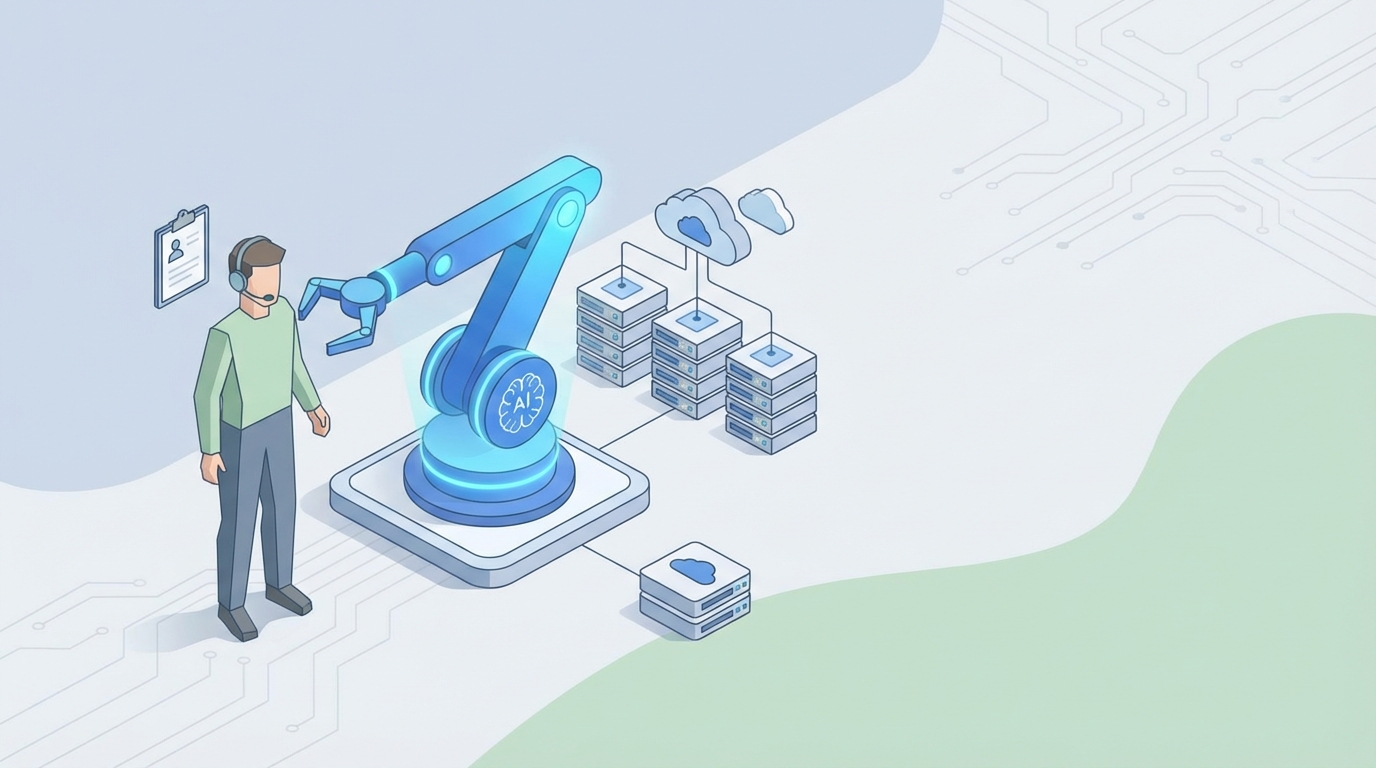
Most dispatchers spend their day doing the same thing over and over: matching drivers to loads, checking ETAs, texting drivers who haven't checked in, updating spreadsheets, re-routing around a traffic jam on I-80, and fielding calls from customers who want to know where their freight is. Then they do it again. For ten to twelve hours. Often overnight.
It's not glamorous. It's high-stress, high-volume coordination work—and a staggering amount of it is repetitive enough that a well-built AI agent can handle it today.
I'm not talking about some vague "AI will transform logistics" pitch. I mean you can build a functioning AI dispatcher agent on OpenClaw right now, deploy it this month, and have it handling 40-60% of the work a human dispatcher currently does. The rest still needs a person. But that person goes from drowning in routine tasks to actually managing exceptions, relationships, and the stuff that requires a brain.
Here's how the whole thing works.
What a Dispatcher Actually Does All Day
Let's be specific, because "dispatching" sounds simple until you realize it's actually six or seven jobs duct-taped together.
A transportation/logistics dispatcher—the kind at a trucking company, delivery fleet, or freight brokerage—typically handles:
Receiving and triaging requests. Calls, emails, TMS notifications from customers or brokers requesting pickups. The dispatcher figures out urgency, load type, pickup/delivery windows, and any special requirements (HAZMAT, temperature control, liftgate). This eats 20-30% of a shift.
Assigning drivers to loads. Matching based on location, availability, equipment type, HOS (hours-of-service) remaining, and sometimes driver preference or skill. For a mid-size fleet with 50-200 trucks, this is a constant puzzle with moving pieces.
Route planning. Plotting efficient paths accounting for traffic, weather, construction, fuel stops, customer dock hours, and weight restrictions. Then re-plotting when something changes, which it always does.
Real-time monitoring and communication. This is the big one. GPS tracking, ETA updates, status check-ins via phone or messaging apps, proactive notifications to customers. Dispatchers at busy operations handle 100+ interactions per shift. It's relentless.
Compliance and scheduling. Managing ELD (electronic logging device) data, HOS compliance, shift schedules, DOT paperwork. Getting this wrong means fines or trucks getting pulled off the road.
Handling disruptions. Breakdowns, weather delays, customer complaints, driver no-shows, detention time disputes. The dispatcher is the first responder for anything that goes sideways.
Administrative work. Updating records in the TMS, generating delivery reports, invoicing support, filing documents. The kind of work that no one wants to do at hour eleven of a shift but has to get done.
If you've never sat in a dispatch center, picture an air traffic controller who also has to do their own paperwork and answer customer service calls. It's a lot.
The Real Cost of a Human Dispatcher
The BLS puts the median salary for a logistics dispatcher in the U.S. at about $49,050 per year. That's $23.58 an hour. But that number is misleading because it's just base pay.
Here's the actual math:
- Base salary: $49,000 (median; $55,000+ in California, Northeast, major metro areas)
- Benefits and payroll taxes: Add 30-40%. Health insurance, 401(k) match, workers' comp, FICA. Call it $15,000-$20,000.
- Training: New dispatchers take 2-4 months to get competent. During that ramp, they're at maybe 50% productivity while a senior dispatcher or supervisor trains them. Cost of lost productivity plus trainer time: $5,000-$10,000.
- Turnover: Burnout is brutal. Industry turnover for dispatchers runs around 30% annually. Every time someone quits, you're back to recruiting and training. Replacement cost per hire: $8,000-$15,000 (recruiting, onboarding, ramp time).
- Error costs: Misdispatches—wrong truck, wrong time, missed load—cost $500 to $5,000 per incident depending on severity. A fatigued dispatcher at 2 AM making three misdispatches a month adds up fast.
All-in annual cost per dispatcher: $65,000-$95,000. And that's for one shift. If you're running 24/7 operations, you need three to four dispatchers to cover the same seat around the clock. So one dispatch "position" can cost $200,000-$380,000 per year fully loaded.
This isn't to say dispatchers aren't worth it. They are. But the question is whether every hour of their time needs to be spent on tasks that require human judgment—or whether a significant chunk of that work can be automated so you need fewer dispatchers doing higher-value work.
What AI Can Handle Right Now
Let's be honest about what works today and what doesn't. I'm not going to tell you AI can replace your entire dispatch team. It can't. But here's what a well-configured AI agent on OpenClaw can do with high reliability (80-95% accuracy depending on the task and your data quality):
Route Optimization and ETA Prediction
This is the most mature AI application in dispatching. Given current location, destination, traffic data, weather, and historical patterns, AI can generate optimal routes and predict ETAs more accurately than a human eyeballing Google Maps. FourKites-level accuracy is around 90% for predicting delays, and you can build similar logic into an OpenClaw agent that pulls from mapping APIs and your historical delivery data.
Automated Driver-to-Load Matching
If you define your constraints clearly—driver location, HOS remaining, equipment type, certifications, load requirements—an OpenClaw agent can score and rank the best matches instantly. What takes a human dispatcher 5-10 minutes of mental juggling per load takes the agent under a second.
Real-Time Monitoring and Alerts
Instead of a dispatcher manually checking GPS positions and calling drivers who are behind schedule, an OpenClaw agent can watch telemetry feeds continuously, flag anomalies (truck stopped too long, ETA slipping, approaching HOS limit), and send automated notifications to drivers and customers. This alone eliminates the single biggest time sink in dispatching.
Routine Communication
"Where's my shipment?" "What's the ETA?" "Is the driver en route?" These questions make up a huge percentage of inbound customer and driver communications. An OpenClaw agent can handle these via API integrations with your TMS and GPS systems, responding instantly with accurate, real-time information.
Compliance Logging and Data Entry
Auto-ingesting ELD data, flagging HOS violations before they happen, populating manifests, generating compliance reports. This is pure automation territory—no judgment required, just accuracy and consistency.
Predictive Maintenance Flagging
If you're feeding vehicle telemetry into your system, an OpenClaw agent can identify patterns (engine codes, mileage thresholds, historical breakdown data) and proactively flag trucks that need service before they break down mid-route.
What Still Needs a Human
Here's where I'm going to be straight with you, because overselling AI is how you end up with a system nobody trusts.
Complex negotiations. When a broker is haggling on rate, when a customer is threatening to pull their contract over a late delivery, when a driver is upset about a load assignment—these are relationship situations. AI can surface data to support the conversation, but the conversation itself needs a person.
High-risk emergencies. A truck jackknifes on I-40. A HAZMAT container is leaking. A driver has a medical emergency. These situations require human judgment, empathy, and the ability to coordinate with emergency services in real-time. No AI agent should be making these calls.
Regulatory edge cases. Most HOS and DOT compliance is straightforward and automatable. But when you hit ambiguities—agricultural exemptions, adverse driving conditions extensions, cross-border regulations—you need someone who understands the nuance and can make a defensible judgment call.
Driver relationship management. Good dispatchers know their drivers. They know who's reliable, who's dealing with personal issues, who needs a lighter week. This soft knowledge matters for retention in an industry with chronic driver shortages (20-30% vacancy rates in U.S. trucking, per ATRI). AI doesn't build trust.
Creative problem-solving under novel constraints. Multi-leg reroutes with cascading dependencies, coordinating with a customer who just changed their dock hours, figuring out coverage when three drivers call out sick on the same day. These compound, novel problems are where human dispatchers earn their pay.
The goal isn't replacing the human. It's removing the 50-60% of their workload that's repetitive coordination so they can focus on the 40-50% that actually requires their expertise.
How to Build an AI Dispatcher Agent with OpenClaw
Here's a practical walkthrough. This isn't theoretical—these are the actual steps to get a working agent deployed.
Step 1: Define Your Agent's Scope
Don't try to automate everything on day one. Pick the highest-volume, lowest-judgment tasks first. For most dispatch operations, that's:
- Automated driver-load matching
- Real-time ETA monitoring and customer notifications
- Routine inquiry handling (status checks)
Start there. Get those working. Then expand.
Step 2: Set Up Your OpenClaw Agent
In OpenClaw, you'll create an agent with a clear system prompt that defines its role, constraints, and escalation rules. Here's a simplified example:
You are a logistics dispatch agent for [Company Name]. Your responsibilities:

1. Match incoming load requests to available drivers based on:
   - Driver proximity to pickup (prefer <50 miles)
   - Remaining HOS hours (minimum 2-hour buffer required)
   - Equipment match (reefer, flatbed, dry van)
   - Driver certification match (HAZMAT, TWIC, oversize)

2. Monitor active shipments and flag:
   - ETA delays >30 minutes from scheduled window
   - Trucks stationary >45 minutes outside designated stops
   - HOS violations projected within next 2 hours

3. Respond to status inquiries with real-time data from the TMS.

ESCALATION RULES:
- Always escalate to human dispatcher: accidents, breakdowns,
  HAZMAT incidents, driver complaints, customer disputes,
  any situation you're uncertain about.
- Never commit to rate changes or contract modifications.
- Never override a driver's stated safety concern.
Step 3: Connect Your Data Sources
The agent is only as good as the data feeding it. Using OpenClaw's integration capabilities, connect:
- Your TMS (McLeod, TMW, MercuryGate, etc.) for load data, driver profiles, and scheduling
- GPS/telematics (Samsara, Motive, Verizon Connect) for real-time location and vehicle diagnostics
- ELD data for HOS tracking
- Weather and traffic APIs for route planning context
- Communication channels (SMS gateway, email, Slack/Teams for internal alerts)
# Example: OpenClaw tool definition for driver matching

def find_best_driver(load_request):
    """
    Scores available drivers for a given load based on
    proximity, HOS, equipment, and certifications.
    Returns ranked list with match scores.
    """
    available_drivers = tms_api.get_available_drivers()
    scored = []

    for driver in available_drivers:
        score = 0
        distance = calculate_distance(
            driver.current_location,
            load_request.pickup_location
        )

        # Proximity scoring (closer = better)
        if distance < 20:
            score += 40
        elif distance < 50:
            score += 25
        elif distance < 100:
            score += 10
        else:
            continue  # Skip drivers >100 miles out

        # HOS check (hard requirement)
        estimated_drive_time = distance / 55  # rough avg mph
        total_time_needed = (
            estimated_drive_time + load_request.estimated_duration + 2
        )  # 2hr buffer
        if driver.hos_remaining < total_time_needed:
            continue

        # Equipment match (hard requirement)
        if driver.equipment_type != load_request.equipment_needed:
            continue

        # Certification match
        if load_request.requires_hazmat and not driver.hazmat_certified:
            continue

        score += 20  # Base score for meeting all requirements

        # Bonus for driver's familiarity with route/customer
        if load_request.customer_id in driver.past_customers:
            score += 15

        scored.append({
            "driver_id": driver.id,
            "name": driver.name,
            "score": score,
            "distance_miles": round(distance, 1),
            "hos_remaining": driver.hos_remaining
        })

    return sorted(scored, key=lambda x: x["score"], reverse=True)[:5]
Step 4: Build the Monitoring Loop
This is where the agent shifts from reactive to proactive. Set up a continuous monitoring cycle:
# Simplified monitoring agent logic in OpenClaw

def monitoring_cycle():
    """
    Runs every 5 minutes. Checks all active shipments
    against expected status.
    """
    active_shipments = tms_api.get_active_shipments()

    for shipment in active_shipments:
        current_pos = gps_api.get_position(shipment.truck_id)
        current_eta = routing_api.calculate_eta(
            current_pos,
            shipment.delivery_location
        )

        # ETA delay check
        eta_delta = current_eta - shipment.scheduled_delivery
        if eta_delta.total_minutes() > 30:
            notify_customer(
                shipment.customer_id,
                f"Shipment {shipment.id} updated ETA: "
                f"{current_eta.format()}. "
                f"Delayed approximately {eta_delta.total_minutes()} min."
            )
            alert_dispatcher(
                f"DELAY: {shipment.id} running "
                f"{eta_delta.total_minutes()}min late. "
                f"Review for reroute."
            )

        # Stationary check
        if (current_pos == shipment.last_known_position
            and time_since_last_move > 45
            and not at_designated_stop(current_pos)):
            alert_dispatcher(
                f"STATIONARY ALERT: Truck {shipment.truck_id} "
                f"hasn't moved in {time_since_last_move}min. "
                f"Location: {current_pos}. Not at a known stop."
            )

        # HOS projection
        driver = tms_api.get_driver(shipment.driver_id)
        remaining_drive = routing_api.time_remaining(
            current_pos,
            shipment.delivery_location
        )
        if driver.hos_remaining - remaining_drive < 1.0:
            alert_dispatcher(
                f"HOS WARNING: Driver {driver.name} projected "
                f"to hit HOS limit before delivery. "
                f"{driver.hos_remaining}hrs remaining, "
                f"{remaining_drive}hrs drive time left. "
                f"Rest stop or relay needed."
            )
Step 5: Deploy, Monitor, Iterate
Launch the agent handling a small subset of your operations first—maybe one terminal, one shift, or one customer segment. Track:
- Match accuracy: How often does the human dispatcher agree with the agent's driver recommendations?
- Alert quality: Are the alerts actionable or noisy? Tune thresholds.
- Response accuracy: For status inquiries, is the agent giving correct information?
- Escalation rate: If it's escalating more than 30-40% of interactions, your rules are too conservative. Less than 10%, probably too aggressive.
Refine the system prompt, adjust scoring weights, tighten or loosen escalation triggers. This is a living system, not a set-it-and-forget-it deployment.
The Numbers
Let's do the rough math on what this looks like deployed.
Current state: Three dispatchers covering 24/7 operations. All-in cost: ~$250,000/year. Each handling ~100 interactions/shift, mostly routine.
With an OpenClaw AI dispatcher agent: The agent handles automated matching, monitoring, routine communications, and compliance logging. Human dispatchers focus on exceptions, relationships, negotiations, and emergencies.
Realistic outcome: You reduce to two dispatchers (or even 1.5 FTEs with a part-time overnight person backed by the agent), saving $65,000-$130,000/year. The remaining dispatchers are less burned out, make fewer errors, and handle escalations faster because the agent surfaces all the context they need.
Companies already doing this in various forms: Uber Freight reduced manual dispatch by 70%. Motive customers like PepsiCo cut dispatch time 40%. Convoy (before Amazon acquired them) reduced dispatcher needs by 80% on their automated loads. Schneider National runs AI-assisted dispatch across 10,000+ trucks.
You don't need to be Schneider-sized to benefit. A 30-truck fleet with one overwhelmed dispatcher gets huge value from offloading monitoring and matching to an agent.
What This Doesn't Solve
A few things to be honest about:
Data quality is everything. If your TMS is a mess, your GPS data is spotty, and your driver records are out of date, the agent will make bad recommendations. Garbage in, garbage out. Budget time for data cleanup before deployment.
Driver adoption matters. If your drivers won't interact with automated messages or check an app, the communication loop breaks. Roll this out with driver input, not as a top-down mandate.
Liability isn't automated. In emergency dispatch (911, first responders), there are legal and ethical barriers to AI-only triage. Even in logistics, if the agent makes a bad call and a truck runs out of HOS, you're still liable. The human-in-the-loop isn't optional—it's a legal and operational requirement.
It won't fix a broken operation. If your dispatch problems stem from not having enough drivers, poor customer contracts, or ancient equipment, AI doesn't fix the root cause. It makes a functioning operation more efficient. It doesn't rescue a dysfunctional one.
Next Steps
If you've read this far, you're probably in one of two camps:
Camp 1: "I want to build this." Great. Start with OpenClaw. Define your agent's scope (start narrow), connect your TMS and GPS data, build the matching and monitoring logic, and iterate. The code examples above are simplified starting points—your implementation will need to account for your specific TMS API, your business rules, and your edge cases. But the architecture is sound.
Camp 2: "I want this built for me." Also great. This is exactly what Clawsourcing does. We'll scope your dispatch operation, identify the highest-ROI automation targets, build and deploy the OpenClaw agent, integrate it with your existing systems, and help you manage the transition. You focus on running your business; we focus on building the agent that makes your dispatch operation dramatically more efficient.
Either way, the technology exists now. The companies that figure this out first get a structural cost and quality advantage that compounds over time. The ones that wait will eventually have to catch up—at a higher cost and against competitors who are already there.