AI Clinical Research Coordinator: Automate Patient Screening & Data Entry
Replace Your Clinical Research Coordinator with an AI Clinical Research Coordinator Agent
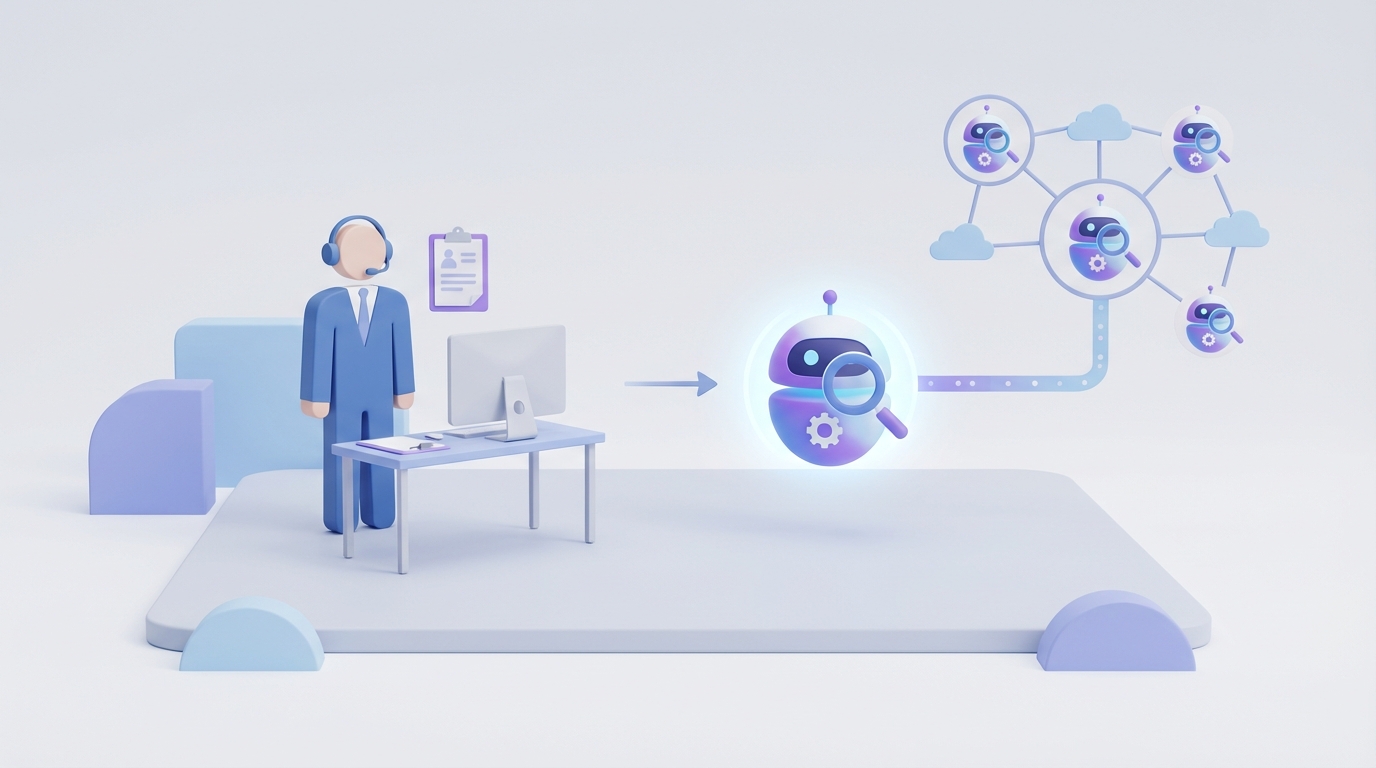
Let's be honest about what's happening in clinical research right now: sites are drowning in administrative work, CRCs are burning out at a 30-50% annual turnover rate, and 80% of trials miss their enrollment timelines. The entire system is held together by overworked coordinators spending half their time on tasks a well-built AI agent could handle today.
I'm not going to tell you AI will replace every CRC tomorrow. It won't. But I am going to walk you through exactly which parts of the role it can take over right now, what still needs a human, and how to build an AI Clinical Research Coordinator agent on OpenClaw that handles the administrative grind so your human coordinators can focus on what actually matters: patients and science.
What a Clinical Research Coordinator Actually Does All Day
If you've never worked at a research site, you might assume a CRC is mostly doing science-adjacent work. The reality is far more mundane.
A typical CRC juggles 5 to 15 active protocols simultaneously across a 40-plus hour week (with frequent overtime). Here's where their time actually goes:
Data entry and management (30-40% of their time). This is the big one. CRCs manually extract data from source documents, patient charts, and lab results, then enter it into Electronic Data Capture systems like Medidata Rave or Veeva. When queries come in from sponsors or monitors flagging discrepancies, they have to investigate and resolve each one. This is painstaking, repetitive, and error-prone work.
Regulatory documentation (20-25%). Preparing and submitting IRB packages, managing amendment submissions, tracking continuing review deadlines, filing adverse event reports, maintaining regulatory binders. Every protocol has its own set of documents that need to stay current, and a single lapse can trigger an FDA audit or site disqualification.
Administrative coordination and scheduling (15-20%). Coordinating patient visit windows across multiple protocols, booking lab draws and imaging, syncing calendars with investigators and sub-investigators, arranging monitor visits, managing sponsor communications. It's an endless game of calendar Tetris with high stakes—a missed visit window can mean a protocol deviation.
Patient recruitment and retention (15-20%). Screening EHRs for potentially eligible patients, running pre-screening checklists, coordinating with referring physicians, following up with patients between visits, sending reminders, handling questions. Screen failure rates run 70-80%, which means the vast majority of recruitment effort leads nowhere.
The remaining time goes to supply management (ordering investigational product, lab kits, maintaining temperature logs), quality assurance activities, and the kind of relationship management that keeps sites running: talking to patients who are nervous, explaining complex procedures to families, smoothing over issues with monitors.
Here's the key insight: more than half of a CRC's time is spent on non-patient-facing administrative tasks. That's the opportunity.
The Real Cost of This Hire
Let's do the math on what a CRC actually costs your site or organization.
Base salary ranges in the US (2026 data):
- Entry level (0-2 years): $50,000–$65,000
- Mid-level (3-5 years): $65,000–$85,000
- Senior (5+ years): $85,000–$110,000+
The median sits around $70,000, with significant geographic variation. Add 20% for California or New York. Subtract 10% for the Midwest.
But salary is just the beginning. Total cost to the employer runs 1.25x to 1.5x the base salary once you factor in benefits, payroll taxes, workspace, equipment, and overhead. A $70,000 CRC costs you $90,000 to $105,000 per year, fully loaded.
Now factor in the hidden costs:
Training. A new CRC takes 3-6 months to become fully productive. During that time, they're burning salary while a senior team member spends their own billable hours training them. Each protocol requires its own training: GCP certification, protocol-specific training, EDC system training, IRB procedures. Conservative estimate: $5,000–$15,000 in lost productivity per new hire during ramp-up.
Turnover. With 30-50% annual turnover in the field (driven by burnout, poaching from pharma companies, and better-paying CRO positions), you're essentially paying that training cost every two to three years per seat. The Society for Human Resource Management estimates total replacement cost at 50-200% of annual salary for specialized roles.
Errors and rework. Manual data entry errors trigger queries that take weeks to resolve. Protocol deviations from missed deadlines cost time and credibility. A single serious compliance failure can jeopardize an entire site's ability to run trials.
Add it all up, and the true annual cost of a single CRC seat is $120,000 to $160,000 when you account for salary, benefits, training, turnover, and the downstream cost of human error.
Sites typically bill sponsors $4,000–$7,000 per patient enrolled, while each CRC handles 20–50 patients per year. The margins are razor-thin, and they get thinner every time you lose a coordinator and have to start over.
What AI Handles Right Now (Not Someday—Now)
This isn't speculative. These are tasks that AI agents handle today, with examples of how you'd implement each one on OpenClaw.
1. Data Extraction and Entry
The problem: CRCs spend hours pulling data from lab reports, patient charts, and source documents, then manually keying it into EDC systems.
The AI solution: An OpenClaw agent with OCR and NLP capabilities can ingest source documents (PDFs, scanned forms, structured EHR exports), extract relevant data fields, map them to your EDC's data dictionary, and either auto-populate entries or stage them for one-click human approval.
Medidata already reports that their AI features resolve 70% of data queries without CRC input. An OpenClaw agent can replicate and extend this by connecting directly to your specific document sources and EDC APIs.
Implementation on OpenClaw:
Agent: CRC Data Entry Assistant
Trigger: New source document uploaded or EHR update detected

Workflow:
1. Ingest document (PDF/HL7 FHIR/CSV)
2. Extract fields using NLP: patient ID, visit date, vitals, lab values, concomitant meds
3. Map extracted fields to protocol-specific CRF (Case Report Form) definitions
4. Validate against protocol-defined ranges (e.g., systolic BP 90-180)
5. Flag outliers or missing required fields
6. Stage clean entries for human review in EDC
7. Auto-resolve simple queries (e.g., unit mismatches, date format corrections)
8. Log all actions for audit trail (21 CFR Part 11 compliance)
You'd configure this in OpenClaw by setting up your document ingestion pipeline, defining the data mappings per protocol, and connecting to your EDC via API. The agent handles the extraction and validation; a human reviews staged entries and approves with a click.
Time saved: 60-70% of data management workload.
2. Scheduling and Visit Window Management
The problem: Coordinating visit schedules across multiple protocols, each with specific visit windows (e.g., "Day 28 ± 3 days"), while accounting for patient availability, investigator schedules, lab hours, and facility constraints.
The AI solution: An OpenClaw scheduling agent that ingests protocol visit schedules, calculates permissible windows, cross-references against all relevant calendars, and either auto-books or presents optimized options to the CRC.
Agent: CRC Scheduling Coordinator
Trigger: Patient enrollment confirmed OR previous visit completed

Workflow:
1. Pull protocol schedule of events and calculate next visit window
2. Query patient contact preferences and availability
3. Cross-reference investigator/sub-I calendar availability
4. Check facility/lab availability for required procedures
5. Propose top 3 appointment slots within window
6. Send patient confirmation via preferred channel (SMS/email/portal)
7. Handle rescheduling requests with automatic window revalidation
8. Flag visits approaching window closure (escalate to human CRC)
9. Predict no-show probability based on patient engagement signals
This agent talks to your scheduling system, sends communications, and keeps everything within protocol-defined windows. It escalates to a human when something falls outside normal parameters.
Time saved: 70-80% of scheduling overhead.
3. Recruitment Pre-Screening
The problem: CRCs manually review patient charts looking for potential trial candidates, checking each one against inclusion/exclusion criteria. With screen failure rates at 70-80%, most of this effort is wasted.
The AI solution: An OpenClaw agent that continuously scans your EHR for patients matching protocol criteria, ranks them by likelihood of eligibility, and presents a prioritized list to the CRC for human review before any patient contact.
Agent: CRC Recruitment Screener
Trigger: Continuous (daily EHR scan) OR new protocol activated

Workflow:
1. Parse protocol I/E criteria into structured rules
2. Query EHR for matching demographics, diagnoses (ICD-10), labs, medications
3. Score each candidate on match strength (0-100)
4. Flag exclusion risks (e.g., concurrent enrollment, contraindicated meds)
5. Generate pre-screening summary per candidate
6. Present ranked list to CRC via dashboard
7. Track conversion rates per source to optimize future screening
Deep 6 AI does something similar and reports 10x faster patient identification. You can build the same pipeline on OpenClaw, customized to your specific EHR system and protocol portfolio.
Time saved: 50-60% of recruitment screening time. More importantly, it dramatically improves screen-to-enroll ratios by catching disqualifying criteria before anyone picks up the phone.
4. Regulatory Document Management
The problem: Keeping regulatory binders current across 5-15 protocols, tracking expiration dates on medical licenses, training certifications, IRB approvals, and protocol amendments. Missing a deadline means compliance risk.
The AI solution: An OpenClaw agent that maintains a living index of all regulatory documents, tracks expiration and renewal dates, auto-generates submission packages, and flags gaps before they become violations.
Agent: CRC Regulatory Tracker
Trigger: Time-based (daily compliance scan) OR document upload

Workflow:
1. Maintain document inventory per protocol (1572s, CVs, licenses, IRB approvals)
2. Track expiration dates and submission deadlines
3. Auto-generate renewal reminders (30/14/7 days out)
4. Pre-populate IRB continuing review forms with current study data
5. Flag missing or outdated documents
6. Route documents for e-signature
7. Maintain audit-ready filing structure
8. Generate monitor-visit-ready document index on demand
Florence Healthcare reports that sites using their AI-powered eBinders save 15-20 hours per week on document management alone. An OpenClaw agent gives you similar functionality with full customization to your site's specific regulatory requirements.
Time saved: 40-50% of regulatory documentation time.
5. Adverse Event Detection and Reporting
The problem: CRCs must identify, classify, and report adverse events within strict timelines. Missing a serious adverse event (SAE) report can have FDA consequences.
The AI solution: An OpenClaw agent that monitors patient records for potential AE signals, classifies severity using protocol-specific criteria, and drafts initial reports for human clinical review.
Agent: CRC AE Monitor
Trigger: New patient encounter note, lab result, or patient-reported outcome

Workflow:
1. Scan clinical notes using NLP for AE-related language
2. Cross-reference with known drug safety profile
3. Classify by severity (mild/moderate/severe) and expectedness
4. Draft AE report form with pre-populated fields
5. Route to investigator for causality assessment (requires human MD)
6. Track reporting timelines (24hr for SAEs, per protocol for others)
7. Escalate approaching deadlines
8. Archive completed reports with full audit trail
Time saved: 30-40% of safety reporting overhead. The AI handles detection and drafting; the investigator provides clinical judgment.
What Still Needs a Human
I promised no BS, so here's where AI falls short. These tasks require human judgment, empathy, or regulatory accountability that you cannot and should not automate away:
Informed consent. This is a conversation, not a form. Patients need to understand what they're agreeing to, ask questions, express concerns, and feel heard. FDA and ICH-GCP guidelines require a qualified individual to obtain consent. AI can prepare the documents and track signatures, but the conversation has to be human.
Clinical judgment on adverse events. AI can flag potential AEs and draft reports, but determining causality (is this related to the investigational product?) requires a trained clinician. Liability stays with the investigator.
Relationship management. The trust between a CRC and a study participant is what keeps patients enrolled. When someone is scared, frustrated, or thinking about dropping out, they need to talk to a person. Same goes for managing sponsor relationships during sticky situations—contract disputes, protocol deviations, site performance discussions.
Ethical and diversity considerations in recruitment. AI can find eligible patients, but ensuring equitable access to trials, handling culturally sensitive outreach, and making judgment calls about vulnerable populations requires human oversight. Algorithmic bias in recruitment is a real and documented risk.
On-site audits and training. When an FDA inspector walks in or a sponsor monitor arrives, a human needs to be there. Training new staff on procedures and GCP requires human mentorship.
Complex protocol interpretation. When you hit an ambiguous situation—a patient who's borderline on inclusion criteria, a protocol amendment that changes procedures mid-enrollment, a scenario the protocol didn't anticipate—you need experienced human judgment.
The goal isn't zero CRCs. It's CRCs who spend 80% of their time on the tasks above (the ones that actually require their expertise) instead of 50%+ on administrative work that an AI handles better anyway.
How to Build This on OpenClaw
Here's the practical path to building your AI Clinical Research Coordinator agent on OpenClaw:
Step 1: Audit your current workload. Before you build anything, have your CRCs track time by task category for two weeks. Identify where the most hours go and where errors are most common. This tells you which agent to build first for maximum ROI.
Step 2: Start with data management. This is the highest-time, lowest-judgment task in the CRC workflow. Build your first OpenClaw agent to handle document ingestion, data extraction, and EDC staging. Connect it to your EHR and EDC via API.
Step 3: Add scheduling. Once data management is running, layer in the scheduling agent. This one pays off fast because missed visits and window violations are expensive.
Step 4: Expand to recruitment and regulatory. These agents require more protocol-specific configuration but deliver significant ROI once tuned.
Step 5: Connect the agents. The real power comes when your agents talk to each other. The recruitment agent identifies a candidate, the scheduling agent books their screening visit, the data agent captures their screening results, and the regulatory agent ensures all documents are filed. One workflow, minimal human touchpoints for the administrative steps.
Step 6: Human-in-the-loop everywhere. Configure every agent with clear escalation rules. Nothing goes to a patient, sponsor, or regulatory body without human approval until you've validated performance over hundreds of interactions.
For each agent, OpenClaw lets you define:
- Triggers (what kicks off the workflow)
- Data sources (EHR, EDC, calendar APIs, document stores)
- Processing logic (extraction rules, validation criteria, classification models)
- Actions (stage data, send communications, generate documents, escalate)
- Audit logging (critical for 21 CFR Part 11 compliance)
The platform handles orchestration, monitoring, and the API infrastructure. You focus on configuring the clinical logic specific to your protocols.
The Math
Let's be conservative. An AI CRC agent on OpenClaw takes over 40-50% of a coordinator's administrative workload. For a site with 5 CRCs at $100,000 total cost each:
- Current cost: $500,000/year
- With AI handling 40% of admin: You need 3 CRCs at full capacity instead of 5, or all 5 CRCs now handle 60-70% more protocols
- Net savings or capacity gain: $150,000-$200,000/year, plus faster enrollment (trials that enroll on time save sponsors $1M+ per day in time-to-market)
And unlike a new CRC hire, your OpenClaw agents don't burn out, don't leave for a pharma job after 18 months, and don't need 3-6 months to learn a new protocol. You configure them once per protocol and they run.
Next Steps
You have two options:
Build it yourself. Sign up for OpenClaw, start with the data management agent, and iterate from there. The platform documentation walks you through connecting to common EHR and EDC systems, and the agent configuration is designed to be accessible to people who understand clinical workflows even if they're not software engineers.
Or hire us to build it. If you'd rather have a team that's already done this configure your AI CRC agents, handle the integrations, and get you running in weeks instead of months, that's exactly what Clawsourcing does. We'll audit your workflows, build your agents, validate them against your protocols, and hand you a system that works.
Either way, the administrative burden crushing your CRCs isn't going to fix itself. The tools exist now. The question is how long you wait before using them.