Automate Admissions: AI Coordinator Agent for Application Processing
Replace Your Admissions Coordinator with an AI Admissions Coordinator Agent
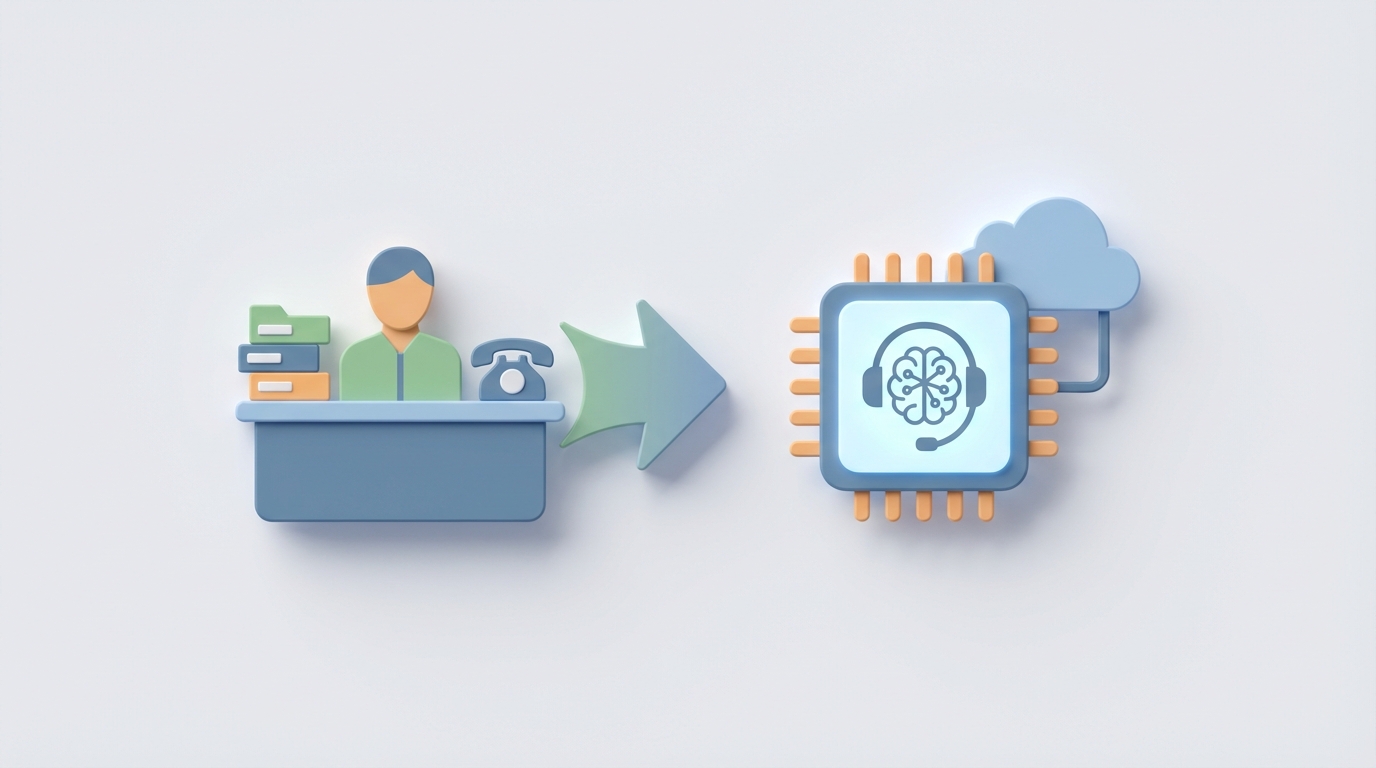
Most admissions coordinators spend their days doing things a well-configured AI agent could handle in seconds. That's not a knock on the people — it's a knock on the system that has them manually copy-pasting transcript data into a CRM at 9 PM during application season.
I'm going to walk through exactly what an Admissions Coordinator does, what it actually costs you, which parts of the job AI handles right now (not theoretically — right now), what still needs a human, and how to build an AI Admissions Coordinator Agent on OpenClaw. If you don't want to build it yourself, we'll do it for you. But let's get into it.
What an Admissions Coordinator Actually Does All Day
The title sounds straightforward. The reality is a blender of admin work, customer service, data entry, event planning, and sales — yes, sales. Admissions is a revenue function, whether institutions want to admit that or not.
Here's the real breakdown of day-to-day responsibilities:
Inquiry Response and Applicant Communication (~35% of time)
This is the biggest time sink. A single coordinator might field 50 to 200 emails, phone calls, live chats, and social media DMs per day. The vast majority are repeat questions: "What's the application deadline?" "Do you accept AP credits?" "What GPA do I need?" "Can I schedule a tour?" During peak season — think September through January for fall admissions — this volume doubles. Global applicants in different time zones mean inquiries come in at 2 AM, and they expect answers before morning.
Application Processing and Document Review (~30% of time)
Reviewing submitted applications, verifying transcripts match what's claimed, checking test scores against requirements, flagging missing documents, and entering all of this into a CRM like Slate, Salesforce, or Technolutions. For a mid-size university processing 10,000+ applications, this is brutal. It's largely manual, error-prone, and mind-numbing. One coordinator might be responsible for 5,000 applications. You do the math on accuracy under those conditions.
Scheduling and Event Coordination (~15% of time)
Campus tours, virtual info sessions, admissions interviews, open houses. Coordinators book these, send reminders, handle reschedules, manage no-shows, and coordinate with faculty or staff who need to be present. Calendar Tetris at industrial scale.
Outreach and Recruitment (~10% of time)
Email drip campaigns to nurture leads, social media engagement, attending college fairs (virtual and in-person), and following up with students who started applications but didn't finish. This is the part most coordinators wish they could spend more time on because it actually moves the enrollment needle. Instead, they're buried under the other 90%.
Compliance, Reporting, and Admin (~10% of time)
FERPA compliance for student data. Processing financial aid documents. Visa paperwork for international students. Pulling reports on yield rates, conversion funnels, and diversity metrics for leadership. Unglamorous but non-negotiable.
A typical day splits roughly 40-50% communications and admin, 30% data review, and 20% events and outreach. During peak season, the first two categories eat everything, and coordinators regularly push 50-60 hour weeks.
The Real Cost of This Hire
Let's talk numbers, because the salary line item is only part of the story.
| Experience Level | Base Salary (US) | Total Cost to Employer (with benefits) |
|---|---|---|
| Entry-level (0-2 years) | $40,000 – $50,000 | $52,000 – $65,000 |
| Mid-level (3-5 years) | $50,000 – $60,000 | $65,000 – $78,000 |
| Senior (5+ years) | $60,000 – $75,000 | $78,000 – $98,000 |
The median sits around $48,000 to $62,000 base, but once you add benefits (health insurance, retirement contributions, payroll taxes), you're looking at $65,000 to $85,000 per coordinator per year. In urban markets like New York, Boston, or San Francisco, tack on another 20%.
But wait, there's more.
Training costs: It takes 2-4 months to get a new coordinator fully up to speed on your institution's programs, CRM, compliance requirements, and communication protocols. During that ramp-up period, they're operating at maybe 50% capacity while pulling resources from senior staff who are training them.
Turnover costs: Post-COVID turnover in higher ed administration jumped roughly 20%, according to CUPA-HR data. Every time someone leaves, you're looking at recruiting costs, another training cycle, and a productivity gap that hits hardest during peak admissions windows. SHRM estimates replacement costs at 50-75% of annual salary for these roles. That's $30,000 to $50,000 each time someone walks.
The hidden cost of being slow: This is the one nobody puts on a spreadsheet. When a prospective student emails a question and doesn't hear back for 48 hours, some percentage of them move on to another school. You'll never measure the enrollment revenue you lost because your team was underwater.
So the real annual cost of one admissions coordinator, accounting for turnover risk and ramp-up periods, is closer to $75,000 to $100,000. Most institutions need multiple coordinators.
What AI Handles Right Now (Not "Someday" — Today)
Based on current AI capabilities and what institutions like Georgia State, ASU, and Northeastern are already doing, here's an honest assessment. AI can automate 40-60% of an admissions coordinator's workload today. Not perfectly. Not without oversight. But reliably enough to change the staffing equation.
Inquiry Response: ~80% Automatable
This is the lowest-hanging fruit and the highest-impact win. The overwhelming majority of applicant inquiries are variations on the same 50-100 questions. Deadlines, requirements, program details, financial aid basics, how to submit documents, tour availability. An AI agent built on OpenClaw can handle these across email, chat, and web forms — 24/7, in multiple languages, with zero wait time.
Georgia State University deployed AI chatbots that now handle over one million annual inquiries, cutting response times by 70% and increasing inquiry-to-application conversion by 20%. That's not a pilot program. That's production at scale.
The key difference with OpenClaw is that you're not limited to a rigid chatbot with a decision tree. You build an agent that reasons over your institution's actual knowledge base — course catalogs, policy documents, FAQ databases — and generates contextually accurate responses. When it hits something it can't handle confidently, it escalates to a human.
Application Screening and Document Processing: ~70% Automatable
OpenClaw agents can parse uploaded documents (transcripts, test scores, recommendation letters), extract structured data via OCR and NLP, cross-reference it against your admission criteria, and flag applications as complete, incomplete, or needing review. This eliminates the copy-paste-into-CRM grind.
For essay review, the agent can score against rubrics, detect plagiarism signals, and surface key themes — not to make the final decision, but to triage. Instead of a coordinator reading 5,000 essays start to finish, they review the 500 the agent flagged as borderline or interesting.
Scheduling: ~90% Automatable
Tour booking, interview scheduling, info session registration, reminder emails, reschedule handling, no-show follow-ups. All of this can run on autopilot. The agent checks calendar availability, confirms slots, sends reminders, and handles conflicts without human intervention. This is one of those tasks where AI isn't just as good as a human — it's better because it never forgets to send the reminder.
Data Entry and CRM Management: ~85% Automatable
Extracting applicant data from emails, forms, and uploaded documents, then populating the correct fields in your CRM. OpenClaw agents can integrate with Slate, Salesforce, or whatever system you're using via API. They can also deduplicate records, flag inconsistencies, and keep data clean in ways that manual entry never achieves.
Outreach and Lead Nurturing: ~75% Automatable
Personalized email sequences based on where an applicant is in the funnel, what program they're interested in, and how they've interacted with your content. The agent drafts contextually relevant messages, sends them at optimal times, and adjusts the sequence based on engagement. This isn't mail merge — it's dynamic communication that adapts per student.
Reporting and Analytics: ~80% Automatable
Pulling enrollment funnel metrics, generating yield rate reports, tracking conversion by source or demographic — the agent can do all of this on a schedule or on demand. OpenClaw can connect to your data sources and produce the reports your leadership team actually needs, without someone spending Friday afternoon in Excel.
What Still Needs a Human (Being Honest Here)
AI does not replace judgment, empathy, or accountability. Here's where you still need people, and it's important to be clear-eyed about this:
Borderline Admissions Decisions: When an applicant doesn't clearly meet or miss criteria — the student with a low GPA but extraordinary circumstances, the career changer with non-traditional credentials — a human needs to make that call. Holistic review requires understanding context in ways AI simply can't do reliably yet. The bias risks alone make full automation here irresponsible.
Sensitive Communications: Rejection letters, financial hardship discussions, appeals, accommodation requests. These require genuine empathy and careful language. An AI can draft a template, but a human should own the relationship in these moments.
Strategic Enrollment Decisions: Should you shift recruiting spend toward a new market? How do you balance diversity goals with yield targets? What does a 15% drop in applications from a specific region mean? These are strategic questions that require institutional knowledge, ethical reasoning, and leadership judgment.
Crisis and Exception Handling: The applicant whose transcripts were destroyed in a natural disaster. The international student with visa complications. The parent threatening legal action. These outlier situations need a human who can think creatively and take responsibility.
Relationship Building: At the senior level, admissions involves building relationships with high school counselors, community organizations, and feeder institutions. That's human work.
The realistic end state isn't zero admissions coordinators. It's fewer coordinators doing higher-value work — the strategic, empathetic, judgment-heavy tasks they were hired for but never have time to do because they're drowning in email and data entry.
How to Build an AI Admissions Coordinator Agent on OpenClaw
Here's the practical implementation. OpenClaw is built for exactly this kind of multi-step, knowledge-intensive agent, and you don't need a machine learning team to get started.
Step 1: Define the Agent's Scope
Start with the highest-volume, lowest-judgment tasks. For most admissions offices, that means:
- Answering applicant inquiries (email and chat)
- Scheduling tours and info sessions
- Processing and triaging applications
- Updating CRM records
- Sending nurture sequences
Don't try to automate everything on day one. Pick the task that's eating the most coordinator time — usually inquiry response — and nail that first.
Step 2: Build Your Knowledge Base
Your agent is only as good as the information it can access. Gather:
- Program catalogs (PDF or structured data)
- Admission requirements by program
- FAQ documents
- Financial aid and scholarship info
- Academic calendar and key deadlines
- Tour/event schedules and availability
- Policy documents (transfer credits, deferral, withdrawal)
Upload these to OpenClaw as your agent's knowledge base. OpenClaw will index and chunk these documents so the agent can retrieve relevant information in real time when responding to queries.
# Example OpenClaw knowledge base configuration
knowledge_base:
  sources:
    - type: document
      path: /admissions/program-catalog-2026.pdf
      refresh: weekly
    - type: document
      path: /admissions/faq-master.md
      refresh: daily
    - type: structured
      source: slate_crm
      endpoint: https://your-institution.slate.org/api/v1/programs
      auth: api_key
      refresh: realtime
    - type: document
      path: /admissions/financial-aid-guide.pdf
      refresh: monthly
Step 3: Configure the Agent's Behavior
This is where OpenClaw shines. You define the agent's role, communication style, escalation rules, and guardrails in plain language, backed by structured configuration.
# OpenClaw Agent Configuration - Admissions Coordinator
agent:
  name: "Admissions Coordinator Agent"
  role: |
    You are an admissions coordinator for [Institution Name]. You help
    prospective students with program information, application requirements,
    scheduling tours, and tracking application status. You are friendly,
    professional, and accurate. You never guess — if you don't know
    something, you say so and offer to connect the student with a human
    advisor.

  guardrails:
    - never_make_admissions_decisions: true
    - never_discuss_individual_financial_aid_amounts: true
    - escalate_on_topics:
        - appeals
        - legal_inquiries
        - accommodation_requests
        - complaints
    - compliance:
        - FERPA
        - require_identity_verification_for_status_checks

  escalation:
    method: email
    target: admissions-team@institution.edu
    include_conversation_context: true
    sla_note: "A human advisor will follow up within 4 business hours."

  channels:
    - web_chat
    - email
    - sms
Step 4: Integrate with Your Existing Systems
OpenClaw connects to the tools your office already uses. Key integrations:
CRM (Slate, Salesforce, etc.): Read and write applicant records, update statuses, log interactions.
integrations:
  crm:
    platform: slate
    api_endpoint: https://your-instance.slate.org/api/v1
    capabilities:
      - read_applicant_profile
      - update_application_status
      - log_interaction
      - create_task_for_human_review

  calendar:
    platform: google_calendar
    calendar_id: admissions-tours@institution.edu
    capabilities:
      - check_availability
      - book_appointment
      - send_confirmation
      - handle_reschedule

  email:
    platform: smtp
    from: admissions@institution.edu
    templates_path: /admissions/email-templates/
Scheduling: Google Calendar, Outlook, or Calendly for booking tours and interviews.
Email: SMTP integration for sending responses and nurture sequences from your institution's domain.
Document Processing: Ingest uploaded PDFs (transcripts, test scores) and extract structured data.
Step 5: Build Workflows for Multi-Step Tasks
Single-turn Q&A is just the starting point. The real power is in multi-step workflows that handle entire processes:
workflows:
  application_triage:
    trigger: new_application_submitted
    steps:
      - action: extract_documents
        description: "Parse transcript, test scores, and essays from uploaded files"
      - action: verify_completeness
        description: "Check all required materials against program requirements"
      - action: score_against_criteria
        description: "Compare GPA, test scores, prerequisites to minimum thresholds"
      - action: route
        conditions:
          - if: meets_all_criteria
            then: flag_as_ready_for_review
          - if: missing_documents
            then: send_missing_docs_email
          - if: below_thresholds
            then: flag_for_human_borderline_review

  inquiry_to_applicant_nurture:
    trigger: web_chat_inquiry
    steps:
      - action: answer_question
        source: knowledge_base
      - action: capture_lead_info
        fields: [name, email, program_interest, intended_start_term]
      - action: create_crm_record
        integration: crm
      - action: enroll_in_email_sequence
        sequence: inquiry_nurture_30day
      - action: offer_tour_booking
        integration: calendar
Step 6: Test, Deploy, Monitor
Before going live, run the agent through your most common scenarios:
- 50 most frequently asked questions (check accuracy against your official answers)
- Edge cases: questions about programs that don't exist, requests in other languages, aggressive or confused applicants
- Escalation triggers: make sure sensitive topics route to humans correctly
- CRM writes: verify data lands in the right fields
OpenClaw provides monitoring dashboards showing response accuracy, escalation rates, resolution times, and applicant satisfaction. Review these weekly for the first month, then monthly.
Step 7: Iterate Based on Real Data
The agent will get things wrong, especially early on. That's fine. OpenClaw logs every conversation, so you can:
- Identify questions the agent couldn't answer and add to the knowledge base
- Spot patterns in escalations and decide if the agent should handle those
- Tune the agent's tone and detail level based on applicant feedback
- Expand to new channels (SMS, WhatsApp) once the core is solid
The Math
Let's say your admissions office has three coordinators at $75,000 total cost each. That's $225,000 per year.
An OpenClaw agent handles 50-60% of their collective workload. You redeploy one coordinator to a higher-value role (or don't replace them when they leave), and the other two focus on the human-essential work: borderline decisions, relationship building, strategy.
Conservative estimate: You save $75,000-$100,000 annually in staffing costs while improving response times from hours to seconds, operating 24/7 instead of business hours, and reducing data entry errors by 80%+.
The enrollment revenue you recover by not losing applicants to slow response times? That's the number that makes CFOs pay attention.
What to Do Next
Option 1: Build it yourself. Everything I described above is doable on OpenClaw with your own team. Start with inquiry response, prove the value, then expand. The platform documentation walks you through each integration step.
Option 2: Have us build it. If you want an AI Admissions Coordinator Agent deployed and running without pulling your team off their existing work, that's exactly what Clawsourcing does. We'll scope your admissions workflows, build and configure the agent, integrate it with your CRM and scheduling tools, test it against your real inquiry data, and hand it over running. You keep full control and visibility.
Either way, the coordinators you have are almost certainly spending 30-40 hours a week on work a machine should be doing. Fix that first. The strategic, human, high-judgment work will get better the moment your team has time to actually do it.