AI Academic Advisor: Guide Students Through Course Planning Automatically
Replace Your Academic Advisor with an AI Academic Advisor Agent
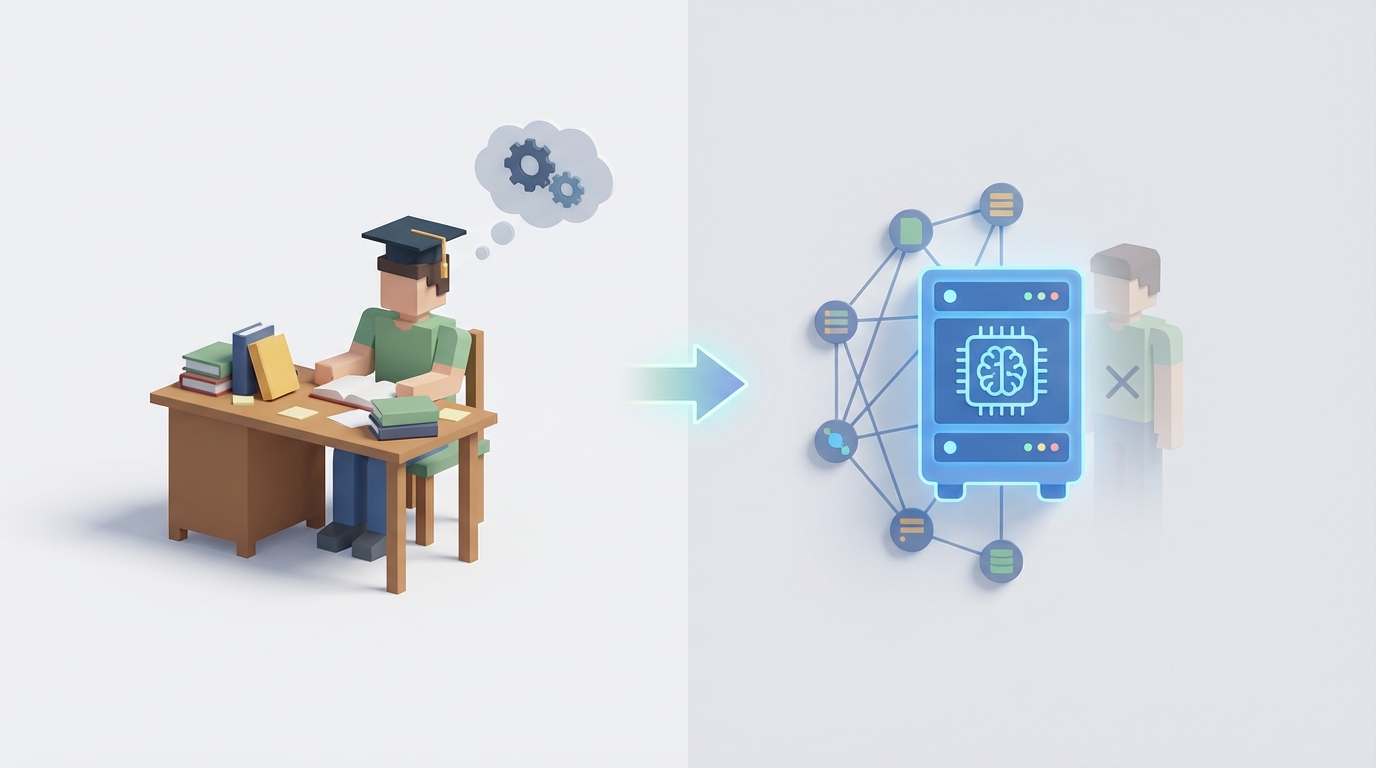
Let's be honest about what academic advising looks like at most universities: an overworked human with 400 students on their caseload, back-to-back 15-minute appointments, and a stack of degree audits that would make a CPA weep. The advisor genuinely wants to help. They just don't have the bandwidth.
Meanwhile, students get a rushed meeting, a printout of requirements they could've Googled, and a vague suggestion to "explore their options." The ones who really need help—the student on academic probation, the transfer student with a patchwork transcript, the first-gen kid who doesn't know what "credit hours" means—get the same 15 minutes as everyone else.
This isn't a people problem. It's a systems problem. And it's exactly the kind of problem AI agents are built to solve.
Here's how to build an AI academic advisor agent using OpenClaw that handles the repeatable 80% of advising work, so human advisors can focus on the 20% that actually requires a human.
What an Academic Advisor Actually Does All Day
Before we automate anything, we need to understand the real job—not the job description HR posted, but what an advisor's Tuesday actually looks like.
A typical day breaks down roughly like this:
4-6 student appointments (40-60% of time): Most of these are routine. "What classes should I take next semester?" "Can I switch my minor?" "Am I on track to graduate?" The advisor pulls up a degree audit, cross-references the catalog, and walks the student through what they see on the screen. Valuable? Sure. Requires a master's degree and years of experience? Not usually.
Scheduling and registration support (20-30%): During peak registration windows, advisors become glorified IT support. Clearing holds, troubleshooting enrollment errors, explaining prerequisite chains. This is pure process work that scales terribly with humans.
Paperwork and data entry (15-25%): Updating CRM records in Banner or PeopleSoft, logging meeting notes, running reports for department chairs, processing override forms. Administrative drag that eats hours every week.
Everything else (10%): Outreach emails, orientation sessions, the occasional workshop on "choosing your major," professional development. The strategic, proactive work advisors wish they could do more of but never have time for.
The National Academic Advising Association (NACADA) has been documenting this time crunch for years. Their 2022-2023 surveys paint a clear picture: advisors spend the majority of their time on tasks that are structured, repeatable, and information-retrieval-based. The high-value relational work—mentoring a struggling student, navigating a complex transfer situation, helping someone through a personal crisis—gets squeezed into the margins.
The Real Cost of This Hire
Let's talk money, because that's ultimately what drives institutional decisions.
The median salary for an academic advisor in the US sits around $60,040 according to BLS data. But that number is misleading because it's just base compensation. Here's what a single advisor actually costs the institution:
- Base salary: $55,000-$75,000 (varies by institution type and region)
- Benefits (health, retirement, etc.): Add 25-40%, so another $14,000-$30,000
- Onboarding and training: 2-3 months of reduced productivity, plus NACADA conference costs ($1,500-$3,000/year)
- Technology licenses: Banner/PeopleSoft seats, Salesforce CRM, EAB Navigate—$2,000-$5,000 per user
- Office space and overhead: $5,000-$10,000 annually
All-in cost: $80,000-$120,000 per advisor per year.
Now multiply that by the number of advisors you need. NACADA recommends a ratio of 300:1 (students to advisors). Most institutions run at 400-500:1 because they can't afford enough people. A mid-size university with 20,000 students needs 40-65 advisors at recommended ratios. That's $3.2M to $7.8M annually in advising staff costs alone.
And here's the kicker: turnover in academic advising is brutal. Low pay relative to workload, emotional burnout, and limited upward mobility mean you're replacing 15-25% of your advising staff every year. Each departure costs roughly 50-75% of annual salary in recruitment, hiring, and lost institutional knowledge.
This isn't sustainable. Everyone in higher ed knows it. The question is what to do about it.
What AI Handles Right Now
Not "what AI might handle in some theoretical future." What it handles today, reliably, at production quality.
An AI academic advisor agent built on OpenClaw can manage these tasks with 80-95% accuracy—and in most cases, better consistency than a burned-out human advisor handling their 400th "what classes do I need?" conversation.
Degree Audit and Requirement Checking
This is the single highest-impact automation. A student asks: "What do I still need to graduate?" Instead of waiting two weeks for an appointment, they get an immediate, accurate answer.
In OpenClaw, you'd set this up by connecting your student information system as a data source and building an agent that can query degree requirements against completed coursework:
Agent: Degree Audit Advisor
Data Sources:
  - University course catalog (structured data, updated per semester)
  - Degree requirement matrices by major/minor/concentration
  - Student transcript data (via SIS API integration)

Core Capability:
  "Compare student's completed and in-progress coursework against
   their declared degree requirements. Identify remaining requirements,
   suggest eligible courses for next semester, and flag any prerequisite
   gaps or scheduling conflicts."
OpenClaw's agent framework lets you connect directly to your institutional databases and build retrieval logic that accounts for the messy reality of academic requirements—prerequisites, corequisites, course equivalencies, catalog year rules, and the dozen other edge cases that make degree auditing tedious.
FAQ and Policy Questions
"What's the deadline to drop a class?" "How do I declare a minor?" "What's the GPA requirement for the honors program?" These questions have definitive, lookupable answers. An AI agent handles them instantly, 24/7, without scheduling an appointment.
With OpenClaw, you'd build a knowledge base from your institution's academic policies, catalog, and student handbook:
Knowledge Base Configuration:
  Sources:
    - Academic catalog (PDF or structured)
    - Student handbook
    - Registrar policies and procedures
    - Financial aid guidelines
    - Department-specific advising guides

  Update Frequency: Semester start + ad-hoc for policy changes
  Chunking Strategy: By policy section with metadata tags
    (department, effective_date, student_type)
The agent can handle natural language questions and return specific, cited answers. Not generic chatbot fluff—actual policy references that the student (or a human advisor reviewing the interaction) can verify.
Proactive Nudges and Progress Monitoring
This is where AI advising gets genuinely better than human advising for most students. An OpenClaw agent can continuously monitor student data and trigger interventions:
- GPA drops below a threshold → automatic outreach with resources
- Student hasn't registered and the deadline is approaching → reminder with a link to their recommended schedule
- Prerequisite for a required course is only offered in spring → alert the student in fall to plan ahead
Monitoring Agent Configuration:
  Triggers:
    - gpa_change: threshold < 2.5 OR drop > 0.5 in one semester
    - registration_status: not_enrolled AND deadline < 14 days
    - prerequisite_alert: required_course_prereq NOT in completed_courses
      AND prereq_next_offered > 1 semester

  Actions:
    - Send personalized message via preferred channel (email/SMS/LMS)
    - Log interaction in CRM
    - Escalate to human advisor if: student responds with distress
      indicators OR issue requires override/exception
Georgia State University pioneered this approach with their Pounce chatbot and saw a 22% reduction in summer melt. Arizona State's Helios system handles over 140,000 students. These aren't experiments anymore—they're proven at scale. OpenClaw lets you build equivalent capabilities without a seven-figure contract with a legacy ed-tech vendor.
Scheduling and Registration Support
Appointment booking, hold clearances, enrollment troubleshooting for common errors—all automatable. OpenClaw agents can integrate with your scheduling system and handle the back-and-forth that currently eats 20-30% of advisor time during peak registration.
Bulk Communications and Outreach
Personalized emails to 500 students in a specific cohort, each referencing their individual progress and next steps? That takes an advisor a full week of copy-pasting. An OpenClaw agent does it in minutes with actual personalization, not mail-merge tokens.
What Still Needs a Human
Here's where I refuse to blow smoke. AI academic advising has real limitations, and pretending otherwise will get students hurt and get your institution sued.
Complex transfer evaluations: A student transfers from a community college with 47 credits, some from dual enrollment in high school, some from a study abroad program that may or may not have been accredited. The judgment calls involved—what counts, what doesn't, where to grant exceptions—require human expertise and institutional authority.
Crisis intervention and emotional support: A student says "I'm failing because I can't get out of bed." That's not an advising question—it's a mental health referral that requires empathy, training, and often a mandated reporting decision. AI should detect these signals and immediately escalate to a human. It should never attempt to handle them.
Appeals and exceptions: Financial aid appeals, academic probation hearings, retroactive withdrawals due to medical emergencies—these involve judgment, institutional politics, and legal considerations that AI cannot and should not navigate alone.
Relationship building: For many students, especially first-generation and underrepresented populations, the advisor relationship is a lifeline. Having someone who knows your name, remembers your situation, and advocates for you within the institution—that's irreplaceable. AI doesn't build trust. Humans do.
FERPA and ethical gray areas: Data privacy in education is heavily regulated. An AI agent needs human oversight on any decision involving student records, especially when third parties (parents, employers, other institutions) are involved.
The right model isn't replacement—it's reallocation. AI handles the informational and transactional layer. Humans handle the relational and judgmental layer. The result: advisors with caseloads of 300 students actually have time to advise instead of just processing.
How to Build This with OpenClaw
Here's the practical implementation path. This isn't theoretical—these are the steps an institution (or a scrappy department) would follow.
Step 1: Identify your data sources. You need structured access to your course catalog, degree requirements, student transcripts (anonymized for development, live for production), and policy documents. Most institutions run on Banner, PeopleSoft, or Workday Student. OpenClaw supports API integrations with these systems and can also ingest flat files (CSV, PDF) for institutions with less modern infrastructure.
Step 2: Build your knowledge base in OpenClaw. Upload your catalog, handbook, and policy documents. OpenClaw's ingestion pipeline handles chunking, embedding, and indexing. Tag content by department, student type, and effective date so the agent retrieves the right information for the right student.
Step 3: Design your agent workflows. Start with the highest-volume, lowest-complexity tasks:
- Degree requirement queries
- Registration FAQ
- Appointment scheduling
- Deadline reminders
Each workflow is a defined agent in OpenClaw with specific data access, response parameters, and escalation rules.
Step 4: Set escalation logic. This is non-negotiable. Every agent needs clear rules for when to hand off to a human:
Escalation Rules:
  - Student expresses emotional distress → immediate human handoff
  - Question involves exception/appeal → route to senior advisor
  - Agent confidence score < 0.7 → present answer with caveat + offer
    human appointment
  - Any FERPA-sensitive request from third party → block and escalate
  - Student requests override or policy exception → route to appropriate
    authority
Step 5: Pilot with a controlled group. Don't roll this out to 20,000 students on day one. Start with a single department or cohort. Measure response accuracy, student satisfaction, and advisor time savings. Iterate based on real data.
Step 6: Scale and integrate. Once validated, expand across departments. Integrate with your LMS (Canvas, Blackboard) and CRM (Salesforce, EAB Navigate) so the agent operates within existing workflows rather than creating a parallel system.
The expected impact, based on institutions that have deployed similar systems:
- 30-50% reduction in routine advising appointments
- 24/7 availability for basic queries (huge for non-traditional and international students)
- 5-10% improvement in retention through proactive nudges
- Advisor time freed for the complex, high-impact work they were trained to do
The Bottom Line
Academic advising is broken not because advisors are bad at their jobs, but because the job is structurally impossible at current caseload ratios. AI doesn't fix this by replacing the humans who care about students. It fixes this by removing the pile of routine tasks that prevent those humans from actually doing meaningful work.
An OpenClaw-powered AI academic advisor agent handles the informational layer—degree audits, policy questions, scheduling, registration support, proactive monitoring—while routing the complex, sensitive, and deeply human work to the people equipped to handle it.
The institutions already doing this (Georgia State, Arizona State, the 1,400+ schools on EAB's platform) aren't experimenting anymore. They're seeing real results: higher graduation rates, lower melt, better advisor satisfaction. OpenClaw lets you build the same thing without being locked into a legacy vendor's timeline and pricing.
You can build this yourself using OpenClaw's agent framework. Start with one department, one workflow, one semester. Measure the results.
Or, if you'd rather have someone who's done this before handle the build, hire our Clawsourcing team to build it for you. We'll scope the project, connect your systems, and deliver a working AI advising agent tailored to your institution's specific catalog, policies, and student population. You focus on the students. We'll handle the infrastructure.