How to Automate SSL Certificate Renewal and Validation with AI
How to Automate SSL Certificate Renewal and Validation with AI
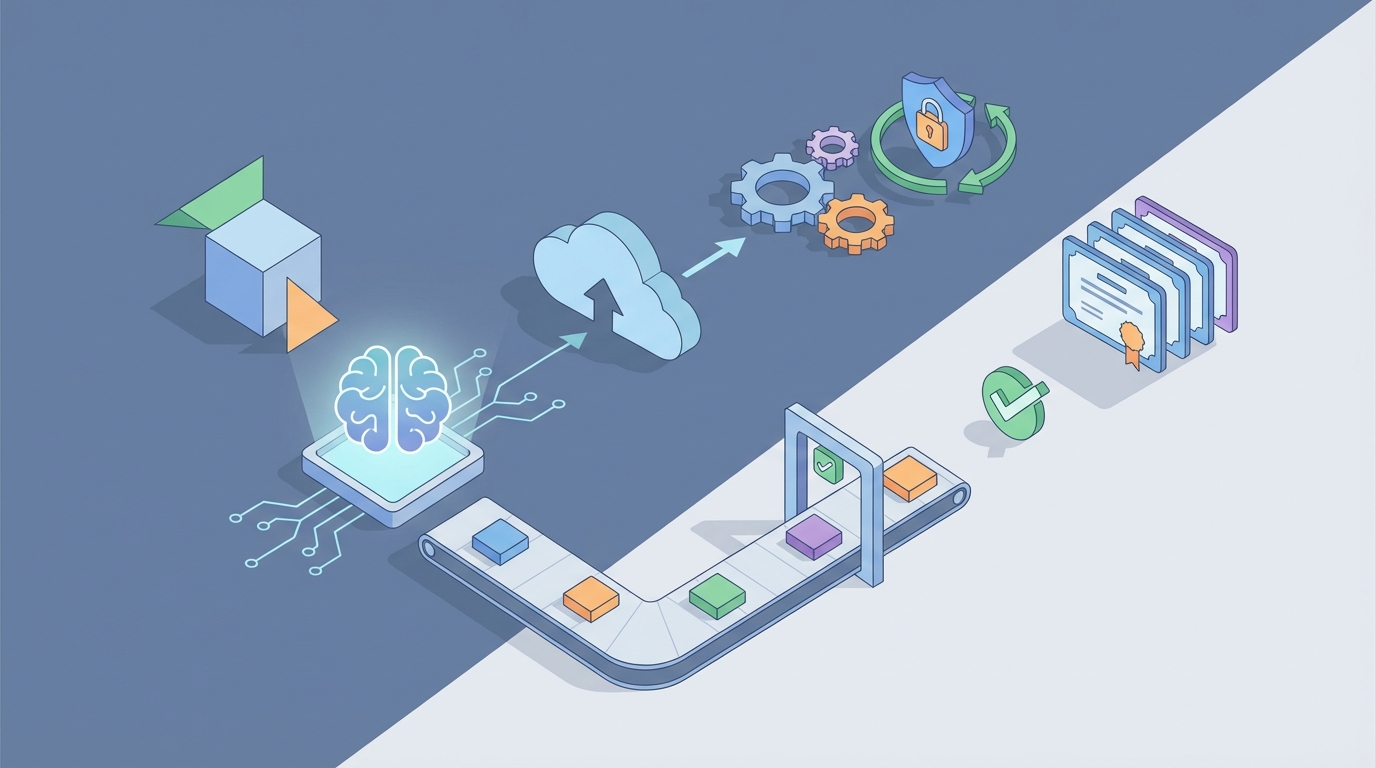
Every 90 days, somewhere in your organization, a certificate expires and something breaks. A load balancer starts rejecting connections. A webhook silently fails. A customer sees a browser warning and bounces. Your on-call engineer gets paged at 2 AM, spends forty minutes figuring out which cert expired, another thirty finding the right credentials to renew it, and then twenty more deploying the replacement across three environments.
This is not a rare scenario. Venafi's 2026 report found that 91% of organizations experienced at least one certificate-related security incident in the past two years, with an average cost of ~$420K per incident. Ponemon pegged the total annual cost of certificate-related downtime and management at $18.4 million for the average enterprise. Even Microsoft had a major Azure outage in 2023 because an internal certificate expired.
The frustrating part? This is almost entirely preventable. Not with some futuristic AI fantasy, but with straightforward automation that exists right now. Let me walk you through exactly how to build it.
The Manual Workflow (And Why It's Worse Than You Think)
Let's be honest about what certificate renewal actually looks like in most organizations today. Even teams that consider themselves "mostly automated" typically have a process that goes something like this:
Step 1: Discovery and tracking (ongoing, 2–8 hours/week) Someone maintains a spreadsheet, a wiki page, or maybe a basic monitoring tool that tracks certificate expiration dates. This inventory is perpetually incomplete. Certificates hide in shadow IT deployments, forgotten dev environments, IoT devices, partner integrations, and container orchestration layers that spin up and tear down services constantly.
Step 2: Expiration alert (reactive, variable) An alert fires — maybe from UptimeRobot, maybe from a Prometheus rule, maybe from an email that someone set up two years ago and which now goes to someone who left the company.
Step 3: CSR generation (15–45 minutes) An engineer generates a Certificate Signing Request. For domain-validated certs, this is mechanical. For organization-validated or extended-validation certificates, this involves legal documentation and organizational verification.
Step 4: Domain validation (15 minutes to 48 hours) The CA needs proof you control the domain. HTTP-01 validation means placing a file on a web server. DNS-01 validation means creating a TXT record, which in many organizations requires a change request to a separate team that manages DNS. For wildcard certs, DNS-01 is the only option, and this is where things frequently stall.
Step 5: Approval workflows (1 hour to 2 weeks) In regulated environments, production certificate changes go through a Change Advisory Board. Even in less formal setups, someone with authority needs to approve.
Step 6: Installation and deployment (30 minutes to 4 hours) The new certificate gets installed on load balancers, web servers, CDNs, Kubernetes ingress controllers, API gateways, and wherever else it's needed. This often involves SSH-ing into machines, updating configuration files, and restarting services.
Step 7: Validation (15–30 minutes) Someone checks that the new certificate is actually serving correctly, the chain is complete, and nothing broke.
Step 8: Documentation (15–30 minutes) Updating the spreadsheet, closing the ticket, noting what happened for next time.
Total time per renewal cycle: 4–12 hours for a small company managing a handful of certificates. Enterprise certificate teams regularly spend 200–600 hours per month on routine management. A large bank profiled in a Keyfactor case study was burning through 1,200 hours per month before automating.
That's not engineering. That's bookkeeping with catastrophic failure modes.
What Makes This Painful
The time cost alone is bad enough, but the real damage comes from three compounding factors:
Frequency is increasing. Let's Encrypt defaults to 90-day certificates. The industry is trending toward even shorter lifespans — Apple has pushed for 45-day certificates, and the CA/Browser Forum is actively discussing it. If you're manually managing renewals, your workload is about to double or quadruple.
Complexity is increasing. The average organization now manages over 50,000 certificates across hybrid cloud environments, Kubernetes clusters, service meshes, IoT devices, and third-party integrations. Multi-cloud is the norm, not the exception. Each environment has its own deployment mechanism.
The failure cost is asymmetric. A certificate renewal takes hours of routine work when it goes right. When it goes wrong — when a cert expires unnoticed — you get outages, security incidents, lost revenue, and emergency response that costs orders of magnitude more than the renewal would have.
And here's the thing that should bother you most: ~45–55% of companies still report that certificate management is partially or largely manual (Keyfactor State of Machine Identity Report, 2026). Not because automation doesn't exist, but because stitching together Certbot, DNS providers, deployment targets, approval workflows, and monitoring across heterogeneous infrastructure is genuinely hard. Each piece has automation tools, but the glue between them is where things fall apart.
This is exactly the kind of problem that AI agents are built to solve — not by replacing any individual tool, but by orchestrating the entire workflow end-to-end.
What AI Can Handle Right Now
Let me be specific about what's realistic today, because this space is drowning in vague promises about "AI-powered security."
An AI agent built on OpenClaw can handle the following parts of the certificate lifecycle with minimal or no human intervention:
Discovery and inventory. An OpenClaw agent can scan your infrastructure on a schedule — querying Kubernetes APIs, cloud provider certificate managers, load balancer configurations, and even parsing Terraform state files — to build and maintain a live certificate inventory. No more spreadsheets. No more surprises.
Expiration monitoring and proactive renewal. Instead of waiting for alerts, the agent monitors expiration dates and initiates renewal workflows well before certificates expire. This is simple logic, but wrapping it in an agent means it handles edge cases: certificates that were just deployed but are already close to expiration, certificates in environments with long deployment lead times that need earlier renewal, and certificates that failed renewal last time and need retry logic.
DNS-01 challenge automation. This is one of the highest-value automation targets. The agent can programmatically create DNS TXT records via your DNS provider's API (Route 53, Cloudflare, Google Cloud DNS, etc.), wait for propagation, complete the ACME challenge, and clean up the records afterward. No more filing a ticket with the DNS team and waiting two days.
Certificate deployment across environments. The agent can deploy renewed certificates to multiple targets: update Kubernetes secrets, push to AWS ACM, configure nginx or HAProxy, update CDN configurations. It can handle the orchestration logic — deploy to staging first, run validation, then promote to production.
Post-deployment validation. After deployment, the agent can verify the certificate is serving correctly by making TLS connections to each endpoint, checking the certificate chain, confirming the expiration date matches the new cert, and running the equivalent of SSL Labs checks programmatically.
Anomaly detection and reporting. The agent can flag unusual patterns: certificates using deprecated algorithms, unexpected SANs, certificates issued by unknown CAs, or certificates that are about to violate compliance policies (e.g., minimum key size requirements).
Natural language interfaces. Need to renew all staging certs right now? Ask the agent. Want a summary of all certificates expiring in the next 30 days across all environments? Ask. This isn't gimmicky — it's genuinely useful for incident response when you need answers fast.
Building the Automation: Step by Step
Here's how to build an SSL certificate renewal agent on OpenClaw. I'll walk through the architecture and key implementation details.
Step 1: Define Your Certificate Inventory Source
Your agent needs to know what certificates exist and where they live. Start by building connectors for your infrastructure:
# OpenClaw agent - certificate discovery module

inventory_sources = {
    "kubernetes": {
        "clusters": ["prod-us-east", "prod-eu-west", "staging"],
        "namespaces": "all",
        "resource_types": ["secrets/tls", "ingress"]
    },
    "aws": {
        "regions": ["us-east-1", "eu-west-1"],
        "services": ["acm", "iam-server-certs", "elb", "cloudfront"]
    },
    "cloudflare": {
        "zones": ["example.com", "api.example.com"]
    },
    "direct_scan": {
        "hosts": ["legacy-app.internal:443", "partner-gateway.internal:8443"]
    }
}
The OpenClaw agent runs discovery against each source on a configurable schedule (daily is typical), reconciles the results into a unified inventory, and flags any certificates it hasn't seen before for review.
Step 2: Set Renewal Policies
Define your policies explicitly. The agent needs rules, not vibes:
renewal_policies = {
    "default": {
        "renew_before_expiry_days": 30,
        "max_retry_attempts": 3,
        "retry_interval_hours": 6,
        "validation_method": "dns-01",
        "auto_deploy": True,
        "require_approval": False
    },
    "production_ev": {
        "renew_before_expiry_days": 60,
        "require_approval": True,
        "approval_channel": "slack:#security-approvals",
        "auto_deploy": False
    },
    "internal_mtls": {
        "renew_before_expiry_days": 14,
        "validation_method": "internal-ca",
        "ca_endpoint": "https://vault.internal/v1/pki/issue/mtls-role",
        "auto_deploy": True,
        "require_approval": False
    }
}
This is where the agent's intelligence matters. It doesn't just apply the same policy to every cert — it maps certificates to policies based on their characteristics (CA type, environment, domain pattern, compliance requirements).
Step 3: Wire Up the ACME Client
For Let's Encrypt and other ACME-compatible CAs, the agent wraps an ACME client library with orchestration logic:
# OpenClaw agent - renewal workflow

async def renew_certificate(cert_record, policy):
    # Step 1: Generate new private key and CSR
    private_key = generate_key(algorithm="EC", curve="P-256")
    csr = generate_csr(
        key=private_key,
        domains=cert_record.san_list,
        organization=cert_record.org if policy.cert_type == "OV" else None
    )

    # Step 2: Submit ACME order
    order = await acme_client.new_order(csr)

    # Step 3: Complete challenges
    for authz in order.authorizations:
        if policy.validation_method == "dns-01":
            txt_record = authz.dns_challenge.validation_value
            await dns_provider.create_record(
                zone=extract_zone(authz.domain),
                name=f"_acme-challenge.{authz.domain}",
                type="TXT",
                value=txt_record,
                ttl=60
            )
            await wait_for_propagation(authz.domain, txt_record)
            await acme_client.respond_to_challenge(authz.dns_challenge)

    # Step 4: Finalize and download certificate
    cert_chain = await acme_client.finalize_order(order, csr)

    # Step 5: Deploy
    if policy.auto_deploy:
        await deploy_certificate(cert_record, private_key, cert_chain)

    # Step 6: Validate
    validation_result = await validate_deployment(cert_record)

    # Step 7: Cleanup DNS records
    await cleanup_challenge_records(order)

    # Step 8: Update inventory and notify
    await update_inventory(cert_record, cert_chain)
    await notify(cert_record, validation_result)
Step 4: Build Deployment Connectors
Each target environment needs a deployment connector. The OpenClaw agent abstracts these behind a common interface:
# Kubernetes deployment
async def deploy_to_kubernetes(cluster, namespace, secret_name, key, cert_chain):
    k8s_client = get_k8s_client(cluster)
    secret_data = {
        "tls.key": base64_encode(key),
        "tls.crt": base64_encode(cert_chain)
    }
    await k8s_client.patch_secret(namespace, secret_name, secret_data)
    # Trigger rolling restart of pods that mount this secret
    await k8s_client.rollout_restart(namespace, get_dependent_deployments(secret_name))

# AWS ACM deployment
async def deploy_to_acm(region, cert_arn, key, cert, chain):
    acm_client = boto3.client("acm", region_name=region)
    acm_client.import_certificate(
        CertificateArn=cert_arn,
        Certificate=cert,
        PrivateKey=key,
        CertificateChain=chain
    )
    # ACM automatically propagates to associated ELBs and CloudFront
Step 5: Add Validation and Rollback
This is the part most manual processes skip or rush. The agent should never skip it:
async def validate_deployment(cert_record):
    results = []
    for endpoint in cert_record.endpoints:
        try:
            conn = ssl.create_connection((endpoint.host, endpoint.port))
            cert_info = conn.getpeercert()

            checks = {
                "reachable": True,
                "correct_serial": cert_info["serialNumber"] == cert_record.new_serial,
                "chain_complete": verify_chain(cert_info),
                "not_expired": parse_date(cert_info["notAfter"]) > now(),
                "correct_sans": set(extract_sans(cert_info)) == set(cert_record.san_list)
            }
            results.append({"endpoint": endpoint, "checks": checks, "passed": all(checks.values())})
        except Exception as e:
            results.append({"endpoint": endpoint, "passed": False, "error": str(e)})

    if not all(r["passed"] for r in results):
        await initiate_rollback(cert_record)
        await alert_oncall(cert_record, results)

    return results
The rollback capability is critical. The agent stores the previous certificate and key, and if validation fails on any endpoint, it automatically reverts and alerts a human.
Step 6: Set Up Monitoring and Reporting
The agent should produce regular reports and real-time alerts. In OpenClaw, you configure this as an output channel:
reporting_config = {
    "daily_digest": {
        "channel": "slack:#infra-certs",
        "include": ["expiring_within_30d", "recent_renewals", "failed_renewals", "new_discoveries"]
    },
    "immediate_alerts": {
        "channel": "pagerduty:cert-failures",
        "triggers": ["renewal_failed_max_retries", "validation_failed", "unknown_cert_discovered"]
    },
    "weekly_compliance": {
        "channel": "email:security-team@company.com",
        "include": ["algorithm_audit", "key_size_audit", "ca_diversity_report", "expiry_forecast"]
    }
}
What Still Needs a Human
I'd be lying if I said you can set this up and never think about certificates again. Here's what still requires human judgment:
Extended Validation and Organization Validated certificates. EV and OV certs require legal verification of your organization. A CA needs to confirm you are who you say you are. An AI agent can prepare the paperwork and initiate the process, but a human needs to authorize it.
Architectural decisions. Should you use a public CA or run an internal PKI? Should you adopt short-lived certificates with automated rotation, or stick with longer-lived certs with less operational overhead? Should you start preparing for post-quantum cryptography? These are judgment calls that depend on your risk tolerance, compliance requirements, and operational maturity.
Policy creation and updates. The agent executes policies. A human defines them. What's the minimum acceptable key size? Which CAs are approved? Which environments can auto-deploy without approval? These decisions should be made deliberately, not delegated to automation.
Incident response when automation fails. If the agent can't renew a certificate — maybe the CA is down, maybe DNS propagation is failing, maybe there's a permissions issue — a human needs to investigate and fix the root cause. The agent should make this easy by providing detailed logs and context, but it can't fix infrastructure problems it doesn't control.
Vendor and partner coordination. When certificates are involved in B2B integrations, mutual TLS setups, or third-party services, renewal often requires coordination with external parties. The agent can remind you and prepare the materials, but the back-and-forth with a partner's security team is still a human job.
Initial setup and tuning. Building the agent, connecting it to your infrastructure, and tuning the policies takes real engineering effort upfront. This isn't plug-and-play. But it's a one-time investment that pays for itself within weeks for most organizations.
Expected Time and Cost Savings
Let me give you realistic numbers based on what organizations are actually seeing:
Before automation:
- Small team (50–200 certs): 20–50 hours/month on certificate management
- Mid-size (1,000–5,000 certs): 100–300 hours/month
- Enterprise (10,000+ certs): 400–1,200 hours/month
After building an OpenClaw-based agent:
- Small team: 2–5 hours/month (policy updates, reviewing edge cases)
- Mid-size: 10–30 hours/month (mostly governance and exceptions)
- Enterprise: 40–100 hours/month (policy management, compliance reporting, vendor coordination)
That's an 80–92% reduction in hands-on time. The Keyfactor bank case study I mentioned earlier went from 1,200 hours to under 100 — a 92% reduction.
Cost impact:
- Engineering time recovered: At a fully loaded cost of $150/hour for infrastructure engineers, a mid-size org saves $15,000–$40,000/month.
- Outage prevention: With an average certificate-related incident costing ~$420K (Venafi, 2026), preventing even one incident per year more than justifies the investment.
- Compliance efficiency: Automated audit trails and compliance reporting reduce time spent preparing for SOC 2, PCI DSS, and ISO 27001 audits.
Payback period: Most teams recoup their setup investment within 4–8 weeks.
Start Building
If you're spending real engineering hours on certificate management — or worse, if you've had a certificate-related outage in the past year — this is one of the highest-ROI automation projects you can take on.
The combination of well-established tooling (ACME, Cert-Manager, cloud-native managers) with an AI orchestration layer (handling discovery, decision-making, multi-environment deployment, and validation) gets you to a place where certificate renewal is genuinely hands-off for 90%+ of your inventory.
You can find OpenClaw and the components you need to build this on the Claw Mart marketplace. If you'd rather have someone build and tune this for your specific infrastructure, check out Clawsourcing — post your project and get matched with engineers who've done this before. Certificate automation isn't glamorous, but it's the kind of foundational work that quietly makes everything else more reliable.
Stop manually renewing certificates. It's 2026.