How to Automate Contract Renewal Negotiations Prep with AI
How to Automate Contract Renewal Negotiations Prep with AI
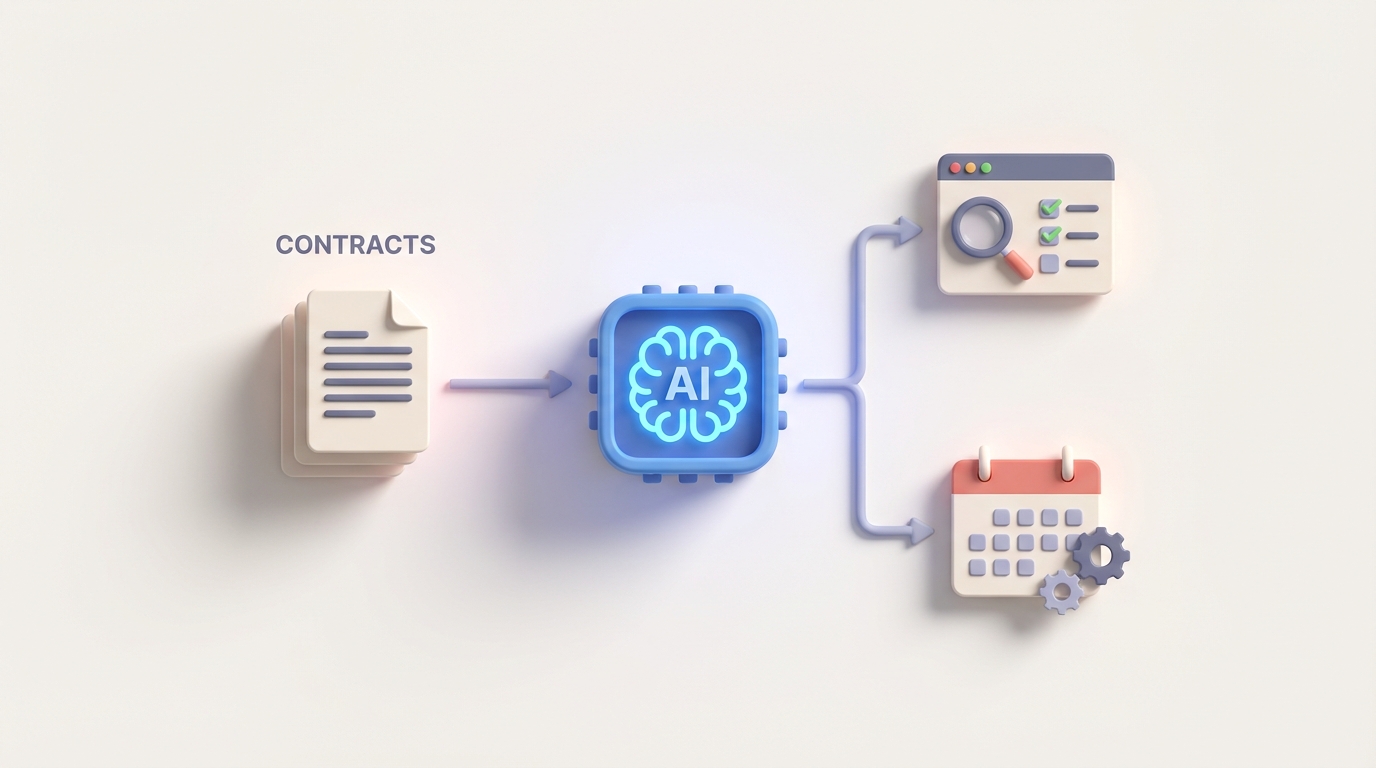
Every year, your company bleeds money on contracts nobody remembered to renegotiate. Not because your team is incompetent—because the process is a nightmare of scattered documents, manual clause reading, and last-minute scrambles that leave you with zero leverage at the negotiation table.
World Commerce & Contracting estimates that organizations lose roughly 9% of annual contract value due to poor contract management. Gartner pegs the administrative cost of manual contract processes at $6,900–$12,000 per contract. And up to 70% of contracts auto-renew without any strategic review in companies that haven't gotten their act together.
The fix isn't "try harder" or "hire more paralegals." It's building an AI agent that handles the grunt work—the discovery, extraction, summarization, and alerting—so your humans can focus on what actually requires a brain: strategy, relationship management, and creative deal structuring.
Here's how to do it with OpenClaw.
The Manual Workflow Today (And Why It's Broken)
Let's be honest about what contract renewal prep actually looks like in most organizations. Here's the typical sequence:
Step 1: Discovery & Tracking (2–4 hours per batch) Someone maintains a spreadsheet—or worse, an Outlook calendar—with renewal dates. They check it periodically. Sometimes. When they remember. Contracts slip through constantly.
Step 2: Document Retrieval (1–3 hours per contract) The original agreement is in SharePoint. The amendment from 2022 is in someone's email. The SOW is in a different SharePoint site. The pricing addendum? Nobody's sure. You're playing digital archaeologist.
Step 3: Term Extraction & Analysis (3–6 hours per contract) A lawyer or procurement specialist manually reads through the contract—often 30–80 pages with amendments—flagging auto-renewal clauses, notice periods, pricing adjustment mechanisms, termination rights, SLAs, and change-of-terms provisions. They take notes. They miss things.
Step 4: Performance Review (2–4 hours) Someone emails the business owner: "Hey, how's Vendor X doing?" The business owner responds two weeks later with "fine, I guess." Useful.
Step 5: Financial Analysis (2–4 hours) Procurement compares current pricing to budget and maybe does some market research. This often happens in a separate spreadsheet that nobody else can find later.
Step 6: Stakeholder Alignment (3–8 hours, spread across weeks) Legal, procurement, finance, and the business unit all need to weigh in. This means meetings, emails, more meetings, conflicting opinions, and eventually a decision that could have been made in 30 minutes with the right information upfront.
Step 7: Strategy Development & Document Prep (3–6 hours) Finally, someone develops a negotiation position and prepares a redline or draft amendment.
Total: 15–40 hours per mid-complexity contract. Multiply that across dozens or hundreds of renewals per year and you're looking at a staggering amount of skilled professional time spent on what is fundamentally an information-gathering and synthesis problem.
A tech scale-up with 400 SaaS contracts missed notice periods on 19% of their renewals in a single year, leading to approximately $340,000 in unwanted spend. That's not an edge case—that's normal.
What Makes This So Painful
The time cost is obvious. But the real damage is subtler:
You negotiate from weakness. When renewal prep starts 15 days before the deadline instead of 90, you have no leverage. The vendor knows you can't switch. You accept whatever they put in front of you.
Institutional knowledge vanishes. The person who negotiated the original deal left the company two years ago. Their context—why certain clauses were structured that way, what concessions were made and why—is gone. You're starting from scratch every time.
Errors compound silently. A missed auto-renewal clause here, an overlooked price escalation mechanism there. A global bank discovered they were missing termination windows on 28% of their vendor contracts. These aren't small mistakes—they're systemic failures that cost real money quarter after quarter.
Your best people do your worst work. Lawyers and procurement professionals spending 20–50% of their time on administrative contract tasks instead of strategic work. That's an expensive misallocation of talent.
What AI Can Handle Right Now
Let's be clear about what's realistic. AI isn't going to negotiate your contracts for you. But it can reliably handle the 60–80% of preparation work that's essentially information processing:
- Obligation and date extraction from contracts—renewal dates, notice periods, pricing mechanisms, SLA thresholds
- Proactive alerting at 90/60/30-day intervals with relevant clause summaries attached
- Contract summarization and clause-level risk flagging
- Performance data aggregation from connected systems (CRM tickets, support logs, usage data)
- First-draft generation for renewal notices and amendments based on templates and extracted terms
- Historical benchmarking against your own past contracts
- Change detection between the original contract and a proposed renewal
- Metadata population and repository organization
This is where OpenClaw comes in. Instead of buying a monolithic CLM platform and hoping the built-in AI features cover your needs, you build an agent that's tailored to your specific workflow, data sources, and decision criteria.
Step-by-Step: Building the Automation with OpenClaw
Here's the practical implementation path. This isn't theoretical—it's what the workflow looks like when you build it as an OpenClaw agent.
Phase 1: Connect Your Data Sources
First, your agent needs access to where your contracts actually live. For most companies, that's a messy combination of document storage, CRM, and email.
In OpenClaw, you'd configure your agent's data connections:
data_sources:
  - type: sharepoint
    connection: ${SHAREPOINT_TENANT_URL}
    libraries:
      - "Legal/Contracts"
      - "Procurement/Vendor Agreements"
    file_types: [pdf, docx]
  - type: google_drive
    folder_ids:
      - "1aBcDeFgHiJkLmNoPqRsTuVwXyZ"
  - type: salesforce
    objects: [Account, Opportunity, Contract]
    fields: [contract_end_date, annual_value, owner]
  - type: email
    provider: microsoft_graph
    search_scope: "contract renewal"
The key here is being comprehensive. Most missed renewals happen because the contract was in a repository nobody thought to check. Cast a wide net.
Phase 2: Build the Extraction Layer
This is where the AI does its heaviest lifting. You're training your OpenClaw agent to pull structured data from unstructured legal documents.
Define what you need extracted:
extraction_schema:
  contract_metadata:
    - field: effective_date
      type: date
    - field: expiration_date
      type: date
    - field: auto_renewal
      type: boolean
    - field: auto_renewal_term
      type: duration
    - field: notice_period_days
      type: integer
    - field: notice_deadline
      type: date
      derived: expiration_date - notice_period_days
    - field: pricing_mechanism
      type: enum
      values: [fixed, escalation, index_linked, market_rate]
    - field: annual_value
      type: currency
    - field: termination_for_convenience
      type: boolean
    - field: change_of_terms_clause
      type: boolean
    - field: sla_commitments
      type: text_array
    - field: key_risks
      type: text_array
      instruction: "Flag non-standard clauses, one-sided indemnities, uncapped liability, broad IP assignments, or restrictive non-competes"
OpenClaw's extraction capabilities handle the natural language processing here—reading through dense legal prose and pulling out structured, queryable data. This is the step that takes lawyers 3–6 hours per contract manually. The agent does it in minutes.
Phase 3: Set Up the Alert and Triage System
Now you build the proactive workflow. Your agent monitors the extracted data and triggers actions based on your business rules:
alert_rules:
  - name: "90-day strategic review"
    trigger: days_until_expiration <= 90
    conditions:
      - annual_value >= 50000
      - OR auto_renewal == true
    actions:
      - generate_renewal_brief
      - notify: [contract_owner, procurement_lead]
      - create_task: "Strategic review required"

  - name: "60-day negotiation prep"
    trigger: days_until_expiration <= 60
    actions:
      - generate_negotiation_package
      - pull_vendor_performance_data
      - run_historical_benchmark
      - notify: [legal, finance]

  - name: "30-day critical deadline"
    trigger: days_until_notice_deadline <= 30
    conditions:
      - auto_renewal == true
      - renewal_decision == null
    actions:
      - escalate: [department_head, legal_director]
      - flag_priority: critical
The 90/60/30 cadence is deliberate. It mirrors best practices from procurement teams that actually manage renewals well—you're just removing the human bottleneck from the monitoring and triggering.
Phase 4: Auto-Generate Renewal Briefs
This is where the agent starts delivering real value to your negotiators. When a 90-day alert fires, the agent compiles a renewal brief automatically:
renewal_brief_template:
  sections:
    - contract_summary:
        include: [parties, term, value, key_obligations]
        format: "executive_summary"
    - clause_analysis:
        highlight: [auto_renewal, pricing_escalation, termination_rights]
        risk_flag: true
    - performance_summary:
        sources: [salesforce_cases, support_tickets, sla_reports]
        timeframe: "last_12_months"
    - financial_analysis:
        include: [spend_history, budget_comparison, yoy_change]
        benchmark: "similar_contracts_in_portfolio"
    - renewal_options:
        generate: [renew_as_is, renegotiate_terms, competitive_bid, terminate]
        include_pros_cons: true
    - recommended_actions:
        based_on: [performance_data, financial_analysis, clause_risks]
Your negotiator walks into the conversation with a comprehensive brief that took the agent minutes to compile instead of someone's entire week. The brief includes the contract summary, flagged risks, vendor performance data pulled from your CRM and ticketing systems, financial benchmarks, and a preliminary set of options with pros and cons.
Phase 5: Draft the Opening Position
For standard renewals, the agent can generate first-draft communications and redlines:
document_generation:
  renewal_notice:
    template: "standard_renewal_notice"
    populate_from: extracted_metadata
    tone: "professional, firm"

  amendment_draft:
    base: original_contract
    proposed_changes:
      - source: negotiation_strategy
      - apply: pricing_adjustments
      - apply: updated_sla_terms
    output: redlined_document

  negotiation_talking_points:
    based_on: [renewal_brief, market_data, performance_gaps]
    format: bullet_points
    include: [opening_position, walkaway_points, concession_ladder]
This doesn't replace your negotiator. It gives them a starting point that's grounded in data instead of gut feeling.
Phase 6: Close the Loop
After the renewal is completed, the agent captures the outcome and feeds it back into the system:
post_renewal:
  - update_metadata: new_contract_terms
  - log_negotiation_outcomes:
      fields: [original_ask, final_terms, concessions_made, savings_achieved]
  - update_benchmarks: true
  - schedule_next_review: based_on_new_terms
This is how institutional knowledge stops walking out the door. Every negotiation outcome feeds the agent's benchmarking data, making future renewal briefs smarter and more context-rich.
What Still Needs a Human
Let's not oversell this. AI handles the information processing layer brilliantly. But contract renewal negotiation is ultimately a business decision, and several critical components require human judgment:
Strategic value assessment. Should you even be in this vendor relationship anymore? Has your business strategy shifted? Is there a build-vs-buy calculus that's changed? The agent can surface the data, but only a human understands the strategic context.
Relationship dynamics. Your agent doesn't know that the vendor CEO and your CTO play golf together, or that the vendor just lost their biggest customer and is desperate to retain you. Negotiation leverage comes from understanding the full picture.
Creative deal structuring. Maybe the right move isn't renegotiating the price—it's restructuring the entire arrangement into a revenue-share model or a phased migration. AI generates conventional options; humans generate creative ones.
Risk appetite decisions. The agent can flag that a clause creates risk. Only your leadership can decide whether that risk is acceptable given the business context.
Final approval. Obvious, but worth stating. The human is the decision-maker. The agent is the analyst.
The best mental model: your OpenClaw agent is a very thorough, very fast junior analyst who never forgets anything and never sleeps. You still need the senior people to interpret, strategize, and decide.
Expected Time and Cost Savings
Let's be specific about what you can expect:
Time per contract:
- Manual process: 15–40 hours
- With OpenClaw agent: 3–8 hours of human time (focused on review, strategy, and negotiation)
- Time reduction: 60–80%
Missed renewals:
- Typical organization: 15–28% of contracts miss optimal renewal windows
- With automated alerting: Under 3%
Cycle time:
- Manual: 45–60 days from start to execution
- Automated prep: 15–25 days
- One Fortune 500 manufacturer cut their cycle from 47 days to 18 days using AI-augmented processes
Cost impact:
- Administrative cost reduction: $4,000–$9,000 per contract
- Negotiation improvement from better preparation: 3–7% better terms (this varies widely but is consistently reported)
- Eliminated unwanted auto-renewals: Varies, but that tech scale-up saved $340k in year one just by not missing notice periods
At portfolio scale: If you manage 200 contracts per year at an average value of $100,000, and you improve management by even 5% of contract value, that's $1 million in annual savings. The OpenClaw agent costs a fraction of that to build and maintain.
Getting Started
The biggest mistake companies make is trying to boil the ocean. Don't attempt to automate everything on day one. Here's the practical sequence:
-
Start with extraction. Get your existing contracts into OpenClaw and extract the metadata. Just knowing what you have and when it expires is transformative.
-
Add alerting. Set up the 90/60/30-day notification system. This alone will eliminate most missed deadlines.
-
Build renewal briefs. Start generating automated briefs for your highest-value contracts first. Refine the template based on what your negotiators actually find useful.
-
Expand to drafting. Once your extraction and briefing are solid, add first-draft generation for standard renewals.
-
Close the feedback loop. Capture outcomes and build your institutional knowledge base.
Each phase delivers standalone value. You don't need the full system to start seeing ROI.
You can find pre-built components for several of these steps on Claw Mart, where the OpenClaw community shares agent templates, extraction schemas, and workflow configurations. No need to build everything from scratch when someone's already solved the "extract notice periods from enterprise software agreements" problem.
If the build sounds like more than you want to take on internally, consider Clawsourcing—OpenClaw's marketplace for connecting with developers and specialists who build these agents for a living. Describe what you need, get matched with someone who's done it before, and have a working agent in weeks instead of months.
The contracts are going to renew whether you're ready or not. Might as well be ready.