Automate Supplier Performance Tracking: Build an AI Agent That Scores Vendors
Automate Supplier Performance Tracking: Build an AI Agent That Scores Vendors
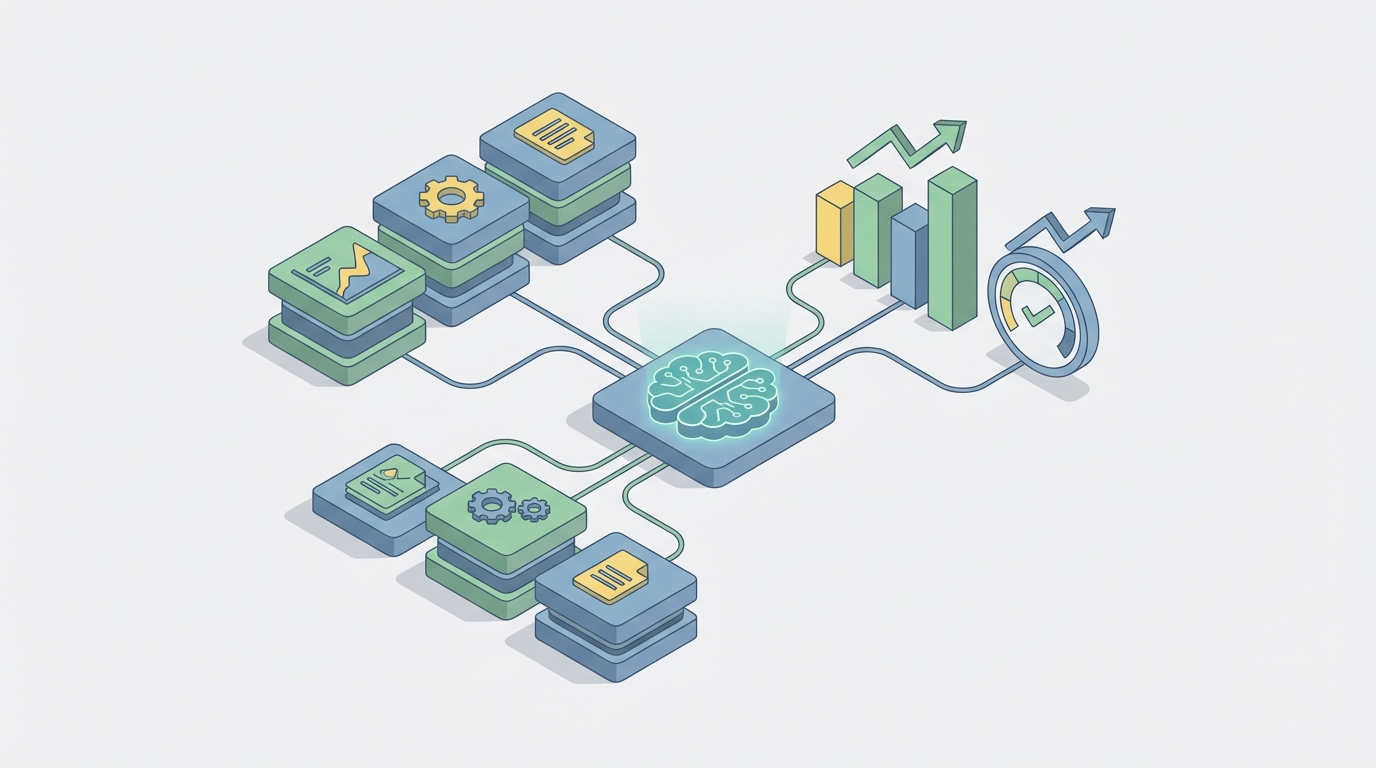
Most procurement teams will tell you their supplier tracking is "pretty good." Then you watch them work and realize "pretty good" means someone named Sarah spends every Thursday afternoon copying delivery dates from emails into a spreadsheet, manually calculating on-time delivery percentages, and color-coding cells red, yellow, or green before a quarterly business review that's already outdated by the time it happens.
This is the state of supplier performance management in 2026. Not broken in a dramatic way — broken in a slow, expensive, soul-crushing way that compounds quietly until a supplier ships defective parts and nobody catches it for six weeks because the scorecard refresh was last month.
Let's fix that. Here's how to build an AI agent on OpenClaw that continuously tracks, scores, and flags supplier performance — replacing most of the manual grind while keeping humans in the loop where they actually matter.
The Manual Workflow Today (And Why It's Worse Than You Think)
Here's what supplier performance tracking actually looks like at most companies running 100+ suppliers:
Step 1: Data Collection (2–4 hours per supplier, per quarter) Someone pulls delivery confirmations from the ERP, cross-references them against purchase orders, digs through email threads for quality incident reports, checks the supplier portal for updated certifications, and maybe calls the warehouse to ask about that shipment that showed up with damaged packaging last month. This information lives in at least four different systems and someone's inbox.
Step 2: Data Entry and Reconciliation (1–3 hours per supplier) All of that gets manually entered into a master spreadsheet or a scorecard template. Numbers get compared against previous quarters. Discrepancies get investigated, which usually means more emails.
Step 3: KPI Calculation (30–60 minutes per supplier) On-time delivery rate. Quality defect rate. Price variance against contract. Lead time consistency. Responsiveness score (often subjective). Someone calculates these, sometimes with formulas that break when a row gets inserted in the wrong place.
Step 4: Scorecard Assembly and Review (2–4 hours per supplier) Results get formatted into a presentable scorecard. Commentary gets added. Trends get charted. This gets circulated to stakeholders who may or may not read it before the quarterly business review meeting.
Step 5: Risk and Compliance Checks (1–2 hours per supplier) Certificates of insurance current? ISO certifications valid? Any sanctions list flags? Financial health okay? ESG questionnaire responses reviewed? Most of this is checked sporadically, not continuously.
Total time per supplier per quarter: 4–12 hours.
If you have 200 suppliers, that's 800 to 2,400 hours per quarter — roughly half a person to one and a half people doing nothing but supplier scorecards, all year, every year. And the output is a retrospective snapshot that's already stale.
According to Deloitte's 2023 Global Procurement Survey, procurement teams spend 20–40% of their time on manual data collection and reporting. That's not strategic work. That's data janitoring.
What Makes This Painful
The time cost alone is bad enough. But the real damage is subtler:
Errors compound silently. Manual data entry in procurement carries a 3–8% error rate. When your on-time delivery score for a supplier is based on hand-entered dates, a few typos can make a mediocre supplier look acceptable or a good supplier look unreliable. Decisions get made on bad numbers, and nobody realizes it.
Late detection costs real money. When scorecards refresh quarterly, you're finding out about problems 30–90 days after they started. McKinsey found that companies with poor supplier visibility experience 2–3x higher disruption costs. The average cost of a single supply disruption for large companies runs $1.5–2 million (Resilinc data). By the time your quarterly scorecard turns red, the damage is already done.
It doesn't scale. Managing 50 suppliers manually is tedious but possible. Managing 500 is unsustainable. Most companies hit a wall somewhere around 150–200 suppliers where the tracking quality degrades noticeably because there simply aren't enough hours.
Compliance is exploding. ESG reporting, modern slavery laws, conflict minerals, carbon emissions tracking — the regulatory surface area keeps expanding. Manually reviewing every supplier against every requirement is becoming physically impossible for procurement teams that haven't grown proportionally.
Sixty-eight percent of procurement leaders cite "lack of actionable insights from supplier data" as a top challenge (Deloitte 2026). The data exists. The insights don't, because humans can't process it all fast enough.
What AI Can Handle Right Now
Not everything. But a lot more than most teams realize.
Here's what an AI agent built on OpenClaw can do today — reliably, at scale, without hallucinating scores or making up delivery dates:
Automated data ingestion. Pull structured data from your ERP (SAP, Oracle, Dynamics, Epicor — whatever you're running) via API connections. Ingest delivery receipts, purchase orders, quality inspection results, and invoice records automatically. For unstructured data — supplier emails, PDF certificates, audit reports — OpenClaw's document processing can extract the relevant fields and normalize them.
Continuous KPI calculation. Instead of quarterly batch calculations, the agent computes on-time delivery, defect rates, price variance, lead time variability, and responsiveness scores in real-time as new data arrives. No broken spreadsheet formulas. No waiting until Q3 to find out Q2 was a disaster.
Anomaly detection and alerts. The agent monitors for deviations from expected patterns — a supplier whose on-time delivery drops from 95% to 82% over three weeks, a sudden spike in quality rejections, a price creep that's technically within contract tolerance but trending in the wrong direction. You get flagged when something matters, not when someone remembers to check.
Risk scoring. Combine internal performance data with external signals — financial health indicators, news sentiment analysis, sanctions list checks, geographic risk factors. The agent maintains a continuously updated risk profile for each supplier.
Automated reporting. Generate supplier scorecards on demand or on schedule, formatted consistently, with trend analysis and commentary. Distribute to the right stakeholders automatically.
Contract compliance monitoring. Extract obligations and SLAs from supplier contracts, then continuously check actual performance against contractual commitments. Flag deviations before they become disputes.
Step-by-Step: Building the Supplier Scoring Agent on OpenClaw
Here's a practical implementation path. This isn't theoretical — it's what actually works.
Step 1: Define Your Scoring Model
Before you build anything, decide what you're measuring. A solid starting point:
Supplier Score = weighted average of:
  - On-Time Delivery (OTD): 30%
  - Quality (defect rate, rejection rate): 25%
  - Cost Performance (price variance, invoice accuracy): 20%
  - Responsiveness (communication speed, issue resolution time): 15%
  - Compliance (certifications, audit results, ESG): 10%
Adjust weights based on what matters to your business. A medical device company will weight quality higher. A JIT manufacturer will weight OTD higher. Write these down explicitly — the agent needs crisp logic, not vibes.
Step 2: Map Your Data Sources
Inventory every system where supplier performance data lives:
- ERP: Purchase orders, goods receipts, invoices, delivery dates
- QMS (Quality Management System): Inspection results, NCRs, CAPAs
- Email: Supplier communications, delay notifications, certificate renewals
- Supplier portals: Self-reported data, updated certifications
- External sources: Financial databases (Dun & Bradstreet, etc.), news feeds, sanctions lists
For each source, determine the connection method: API, file export (CSV/SFTP), email parsing, or manual upload as a fallback.
Step 3: Build the Data Pipeline in OpenClaw
Set up your OpenClaw agent with data connectors for each source. The architecture looks like this:
[ERP API] ──────────────┐
[QMS API] ──────────────┤
[Email Inbox Parser] ───┤──→ [OpenClaw Data Normalization Layer]
[Supplier Portal API] ──┤         │
[External Risk Feeds] ──┘         ▼
                        [Unified Supplier Data Store]
                                  │
                                  ▼
                        [Scoring & Alert Engine]
                                  │
                          ┌───────┴───────┐
                          ▼               ▼
                   [Dashboards]    [Alert Notifications]
In OpenClaw, you configure each data connector and define the normalization rules — how a "delivery date" in SAP maps to a "delivery date" in your unified model, how a quality rejection code in your QMS translates to a defect category in your scoring system.
Step 4: Implement Scoring Logic
Define the scoring rules explicitly in your OpenClaw agent configuration. Here's a simplified example of the OTD scoring logic:
def calculate_otd_score(supplier_id, period_days=90):
    deliveries = get_deliveries(supplier_id, last_n_days=period_days)

    on_time = sum(1 for d in deliveries if d.actual_date <= d.promised_date)
    total = len(deliveries)

    if total == 0:
        return None  # No deliveries to score

    otd_rate = on_time / total

    # Score on 0-100 scale
    if otd_rate >= 0.98:
        return 100
    elif otd_rate >= 0.95:
        return 85
    elif otd_rate >= 0.90:
        return 70
    elif otd_rate >= 0.80:
        return 50
    else:
        return 25
Similar logic for each KPI category. The weighted combination produces the overall supplier score:
def calculate_overall_score(supplier_id):
    weights = {
        'otd': 0.30,
        'quality': 0.25,
        'cost': 0.20,
        'responsiveness': 0.15,
        'compliance': 0.10
    }

    scores = {
        'otd': calculate_otd_score(supplier_id),
        'quality': calculate_quality_score(supplier_id),
        'cost': calculate_cost_score(supplier_id),
        'responsiveness': calculate_responsiveness_score(supplier_id),
        'compliance': calculate_compliance_score(supplier_id)
    }

    overall = sum(scores[k] * weights[k] for k in weights if scores[k] is not None)
    return round(overall, 1)
OpenClaw runs this continuously — not quarterly, not monthly, but as new data arrives. Every goods receipt, every quality inspection, every invoice updates the relevant scores in near real-time.
Step 5: Configure Alerts and Thresholds
This is where the agent earns its keep. Define alert triggers:
alerts:
  - name: "OTD Drop"
    condition: "otd_score drops more than 15 points in 14 days"
    severity: "high"
    notify: ["procurement_lead", "category_manager"]

  - name: "Quality Spike"
    condition: "defect_rate exceeds 3% over rolling 30-day window"
    severity: "critical"
    notify: ["quality_manager", "procurement_lead", "operations_director"]

  - name: "Certification Expiring"
    condition: "any required certification expires within 45 days"
    severity: "medium"
    notify: ["compliance_team", "category_manager"]

  - name: "Financial Risk Flag"
    condition: "external_risk_score drops below threshold"
    severity: "high"
    notify: ["procurement_lead", "finance_team"]
The agent sends notifications through whatever channels your team uses — email, Slack, Teams, SMS for critical alerts. No more waiting for the quarterly review to learn that your biggest supplier has been slipping for two months.
Step 6: Generate Scorecards Automatically
Configure the agent to produce formatted supplier scorecards — on demand or on a regular schedule. Each scorecard includes:
- Overall score and category breakdowns
- Trend charts (current vs. previous periods)
- Alert history for the period
- AI-generated commentary highlighting key changes and concerns
- Comparison against peer suppliers in the same category
The AI-generated commentary is where OpenClaw's language capabilities shine. Instead of someone writing "Supplier X's OTD declined from 96% to 89% this quarter due to three late shipments in June, correlating with a reported labor shortage at their main facility," the agent generates that summary automatically by correlating internal performance data with external context it's monitoring.
Step 7: Start Small, Then Expand
Don't try to connect every data source and score every supplier on day one. Start with:
- Your top 20 suppliers by spend
- Two or three data sources (ERP + QMS at minimum)
- Three core KPIs (OTD, quality, cost)
Get that working reliably. Validate the scores against your team's intuition. Fix the data mapping issues that will inevitably surface. Then expand to more suppliers, more data sources, and more KPIs.
What Still Needs a Human
AI doesn't replace procurement professionals. It replaces the worst parts of their job so they can focus on the parts that actually require judgment.
Humans still own:
- Strategic supplier decisions. Awarding new business, terminating relationships, consolidating supply base. The agent provides the data; humans make the call.
- Relationship management. Trust, negotiation, collaborative problem-solving during a crisis. No agent handles a tense phone call with a supplier's VP of operations when their plant flooded.
- Ambiguous compliance situations. Regulatory gray areas, ethical trade-offs, cultural context. When a supplier in a developing country scores poorly on an ESG metric, the right answer isn't always "switch suppliers."
- Exception handling. The weird situations that don't fit the model — force majeure events, one-time quality issues with a clear root cause, market-wide disruptions that affect everyone.
- Scoring model refinement. The weights and thresholds need periodic human review. What mattered last year might not be what matters next year.
The rule is straightforward: AI handles monitoring and pattern detection. Humans handle context, relationships, and accountability.
Expected Time and Cost Savings
Based on industry benchmarks and real implementations:
Time savings:
- Data collection and entry: 80–90% reduction. The agent pulls and normalizes data automatically. Human involvement drops to handling exceptions and validating edge cases.
- KPI calculation: 95%+ reduction. It's continuous and automatic.
- Scorecard preparation: 70–80% reduction. Auto-generated scorecards need human review, not human creation.
- Risk monitoring: 60–70% reduction in manual effort with significantly faster detection (real-time vs. quarterly).
Overall: A procurement team managing 200 suppliers can expect to reclaim 600–1,800 hours per quarter — the equivalent of one to two full-time employees redeployed from data janitoring to strategic work.
Cost impact:
- Organizations using advanced analytics in supplier management see 13–20% lower supply chain costs (Gartner 2026, McKinsey).
- Predictive risk tools reduced disruption impact by 40–65% during the 2021–2022 supply crisis (Resilinc study).
- Faster risk identification — 35–50% faster on average — means problems get addressed before they cascade.
The ROI math isn't complicated. If you're spending $150K+ annually in labor costs on manual supplier tracking, and an AI agent handles 75% of that work, you're looking at a payback period measured in months, not years. That's before you count the avoided disruptions.
Get Started
The gap between "we track suppliers in Excel" and "we have continuous AI-powered supplier intelligence" is smaller than most teams think. The hard part isn't the technology — it's deciding to stop tolerating the manual process.
If your procurement team is spending more time collecting data than acting on it, that's the signal.
Browse pre-built procurement and supply chain agents on Claw Mart to see what's already available, or build your own supplier scoring agent on OpenClaw from scratch. Either way, start with your top 20 suppliers and three core KPIs. You'll have a working system inside of a week and wonder why you tolerated the spreadsheet era as long as you did.