Automate Sales Demo Scheduling and Preparation: Build an AI Agent That Books Demos
Automate Sales Demo Scheduling and Preparation: Build an AI Agent That Books Demos
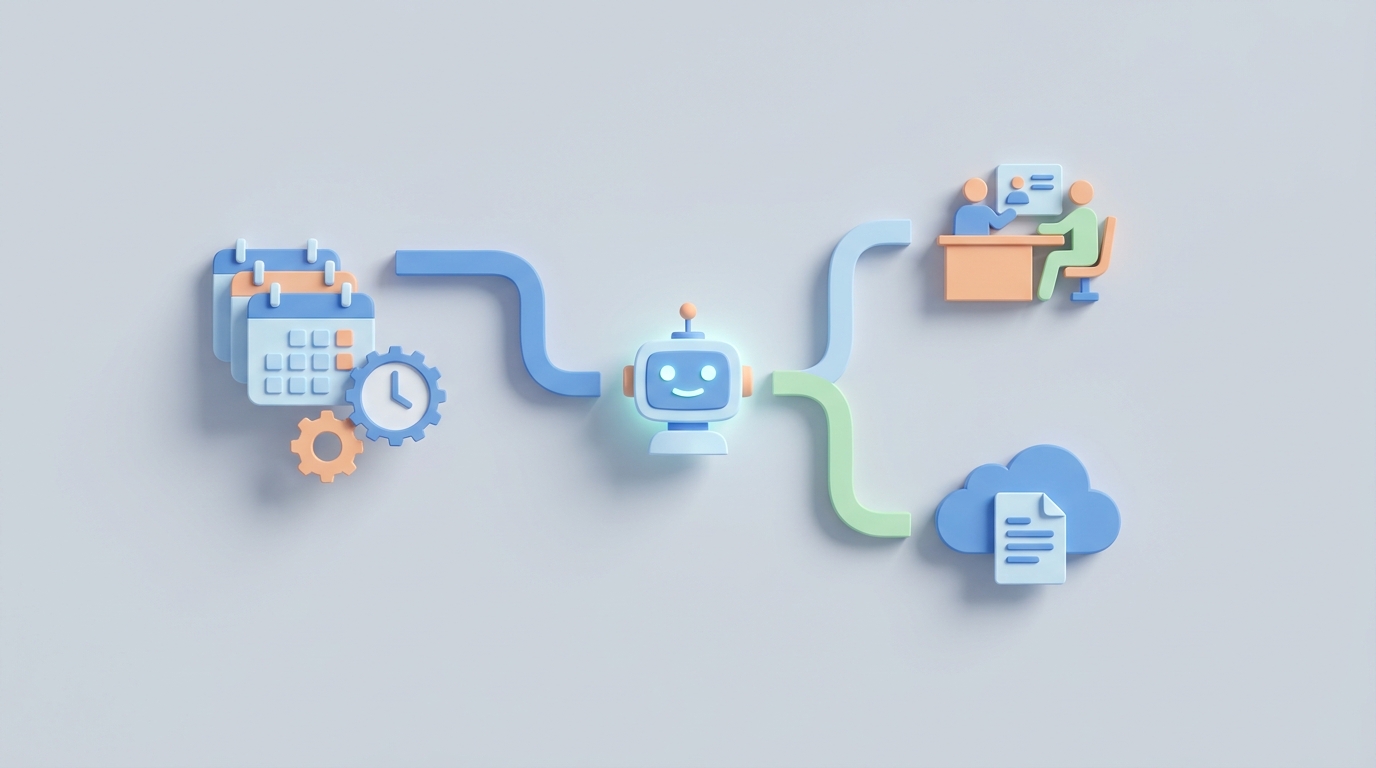
Every sales team has the same dirty secret: your reps spend more time playing calendar Tetris than actually selling. The data backs this up — Salesforce's own State of Sales report found reps spend only 28-36% of their time doing the thing you hired them for. The rest? Administrative quicksand. And scheduling is the worst offender.
I'm going to walk you through exactly how to build an AI agent on OpenClaw that handles the entire demo scheduling and preparation workflow — from lead qualification through booking confirmation and pre-demo prep. Not a conceptual overview. Not a "what if" thought experiment. An actual, implementable system.
The Manual Workflow Today (And Why It's Bleeding You Dry)
Let's trace what actually happens when someone requests a demo at a typical B2B company right now:
Step 1: Lead fills out a form. They hit "Request a Demo" on your website. The form data lands in your CRM. Average time for a human to notice and act on it: 2-6 hours during business hours, up to 24 hours if it comes in after 5 PM.
Step 2: SDR qualifies the lead. Someone opens the CRM record, looks at the company name, Googles them, checks LinkedIn, maybe cross-references with your ICP criteria. They compose an email or make a call to confirm budget, authority, need, and timeline. This takes 15-30 minutes per lead.
Step 3: The email ping-pong begins. Your SDR proposes three time slots. The prospect responds 8 hours later saying none of those work. Your SDR sends three more. The prospect's colleague also needs to attend — can we do Thursday instead? Research from Gong and Chorus shows this averages 5-8 emails per booked meeting.
Step 4: Calendar coordination. The SDR checks the AE's calendar, their own calendar, the prospect's stated preferences, time zone conversions, room availability if it's in-person, and whether the right sales engineer is free. Then they create a calendar invite, generate a Zoom link, write a custom agenda, and send it.
Step 5: CRM updates. Log the activity. Update the opportunity stage. Attach notes about what the prospect cares about. Tag the account owner.
Step 6: Pre-demo prep. The AE receives the meeting and has to dig through CRM notes, the prospect's website, recent funding announcements, competitor usage signals, and prior interactions to build a relevant demo script. Often this happens 10 minutes before the call.
Step 7: Reminder and no-show management. Send a confirmation email 24 hours before. Send another the morning of. If they don't show, follow up to reschedule — restarting the entire ping-pong cycle.
Total time cost per qualified demo: 45 minutes to 2 hours of human labor across SDR and AE, spread over 3-14 days of elapsed time. The Bridge Group's SDR Metrics Report puts it bluntly: SDRs spend roughly 21% of their entire workweek on meeting coordination alone.
The financial cost? If your SDR is making $65K base and spending a fifth of their time scheduling, that's $13,000/year per rep going toward a task a machine can do better. Scale that across a team of 10 SDRs and you're lighting $130K on fire annually — before you count the deals you lose because you were too slow.
What Makes This Genuinely Painful
The time waste is obvious. But the real damage is subtler:
Speed kills deals — in both directions. Gong's analysis of thousands of deals found that when the first meeting was booked within 24 hours of initial contact, close rates were 2.8x higher. Meanwhile, HubSpot data shows 40-60% of leads go cold if it takes more than 48 hours to get on the calendar. Every day of scheduling friction is a direct hit to your pipeline.
No-shows compound the pain. Manual email-booked demos have a 20-35% no-show rate according to Chili Piper's benchmarks. That means roughly one in four of those hard-won calendar slots just evaporates — and now your SDR starts the cycle over.
Routing errors kill momentum. When the wrong AE gets booked (wrong territory, wrong product line, wrong seniority for the deal size), you're rescheduling. The prospect's enthusiasm decays with every friction point.
Context gets lost. By the time the AE opens the CRM record five minutes before the call, the prospect has already told your chatbot, your SDR, and your form exactly what they care about — but none of that made it into a clean, actionable brief. The AE opens with generic discovery questions the prospect already answered. Trust erodes.
Reps burn out on the wrong work. You didn't hire your SDRs to be calendar administrators. Every minute spent coordinating logistics is a minute not spent on personalized outreach, relationship building, or pipeline generation.
What an AI Agent Can Handle Right Now
Here's what's realistic — not science fiction, not "in two years" — for an AI agent built on OpenClaw today:
Instant lead qualification. When a demo request comes in, your OpenClaw agent can pull the form data, enrich it with company information (size, industry, tech stack, funding stage), score it against your ICP criteria, and make a qualify/disqualify/flag-for-review decision in seconds. It handles 70-80% of initial qualification without a human touching it.
Availability matching and booking. The agent reads your AEs' calendars, applies your routing rules (territory, deal size, product line, round-robin), identifies open slots, and presents them to the prospect. No ping-pong. No time zone math errors.
Personalized outreach. Instead of a generic "pick a time" email, the agent generates context-aware messages: "Based on your interest in our analytics module and your team's use of Snowflake, I've set up a focused demo with Sarah, who specializes in data infrastructure workflows. Here are three times this week."
CRM synchronization. Every action the agent takes gets logged: qualification data, booking details, communications, prep notes. Your Salesforce or HubSpot pipeline stays clean without anyone manually entering data.
Reminder sequences and no-show recovery. Automated confirmation and reminder cadences, plus instant rebooking flows if someone misses the call.
Pre-demo intelligence briefs. This is where it gets genuinely valuable. The agent compiles a prep document for your AE: company overview, recent news, the prospect's stated pain points from the form and any email exchanges, competitive intelligence, and recommended demo talking points — all generated and delivered to the AE's inbox 30 minutes before the call.
Step-by-Step: Building This on OpenClaw
Here's how to actually build this system. I'm assuming you have a CRM (Salesforce or HubSpot), a calendar system (Google or Microsoft), and a website form for demo requests.
Step 1: Define Your Agent's Scope and Triggers
In OpenClaw, start by creating a new agent and defining its primary trigger: a new demo request submission. This could come from a webhook fired by your website form, a new record in your CRM, or an inbound email to your sales alias.
Map out the decision tree:
Trigger: New demo request received
→ Enrich lead data (company size, industry, tech stack)
→ Score against ICP criteria
→ If qualified: route to correct AE, initiate booking flow
→ If borderline: flag for SDR review with enrichment summary
→ If disqualified: send polite decline with alternative resources
Step 2: Connect Your Data Sources
Wire up the integrations your agent needs. In OpenClaw, you'll connect:
- CRM (Salesforce/HubSpot) — for reading lead data and writing activity logs
- Calendar API (Google Calendar/Microsoft Graph) — for reading AE availability and creating events
- Enrichment source — company data for ICP scoring (Clearbit, Apollo, or your own database)
- Email/communication layer — for sending booking confirmations and reminders
- Video conferencing — for generating Zoom/Google Meet links automatically
Each integration in OpenClaw is configured once and available to every agent action. You're building a connected system, not a chain of brittle Zapier steps.
Step 3: Build Your Qualification Logic
Define your ICP scoring rules explicitly. Here's an example configuration for your OpenClaw agent:
qualification_rules:
  auto_qualify:
    - company_size: ">50 employees"
    - industry: ["SaaS", "FinTech", "HealthTech", "E-commerce"]
    - title_seniority: ["Director", "VP", "C-level", "Head of"]
    - score_threshold: 70

  flag_for_review:
    - score_range: [40, 69]
    - reason: "Partial ICP match — needs human review"

  auto_disqualify:
    - company_size: "<5 employees"
    - free_email_domain: true
    - score_threshold: 39
The agent pulls enrichment data, runs it through your scoring criteria, and routes accordingly. The key here: be explicit about your rules upfront. The AI is executing your qualification framework, not inventing its own.
Step 4: Configure Routing and Calendar Logic
Set up your AE routing rules:
routing_rules:
  - criteria:
      deal_size_estimate: ">$50K ARR"
      region: "North America"
    assign_to: "enterprise_ae_pool"
    booking_method: "round_robin"

  - criteria:
      deal_size_estimate: "<$50K ARR"
      region: "North America"
    assign_to: "mid_market_ae_pool"
    booking_method: "round_robin"

  - criteria:
      region: "EMEA"
    assign_to: "emea_ae_pool"
    booking_method: "round_robin"

calendar_settings:
  minimum_notice: "4 hours"
  booking_window: "14 days"
  slot_duration: "30 minutes"
  buffer_between_meetings: "15 minutes"
  preferred_times: "10:00-16:00 prospect_timezone"
  max_demos_per_ae_per_day: 4
Your OpenClaw agent checks the selected AE pool's real-time calendar availability, filters for your constraints, and presents the best options to the prospect — either via email with embedded booking links or through an interactive scheduling page.
Step 5: Build the Booking Communication Flow
When the agent identifies available slots, it sends a personalized booking message. Here's the kind of prompt template you'd configure in OpenClaw:
Generate a booking email using these inputs:
- Prospect name: {{prospect.first_name}}
- Company: {{prospect.company}}
- Stated interest: {{form.primary_interest}}
- Assigned AE: {{ae.first_name}} {{ae.last_name}}
- AE specialty: {{ae.product_focus}}
- Available slots: {{available_slots}}

Tone: Professional but warm. Brief. Focus on relevance.
Include: Why this specific AE is a good match.
Do not: Use filler phrases, excessive enthusiasm, or generic language.
Max length: 150 words.
The result is something like:
Hi Marcus,
Thanks for your interest in [Product] — specifically the API integration layer for your existing Snowflake setup.
I've matched you with Sarah Chen, who leads our data infrastructure demos and has worked with several teams running similar architectures.
Here are a few times that work on her end:
- Tuesday 2:00 PM ET
- Wednesday 10:30 AM ET
- Thursday 1:00 PM ET
[Book your preferred time →]
If none of these work, reply with your availability and I'll find alternatives.
When the prospect clicks and books, the agent automatically creates the calendar event with a video conference link, sends confirmations to both parties, and updates the CRM.
Step 6: Automate Pre-Demo Intelligence
This is the step that turns your AI agent from a scheduling assistant into a genuine competitive advantage.
Configure your OpenClaw agent to run a pre-demo prep workflow 30-60 minutes before each scheduled demo:
pre_demo_prep:
  trigger: "60 minutes before scheduled demo"
  compile:
    - prospect_company_overview (from enrichment data)
    - recent_news (last 90 days, from web search)
    - prospect_linkedin_summary
    - stated_pain_points (from form + email exchanges)
    - competitor_signals (from technographic data)
    - prior_interactions (from CRM activity log)
    - recommended_demo_focus_areas
    - suggested_discovery_questions

  deliver_to: assigned_ae
  format: structured_brief
  channel: email + slack_dm
Your AE gets a one-page brief that looks something like:
Demo Prep: Marcus Rivera, DataFlow Inc.
Company: DataFlow Inc. | Series B ($28M) | 120 employees | Data infrastructure for logistics
Key Context: Currently using Snowflake + Fivetran. Job posting from last week seeking "integration engineer" — likely scaling their data pipeline.
Stated Interest: API integration layer, specifically reducing custom code for warehouse syncs.
Competitive Intel: Previously evaluated Segment (per G2 review). Likely comparing against Airbyte.
Recommended Demo Focus: API flexibility, pre-built Snowflake connectors, implementation timeline vs. building in-house.
Suggested Opening Questions:
- "What's driving the timeline on expanding your integration layer?"
- "How much engineering time are you currently spending on custom pipeline maintenance?"
That AE is walking into the call loaded with context that would have taken 30+ minutes to compile manually — if they compiled it at all.
Step 7: Set Up Reminder and No-Show Sequences
Configure automated touchpoints:
reminder_sequence:
  - timing: "24 hours before"
    channel: email
    content: "Confirmation + agenda preview + any prep materials"

  - timing: "1 hour before"
    channel: email
    content: "Quick reminder with meeting link"

  - timing: "5 minutes after start, if prospect hasn't joined"
    channel: email
    content: "Looks like we might have missed each other — here's the link again"

  - timing: "15 minutes after start, if no-show confirmed"
    action: "Send rebooking email with new available slots"
    crm_update: "Mark as no-show, log rebooking attempt"
This sequence alone can cut your no-show rate from the 20-35% industry average down to 10-15%, based on what companies like Chili Piper have documented with similar automated approaches. PagerDuty reported a 38% increase in conversion after implementing automated instant booking — and their no-show rates plummeted alongside it.
What Still Needs a Human
Let me be clear about where to keep humans in the loop. This isn't an everything-must-be-automated argument. Some things genuinely require human judgment:
Complex qualification edge cases. Your agent handles 70-80% of qualification automatically. The remaining 20-30% — the ones that score in your "flag for review" range — need a human. Maybe it's a tiny company but the buyer is a well-known industry figure. Maybe the company is huge but the use case doesn't fit. Humans read between the lines better here.
The actual demo. Obviously. Your AE still runs the demo, reads the room, adjusts the narrative based on body language and tone, handles objections with nuance, and builds the trust that closes deals. The AI made sure they're prepared and on time. The human does the selling.
Custom demo scripting for complex deals. The AI generates recommended focus areas. But for a $500K enterprise deal with seven stakeholders and a 9-month sales cycle, the AE and their manager need to strategize on the demo approach together.
Pricing and negotiation. When the conversation moves to contracts, discounts, and commercial terms, you want experienced humans making those calls.
Relationship judgment. Should you invite the VP of Engineering to the follow-up? Is this champion actually able to push the deal through? These are human-judgment calls the AI can inform but shouldn't make.
The principle is straightforward: automate the logistics, prepare the humans, let the humans do the high-judgment work.
Expected Time and Cost Savings
Here's what the math looks like for a team of 8 SDRs and 6 AEs:
Time saved per demo:
- Qualification and enrichment: 15-30 min → 0 min (automated) = ~20 min saved
- Scheduling coordination: 20-45 min → 0 min (automated) = ~30 min saved
- CRM logging: 5-10 min → 0 min (automated) = ~7 min saved
- Pre-demo prep (AE): 15-30 min → 3 min (reviewing AI brief) = ~17 min saved
- Reminder management: 5-10 min → 0 min (automated) = ~7 min saved
Total: ~80 minutes saved per qualified demo.
If each SDR books 15 demos per month, that's 20 hours per SDR per month returned to actual selling. Across 8 SDRs, that's 160 hours/month — effectively gaining two full-time SDRs worth of selling capacity without hiring anyone.
Pipeline impact:
- Speed-to-demo improvement: From 3-5 days average down to under 24 hours. Based on Gong's data, this alone correlates with a 2.8x improvement in close rates.
- No-show reduction: From ~25% to ~12%, meaning roughly 13% more demos actually happen per month.
- Lead response time: From hours to minutes. Forrester's data shows this can shave 9-14 days off total sales cycle length.
Conservative revenue impact: If faster scheduling and better prep improve your demo-to-close rate by even 10-15% (which is conservative given the data from companies like PagerDuty and Ramp), and your average deal is $30K ARR, and you're running 120 demos/month — that's 12-18 additional closed deals per month. Do that math yourself and see if the investment makes sense. (It does.)
Get This Built
You can build this entire system on OpenClaw. The platform handles the agent logic, the integrations, the communication flows, and the intelligence layer. What I've described above isn't a theoretical architecture — it's a practical build guide.
But if you'd rather not build it yourself, or you want someone who's done this before to configure it for your specific sales process, CRM setup, and routing rules — that's exactly what Clawsourcing is for. Browse pre-built sales automation agents on Claw Mart, or hire an OpenClaw specialist through Clawsourcing to have this running in your pipeline within days instead of weeks. You'll get an agent customized to your ICP, your CRM, your AE roster, and your qualification framework — built by someone who's done it before and knows where the edge cases hide.
Stop burning selling time on scheduling logistics. Your reps have better things to do.
Recommended for this post

Your memory engineer that builds persistent context, tiered storage, and retrieval systems -- agents that remember.
 SpookyJuice.ai
Your Linear expert that automates issue tracking, builds workflows, and streamlines project management.
SpookyJuice.ai