Automate Influencer Outreach Personalization at Scale: Build an AI Agent That Finds and Messages
Automate Influencer Outreach Personalization at Scale: Build an AI Agent That Finds and Messages
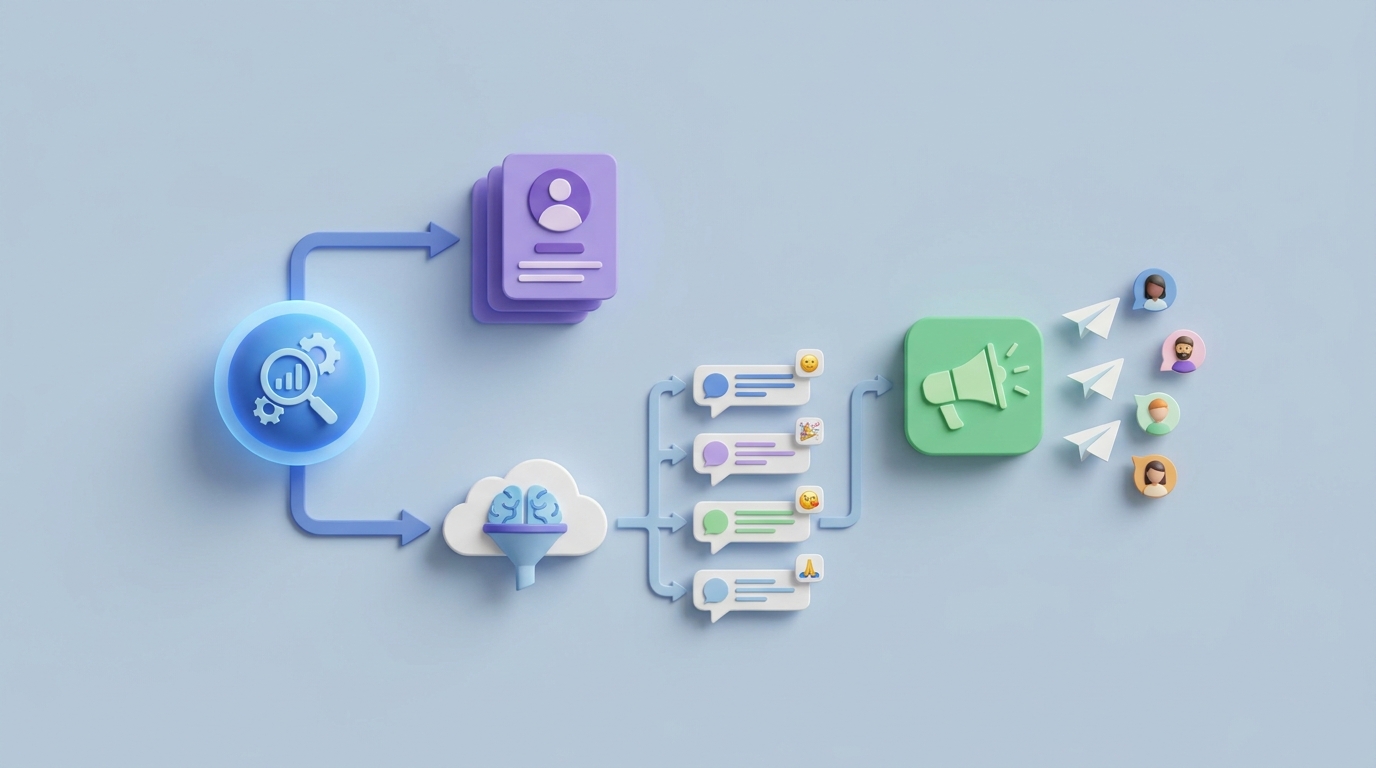
Most influencer outreach is a brutal grind disguised as a marketing strategy.
You spend 20 hours finding creators, another 10 vetting them, another 15 writing personalized emails that try not to sound like personalized emails, and then you get a 7% response rate. You land maybe 8 partnerships out of 200 cold messages. Your cost per acquired influencer is somewhere north of $1,500 in fully loaded team time, and half of those partnerships turn out mediocre anyway.
The kicker? About 70% of that work is repetitive pattern-matching that a well-built AI agent can handle better than a junior marketing coordinator running on caffeine and a Notion database.
This post is a practical guide to building that agent on OpenClaw — specifically, an AI workflow that discovers influencers matching your criteria, enriches their profiles with contact data, generates genuinely personalized outreach messages, and manages follow-up sequences. All at a fraction of the manual cost.
I'll be specific about what works, what doesn't, and where you still need a human in the loop. No "AI will revolutionize everything" nonsense. Just the actual implementation.
The Manual Workflow Today (And Why It's Broken)
Let's map out what a real influencer outreach process looks like for a DTC brand running a campaign targeting 15–20 creator partnerships. This is based on what practitioners at mid-market brands, agencies, and platforms like Aspire and Grin consistently report:
Step 1: Discovery & Longlisting (15–25 hours)
You define your criteria — niche, follower range, engagement rate, audience demographics, content style. Then you search across Instagram, TikTok, YouTube using a combination of platform search, hashtag exploration, competitor analysis, and maybe a discovery tool like Modash or HypeAuditor. You build a list of 200–500 creators. You manually scroll through profiles, recent posts, and comment sections to get a feel for each creator's vibe.
This is where 40–60% of total campaign time goes.
Step 2: Vetting & Shortlisting (8–15 hours)
You check for fake followers and engagement. You analyze audience demographics. You look for past brand controversies, off-brand content, or anything that could be a reputation risk. You evaluate whether their content quality and aesthetic actually match your brand.
Even with tools, most teams report spending 30–60 minutes per creator on vetting. For 200 creators, that's 100+ hours if you're thorough, or 8–15 hours if you're using AI-assisted fraud detection and doing deeper manual review on only your top 50.
Step 3: Contact Research (3–5 hours)
Hunt for email addresses in bios, use Hunter.io or Apollo, check for management contacts, verify email deliverability. Surprisingly tedious.
Step 4: Personalized Outreach (10–20 hours)
This is the bottleneck everyone underestimates. You need to write messages that reference specific content each creator has made, explain why your brand is a genuine fit, outline the opportunity, and not sound like a template. Because creators get 20–50 pitch emails per week, and they can smell a mail merge from three paragraphs away.
Average response rate for generic outreach: 3–12%. For genuinely personalized outreach: 18–30%. The difference is worth the effort, but the effort is enormous.
Step 5: Follow-ups (3–5 hours)
Three to five follow-up touches per creator, spaced appropriately, each slightly different.
Step 6: Negotiation & Relationship Management (10–30 hours)
Deliverables, usage rights, timelines, payment terms, contracts. This is where human judgment is non-negotiable.
Total: 50–100+ hours per campaign to land 15–20 partnerships.
Average cost to acquire one quality influencer partnership through manual outreach: $800–$2,500 in team time.
That's not a typo. That's the actual number from Aspire and Grin user surveys. And it's why most brands either overpay agencies or underinvest in influencer marketing despite knowing it works.
What Makes This Painful (Beyond Just Time)
The time cost is obvious. The hidden costs are worse:
Error rates compound. When you're manually reviewing 300 profiles, you miss things. Fake engagement slips through. Brand safety issues get overlooked. You end up partnering with creators whose audience is 60% bots, and your campaign ROI tanks.
Personalization degrades under volume pressure. Your first 20 outreach emails are great. By email 150, you're cutting corners. The messages get generic. Response rates drop. You compensate by increasing volume, which further degrades quality. It's a death spiral.
Opportunity cost is massive. Your marketing team spending 80 hours on influencer logistics is 80 hours not spent on creative strategy, content planning, or relationship deepening with your best-performing creators.
Inconsistency kills measurement. When different team members vet creators using different mental criteria, your campaign quality varies wildly. You can't systematize what you can't measure, and you can't measure judgment calls happening in someone's head while they scroll Instagram.
What AI Can Handle Right Now (With OpenClaw)
Here's the honest breakdown. AI is very good at some of this and terrible at other parts. The goal isn't full automation — it's automating the 70% that's repetitive so your team can focus on the 30% that requires actual human judgment.
High-confidence automation zones:
-
Discovery and ranking — Natural language search across creator databases, filtering by engagement metrics, audience demographics, content themes, and growth patterns. OpenClaw agents can query APIs from platforms like Modash, HypeAuditor, or social platform endpoints and return ranked lists based on your custom scoring criteria.
-
Fraud detection — Analyzing follower growth curves, engagement-to-follower ratios, comment authenticity patterns, and audience location distributions. This is fundamentally pattern recognition, and AI does it faster and more consistently than humans. Tools report 80–90% accuracy on fake follower detection.
-
Content analysis and categorization — NLP on captions, hashtags, and (if you're pulling transcripts) video content. An OpenClaw agent can analyze the last 30 posts from a creator and generate a content profile: themes, tone, posting frequency, brand mentions, audience sentiment.
-
Contact enrichment — Pulling emails from bios, cross-referencing with enrichment APIs (Hunter, Apollo, Clearbit), verifying deliverability.
-
Personalized message generation — This is where the leverage is highest. An agent that has analyzed a creator's recent content can generate an outreach message that references specific posts, explains brand fit in context, and sounds like it was written by someone who actually spent time on their profile. Because an AI agent did spend time on their profile — it just took 4 seconds instead of 15 minutes.
-
Follow-up sequencing — Automated but intelligent follow-ups that adjust based on whether the creator opened, clicked, or partially responded.
Step-by-Step: Building the Influencer Outreach Agent on OpenClaw
Here's how to actually build this. I'm going to walk through the architecture, the key agent components, and the integration points.
Architecture Overview
You're building a multi-step agent pipeline on OpenClaw with these stages:
[Discovery Agent] → [Vetting Agent] → [Enrichment Agent] → [Personalization Agent] → [Outreach Agent] → [Follow-up Agent]
Each stage is a separate agent with defined inputs, outputs, and decision logic. OpenClaw handles the orchestration, memory, and tool connections.
Step 1: Configure Your Discovery Agent
This agent takes your campaign brief as input and returns a ranked longlist of creators.
Input schema:
campaign_brief:
  niche: "clean beauty, skincare routines"
  platforms: ["instagram", "tiktok"]
  follower_range: [25000, 500000]
  engagement_rate_min: 2.5
  audience_location: "US"
  audience_age_range: [22, 38]
  content_themes: ["ingredient education", "routine videos", "product reviews"]
  exclude: ["competitors: [Brand X, Brand Y]", "previous_partners"]
What the agent does:
- Queries connected discovery APIs (Modash, HypeAuditor, or your own database via OpenClaw's tool integrations)
- Applies filters and returns an initial list of 200–500 creators
- Runs a secondary scoring pass using your custom weighting (you define how much engagement rate matters vs. content relevance vs. audience quality)
- Returns a ranked list with confidence scores
On OpenClaw, you configure this as an agent with tool access to your discovery API endpoints. The agent's system prompt defines your scoring rubric, and OpenClaw's structured output ensures you get clean, consistent data back.
Step 2: Build Your Vetting Agent
This agent takes each creator from the longlist and runs a deeper analysis.
What it checks:
- Fake follower percentage (via API)
- Engagement authenticity (comment quality analysis — are comments generic emojis or real reactions?)
- Content recency and consistency (have they posted in the last 2 weeks? Is their content quality stable?)
- Brand safety flags (scanning recent captions and comments for controversial topics, competitor partnerships, or off-brand messaging)
- Audience overlap with your existing customers or other creators on your list
Key implementation detail on OpenClaw:
You set up the vetting agent with access to both the discovery API (for metrics) and an NLP analysis tool that processes the creator's recent content. The agent outputs a structured vetting report for each creator:
{
  "creator_id": "12345",
  "handle": "@cleanbeautykim",
  "fake_follower_score": 0.08,
  "engagement_authenticity": "high",
  "content_relevance_score": 0.87,
  "brand_safety_flags": [],
  "recommendation": "shortlist",
  "confidence": 0.91,
  "notes": "Strong ingredient education content, consistent posting, audience 78% US female 24-35"
}
Creators scoring below your thresholds get automatically filtered. Borderline cases get flagged for human review. This is where you configure OpenClaw's human-in-the-loop triggers — the agent pauses and routes specific creators to your team for a judgment call rather than making the decision autonomously.
Step 3: Enrichment Agent
Straightforward. Takes your shortlisted creators and finds contact information.
- Pulls email from social bios
- Cross-references with Hunter.io, Apollo.io, or your preferred enrichment API via OpenClaw tool connections
- Checks for management or agency representation
- Verifies email deliverability
- Appends all contact data to the creator profile
Step 4: Personalization Agent (This Is Where It Gets Good)
This is the agent that turns a 15-minute-per-creator manual task into a 10-second automated one without sacrificing quality.
What it does:
- Ingests the creator's last 20–30 posts (captions, engagement data, any available video transcripts)
- Analyzes their content themes, writing style, and what they seem to genuinely care about
- Cross-references with your campaign brief and product information
- Generates a complete outreach message with:
- A specific opening line referencing their recent content (not "I love your content!" — an actual specific reference)
- A clear explanation of why your brand fits their content and audience
- The campaign opportunity and next steps
- Appropriate tone matching (casual for a TikTok creator, more professional for a YouTube educator)
Example output:
Subject: Your hyaluronic acid layering video — we think alike

Hey Kim,

Your video breaking down the molecular weight differences in hyaluronic
acid serums was the first time I've seen someone explain that clearly
without making it sound like a chemistry lecture. The comment section
proved your audience actually gets it — 40+ people asking follow-up
ingredient questions is rare.

We're [Brand], and we just launched a multi-weight HA serum that's
basically built around the exact layering approach you demonstrated.
We'd love to send you a bottle and talk about a potential partnership
for a routine integration video.

No scripts, no required talking points — your educational style is
exactly why we reached out, and we don't want to mess with that.

Worth a quick chat this week?

[Name]
That message took the agent about 8 seconds to generate. A human writing it would spend 10–15 minutes. Multiply by 150 creators, and you've just saved 25–35 hours.
Critical configuration on OpenClaw: Set up the personalization agent with your brand voice guidelines, your product information, and explicit instructions about what good personalization looks like (and what counts as generic filler). OpenClaw lets you create test runs against known creators so you can evaluate output quality before deploying at scale.
Step 5: Outreach Agent
Connects to your email sending infrastructure (via SendGrid, Instantly, or your ESP of choice through OpenClaw's integrations). Handles:
- Sending sequenced across time zones and appropriate hours
- Rate limiting to protect deliverability
- Tracking opens, clicks, and replies
- Routing responses back to your team
Step 6: Follow-up Agent
Monitors response status and triggers follow-up messages at configured intervals. Each follow-up is generated fresh (not a canned "just bumping this up"), referencing the original message context and any new content the creator has posted since your initial outreach.
If a creator partially responds (interested but not ready to commit), the agent flags it for human handoff rather than continuing automated sequences.
What Still Needs a Human
I want to be direct about this because overpromising is how AI tools lose trust.
You need a human for:
-
Final brand safety decisions. AI can flag potential issues, but the call on whether a creator's edgy humor is "on-brand edgy" or "liability edgy" requires human context and risk tolerance that varies by brand.
-
Assessing cultural and values fit. The "vibe check" is real. AI can approximate it but can't fully replace the intuition of someone who deeply understands your brand's identity.
-
Negotiation. Usage rights, exclusivity clauses, payment structures, creative direction — this is complex, relationship-dependent, and high-stakes. Keep it human.
-
Relationship building. Once a creator responds positively, a real person needs to take over. The entire point of influencer marketing is authentic relationships. Automating the relationship itself defeats the purpose.
-
Reviewing AI-generated outreach before sending. At least initially. Run the personalization agent on your first 30–50 creators and have your team review every message. Calibrate, adjust the agent's instructions on OpenClaw, and iterate. Once output quality is consistently good, you can move to spot-checking 10–20% rather than reviewing everything.
-
Handling edge cases and objections. Ghosted after initial interest? Creator has concerns about your brand? Unexpected negotiation complexity? Humans.
The sweet spot is: AI handles discovery through first-touch outreach. Humans handle everything from first response onward.
Expected Time and Cost Savings
Based on the benchmarks above and what teams using similar AI-assisted workflows report:
| Stage | Manual Time | With OpenClaw Agent | Savings |
|---|---|---|---|
| Discovery & longlisting | 15–25 hrs | 1–2 hrs (setup + review) | ~90% |
| Vetting & shortlisting | 8–15 hrs | 2–3 hrs (review flagged cases) | ~75% |
| Contact enrichment | 3–5 hrs | 0.5 hrs (spot-check) | ~90% |
| Personalized outreach | 10–20 hrs | 2–4 hrs (review + send) | ~80% |
| Follow-up sequences | 3–5 hrs | 0.5–1 hr (monitor) | ~85% |
| Total pre-negotiation | 39–70 hrs | 6–10.5 hrs | ~80% |
For a campaign targeting 15–20 partnerships from a pool of 200 creators, you're looking at roughly 30–60 hours saved per campaign.
In cost terms: if your team's fully loaded hourly rate is $75–$150/hr, that's $2,250–$9,000 in savings per campaign on the outreach side alone. Plus improved response rates from better personalization (teams report moving from 7–12% to 18–28% when AI-generated messages are properly calibrated and human-reviewed).
Your cost per acquired influencer partnership drops from $800–$2,500 to something closer to $200–$600. That's the difference between influencer marketing being marginally profitable and being one of your best-performing channels.
Getting Started
If you're running influencer campaigns and burning 50+ hours on outreach per cycle, here's what I'd do:
-
Start with the personalization agent. That's where the biggest time savings and quality improvements are. Build it on OpenClaw, feed it your brand guidelines and 10 sample outreach emails your team has sent, and run it against 20 creators you've already vetted. Compare output quality.
-
Add discovery and vetting agents once personalization is dialed in. Connect your preferred data sources through OpenClaw's tool integrations.
-
Keep humans in the loop aggressively for the first 2–3 campaigns. Review everything. Adjust agent configurations based on what's working. Tighten the feedback loop.
-
Gradually reduce human review as confidence builds. Move from 100% review to 20% spot-checking over 2–3 campaign cycles.
You don't need to build the whole pipeline at once. Start with the highest-leverage piece and expand.
If you want pre-built agent templates for influencer outreach — including the personalization and vetting agents described here — check out the Claw Mart marketplace. There are ready-to-deploy OpenClaw agent configurations you can customize for your brand, plus community-built tools for specific discovery API integrations.
And if you've already built something that works, consider Clawsourcing it. The community is actively looking for tested influencer marketing agents, and you can earn from the workflows you've already figured out. Build it once, let others benefit, get paid for your expertise.
The outreach grind doesn't have to be a grind. Automate the pattern-matching. Keep the humans where they matter.
Recommended for this post

Your memory engineer that builds persistent context, tiered storage, and retrieval systems -- agents that remember.
 SpookyJuice.ai
Ground your agent on real, up-to-date content. Header monitors your trusted sources and delivers briefings your agent can act on
 Header's Chief Executive Agent (CEA)
Your Linear expert that automates issue tracking, builds workflows, and streamlines project management.
SpookyJuice.ai