AI Agent for Setmore: Automate Appointment Scheduling, Staff Management, and Customer Communication
Automate Appointment Scheduling, Staff Management, and Customer Communication
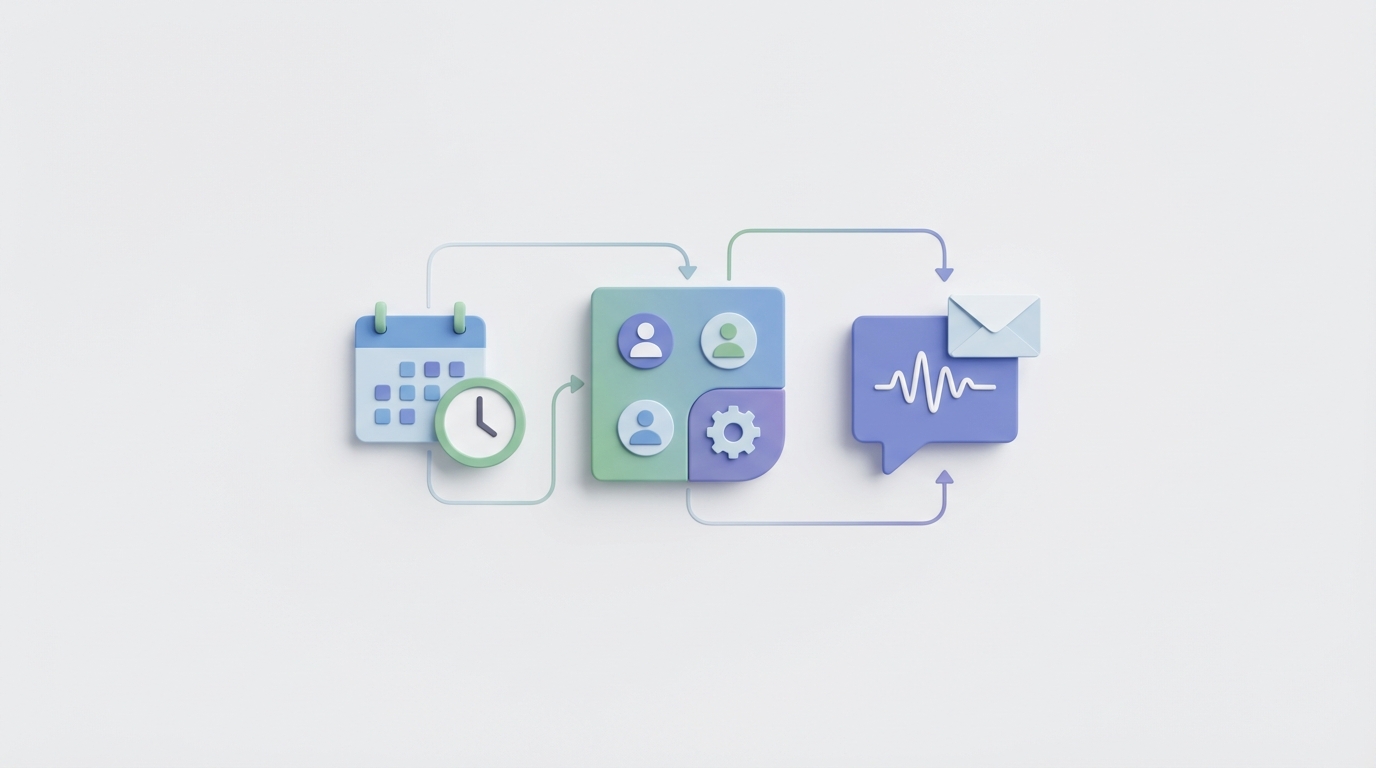
Most appointment scheduling tools promise automation but deliver something closer to a glorified alarm clock. Setmore is no exception. It handles the basics — online booking, calendar sync, reminders — and it does them well enough for a small service business. But the moment you need anything beyond "send a reminder 24 hours before," you hit a wall.
The native automation in Setmore is rigid. Fixed reminder sequences. Simple confirmation emails. Almost zero conditional logic. No ability to factor in client history, adapt messaging based on behavior, or make intelligent decisions about scheduling. If you want real automation — the kind that actually thinks — you're on your own.
That's where a custom AI agent comes in. Not Setmore's built-in features. Not a Zapier chain held together with duct tape. A purpose-built agent that connects to Setmore's API, monitors what's happening in real time, and takes autonomous action based on actual business logic.
We build these on OpenClaw, and the results are substantially better than anything you'll get from native tools or no-code middleware.
Let me walk through exactly what this looks like.
What Setmore's API Actually Gives You to Work With
Before building anything, you need to understand the surface area. Setmore offers a REST API with API key authentication. Here's what's available:
- Customers: Create, read, update, delete. Search by email or phone. Add tags and notes.
- Appointments: Full CRUD. Create, reschedule, cancel.
- Services: Retrieve the service catalog and details.
- Staff: Get staff lists, working hours, time-off schedules.
- Availability: Fetch open slots with basic filtering.
- Bookings: Create complete bookings (customer + service + staff + time).
- Payments: Limited read access to payment status.
- Webhooks: Appointment created, updated, cancelled events (though coverage is incomplete and reliability is inconsistent).
The API has real constraints. Rate limits cap out around 100-300 calls per minute depending on your plan. No bulk operations. Some client metadata fields are read-only. No access to form submissions or advanced reporting data. No sandbox environment. Authentication is per-account API key — no OAuth for multi-tenant setups.
These constraints matter because they dictate how you architect the agent. You can't just hammer the API with polling requests. You need to be smart about caching, webhook handling, and batching operations.
The Architecture: How OpenClaw Connects to Setmore
Here's how the integration works at a technical level.
OpenClaw acts as the intelligence layer. It sits between your communication channels (SMS, email, WhatsApp, web chat, voice) and Setmore's API. The agent receives inputs — client messages, webhook events, scheduled triggers — processes them through an LLM with function-calling capabilities, and executes actions against the Setmore API.
The core components:
- Webhook listener that receives real-time events from Setmore (appointment created, cancelled, updated).
- API connector that handles authenticated requests to Setmore's REST endpoints, with built-in rate limiting and retry logic.
- Client data cache backed by a vector database that stores enriched client profiles, conversation history, and appointment patterns.
- Decision engine powered by OpenClaw's LLM layer, which uses function calling to determine what actions to take based on incoming events and business rules.
- Multi-channel output that sends responses and proactive messages via whatever channel the client prefers.
A simplified flow for an incoming client message:
Client sends SMS: "Can I move my Thursday appointment to next week?"

→ OpenClaw receives message
→ Identifies client by phone number (Setmore Customer API: search by phone)
→ Retrieves upcoming appointments (Setmore Appointments API: filter by customer + date range)
→ Finds the Thursday appointment
→ Checks staff availability for next week (Setmore Availability API)
→ LLM generates response with available options
→ Client replies with preferred time
→ OpenClaw reschedules appointment (Setmore Appointments API: update)
→ Sends confirmation with updated details
No human touched this. No one checked a calendar manually. No one copied and pasted between screens.
Five Workflows That Actually Matter
Let me get specific about what this agent does that Setmore alone cannot.
1. Conversational Booking via Natural Language
This is the highest-impact workflow. Instead of forcing clients through a booking page with dropdown menus and calendar pickers, they just... talk.
A client texts: "I need a deep tissue massage next Tuesday afternoon, preferably with Sarah."
The OpenClaw agent:
- Parses intent (service: deep tissue massage, preferred day: next Tuesday PM, preferred staff: Sarah)
- Hits the Setmore Availability API for Sarah's Tuesday afternoon slots
- If Sarah is unavailable, checks other qualified staff and offers alternatives
- Presents 2-3 options in plain language
- On confirmation, creates the booking via the Setmore Bookings API
- Sends a confirmation message with all details
# Simplified function call the OpenClaw agent executes

def check_availability_and_book(service_name, preferred_staff, preferred_date, preferred_time_range):
    # Resolve service ID
    services = setmore_api.get_services()
    service = match_service(services, service_name)

    # Resolve staff ID
    staff_list = setmore_api.get_staff()
    staff = match_staff(staff_list, preferred_staff)

    # Check availability
    slots = setmore_api.get_available_slots(
        staff_key=staff['key'],
        service_key=service['key'],
        date=preferred_date
    )

    # Filter by preferred time range
    matching_slots = filter_by_time_range(slots, preferred_time_range)

    if not matching_slots:
        # Fall back to other qualified staff
        alternative_staff = get_qualified_staff(service, exclude=staff['key'])
        for alt in alternative_staff:
            alt_slots = setmore_api.get_available_slots(
                staff_key=alt['key'],
                service_key=service['key'],
                date=preferred_date
            )
            if alt_slots:
                matching_slots = filter_by_time_range(alt_slots, preferred_time_range)
                break

    return matching_slots
The conversion rate on conversational booking consistently beats traditional booking pages. People don't want to navigate a UI. They want to send a message and have it handled.
2. Intelligent No-Show Recovery
Setmore tells you someone didn't show up. That's about it. A well-built OpenClaw agent turns a no-show from a lost revenue event into a recovery opportunity.
When a no-show is detected (via webhook or status check):
- Agent checks the client's history: first-time no-show or repeat offender?
- For first-timers: sends a warm, non-judgmental message within 30 minutes. "Hey — we missed you today! Want to rebook? Here are some openings this week."
- For repeat no-shows: adjusts tone and may require a deposit for future bookings.
- Simultaneously checks the waitlist (if maintained in the client data cache) and offers the now-open slot to other clients who wanted that time.
- Logs the no-show pattern to the client profile for future scheduling decisions.
This alone can recover 15-25% of no-show revenue. The speed matters — reaching out within 30 minutes while the client still remembers they missed the appointment dramatically increases rebooking rates.
3. Proactive Rebooking Based on Service Intervals
Most service businesses have natural rebooking cadences. Haircuts every 4-6 weeks. Dental cleanings every 6 months. Massage therapy every 2-4 weeks. Setmore doesn't track or act on these patterns.
The OpenClaw agent does. It analyzes each client's appointment history to establish their typical interval for each service type, then proactively reaches out when they're approaching the window.
Client last booked a haircut 5 weeks ago.
Typical interval for this client: 5.5 weeks (based on last 8 appointments).

→ Agent sends message at week 5: "Getting close to your usual time for a cut.
   Want me to book you in with [preferred stylist] next week?
   I see openings on Tuesday at 2pm and Thursday at 10am."
This is where the vector database in OpenClaw earns its keep. By storing and analyzing historical patterns, the agent builds a model of each client's behavior without anyone having to configure rules manually. The agent learns that Client A comes in every 4 weeks like clockwork and Client B is more like 6-8 weeks and erratic — and adjusts its outreach timing and tone accordingly.
4. Smart Staff Assignment and Load Balancing
Setmore offers basic round-robin staff assignment. Real businesses need something more nuanced.
An OpenClaw agent can factor in:
- Client-staff relationship history: If a client has seen the same stylist/therapist 6 times, don't suddenly assign someone else without reason.
- Staff performance data: Route high-value or complex appointments to your strongest performers.
- Utilization balancing: If one staff member is at 90% capacity this week and another is at 50%, weight new bookings toward the lighter schedule.
- No-show risk mitigation: High no-show risk clients can be strategically placed in slots that are easier to backfill.
- Revenue optimization: During peak hours, prioritize higher-value services or clients with stronger booking histories.
This logic runs every time a booking is created or a client requests an appointment. The agent queries staff availability from Setmore, layers in the business intelligence from its data cache, and makes a recommendation — or just handles it autonomously if configured to do so.
5. Personalized Post-Appointment Follow-Up
Setmore's follow-up capability is essentially a generic thank-you email. An OpenClaw agent generates follow-ups that are actually useful.
After an appointment completes:
- Agent pulls the appointment details (service, staff, duration, any notes the staff added).
- Generates a personalized message referencing the specific service.
- Includes relevant upsell or cross-sell suggestions based on client history and the service just completed.
- If the staff left notes (e.g., "client interested in keratin treatment"), the agent incorporates that into the follow-up.
- Sets a rebooking reminder based on the client's typical interval.
"Thanks for coming in today, Alex. Hope the balayage turned out exactly how you wanted. Sarah mentioned you were curious about our keratin smoothing treatment — happy to send you more info or book a consultation. Also, based on your history, you'll probably want to touch up the color in about 8 weeks. Want me to pencil something in for early March?"
That message drives revenue. A generic "Thanks for your appointment!" does not.
What You're Actually Replacing
Let's be honest about what most small service businesses do today:
- Manually check the calendar and text clients back when they reach out.
- Rely on Setmore's basic reminders and hope people show up.
- Never follow up after appointments because there's no time.
- Use Zapier for one or two simple automations and pay $20-50/month for the privilege of connecting two apps with a 15-second delay.
- Lose clients to competitors who are better at staying in touch.
An OpenClaw agent replaces all of that. It runs continuously, handles every communication channel, makes decisions based on actual data, and gets smarter as it processes more interactions.
The operational overhead is near zero once configured. You're not maintaining Zap chains. You're not debugging broken webhook connections at 2am. The agent is purpose-built for your business logic and your Setmore account.
Implementation: What It Takes
Building this isn't a weekend project, but it's not a six-month enterprise deployment either. The typical path:
- API key provisioning and webhook configuration in Setmore.
- Data migration: Pull historical client and appointment data into OpenClaw's vector database for pattern analysis.
- Workflow definition: Map out which workflows you want automated and what business rules govern them.
- Channel setup: Connect SMS, email, WhatsApp, or web chat endpoints.
- Testing: Run the agent in shadow mode — it suggests actions but a human approves — for 1-2 weeks.
- Go live: Switch to autonomous mode with human escalation paths for edge cases.
Most businesses are fully operational within 2-4 weeks.
The Honest Limitations
Setmore's API has gaps. Form submission data isn't accessible. Some client fields are read-only. Webhooks are occasionally unreliable — you'll need polling as a fallback for critical workflows. Rate limits mean you can't do real-time sync for very large operations (10+ staff with hundreds of daily bookings) without careful architecture.
These are solvable problems, but they're real. The agent works around them through caching, intelligent polling intervals, and error handling — but you should know they exist.
Where This Goes
The immediate win is operational: fewer no-shows, higher rebooking rates, less time spent on admin. The longer-term value is strategic. You're building an intelligent layer on top of your scheduling data that gets smarter over time. It learns which clients are high-value, which staff pairings work best, which time slots underperform, and which services are trending.
That intelligence compounds. Month over month, the agent makes better recommendations, writes better messages, and catches more opportunities.
Next Steps
If you're running a service business on Setmore and you're tired of the limitations — the rigid automations, the manual follow-ups, the generic communications — this is worth exploring.
We build these integrations through Clawsourcing, our done-with-you implementation service. We'll scope your workflows, connect OpenClaw to your Setmore account, configure the business logic, and get you live.
Start a Clawsourcing engagement →
No six-month contracts. No enterprise pricing theater. Just a working AI agent that makes your scheduling platform actually intelligent.