AI Agent for Qwilr: Automate Interactive Proposals, Document Analytics, and Deal Acceleration
Automate Interactive Proposals, Document Analytics, and Deal Acceleration
Most proposal tools promise to "streamline your sales process." What they actually do is give you a slightly fancier way to build PDFs. Qwilr is genuinely better than that — interactive web-based proposals with analytics, eSignatures, and payments baked in. It's a real product that solves real problems.
But here's what Qwilr doesn't do: think.
It doesn't know that your prospect spent four minutes staring at your pricing table and then bounced. It doesn't automatically pull context from your last three emails to personalize the opening paragraph. It doesn't generate a first draft from a scoping call transcript. It doesn't chain together the seven systems you actually need to close and fulfill a deal.
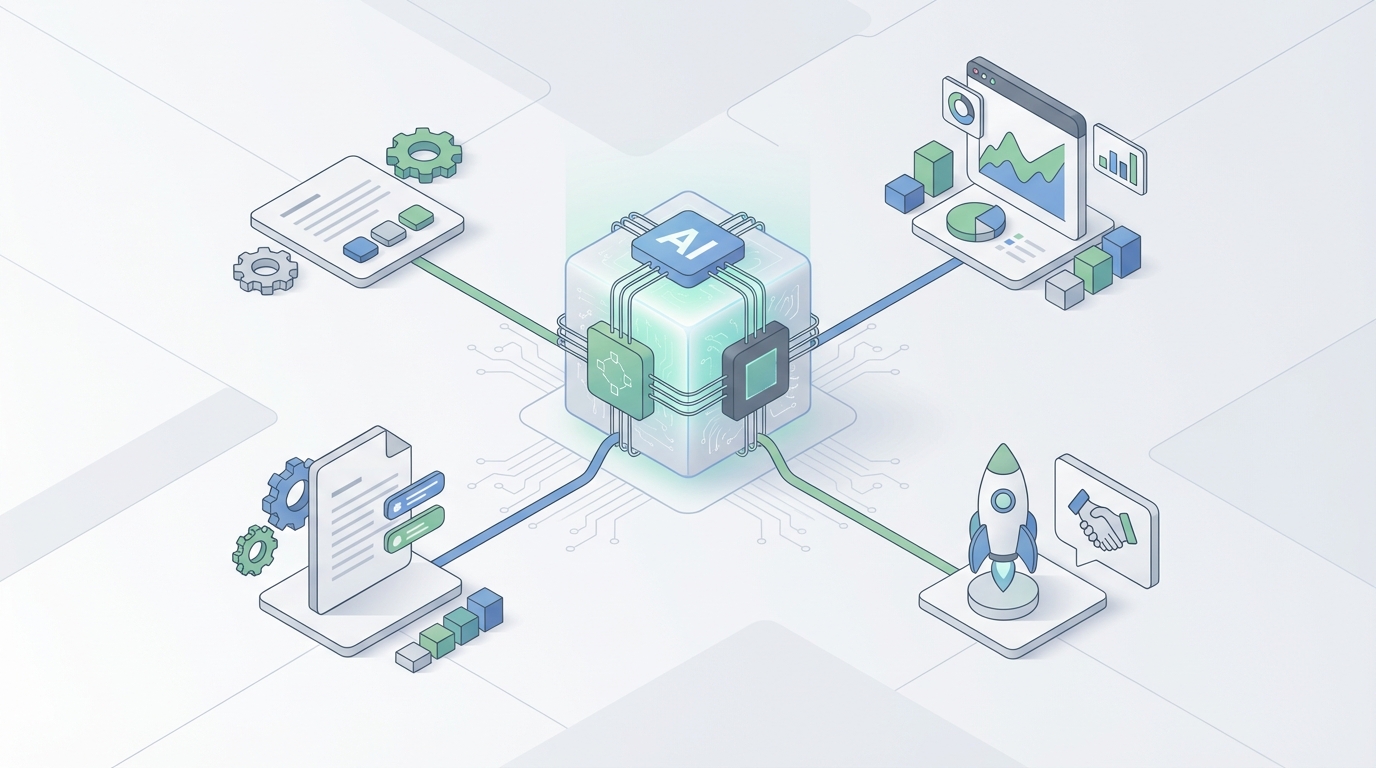
Qwilr is a great document layer. What it needs is a brain. That's what you build with OpenClaw — a custom AI agent that connects to Qwilr's API and turns a solid proposal platform into an autonomous deal-acceleration machine.
Let me walk through exactly how this works, what it looks like in practice, and where the real leverage is.
Why Qwilr's Built-in Automation Isn't Enough
Before we build anything, let's be honest about where Qwilr's native capabilities run out.
Qwilr gives you:
- Basic status triggers ("when signed, update CRM")
- Zapier integration for connecting to other tools
- Email reminders and notifications
- Simple conditional content blocks
- Viewer engagement analytics (who viewed, time on page, etc.)
This is fine for a straightforward flow: create proposal → send → they sign → deal closes. If your business is that clean, congratulations — you probably don't need what I'm about to describe.
But most businesses that use Qwilr heavily — agencies, SaaS companies, consultants, professional services firms — have messier realities:
- Proposals require heavy personalization based on the client's industry, past conversations, or specific pain points. Right now, that's manual work every single time.
- Engagement data goes nowhere useful. You can see that someone spent time on your case studies section, but nothing happens with that information automatically.
- Post-signature fulfillment is a black hole. The proposal gets signed, and then someone has to manually create projects in Asana, send invoices in QuickBooks, kick off onboarding emails, and notify the delivery team in Slack.
- There's no learning loop. You send 200 proposals a quarter and have zero structured intelligence about what's working, what's not, and what to change.
Qwilr's automation is shallow. It's the last mile of a process that actually spans your entire revenue operation. An AI agent fills every gap in between.
The Architecture: OpenClaw as the Brain, Qwilr as the Document Layer
The mental model is simple. Qwilr handles what it's good at: rendering beautiful, interactive proposals with eSignatures and payments. OpenClaw handles everything else — the intelligence, the orchestration, the decision-making.
Here's the architecture at a high level:
[Your Systems] ←→ [OpenClaw Agent] ←→ [Qwilr API + Webhooks]
     ↑                    ↑
   CRM, PM tools,     Memory, reasoning,
   email, Slack,       tool selection,
   accounting          autonomous actions
Qwilr's REST API lets you:
- Create projects from templates programmatically
- Add, update, and remove content blocks and sections
- Generate and manage proposal links
- Retrieve viewer analytics data
- Listen for webhooks: proposal viewed, section viewed, form submitted, signed, paid, declined
That's a solid API surface. The problem is that using it intelligently requires context, logic, and multi-step reasoning that no Zapier chain can handle. That's where OpenClaw comes in.
An OpenClaw agent connects to Qwilr's API as one of its available tools, alongside your CRM, project management platform, communication tools, and whatever else runs your business. It maintains memory across interactions, reasons about what action to take next, and executes autonomously.
Five Workflows That Actually Matter
Let me get specific. These aren't theoretical — they're the workflows that produce the most leverage for teams doing 20+ proposals per month.
1. AI-Generated First Drafts from Intake Data
The problem: Building a branded, personalized proposal takes 45–90 minutes, even with templates. For agencies and consultants, this is one of the biggest bottlenecks in the sales process.
The OpenClaw workflow:
- A sales rep fills out a lightweight intake form (or just dumps notes from a discovery call into Slack).
- The OpenClaw agent receives this input and enriches it — pulling the prospect's company data, checking your CRM for past interactions, reviewing any attached scope documents.
- The agent selects the right Qwilr template based on the service type, deal size, and client segment.
- It calls the Qwilr API to create a new project from that template and programmatically populates every section: personalized intro, relevant case studies, configured pricing table, correct terms and conditions.
- The agent posts a review link to the rep in Slack: "Draft proposal for [Client] ready for review. I used the Enterprise SaaS template with the fintech case study based on their industry. Pricing set to Package B with the optional analytics add-on based on scope notes."
The rep spends 10 minutes reviewing and tweaking instead of 90 minutes building from scratch. At 50 proposals per month, that's roughly 65 hours saved — more than a full work week reclaimed every single month.
Here's what the core of that agent logic looks like when you're configuring it in OpenClaw:
agent: proposal_generator
triggers:
  - slack_message_in: #new-proposals
  - form_submission: intake_form
tools:
  - qwilr_api
  - crm_lookup
  - company_enrichment
  - slack_messenger
steps:
  - enrich_client_data:
      sources: [crm, clearbit, intake_notes]
  - select_template:
      logic: match service_type + deal_size + industry
  - generate_content:
      sections: [intro, problem_statement, solution, case_studies, pricing, terms]
      personalization: client_context + past_interactions
  - create_qwilr_project:
      api: qwilr.projects.create
      template_id: selected_template
      content: generated_sections
  - notify_rep:
      channel: slack
      message: draft_summary + review_link
This is a real workflow, not a demo. It runs on actual API calls and actual data.
2. Engagement-Triggered Smart Follow-ups
The problem: Qwilr tells you someone viewed your proposal. It even tells you how long they spent on each section. But that data just sits in a dashboard that your reps check sporadically (if ever).
The OpenClaw workflow:
- Qwilr fires a webhook when a proposal is viewed, including section-level engagement data.
- The OpenClaw agent receives the webhook and analyzes the engagement pattern:
- Spent 5 minutes on pricing, 30 seconds on everything else? → They're evaluating cost. Follow up with ROI data and a flexible payment option.
- Read the whole thing but didn't sign? → They're interested but have objections. Follow up with a "any questions?" touchpoint and suggest a quick call.
- Opened it three times in two days? → They're sharing it internally. Send a summary PDF they can forward, or offer to present to their team.
- The agent drafts a contextual follow-up email (or Slack message to the rep with a suggested response) based on the engagement pattern.
- If the prospect hasn't viewed the proposal after 48 hours, the agent sends a gentle nudge — but only if the CRM shows no other recent touchpoints.
This isn't "if viewed, send email." This is understanding what the viewing behavior means and responding appropriately. That's reasoning, and it's exactly what OpenClaw agents are built for.
3. Post-Signature Fulfillment Orchestration
The problem: The proposal gets signed. Now someone needs to manually create a project in your PM tool, generate an invoice, add the client to your onboarding sequence, notify the delivery team, and update the CRM. This is where deals fall through the cracks — not before the signature, but after.
The OpenClaw workflow:
- Qwilr webhook fires on signature event with full proposal metadata.
- The OpenClaw agent parses the signed proposal: extracts the selected package, pricing, add-ons, start date, and any form responses (like onboarding questionnaires).
- It then executes a fulfillment chain:
- Creates a project in Asana/Monday/ClickUp with the correct scope, milestones, and assigned team members.
- Generates an invoice in QuickBooks/Xero/Stripe matching the exact pricing configuration the client approved.
- Updates the CRM deal to Closed-Won with structured data (not just "deal closed" — actual line items, package type, contract value).
- Sends a personalized onboarding email to the client.
- Posts a summary to the #wins Slack channel so the team knows.
- All of this happens in seconds, with zero manual intervention.
# Simplified OpenClaw webhook handler for post-signature
@openclaw.on_webhook("qwilr.proposal.signed")
async def handle_signature(event):
    proposal_data = await agent.tools.qwilr.get_project(event.project_id)

    extracted = await agent.extract_structured_data(
        proposal_data,
        schema=["package", "pricing", "addons", "start_date", "client_info"]
    )

    # Parallel execution of fulfillment tasks
    await asyncio.gather(
        agent.tools.asana.create_project(extracted),
        agent.tools.stripe.create_invoice(extracted),
        agent.tools.hubspot.update_deal(extracted, status="closed_won"),
        agent.tools.email.send_onboarding(extracted),
        agent.tools.slack.post_win(extracted)
    )
This is where the ROI gets undeniable. Every manual handoff you eliminate is a place where things stop getting dropped.
4. Proposal Intelligence and Win/Loss Analysis
The problem: You've sent 500 proposals this year. You have no structured data about what differentiates the ones that closed from the ones that didn't. You're flying blind on your most important revenue document.
The OpenClaw workflow:
- The agent continuously collects data from every proposal: content used, pricing structure, engagement patterns, time to signature, and outcome.
- Over time, it builds a structured dataset that reveals patterns:
- Proposals with video intros close 23% more often.
- Deals over $50K close faster when Package C is presented as the default.
- Prospects in healthcare spend disproportionate time on compliance sections — proposals that don't include one have a 40% lower close rate.
- Before a new proposal is sent, the agent scores it: "This proposal has a 67% predicted close rate. Adding a compliance section and switching to annual pricing would increase it to 78% based on historical patterns."
This isn't available in Qwilr. It's not available in any proposal tool. But the data is right there in the API — it just needs something intelligent pulling it together. OpenClaw does that.
5. Multi-Stakeholder Deal Rooms
The problem: Complex B2B deals involve multiple decision-makers. Each cares about different things. Sending the same proposal to everyone is lazy and ineffective.
The OpenClaw workflow:
- Rep indicates the deal has multiple stakeholders (or the agent detects it from CRM data).
- The agent creates variant versions of the proposal using Qwilr's API — same core document, but with different emphasized sections and personalized messaging:
- CFO version leads with ROI and pricing details.
- Technical lead version leads with implementation approach and integrations.
- Executive sponsor version leads with strategic alignment and case studies.
- Each stakeholder gets their own tracked link. The agent monitors engagement across all of them and provides a unified view: "The CFO has reviewed pricing twice. The technical lead hasn't opened theirs yet. Recommend: have your champion nudge the tech lead, and prepare an ROI one-pager for the CFO's next review."
Why OpenClaw Instead of Stitching Together Zapier and ChatGPT
You could theoretically approximate some of this with a Zapier → ChatGPT → Zapier chain. Here's why that falls apart:
No memory. Zapier workflows are stateless. Each trigger is independent. An OpenClaw agent remembers the entire deal context — every interaction, every engagement signal, every piece of data it has collected. When it drafts a follow-up email, it knows this is the third time the prospect has viewed the proposal and that the rep mentioned budget concerns in last week's call notes.
No reasoning. Zapier executes predetermined paths. If X, then Y. An OpenClaw agent evaluates the situation and decides what to do. "The prospect viewed the proposal but only looked at the pricing section. However, I also see from the CRM that this deal has been stuck for two weeks and the rep's last email went unanswered. I'm going to suggest a different approach than a simple follow-up."
No multi-system orchestration with logic. Chaining seven Zapier steps together with filters and delays is fragile, hard to debug, and impossible to maintain at scale. OpenClaw agents handle multi-tool orchestration natively — with error handling, retry logic, and the ability to adapt when something unexpected happens.
No learning. Zapier runs the same automation forever. An OpenClaw agent can improve its outputs over time based on outcomes.
Getting Started: The Practical Path
You don't need to build all five workflows on day one. Here's the sequence I'd recommend:
Week 1–2: Post-signature fulfillment. This has the highest immediate ROI. Connect the Qwilr signed webhook to your PM tool, invoicing, and CRM via OpenClaw. You'll eliminate hours of manual work immediately.
Week 3–4: Engagement-triggered follow-ups. Connect viewer analytics webhooks to your email/Slack. Start with simple patterns (viewed but not signed after 48 hours) and add sophistication over time.
Month 2: AI-generated first drafts. This requires more configuration — template mapping, content generation rules, personalization logic. But once it's running, it transforms your proposal velocity.
Month 3+: Proposal intelligence. By now you'll have enough data flowing through the agent to start building win/loss analysis and proposal scoring.
The Bottom Line
Qwilr is a good tool. It does the document part well. But the document is just one step in a process that spans prospecting, personalization, sending, tracking, following up, closing, and fulfilling.
OpenClaw turns Qwilr from a proposal builder into a proposal engine — one that generates, personalizes, monitors, follows up, closes, and fulfills with minimal human intervention.
The companies that figure this out first don't just send better proposals. They close faster, drop fewer balls, and build a compounding data advantage that their competitors can't replicate by switching templates.
If you want help scoping an OpenClaw agent for your Qwilr workflow, or if you'd rather have someone build the whole thing for you, check out our Clawsourcing service. We'll map your proposal process, identify the highest-leverage automations, and build a production-ready agent on OpenClaw that actually works.
Stop building proposals manually. Start building systems that build proposals for you.