AI Agent for Ordoro: Automate Shipping, Inventory Sync, and Dropshipping Operations
Automate Shipping, Inventory Sync, and Dropshipping Operations
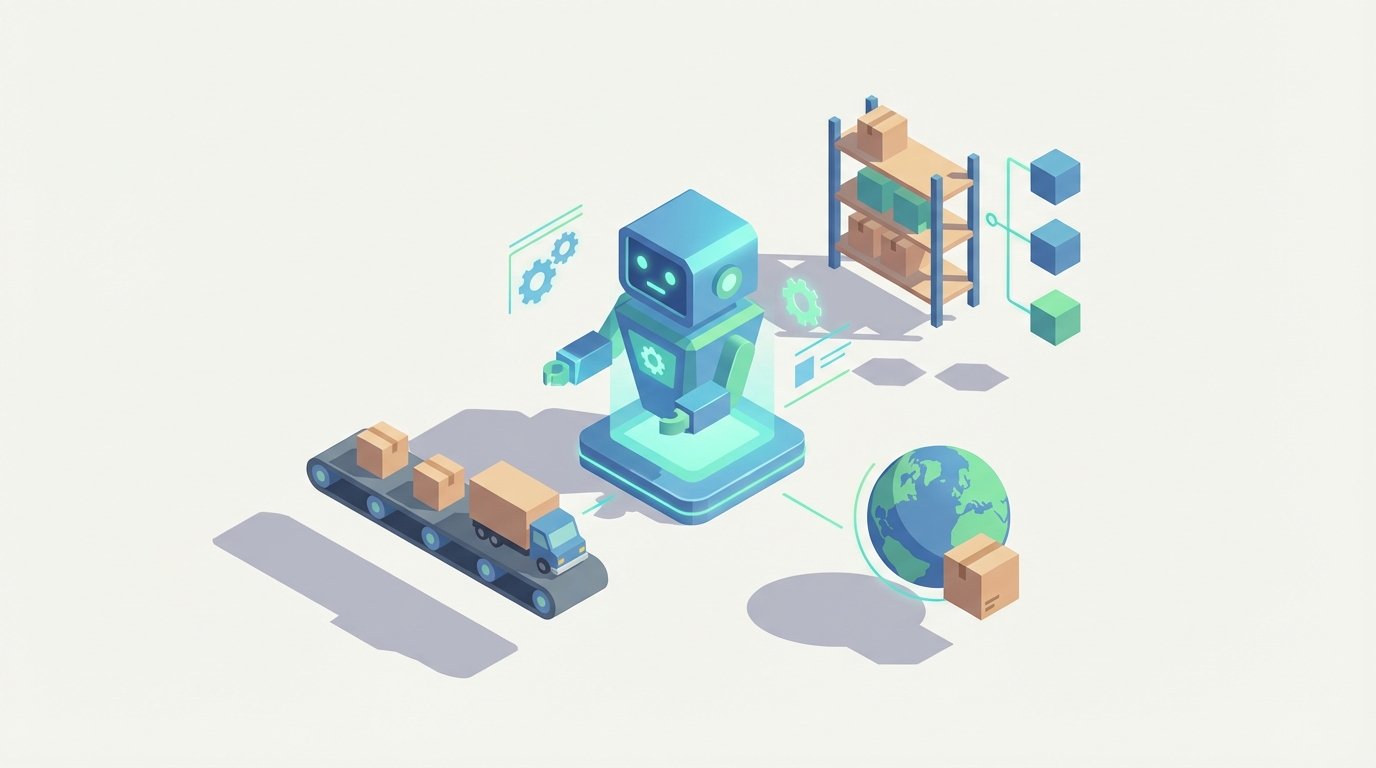
Most e-commerce ops teams running Ordoro hit the same wall around month six.
The platform does what it says on the tin. Orders come in from your channels, inventory syncs (mostly), labels get printed, shipments go out. It works. But then you add a third warehouse, or your fifth dropship supplier, or your twentieth automation rule — and suddenly you're spending three hours a day babysitting the system that was supposed to save you time.
The built-in Rules engine is the usual culprit. Ordoro gives you a basic if-this-then-that setup that works fine for simple routing. But the moment you need conditional logic that actually branches — like "route to Supplier A unless their fulfillment time has degraded this week, in which case check Supplier B's stock, and if neither works, ship from our Austin warehouse but only if the order is under 5 lbs" — you're out of luck. You end up with 40+ rules that conflict with each other, no way to debug them, and a creeping suspicion that orders are falling through cracks you can't see.
This is the gap where an AI agent earns its keep. Not AI as a marketing buzzword. An actual autonomous agent that connects to Ordoro's API, watches what's happening in real time, makes decisions that would take a human 20 minutes of tab-switching, and executes them.
Here's how to build one with OpenClaw, and what it actually does once it's running.
Why Ordoro's Automation Hits a Ceiling
Let's be specific about what breaks, because the solution only matters if the problem is real.
The Rules engine can't handle complexity. There's no nesting, no loops, no ability to pull external data into a decision. Every rule is a flat condition-action pair. When you need to evaluate multiple variables simultaneously — supplier reliability, shipping cost, regional weather delays, current warehouse workload — you're doing that in your head or in a spreadsheet, not in Ordoro.
Reporting is basically a data export button. Users on G2 and Reddit say the same thing over and over: they pull everything into Google Sheets to do real analysis. Ordoro tells you what happened. It doesn't tell you why, and it definitely doesn't tell you what's about to happen.
Inventory sync issues are silent killers. When stock desyncs between channels — and it does happen — Ordoro doesn't explain why. You find out when a customer orders something you don't have. Tracing the root cause means manually checking each channel integration, webhook logs, and order history.
Dropshipping orchestration is manual. Sure, Ordoro can auto-create a purchase order for a supplier. But it can't evaluate which supplier to use based on a live scorecard. It can't detect that Supplier C's average fulfillment time has jumped from 3 days to 8. It can't preemptively switch suppliers before your customer reviews tank.
Support is slow when things break. Multiple users report multi-day response times. When an order is stuck or inventory is negative and you can't figure out why, waiting 48 hours for a support ticket isn't an option.
These aren't edge cases. They're daily reality for anyone running a multi-channel operation with any degree of complexity.
What an AI Agent Actually Does Here
An AI agent sitting on top of Ordoro acts as an operations co-pilot. It watches everything happening through the API and webhooks, maintains context about your business (suppliers, warehouses, historical performance, seasonal patterns), and either takes action autonomously or surfaces recommendations with enough context that you can approve them in seconds instead of investigating for an hour.
Here's what that looks like in practice across five specific workflows.
1. Intelligent Order Routing
Ordoro's built-in routing uses static rules. AI routing uses live data.
When an order comes in, the OpenClaw agent evaluates:
- Fulfillment cost from each eligible warehouse or supplier (including shipping zones)
- Current warehouse workload (orders in queue, staffing levels if you feed that data in)
- Supplier reliability score (rolling average of on-time rate, damage rate, tracking upload speed)
- Inventory position (not just "do they have it" but "will they have it tomorrow based on current velocity")
- Delivery promise (can we meet the expected delivery date from this fulfillment source)
The agent calls Ordoro's Orders API to pull the order details, checks inventory via the Inventory endpoints for each warehouse, evaluates supplier data from a scoring model it maintains, and then routes the order — either by updating the order in Ordoro or creating a purchase order to the selected supplier.
Here's a simplified version of what the routing logic looks like when configured in OpenClaw:
# OpenClaw agent tool: intelligent_order_routing

def route_order(order_id):
    order = ordoro_api.get_order(order_id)
    sku_list = [item['sku'] for item in order['lines']]

    candidates = []

    for warehouse in ordoro_api.get_warehouses():
        stock = ordoro_api.get_inventory(sku_list, warehouse['id'])
        if all(stock[sku] >= order_qty(sku, order) for sku in sku_list):
            cost = estimate_fulfillment_cost(warehouse, order)
            speed = estimate_delivery_days(warehouse, order['shipping_address'])
            candidates.append({
                'source': warehouse,
                'type': 'warehouse',
                'cost': cost,
                'days': speed,
                'reliability': warehouse_reliability_score(warehouse['id'])
            })

    for supplier in ordoro_api.get_suppliers():
        if supplier_can_fulfill(supplier, sku_list):
            cost = supplier_cost(supplier, sku_list)
            speed = supplier_avg_fulfillment_days(supplier['id'])
            candidates.append({
                'source': supplier,
                'type': 'dropship',
                'cost': cost,
                'days': speed,
                'reliability': supplier_reliability_score(supplier['id'])
            })

    # LLM-powered decision with weighted criteria
    best = openclaw.evaluate(
        candidates=candidates,
        priorities=config['routing_priorities'],  # e.g., speed > cost > reliability
        constraints={'max_delivery_days': order['promised_days']}
    )

    if best['type'] == 'warehouse':
        ordoro_api.assign_warehouse(order_id, best['source']['id'])
    else:
        ordoro_api.create_purchase_order(
            supplier_id=best['source']['id'],
            line_items=order['lines']
        )

    return best
The key difference from Ordoro's Rules: this evaluates every variable simultaneously, adapts as supplier performance changes, and handles edge cases (all candidates fail, split shipment needed, etc.) without you writing a new rule for every scenario.
2. Predictive Replenishment
Ordoro shows you current stock levels and lets you set low-stock alerts. That's reactive. You find out you need to reorder when you're almost out.
An OpenClaw agent does demand forecasting. It pulls historical order data from Ordoro's API, analyzes sales velocity per SKU per channel, accounts for seasonality and promotional calendars (which you can feed in via a simple Google Sheet or webhook), and generates purchase orders before you hit safety stock levels.
The workflow:
- Nightly data pull: Agent queries Ordoro's Orders API for the last 90 days of order data by SKU
- Velocity calculation: Units sold per day, weighted toward recent data, segmented by channel
- Lead time awareness: Each supplier has a known lead time (maintained by the agent based on actual PO fulfillment history, not what the supplier claims)
- Reorder point calculation:
(daily_velocity × lead_time_days) + safety_stock - PO generation: When current stock approaches the reorder point, the agent creates a draft PO in Ordoro via the Purchase Orders API
The agent gets smarter over time because it's tracking actual lead times versus predicted ones. If Supplier D says 7-day lead time but consistently delivers in 12, the agent adjusts automatically.
3. Anomaly Detection and Root Cause Analysis
This is where the agent pays for itself fastest, because inventory problems are expensive and invisible.
The agent monitors Ordoro webhooks for:
- Inventory changes that don't correspond to orders (ghost adjustments)
- Negative inventory events (oversells)
- Order status anomalies (stuck in processing for more than X hours)
- Sudden demand spikes (5x normal velocity on a SKU in a 4-hour window — could be a TikTok moment, could be bot fraud)
- Supplier tracking gaps (PO was confirmed 5 days ago, still no tracking)
When it detects an anomaly, it doesn't just send an alert. It investigates. For an inventory desync, the agent traces the sequence of events: which channel reported the sale, when the webhook fired, whether Ordoro's inventory adjustment actually posted, whether the sync to other channels happened. It hands you a timeline and a probable root cause, not just "FYI, inventory is negative on SKU-4421."
Sample alert the agent would push to Slack:
🔴 Inventory Anomaly — SKU-4421 (Blue Widget, 16oz)

Current stock: -3 units
Expected stock: 12 units

Root cause (high confidence):
Shopify order #10842 processed at 2:14pm but inventory
webhook to Amazon was delayed 47 minutes. During that gap,
3 Amazon orders came in against stale stock count.

Affected orders: AMZ-9921, AMZ-9923, AMZ-9925

Recommended action:
→ Cancel AMZ-9925 (lowest margin, Prime penalty is $4.20)
→ Fulfill AMZ-9921 and AMZ-9923 from Austin warehouse (8 units available)
→ Adjust Shopify stock to 0 until restock

[Approve All] [Review Individually]
That's the difference between an alert and an agent. One tells you something is wrong. The other tells you why, what to do about it, and lets you fix it in one click.
4. Natural Language Operations Interface
This sounds flashy but is genuinely practical. Instead of navigating Ordoro's UI to pull reports or check on things, you ask the agent in plain English.
Through OpenClaw's conversational interface:
- "How many orders shipped late this week and from which warehouse?"
- "What's our fulfillment cost per order from the Dallas warehouse versus dropshipping through Supplier B?"
- "Show me every SKU with less than 10 days of inventory at current velocity"
- "Which supplier has the worst on-time rate this quarter?"
The agent translates these into API calls to Ordoro, aggregates the data, and returns an answer — often with context you didn't ask for but need. Ask about late shipments and it might note that 80% of them are from one warehouse that's been understaffed this week based on the order-to-ship time degradation.
5. Smart Dropshipping Orchestration
For businesses doing serious dropshipping volume, this is the highest-leverage workflow.
The agent maintains a live supplier scorecard:
| Metric | Supplier A | Supplier B | Supplier C |
|---|---|---|---|
| On-time rate (30d) | 94% | 87% | 71% |
| Avg fulfillment days | 3.2 | 4.1 | 6.8 |
| Damage rate | 0.8% | 1.2% | 3.1% |
| Cost per unit (avg) | $12.40 | $11.80 | $10.20 |
| Tracking upload speed | Same day | 1.2 days | 2.8 days |
When Supplier C's on-time rate drops below your threshold, the agent doesn't wait for you to notice. It shifts new orders to Supplier A or B, sends you a summary of the decision, and optionally sends an automated notification to Supplier C's contact with the performance data and a request to remediate.
All of this data comes from Ordoro's API — PO creation dates, tracking upload timestamps, delivery confirmation dates. The agent just does the math that nobody has time to do manually.
The Technical Integration Layer
Ordoro exposes a REST API with endpoints for orders, products, inventory, shipments, purchase orders, suppliers, and warehouses. They also support webhooks for key events (order created, inventory changed, shipment created).
OpenClaw connects to this API layer and adds:
- Persistent memory — The agent remembers historical decisions and outcomes across sessions
- Tool execution — The agent can call Ordoro API endpoints as tools, chaining multiple calls to complete complex workflows
- Decision logic — Instead of rigid rules, the agent uses configurable priorities and constraints interpreted by an LLM
- Multi-system orchestration — The agent can simultaneously interact with Ordoro, your Shopify store, your CRM, your accounting system, and communication tools like Slack or email
- Human-in-the-loop controls — High-value or risky actions (canceling orders, issuing refunds, switching suppliers) can require approval before execution
The setup through OpenClaw involves:
- Connecting your Ordoro account via API credentials
- Defining your tools — which Ordoro API endpoints the agent can call and under what conditions
- Setting priorities and constraints — what matters most in routing decisions, what thresholds trigger alerts, what actions require approval
- Configuring webhooks — Ordoro pushes events to OpenClaw, which the agent processes in real time
- Training on your context — uploading supplier contracts, SLAs, business rules, and historical performance data so the agent makes decisions informed by your specific situation
There's no six-month implementation timeline. Most Ordoro-connected agents are functional within a few weeks because the API coverage is solid and the workflows are well-defined.
Where This Goes
The long play here isn't just automating what you already do. It's doing things that aren't possible with manual operations or basic rules engines.
Dynamic pricing recommendations based on inventory position and competitor data. Automated carrier selection that adapts to real-time rate changes and delivery performance. Customer communication that's actually contextual — when an order is delayed, the agent knows why and crafts a message that addresses the specific issue instead of sending a generic "your order is delayed" template.
Ordoro is a solid OMS. It does the mechanical work of managing multi-channel operations. But the decision layer on top of it — the part that determines how well your operation actually runs — has been manual or rule-bound until now. That's what the agent replaces.
If you're running on Ordoro and spending too much time on operational decisions that should be automated, this is exactly what we build through Clawsourcing. We'll scope the integration, build the agent on OpenClaw, and get it running against your actual Ordoro data.
Recommended for this post

Adam
Full-Stack Engineer
Your full-stack AI engineer that architects, builds, deploys, and automates entire applications from a single conversation. 23+ Core Capabilities.
 Clarence Maker
Your Linear expert that automates issue tracking, builds workflows, and streamlines project management.
 SpookyJuice.ai
Product Copywriter
Skill
SEO-optimized product descriptions in seconds. Just paste a URL.