AI Agent for Mews: Automate Hospitality Operations, PMS Workflows, and Revenue Tracking
Automate Hospitality Operations, PMS Workflows, and Revenue Tracking
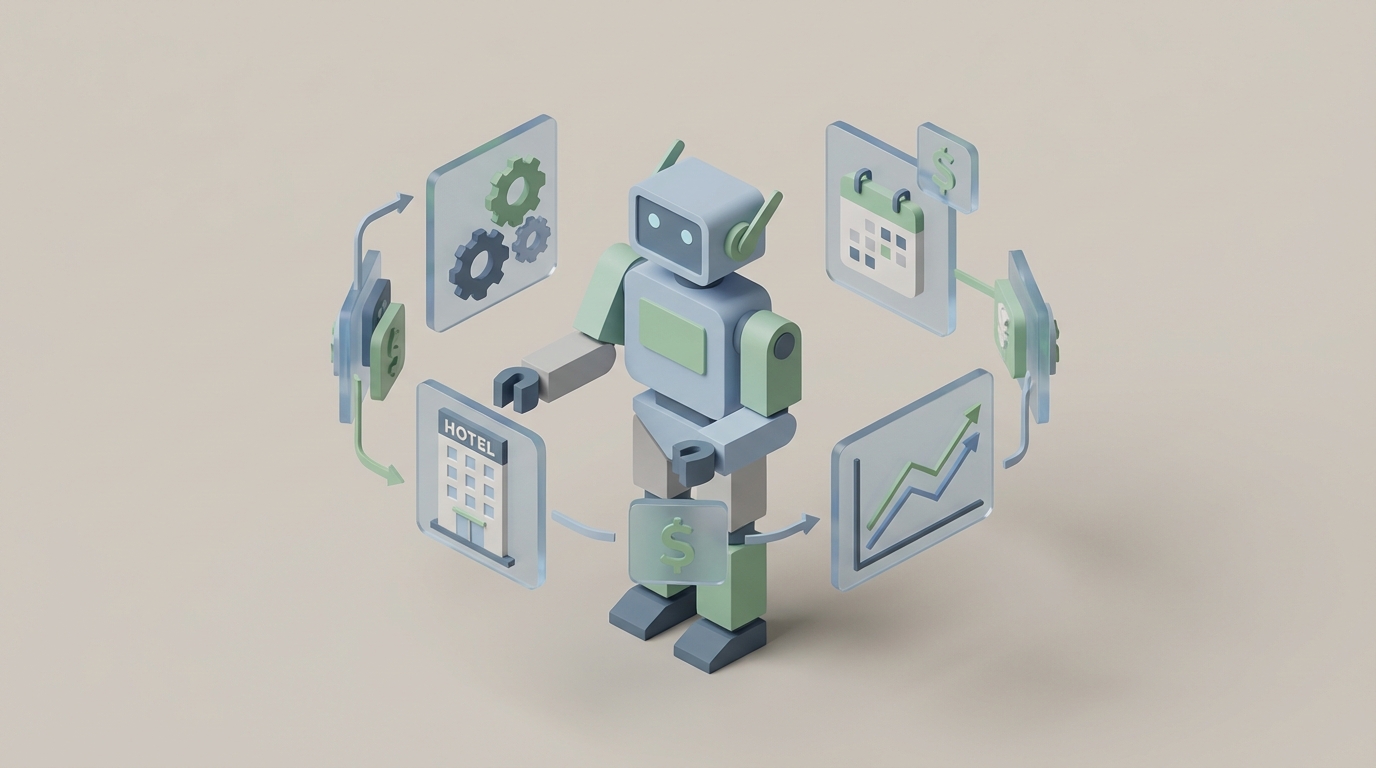
Most hotel teams running Mews already know it's one of the better PMS platforms out there. Clean interface, solid API, modern architecture — it's a genuine step up from the legacy systems it replaces. But if you've been using it for more than a few months, you've also bumped into the ceiling.
The built-in Rules engine handles the basics. A reservation comes in, fire off a confirmation email. A guest checks out, flip the room status. That kind of thing. It works until it doesn't — and it stops working right around the point where your operations actually get complicated.
The gap isn't in what Mews stores or tracks. The data is there. The gap is in what Mews can do with that data autonomously. And that's exactly where a custom AI agent, built on OpenClaw and connected to the Mews API, turns a good PMS into something significantly more powerful.
Let me get specific about what that looks like.
The Real Problem: The Complex 20%
Mews's automation handles the predictable 80% of hotel operations well enough. Booking confirmed → email sent. Check-out completed → housekeeping task created. Rate plan active → inventory distributed to channels.
The remaining 20% is where your staff spends disproportionate time and where guest experience actually differentiates:
- A guest emails saying their flight was delayed and they need a late checkout, a different room type, and want to know if the restaurant is still open when they arrive.
- A group booking modifies three rooms, cancels one, adds a corporate billing code, and requests a cot — all in a single email thread.
- Your revenue manager needs to know why ADR dropped last Tuesday across three room categories and whether it correlates with a rate parity issue on Booking.com.
- A VIP repeat guest is arriving tomorrow, and nobody on the current shift remembers their preferences from six stays ago.
None of these are handled by if-this-then-that rules. They require context, memory, judgment, and coordinated action across multiple systems. That's what an AI agent does.
Why the Mews API Makes This Feasible
Before getting into the agent architecture, it's worth acknowledging why Mews is actually a good candidate for this kind of integration. Not every PMS is.
Mews exposes a comprehensive REST API with webhook support covering most operational events. You get full CRUD access to:
- Reservations, availability, and rate plans
- Guest profiles, preferences, and communication history
- Room inventory and housekeeping status
- Charges, payments, refunds, and folios
- Company and corporate accounts
- Task management
The webhook coverage is particularly strong. You can subscribe to real-time events — new reservation, status change, checkout, payment processed — which means your agent can be reactive without polling. It can listen and act the moment something happens.
Authentication uses OAuth 2.0, rate limits are reasonable, and the data model is clean. This is a platform that was designed to be built on top of. Most legacy PMS systems require middleware hacks or screen scraping to get half of this functionality. Mews just hands it to you.
Building the Agent with OpenClaw
OpenClaw is where you actually construct the intelligence layer. Rather than cobbling together a chain of API calls with custom glue code, OpenClaw lets you build an AI agent that understands hospitality context, connects to the Mews API, and executes multi-step workflows autonomously.
Here's the high-level architecture:
[Mews Webhooks] → [OpenClaw Agent] → [Mews API]
                                    → [Xero / QuickBooks]
                                    → [Mailgun / Klaviyo]
                                    → [Slack / Teams]
                                    → [Google Sheets / BI Tools]
The OpenClaw agent sits in the middle, receiving events from Mews, interpreting them with full context, deciding what actions to take, and executing across whatever systems are relevant. It's not a chatbot. It's an operational co-pilot with API access.
Let me walk through the most valuable use cases with implementation specifics.
Use Case 1: Intelligent Guest Request Handling
The problem: A guest sends a message — through the Mews Guest Journey portal, via email, or through an OTA messaging channel — with a compound request. "We're arriving late, around 11pm. Can we get a room on a high floor away from the elevator? Also, it's our anniversary — is there anything you can do?"
A staff member reading that has to: interpret the request, check availability for high-floor rooms, modify the reservation, note the late arrival so the front desk expects them, check what anniversary perks are available, apply any relevant package or posting, and respond to the guest with a coherent, warm confirmation.
The OpenClaw agent approach:
The agent receives the message via webhook (or email integration). Using the Mews API, it pulls the reservation details and guest profile:
# Fetch reservation context
reservation = mews_api.get_reservation(reservation_id)
guest_profile = mews_api.get_customer(reservation['CustomerId'])
stay_history = mews_api.get_customer_reservations(reservation['CustomerId'])

# Check available rooms matching criteria
available_rooms = mews_api.get_available_resources(
    start_date=reservation['StartUtc'],
    end_date=reservation['EndUtc'],
    resource_category_id=reservation['ResourceCategoryId']
)

# Filter for high floor, away from elevator
suitable_rooms = agent.evaluate_room_preferences(
    available_rooms,
    preferences=["high_floor", "away_from_elevator"],
    property_layout=property_config
)
The agent then determines that this is a repeat guest (third stay), that the property offers a complimentary anniversary package (bottle of sparkling wine + chocolate-covered strawberries), and that room 412 fits the criteria. It assigns the room, adds a note about the late arrival, posts the anniversary amenity charge to the folio (comped), creates a housekeeping task for the amenity setup timed for 10:30pm, and drafts a personalized response:
Hi [Guest Name],

Happy anniversary! We've got you set in Room 412 — high floor,
quiet corner away from the elevators. Since you're arriving around
11pm, we'll have everything ready and waiting for you, including a
little anniversary surprise.

The front desk team will be expecting you. Safe travels!
This entire sequence happens in under a minute. Without the agent, it's 15-20 minutes of staff time minimum — if the message doesn't sit in a queue for an hour first.
Use Case 2: Smart Night Audit and Anomaly Detection
The problem: Night audit in Mews is already lighter than legacy systems, but it still involves a human scanning for issues: rates that didn't post correctly, folios with mismatched charges, rooms showing occupied but with no active reservation, payments that failed tokenization, or rate discrepancies against what was quoted at booking.
The OpenClaw agent approach:
Schedule the agent to run nightly (or continuously monitor via webhooks). It pulls all active reservations, compares posted rates against rate plan configurations, cross-references payment statuses, and flags anomalies:
# Nightly audit sweep
active_reservations = mews_api.get_reservations(
    start_date=today,
    end_date=tomorrow,
    states=["Started", "Confirmed"]
)

for reservation in active_reservations:
    folio = mews_api.get_reservation_items(reservation['Id'])
    expected_rate = mews_api.get_rate_pricing(
        reservation['RateId'],
        reservation['StartUtc']
    )

    # Compare posted vs expected
    discrepancies = agent.audit_folio(folio, expected_rate)

    if discrepancies:
        agent.flag_for_review(reservation, discrepancies)
        agent.notify_staff(
            channel="slack",
            message=f"Folio discrepancy on {reservation['Id']}: {discrepancies}"
        )
The agent doesn't just find problems — it categorizes them by severity, suggests corrections, and in cases where the fix is unambiguous (a standard tax posting was missed, for example), it can apply the correction automatically and log what it did.
Over time, the agent learns which anomalies are common (a particular OTA sends rates that always need adjustment) and starts handling them proactively instead of flagging them.
Use Case 3: Revenue and Pricing Co-Pilot
The problem: Mews reporting gives you occupancy, RevPAR, and ADR. That's table stakes. What revenue managers actually need is the why — and ideally, recommendations for what to do about it.
The OpenClaw agent approach:
The agent pulls historical and current data from Mews, combines it with external signals (local events, competitor pricing if available, day-of-week patterns), and produces actionable briefings:
# Weekly revenue analysis
weekly_data = mews_api.get_revenue_report(
    start_date=week_start,
    end_date=week_end,
    group_by="ResourceCategory"
)

historical_comparison = agent.compare_to_baseline(
    weekly_data,
    same_week_last_year,
    trailing_four_week_average
)

# Generate analysis
briefing = agent.generate_revenue_briefing(
    current_data=weekly_data,
    comparison=historical_comparison,
    pickup_pace=mews_api.get_pickup_report(next_30_days),
    channel_mix=mews_api.get_channel_report(week_start, week_end)
)
The output isn't a spreadsheet. It's a natural language briefing that says something like:
"ADR for Superior Doubles dropped 8% this week compared to the trailing four-week average, driven primarily by a rate parity issue — Booking.com was showing a member-only discount that undercut your direct rate by €12/night. Occupancy held at 84%, so the demand is there, but you left approximately €2,400 on the table. Recommend adjusting the Booking.com rate plan or filing a parity complaint. Next week looks strong — pickup pace is 22% ahead of the same period last year, primarily driven by the tech conference downtown. Consider increasing BAR by €15-20 for Tuesday through Thursday."
That's the kind of analysis that currently takes a revenue manager 2-3 hours with exports to Excel and Power BI. The agent does it on demand, whenever you ask, or automatically every Monday morning in your Slack channel.
Use Case 4: Staff Productivity Agent
The problem: Front desk staff spend significant time navigating through the Mews Commander interface clicking through menus to accomplish tasks that could be expressed in a single sentence.
The OpenClaw agent approach:
Give staff a natural language interface — via Slack, a simple web UI, or even a dedicated terminal at the front desk:
Staff: "Move the Martinez reservation from room 208 to 315, extend one night, and add a parking charge for three nights."
The agent parses this, identifies the reservation, checks 315's availability, performs the room move via the API, extends the end date, posts parking charges (looking up the current parking rate from the rate configuration), and responds:
Agent: "Done. Martinez moved to 315, checkout now March 14. Three nights parking posted at €18/night (€54 total). Folio balance updated to €487."
Staff: "Actually, comp the parking. They complained about noise last night."
Agent: "Parking charges rebated. Added a note to the reservation about the noise complaint. Want me to create a maintenance task to check room 208 for noise issues?"
That's a two-minute interaction that replaces five minutes of clicking through screens, plus the maintenance follow-up that might otherwise get forgotten.
Use Case 5: Cross-System Orchestration
This is where the agent creates value that's impossible with Mews's built-in tools alone.
Example flow — Guest checkout triggers multi-system cascade:
- Guest checks out → Mews webhook fires
- Agent receives event, pulls final folio
- Creates invoice in Xero/QuickBooks with proper GL coding
- If corporate booking, attaches to correct company account
- Sends post-stay email via Klaviyo with personalized content based on stay history
- If guest mentioned an issue during stay (captured in notes), triggers a service recovery sequence
- Updates the guest profile in Mews with calculated lifetime value
- Posts daily revenue summary to the owner's dashboard in Google Sheets
Each of these steps currently either doesn't happen, happens manually, or requires a separate integration tool. The OpenClaw agent handles the entire cascade from a single webhook event.
Implementation: Getting Started
The practical path to deploying this:
Phase 1 — Connect and Listen (Week 1-2)
- Set up OpenClaw agent with Mews API credentials
- Configure webhook subscriptions for key events (reservation created, modified, cancelled; checkout; payment)
- Build the data layer — the agent needs to understand your property's configuration: room types, rate plans, tax structures, staff roles
Phase 2 — Monitor and Recommend (Week 3-4)
- Deploy the night audit agent in "advisory mode" — flags issues but doesn't fix them
- Set up revenue briefings
- Start logging guest requests to identify the highest-volume patterns
Phase 3 — Act Autonomously (Week 5+)
- Enable auto-resolution for unambiguous issues
- Deploy the guest communication agent
- Roll out the staff natural language interface
- Add cross-system integrations one at a time
Start with the use case that saves the most staff hours at your specific property. For most boutique hotels, that's guest communication handling. For properties with complex billing, it's the night audit agent. For revenue-focused operators, it's the pricing co-pilot.
What This Doesn't Replace
To be clear: this isn't about eliminating hotel staff. It's about eliminating the mechanical, repetitive, error-prone parts of their jobs so they can focus on the parts that actually matter — personal guest interaction, creative problem-solving, and the human hospitality touches that no agent can replicate.
The best-run hotel teams using this kind of setup report that their front desk staff spend significantly more time actually with guests and less time staring at screens.
Next Steps
If you're running Mews and want to explore what an AI agent could do for your specific operation, Claw Mart's Clawsourcing team builds custom OpenClaw agents tailored to individual properties and workflows. No generic chatbot — actual operational agents connected to your systems, trained on your processes, and deployed to handle your specific pain points.
Start the conversation at shopclawmart.com/clawsourcing. Bring your messiest workflow. That's usually the best place to start.