AI Agent for Little Green Light: Automate Donor CRM, Gift Tracking, and Fundraising Reports
Automate Donor CRM, Gift Tracking, and Fundraising Reports
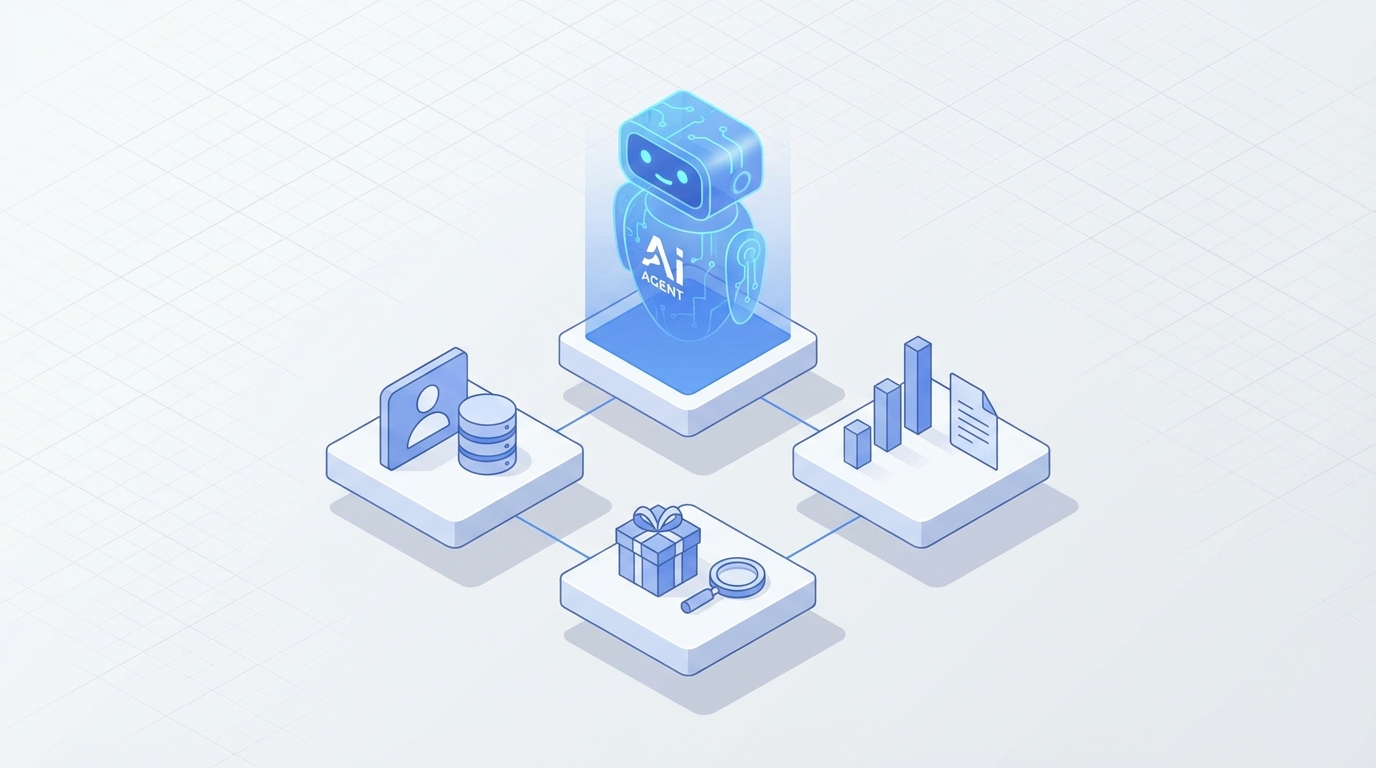
Most nonprofits using Little Green Light are stuck in a frustrating middle ground. The CRM itself is solid — it tracks donors, manages gifts, handles events, and generates reports that keep the board happy. But the moment you need it to do something intelligent — flag a lapsed major donor, draft a personalized acknowledgment, tell you who to call today and why — you're back to clicking through a 2010s-era interface, exporting CSVs, and doing the thinking yourself.
The data is there. The intelligence isn't.
LGL's native automation is bare-bones. You get basic triggers like "new gift" or "new constituent," a handful of actions like sending an acknowledgment email or adding someone to a group, and that's about it. No conditional logic. No multi-step workflows. No ability to reason about your data. Organizations paper over these gaps with Zapier chains and spreadsheet gymnastics, but those solutions are brittle, expensive at scale, and still fundamentally dumb.
Here's what actually works: building a custom AI agent on OpenClaw that connects to Little Green Light's REST API, reads your donor data, reasons about it, and takes action autonomously. Not a chatbot. Not a dashboard with a sparkle emoji. A system that does real work — the kind your development director does manually at 9 PM on a Sunday.
Let me walk through exactly how to build this.
What Little Green Light's API Actually Gives You
Before we talk about the AI layer, you need to understand the raw material. LGL has a v2 REST API that's more capable than most people realize. Here's what you can touch programmatically:
Full CRUD access on:
- Constituents (individuals, organizations, households)
- Gifts, donations, soft credits, pledges
- Notes, interactions, tasks
- Relationships between constituents
- Events, registrations, attendance
- Groups and tags
- Custom fields
Limited but usable:
- Mailings and communications
- Webhooks (new gift, new constituent, updated constituent)
- User data (read-only, mostly)
What you can't access:
- The reporting engine directly (no API endpoint for running saved reports)
- Some complex custom field logic
- Bulk update/delete on all objects
Authentication is straightforward — API key or OAuth2. Rate limits are on the lower side, so you'll want to be thoughtful about polling frequency and batch your reads.
The critical gap: there's no way to run the equivalent of "show me all LYBUNT donors with giving capacity over $10K who haven't been contacted in 60 days" through the API in a single call. You have to pull constituent data, pull gift data, pull interaction data, merge them, and apply logic. That's exactly where an AI agent earns its keep.
The Architecture: OpenClaw + LGL API
OpenClaw is purpose-built for this kind of integration. You're not duct-taping a general-purpose LLM to an API and hoping it doesn't hallucinate donor records. You're building a structured agent with defined tools, data access patterns, and guardrails.
Here's the high-level architecture:
┌─────────────────────────────────────────────┐
│                 OpenClaw Agent               │
│                                              │
│  ┌─────────────┐  ┌──────────────────────┐  │
│  │  LLM Engine  │  │  Tool Definitions     │  │
│  │  (reasoning) │  │  - search_constituents│  │
│  │              │◄─┤  - get_gift_history   │  │
│  │              │  │  - create_task        │  │
│  │              │  │  - update_constituent │  │
│  │              │  │  - log_interaction    │  │
│  │              │  │  - send_email         │  │
│  └─────────────┘  └──────────────────────┘  │
│         │                    │                │
│         ▼                    ▼                │
│  ┌─────────────────────────────────────────┐ │
│  │         LGL REST API (v2)               │ │
│  │    api.littlegreenlight.com/api/v1/     │ │
│  └─────────────────────────────────────────┘ │
└─────────────────────────────────────────────┘
Each "tool" is a defined function the agent can call. OpenClaw handles the orchestration — deciding which tools to use, in what order, and what to do with the results. You define the tools, set the permissions, and the agent reasons through multi-step workflows without you scripting every branch.
Here's what a tool definition looks like for searching constituents:
{
    "name": "search_constituents",
    "description": "Search LGL constituents by name, email, tag, group, or custom field values. Returns constituent IDs, names, and summary data.",
    "parameters": {
        "type": "object",
        "properties": {
            "query": {
                "type": "string",
                "description": "Free-text search term (name, email, etc.)"
            },
            "tag": {
                "type": "string",
                "description": "Filter by tag name"
            },
            "group_id": {
                "type": "integer",
                "description": "Filter by group ID"
            },
            "updated_since": {
                "type": "string",
                "description": "ISO 8601 date to filter recently updated records"
            }
        }
    }
}
And the corresponding API call your tool executes:
import requests

def search_constituents(query=None, tag=None, group_id=None, updated_since=None):
    headers = {
        "Authorization": f"Bearer {LGL_API_KEY}",
        "Content-Type": "application/json"
    }
    params = {}
    if query:
        params["q"] = query
    if tag:
        params["tag"] = tag
    if group_id:
        params["group_id"] = group_id
    if updated_since:
        params["updated_since"] = updated_since

    response = requests.get(
        "https://api.littlegreenlight.com/api/v1/constituents",
        headers=headers,
        params=params
    )
    return response.json()
You'd build similar tools for get_gift_history, create_task, update_constituent, log_interaction, get_event_registrations, and so on. The key insight is that each tool is simple and atomic — the intelligence lives in OpenClaw's orchestration layer, not in the individual API calls.
Five Workflows That Actually Matter
Let's get concrete. Here are the workflows where an OpenClaw agent connected to LGL creates measurable value for a nonprofit development team.
1. Lapsed Donor Detection and Re-Engagement
The problem: LYBUNT (Last Year But Unfortunately Not This) reports exist in LGL, but they're static. Nobody checks them weekly. By the time someone notices a major donor lapsed, six months have passed.
The agent workflow:
Every Monday morning, the OpenClaw agent:
- Pulls all constituents with gifts in the prior fiscal year
- Cross-references against gifts in the current fiscal year
- Filters for donors above a configurable threshold (say, $500+ lifetime giving)
- Checks the interaction history — when was the last touchpoint?
- For each lapsed donor with no recent interaction, creates a task in LGL assigned to the appropriate development officer
- Drafts a personalized re-engagement email based on the donor's history, interests (from tags/custom fields), and last gift details
- Logs the outreach suggestion as a note on the constituent record
The development officer shows up Monday morning to a prioritized list with draft communications ready to review and send. Instead of running a report and writing 15 emails from scratch, they're reviewing and approving in 20 minutes.
2. Intelligent Gift Acknowledgment
The problem: LGL can auto-send a standard acknowledgment email when a gift is recorded. But a $50 annual fund gift and a $5,000 major gift shouldn't get the same template. Neither should a first-time donor and a 10-year loyal supporter.
The agent workflow:
When LGL fires a "new gift" webhook:
- The agent receives the gift details (amount, fund, date, payment method)
- Pulls the constituent's full profile — giving history, relationship to organization, tags, custom fields, past interactions
- Classifies the gift: first-time, repeat, upgraded, major, recurring, tribute, etc.
- Generates a personalized acknowledgment that references their specific history ("This brings your lifetime giving to $12,400 — thank you for seven years of partnership")
- Routes appropriately: auto-send for gifts under $500, queue for human review and personal note for $500+, flag for phone call from ED for $5,000+
- Updates the constituent record with the acknowledgment status and any follow-up tasks
This is the difference between a nonprofit that sends "Dear Friend, thank you for your generous gift" and one that makes every donor feel individually seen. At scale.
3. Natural Language Reporting
The problem: LGL's reporting is powerful but painful. Building a custom report means navigating filter menus, understanding field relationships, and often running multiple reports to answer one question. The executive director shouldn't need a training session to ask "how are we doing this quarter?"
The agent workflow:
A staff member asks (via Slack, email, or a simple chat interface):
"How many new donors do we have this fiscal year compared to last, and what's the average gift size for each cohort?"
The OpenClaw agent:
- Parses the natural language query into specific API calls
- Pulls constituents with first gift dates in the current fiscal year
- Pulls constituents with first gift dates in the prior fiscal year
- Calculates gift counts and averages for each cohort
- Returns a formatted response with the numbers, trend comparison, and optionally an exportable table
No report builder. No CSV export into Excel. Just ask the question, get the answer.
More complex queries work too: "Which board members haven't made their annual gift yet?" requires pulling the board group, cross-referencing against current-year gifts, and returning the list. Three API calls, zero manual work.
4. Meeting Prep Briefs
The problem: Before every donor meeting, development officers spend 15-30 minutes reviewing the constituent record, recent gifts, past interactions, relationships, and notes. Multiply that by 5-10 meetings a week and you've lost a full workday.
The agent workflow:
When a calendar event is tagged as a donor meeting (or the officer asks for a brief):
- The agent pulls the constituent's full profile from LGL
- Summarizes giving history (total, recent, trends, largest gift)
- Highlights recent interactions and their outcomes
- Lists relationships (spouse, company, foundation affiliations)
- Notes any outstanding pledges, upcoming events they're registered for, or open tasks
- Checks for giving capacity indicators and custom field data
- Generates a one-page brief with suggested talking points and an ask amount recommendation based on giving history and capacity
This turns a 20-minute research task into a 30-second read. Development officers walk into meetings better prepared, which directly translates to larger gifts and stronger relationships.
5. Data Quality Monitoring
The problem: CRM data degrades constantly. Duplicate records, missing email addresses, outdated employment info, constituents with no interactions logged in years. LGL has basic duplicate detection, but proactive data quality management doesn't exist natively.
The agent workflow:
On a weekly schedule, the agent:
- Scans for potential duplicates (similar names, shared addresses/emails)
- Flags constituents with missing critical fields (no email, no phone, no address)
- Identifies records with stale data (employment info older than 2 years, no interaction in 18+ months)
- Checks for orphaned relationships (constituent linked to a dissolved organization)
- Generates a data quality report with specific fix-it tasks
- Optionally auto-merges obvious duplicates and fills in missing data from available sources
Data quality is the foundation everything else runs on. Bad data means bad segmentation, missed donors, and embarrassing errors. An agent that quietly maintains data hygiene saves you from the big cleanup project you'll otherwise need every 18 months.
Implementation: Where to Start
Don't try to build all five workflows at once. Here's the practical sequence:
Week 1-2: Foundation
- Set up your LGL API key and test basic read operations
- Build your core tool definitions in OpenClaw (search constituents, get gifts, get interactions, create tasks, log notes)
- Verify data access and rate limit behavior
Week 3-4: First Workflow
- Start with lapsed donor detection — it's high value and relatively simple
- Configure the scheduled trigger and test with a small segment
- Have a development officer review the output for a week before trusting it
Week 5-6: Second Workflow
- Add intelligent gift acknowledgment using the webhook trigger
- Build the classification logic and template generation
- Run in "draft mode" (agent generates, human approves) for two weeks
Week 7+: Expand
- Add natural language reporting
- Build meeting prep briefs
- Layer in data quality monitoring
Each workflow builds on the same tool set. Once your core API integration is solid, new workflows are mostly about orchestration logic — which is what OpenClaw handles natively.
What This Looks Like in Practice
A small environmental nonprofit with 8,000 constituents in LGL deployed an OpenClaw agent focusing on the first three workflows. The development team of three people reported:
- Gift acknowledgments went from 48-hour average turnaround to same-day, with personalization that previously only happened for top-tier donors
- Lapsed donor outreach started happening proactively instead of reactively, catching donors 30-60 days after their typical renewal date instead of 6+ months
- The ED stopped asking the development coordinator to "pull some numbers" for board meetings and started asking the agent directly
The total administrative time savings was roughly 12-15 hours per week across the team. That's not a marginal improvement — that's the equivalent of hiring a part-time data entry and reporting assistant.
The Honest Limitations
A few things to be straightforward about:
LGL's API rate limits are real. You can't have an agent hammering the API every 30 seconds. Design for batch reads, cache constituent data locally where appropriate, and use webhooks for real-time triggers rather than polling.
Some LGL features aren't API-accessible. The reporting engine, certain complex custom field configurations, and some mailing features require workarounds. Your agent may need to reconstruct report logic from raw data rather than calling a "run report" endpoint.
AI-generated communications need human review. At least initially. The agent can draft, but a development officer should review anything going to a major donor. Build approval workflows, not autonomous outreach, for high-stakes communications.
This isn't a replacement for LGL. It's an intelligence layer on top. Your team still uses LGL as the system of record. The agent reads from it, writes to it, and makes it dramatically more useful — but it doesn't replace the core CRM.
Next Steps
If you're running a nonprofit on Little Green Light and your development team is spending more time on data entry and report building than on actual relationship building, this is fixable.
The combination of OpenClaw's agent platform and LGL's API gives you the automation and intelligence that LGL doesn't provide natively — without ripping out your CRM and migrating to something enterprise-grade that costs five times as much.
Want help scoping and building this? Claw Mart's Clawsourcing service pairs you with specialists who build OpenClaw agents for specific CRM integrations. They'll assess your LGL setup, identify the highest-ROI workflows for your team, and build the agent — so you can focus on fundraising instead of fighting your software.
The data is already in your CRM. Time to make it work for you.