AI Agent for GoCardless: Automate Direct Debit Collection, Retry Logic, and Reconciliation
Automate Direct Debit Collection, Retry Logic, and Reconciliation
Most finance teams running GoCardless have the same morning routine: open the dashboard, check for failed payments, manually decide what to retry, copy-paste some customer emails, and then try to reconcile payouts in a spreadsheet that's held together by duct tape and prayers.
GoCardless itself is excellent at what it does — pulling money from bank accounts reliably across 30+ countries. The API is solid, the webhook coverage is genuinely comprehensive, and Smart Retries work reasonably well out of the box. But "reasonably well" leaves a lot of money on the table when you're dealing with hundreds or thousands of recurring payments.
The gap isn't in GoCardless's payment infrastructure. It's in the intelligence layer on top of it. The part that decides when to retry, how to communicate with a customer whose payment just bounced, whether to escalate to a human or handle it autonomously, and what to do across your other systems when something goes sideways.
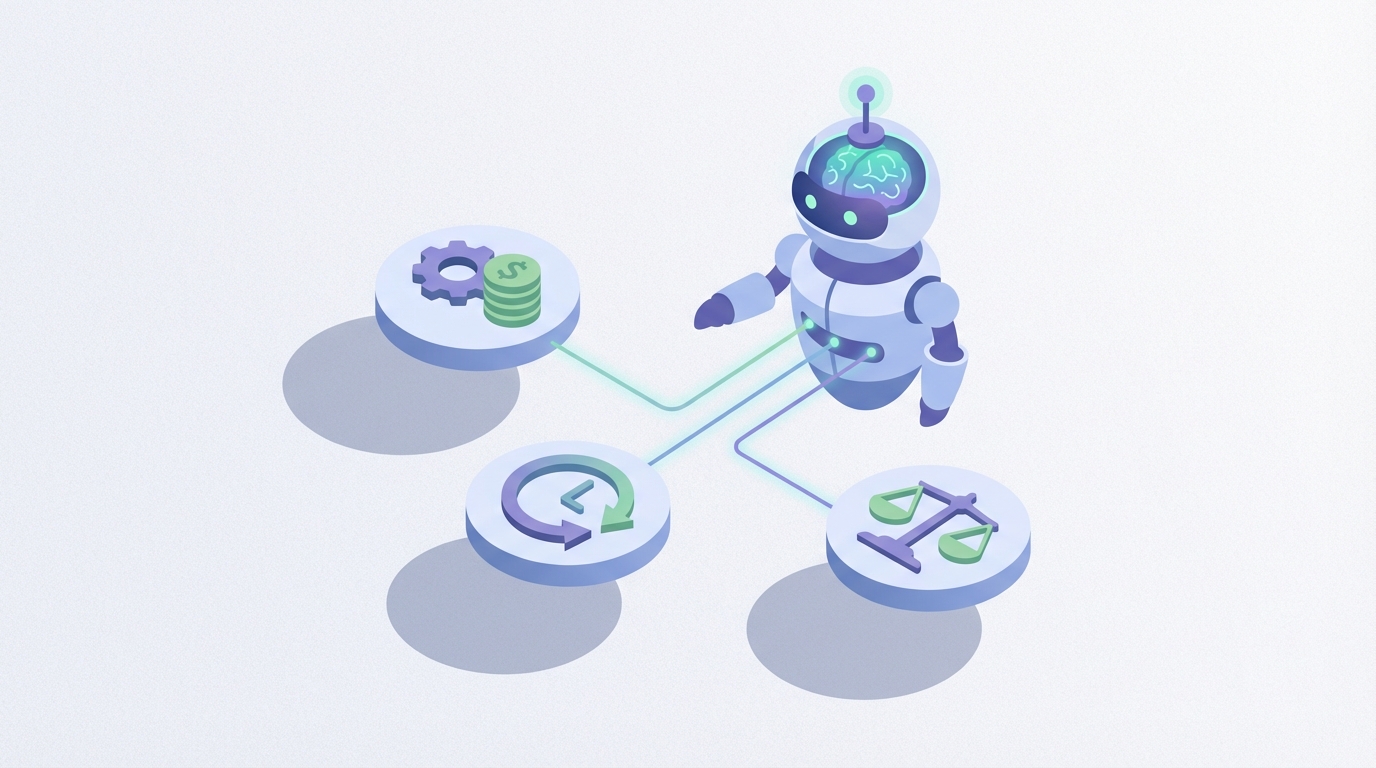
That's what we're building here: a custom AI agent on OpenClaw that connects to GoCardless's API, listens to every webhook event, makes smart decisions, and takes action — without you refreshing a dashboard at 8 AM.
What GoCardless Does Well (And Where It Stops)
Before we build anything, let's be honest about what GoCardless gives you natively:
Strong out of the box:
- Mandate creation and management (paperless, multi-country)
- Payment creation against mandates (one-off and recurring)
- Smart Retries with basic optimization
- Webhook events for nearly every state change
- A billing portal for customer self-service
- Integrations with Xero, QuickBooks, Salesforce, and a dozen others
Where it falls short:
- The rules engine is simple — no complex conditional logic based on customer segment, lifetime value, payment history patterns, or product type
- Communication templates are basic and single-channel — you can't orchestrate email + SMS + WhatsApp with intelligent fallback
- No predictive capabilities beyond basic retry scheduling
- No cross-system workflow orchestration ("payment failed → pause subscription in Stripe → create Zendesk ticket → notify account manager in Slack")
- Reconciliation at high volume still requires manual cleanup
- No native ability to have a conversational AI resolve payment issues with customers directly
GoCardless's own documentation essentially confirms this. Their API is a payment execution engine, not a decision-making engine. The decision-making is supposed to be you — or, more practically, an AI agent you build.
The Architecture: OpenClaw + GoCardless Webhooks
Here's the high-level flow:
GoCardless Webhook Event
    → OpenClaw Ingestion Endpoint
        → AI Agent (with tools for GoCardless API, CRM, billing, email/SMS)
            → Decision + Action
                → Retry payment with adjusted parameters
                → Send personalized recovery message
                → Update CRM records
                → Escalate to human
                → All of the above, in sequence
OpenClaw acts as the brain. GoCardless fires webhooks for events like payment_failed, payment_confirmed, mandate_cancelled, payout_paid, and dozens of others. Your OpenClaw agent receives these events, enriches them with context from your other systems, reasons about what to do, and then executes — calling back into GoCardless's API or any other connected tool.
The key thing OpenClaw gives you that you won't get from stitching together Zapier automations: actual reasoning. Not "if X then Y" — but "given this customer's payment history, their segment, the failure reason code, the day of week, and what's worked for similar customers, here's the optimal action."
Let's get into the specific workflows.
Workflow 1: Intelligent Payment Retry Logic
GoCardless's built-in Smart Retries are a decent first pass. They'll retry failed payments on days that have historically higher success rates. But they treat all customers roughly the same and don't incorporate your business context.
An OpenClaw agent can do significantly better.
What the agent knows:
- The GoCardless failure reason code (e.g.,
insufficient_funds,bank_account_closed,mandate_cancelled) - The customer's full payment history (pulled from GoCardless API)
- The customer's segment and LTV (pulled from your CRM)
- The payment amount and type
- Day of week and proximity to common paydays
- Previous retry attempts and their outcomes
What the agent does:
# OpenClaw agent tool: Decide retry strategy for a failed payment

def handle_payment_failure(event):
    payment = gocardless.payments.get(event["links"]["payment"])
    customer = gocardless.customers.get(payment["links"]["customer"])

    # Enrich with CRM data
    crm_record = crm.get_customer(customer["email"])

    # Build context for OpenClaw agent
    context = {
        "failure_reason": event["details"]["cause"],
        "amount": payment["amount"],
        "currency": payment["currency"],
        "customer_ltv": crm_record["lifetime_value"],
        "segment": crm_record["segment"],
        "payment_history": get_payment_history(customer["id"]),
        "failed_retry_count": count_recent_retries(payment["links"]["mandate"]),
        "day_of_week": datetime.now().strftime("%A"),
    }

    # OpenClaw agent decides
    decision = openclaw_agent.run(
        task="decide_retry_strategy",
        context=context
    )

    # decision might look like:
    # {
    #   "action": "retry",
    #   "retry_date": "2026-01-17",  # Next Friday (payday)
    #   "adjusted_amount": None,  # Full amount
    #   "notify_customer": True,
    #   "notification_channel": "sms",
    #   "notification_tone": "empathetic",
    #   "escalate_to_human": False
    # }

    return execute_decision(decision)
The difference between this and a static retry schedule is enormous. For a high-LTV enterprise customer whose payment failed due to insufficient_funds, the agent might wait until the following Monday, send a polite heads-up SMS, and retry for the full amount. For a low-LTV customer on their third failed retry, it might reduce the amount, offer a payment plan via email, and flag the account for review.
Businesses implementing intelligent retry logic like this on top of GoCardless typically see 15–30% improvement in recovery rates. That's not a hypothetical number — it comes from aggregated data across payments industry case studies. When you're collecting $500K/month in Direct Debits, a 20% improvement in recovery is $100K in annual revenue you were previously losing.
Workflow 2: Hyper-Personalized Dunning Sequences
GoCardless sends basic templated emails when payments fail. They're functional but generic. They don't know that your customer is a 3-year subscriber who's never missed a payment before, or that another customer has been on a downward spiral for months.
Here's what an OpenClaw-powered dunning sequence looks like:
Day 0 — Payment fails: The agent assesses the failure reason and customer context. For a long-time customer with a first-ever failure, it generates a genuinely empathetic, personalized email:
"Hey Sarah — your February payment of £89 for [Product Name] didn't go through, which looks like a first for you in three years. These things happen. We'll automatically retry on Friday the 17th. If you'd like to update your bank details or change your collection date, you can do that here: [link]. No action needed otherwise."
Compare that to: "Your payment has failed. Please update your payment details."
Day 3 — Still failed after first retry: The agent switches channels. If the customer hasn't opened the email (tracked via your email platform), it sends an SMS. If they opened but didn't act, it sends a follow-up email with different messaging.
Day 7 — Second retry fails: For high-LTV customers, the agent creates a task for the account manager in your CRM and drafts a suggested outreach message. For self-serve customers, it offers a payment plan or temporary pause.
Day 14 — Final attempt: The agent makes a last retry, sends a "we don't want to lose you" message, and if it fails, automatically triggers your cancellation or collections workflow.
All of this runs autonomously. The OpenClaw agent decides the channel, tone, timing, and content for each step based on what it knows about the customer and what's worked for similar customers historically.
# OpenClaw agent tool: Generate dunning message

def generate_dunning_message(customer_context, step, channel):
    prompt = f"""
    Generate a {channel} message for a customer whose payment failed.

    Customer context:
    - Name: {customer_context['name']}
    - Product: {customer_context['product']}
    - Tenure: {customer_context['months_subscribed']} months
    - Previous failures: {customer_context['historical_failure_count']}
    - Amount: {customer_context['amount']} {customer_context['currency']}
    - Failure reason (plain English): {customer_context['failure_reason_plain']}
    - Dunning step: {step} of 4
    - Self-serve portal link: {customer_context['portal_link']}

    Tone: {"empathetic and casual" if step <= 2 else "direct but respectful"}
    Length: {"2-3 sentences" if channel == "sms" else "short paragraph"}
    Include: specific next retry date, self-serve link, option to contact support
    Do NOT include: threats, legal language, or guilt-tripping
    """

    return openclaw_agent.generate(prompt)
Workflow 3: Automated Reconciliation and Anomaly Detection
This is the workflow that finance teams will love you for.
GoCardless pays out collected funds on a schedule (typically 2–5 business days after collection). Each payout contains multiple individual payments. Reconciling these payouts against your invoices, subscriptions, and accounting records is tedious at best and error-prone at worst — especially at volume.
An OpenClaw agent can:
- Listen for
payout_paidwebhook events from GoCardless - Pull the payout details including all individual payments in that payout
- Match each payment against records in your accounting system (Xero, QuickBooks, or your own database)
- Flag mismatches — amounts that don't match, payments without corresponding invoices, duplicate entries
- Auto-reconcile clean matches and create the appropriate journal entries
- Generate a daily reconciliation summary sent to your finance team
# OpenClaw agent tool: Reconcile a GoCardless payout

def reconcile_payout(payout_id):
    payout = gocardless.payouts.get(payout_id)
    payout_items = gocardless.payout_items.list(params={"payout": payout_id})

    results = {
        "matched": [],
        "mismatched": [],
        "unmatched": [],
        "anomalies": []
    }

    for item in payout_items:
        payment = gocardless.payments.get(item["links"]["payment"])
        invoice = accounting.find_invoice(
            customer_email=get_customer_email(payment),
            amount=payment["amount"],
            date_range=(payment["charge_date"], payout["arrival_date"])
        )

        if invoice and invoice["amount"] == payment["amount"]:
            results["matched"].append({
                "payment_id": payment["id"],
                "invoice_id": invoice["id"],
                "amount": payment["amount"]
            })
            accounting.mark_reconciled(invoice["id"], payment["id"])
        elif invoice:
            results["mismatched"].append({
                "payment_id": payment["id"],
                "invoice_id": invoice["id"],
                "payment_amount": payment["amount"],
                "invoice_amount": invoice["amount"]
            })
        else:
            results["unmatched"].append(payment)

    # AI anomaly detection
    anomalies = openclaw_agent.run(
        task="detect_reconciliation_anomalies",
        context={
            "payout_amount": payout["amount"],
            "item_count": len(payout_items),
            "historical_avg_payout": get_avg_payout_amount(),
            "results": results
        }
    )

    results["anomalies"] = anomalies
    send_reconciliation_report(results)
    return results
The anomaly detection piece is where AI adds real value beyond simple matching. The agent can spot patterns like: payout amounts trending downward over weeks (revenue leak), unusual clusters of refunds, payments succeeding for customers who should have been cancelled, or timing shifts in when funds arrive.
Workflow 4: Proactive Churn Prevention
This goes beyond reacting to failed payments. An OpenClaw agent can analyze patterns across your GoCardless payment data and predict which customers are at risk before their next payment fails.
Signals the agent monitors:
- Declining payment amounts (for variable billing)
- Payments succeeding on retries more frequently (customer's finances may be tightening)
- Mandate changes or bank account updates (could indicate switching away)
- Reduced product engagement (pulled from your app analytics)
- Support ticket patterns
When the agent identifies an at-risk customer, it can proactively trigger retention workflows: offer a temporary discount, suggest a different payment date that aligns with their payday, downgrade their plan preemptively, or route them to a retention specialist.
This is the kind of thing that's impossible to build with GoCardless alone and impractical to build with if/then automation tools. You need an agent that can weigh multiple signals, reason about them, and choose from a range of possible actions.
Workflow 5: Conversational Payment Resolution
Here's where things get genuinely interesting. Instead of sending a link and hoping the customer clicks it, your OpenClaw agent can actually talk to customers to resolve payment issues.
Customer replies to a failed payment email: "I changed banks last month, how do I update my details?"
The agent (via OpenClaw) processes this, understands the intent, generates a new mandate setup link via the GoCardless API, and responds:
"No problem — here's a secure link to set up your new bank details: [mandate link]. Once you've completed it, we'll retry your February payment automatically. Should take about 2 minutes."
If the customer says "I want to cancel," the agent can attempt a save offer based on their segment and LTV, or process the cancellation by cancelling the mandate via the GoCardless API — all without a human touching it.
This is conversational AI that's actually connected to real systems and can take real actions, not a chatbot that says "let me transfer you to an agent" after two messages.
Getting Started: The Implementation Path
Here's the realistic path to getting this running:
Week 1: Foundation
- Set up your OpenClaw workspace and connect GoCardless as a tool (API key + webhook endpoint)
- Configure webhook ingestion for key events:
payment_failed,payment_confirmed,mandate_cancelled,payout_paid - Connect your CRM and accounting system as additional tools
Week 2: First Agent — Intelligent Retries
- Build the retry decision agent with customer context enrichment
- Start with conservative logic (agent recommends, human approves)
- Track recovery rate against your baseline
Week 3: Dunning Sequences
- Connect your email and SMS tools to OpenClaw
- Build the multi-step dunning workflow with AI-generated messaging
- A/B test AI messages against your existing templates
Week 4: Reconciliation + Monitoring
- Build the payout reconciliation agent
- Set up anomaly detection and daily summary reports
- Gradually automate the clean matches, keep human review for exceptions
Month 2+: Advanced Workflows
- Add proactive churn prediction
- Build conversational resolution capabilities
- Refine agent decisions based on accumulated outcome data
The key principle: start with the agent assisting humans, then gradually increase autonomy as you build confidence in its decisions. OpenClaw makes this transition natural because you can adjust the agent's authority level without rebuilding the architecture.
The Math on This
Let's be concrete. Say you're collecting £200K/month through GoCardless with a 5% failure rate. That's £10K/month in failed payments.
GoCardless's built-in Smart Retries might recover 50% of that: £5K.
An OpenClaw agent with intelligent retry logic, personalized dunning, and proactive intervention might recover 70–80% of that original £10K: £7K–8K.
The delta is £2K–3K per month, or £24K–36K per year. And that's before you factor in the time savings from automated reconciliation, reduced support tickets, and fewer manual interventions.
For larger organizations collecting £1M+ monthly, these numbers scale proportionally. The agent doesn't care if it's handling 100 failed payments or 10,000.
What This Isn't
This isn't about replacing GoCardless. GoCardless is excellent at the payment infrastructure layer — moving money between bank accounts reliably across jurisdictions. You're not going to build that yourself, and you shouldn't try.
This is about adding the intelligence layer that GoCardless doesn't provide. The layer that turns raw payment events into smart decisions and autonomous actions. GoCardless handles the plumbing; OpenClaw handles the thinking.
It's also not about building something fragile. GoCardless's webhook system is genuinely well-designed — nearly every state change fires an event with detailed metadata. That makes it an ideal foundation for an AI agent that needs reliable, real-time information to make good decisions.
Next Steps
If you're running GoCardless and losing sleep over failed payment recovery, reconciliation headaches, or manual dunning workflows, this is a solvable problem.
The fastest path from "this sounds useful" to "this is running in production" is through Clawsourcing. Our team builds custom OpenClaw agents for exactly these kinds of payment operations workflows. You bring the GoCardless account and the business context; we build the agent, connect the systems, and get it running.
No six-month implementation timeline. No enterprise software procurement process. Just an AI agent that watches your GoCardless events, makes smart decisions, and takes action — so you can stop refreshing that dashboard at 8 AM.