AI Agent for Fresha: Automate Beauty and Wellness Booking, POS, and Client Management
Automate Beauty and Wellness Booking, POS, and Client Management
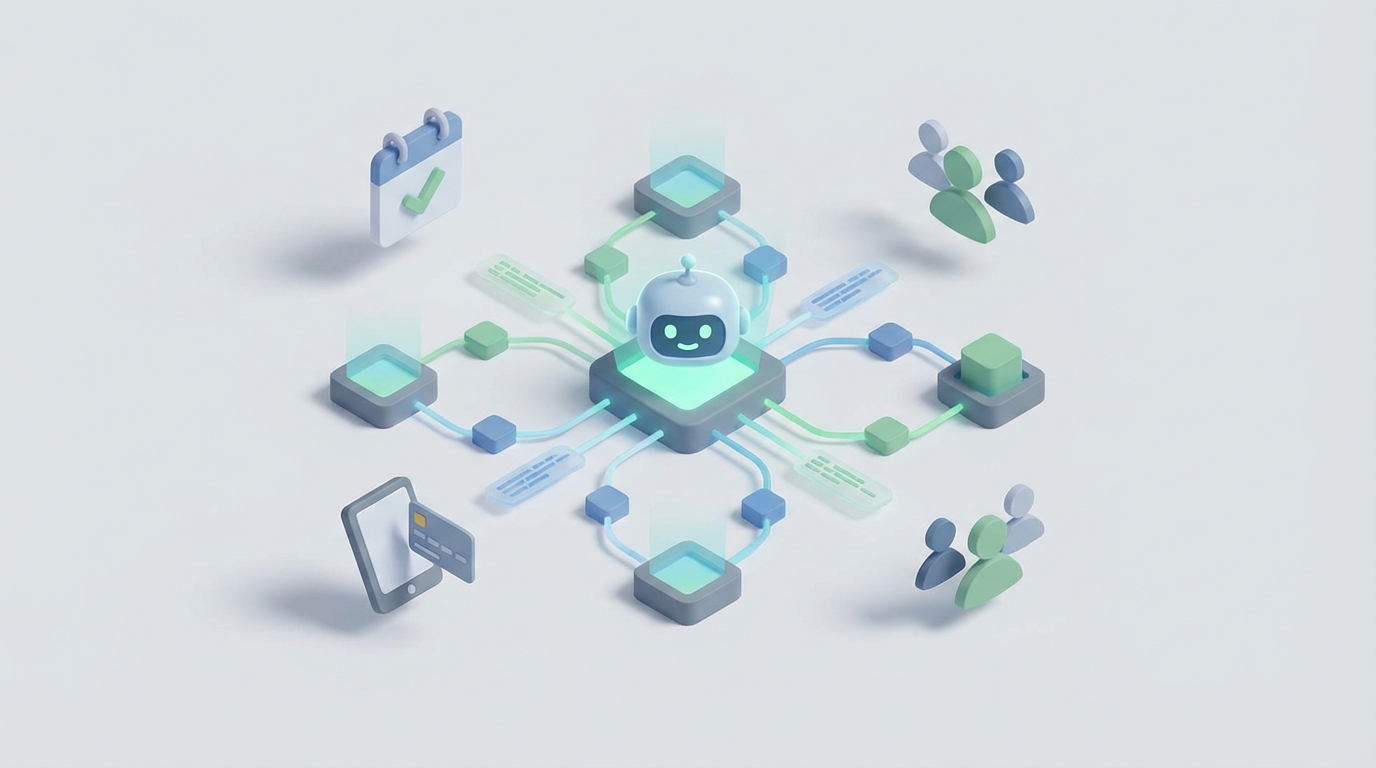
Most beauty and wellness businesses running on Fresha are leaving money on the table every single day — not because Fresha is bad, but because it's fundamentally a booking system pretending to be a business intelligence platform.
Fresha handles scheduling, payments, and client records well enough. Over 100,000 businesses use it globally for exactly those things. But when it comes to thinking — predicting which clients are about to churn, automatically filling schedule gaps, generating personalized win-back campaigns based on actual spending behavior, or letting clients book through WhatsApp in plain English — Fresha doesn't do any of that. Its built-in automations are limited to appointment reminders, review requests, and birthday emails. There's no conditional logic, no multi-step sequences, no intelligence whatsoever.
That's the gap. And it's a massive one.
The move is to keep Fresha as your operational backbone — it's good at what it does — and layer a custom AI agent on top that turns it from a passive record-keeper into a proactive business co-pilot. That's exactly what OpenClaw is built for.
Let me walk through exactly how this works, what you can build, and how to get it running.
What Fresha Actually Gives You to Work With
Before we get into the agent architecture, let's be honest about what the Fresha API actually supports. It's REST-based with webhooks, and access requires going through their partner program or requesting developer credentials. Here's what's available:
Solid coverage:
- Appointments: full CRUD (create, read, update, delete)
- Customers: create, retrieve, update profiles
- Services: read service catalog, pricing, durations
- Staff: read schedules, availability
- Locations: multi-location support
- Webhooks: real-time events for booking created/updated/cancelled and payment events
Weak or missing:
- Commission rules: limited read/write access
- Advanced marketing automations: not exposed
- Payment flow: can't fully bypass Fresha Pay
- Bulk operations: mostly absent
- Reporting: very limited read-only endpoints
- Rate limits: restrictive for high-volume operations
- Custom fields: essentially non-existent in the API
The API documentation is mediocre at best. Developers consistently rate it average-to-poor. But here's the thing — you don't need a perfect API to build something extremely useful. You need the core entities (appointments, clients, services, staff) and real-time webhooks. Fresha gives you both.
The Architecture: OpenClaw + Fresha
OpenClaw sits between your Fresha data and the actual intelligence layer. Instead of trying to hack together a Zapier chain or manually coding an agent framework from scratch, OpenClaw provides the orchestration, reasoning, and tool-use infrastructure out of the box.
Here's the high-level architecture:
Fresha API/Webhooks
        ↓
  OpenClaw Agent Layer
  ├── Client Intelligence Module
  ├── Scheduling Optimizer
  ├── Conversational Booking Interface
  ├── Marketing Automation Engine
  └── Operations Monitor
        ↓
  Action Outputs
  ├── Fresha API (write-backs)
  ├── WhatsApp / SMS / Email
  ├── Accounting systems (Xero, QuickBooks)
  └── Dashboard / Alerts
The OpenClaw agent ingests data from Fresha via webhooks and periodic API polling, maintains enriched client profiles in its own data store, and then takes autonomous actions based on rules and reasoning you define.
Let me break down the five most valuable workflows.
Workflow 1: Intelligent No-Show Prediction and Prevention
No-shows are the silent killer of salon and spa revenue. Most Fresha businesses lose 5–15% of potential revenue to no-shows. Fresha's solution? A flag on the client profile and a reminder SMS. That's it.
An OpenClaw agent can do dramatically better.
How it works:
The agent listens for the booking.created webhook from Fresha. When a new appointment comes in, it pulls the client's full history — past appointments, cancellation rate, average spend, time-of-day patterns, how far in advance they typically book, and whether they've responded to previous reminders.
# OpenClaw agent trigger: new booking created
@agent.on_webhook("fresha.booking.created")
def assess_noshow_risk(event):
    client_id = event["client_id"]
    appointment_id = event["appointment_id"]

    # Pull enriched client profile from OpenClaw's data store
    client = agent.get_client_profile(client_id)

    risk_score = agent.reason(
        prompt=f"""
        Assess no-show probability for this client:
        - Past appointments: {client['total_appointments']}
        - No-show rate: {client['noshow_rate']}
        - Last visit: {client['last_visit_date']}
        - Booking lead time: {event['days_until_appointment']} days
        - Time slot: {event['appointment_time']}
        - Service value: {event['service_price']}

        Return a risk score 0-100 and recommended action.
        """,
        output_schema=NoShowAssessment
    )

    if risk_score.score > 70:
        # High risk: require deposit or send personalized confirmation
        agent.send_message(
            channel="sms",
            to=client["phone"],
            message=risk_score.personalized_confirmation_message
        )
        agent.flag_appointment(appointment_id, "high_noshow_risk")

    elif risk_score.score > 40:
        # Medium risk: send earlier reminder than default
        agent.schedule_reminder(
            appointment_id,
            hours_before=48,  # Instead of Fresha's default 24h
            message=risk_score.reminder_message
        )
The key difference from Fresha's built-in reminders: this is conditional. A loyal client with 50 visits and zero no-shows doesn't get hassled with a deposit request. A new client who booked a high-value service for a Saturday morning and has a 30% cancellation rate? They get a confirmation request 48 hours out, and if they don't respond, the agent can proactively reach out to a waitlisted client to fill the slot.
Revenue impact: For a salon doing $30K/month with a 10% no-show rate, reducing no-shows by even half adds $1,500/month in recovered revenue.
Workflow 2: Conversational Booking via WhatsApp/SMS
This is the workflow that clients actually love. Instead of opening the Fresha app, navigating the booking widget, selecting a service, picking a staff member, and finding a time — they just text.
"Hey, can I get a balayage with Sarah sometime next Thursday afternoon?"
The OpenClaw agent parses this, checks Sarah's availability on Thursday afternoon against the Fresha calendar, checks the client's history for any relevant notes (allergies, preferred products, usual service add-ons), and responds:
"Sarah has openings at 1:00 PM and 3:30 PM next Thursday. Your last balayage was 10 weeks ago — want to add a toner refresh? It adds 20 minutes. Which time works?"
When the client confirms, the agent creates the appointment directly through the Fresha API, and the client gets the standard Fresha confirmation.
@agent.on_message("whatsapp")
def handle_booking_request(message):
    client = agent.identify_client(message.phone_number)

    intent = agent.reason(
        prompt=f"""
        Parse this client message for booking intent:
        Message: "{message.text}"
        Client history: {client['recent_services']}

        Extract: desired service, preferred staff, date/time preferences,
        any modifications or add-ons mentioned.
        """,
        output_schema=BookingIntent
    )

    if intent.type == "new_booking":
        availability = agent.call_tool(
            "fresha.get_availability",
            staff_id=intent.staff_id,
            date_range=intent.date_range,
            service_id=intent.service_id
        )

        # Generate personalized response with upsell opportunity
        response = agent.reason(
            prompt=f"""
            Available slots: {availability}
            Client's usual add-ons: {client['frequent_addons']}
            Days since last visit: {client['days_since_last_visit']}

            Suggest 2-3 time options and one relevant upsell
            based on their history. Keep it conversational and brief.
            """
        )

        agent.send_message("whatsapp", message.phone_number, response)
This alone is a competitive advantage most salons don't have. Clients can book without downloading anything or navigating a UI. And the upsell suggestions based on real purchase history convert meaningfully better than generic prompts.
Workflow 3: Churn Prediction and Automated Win-Back
Fresha lets you build a segment like "clients who haven't visited in 60 days" and send them a blast. That's better than nothing, but it's crude. It treats a client who visits monthly the same as one who visits quarterly. A 60-day gap means something very different for each.
An OpenClaw agent calculates personalized churn risk based on each client's individual cadence.
# Runs daily via OpenClaw scheduler
@agent.on_schedule("daily", time="08:00")
def churn_scan():
    clients = agent.call_tool("fresha.get_all_clients")

    for client in clients:
        expected_return = agent.calculate_expected_return_date(
            visit_history=client["appointment_history"],
            typical_interval=client["avg_days_between_visits"]
        )

        days_overdue = (today - expected_return).days

        if days_overdue > 7 and not client.get("winback_active"):
            # Client is overdue based on THEIR pattern
            campaign = agent.reason(
                prompt=f"""
                Generate a win-back message for this client:
                - Name: {client['first_name']}
                - Usual services: {client['top_services']}
                - Last visit: {client['last_visit']}
                - Typical interval: {client['avg_days_between_visits']} days
                - Days overdue: {days_overdue}
                - Lifetime spend: {client['total_spend']}

                High-value clients (>$2000 LTV) get a personalized offer.
                Medium clients get a gentle reminder.
                Low-value clients get a standard campaign message.

                Be warm but not desperate. One short paragraph max.
                """,
                output_schema=WinBackMessage
            )

            agent.send_message(
                channel=campaign.preferred_channel,
                to=client["contact"],
                message=campaign.message
            )
            agent.tag_client(client["id"], "winback_active")
The agent also tracks whether the win-back worked. If a client returns after receiving a message, it logs that data point and refines its approach over time. If they don't return after three attempts, it stops messaging — because pestering churned clients hurts your brand.
Workflow 4: Smart Schedule Optimization
Most salon schedules have gaps. A 30-minute hole between a balayage and a men's cut. A slow Tuesday afternoon. Fresha shows you the calendar but doesn't do anything about it.
An OpenClaw agent can:
- Identify gaps daily by pulling the staff calendar from Fresha
- Match gap durations to services that fit the window
- Find clients who are due for those services (from the churn analysis above)
- Send targeted availability messages: "Hey [Name], we just had a cancellation — Sarah has a 2:00 PM opening tomorrow, perfect for your usual blowout. Want it?"
This turns dead time into revenue without any manual effort from your front desk.
The agent can also analyze historical patterns to recommend schedule adjustments: "Tuesday afternoons between 1-4 PM are consistently 40% underbooked. Consider running a promotion for that window or reducing staffing."
Workflow 5: Cross-System Financial Intelligence
One of Fresha's biggest pain points is its poor integration with accounting systems. Many salon owners maintain parallel records in Xero or QuickBooks, manually reconciling revenue.
An OpenClaw agent bridges this gap. It listens for payment webhooks from Fresha, categorizes transactions by service type and payment method, and pushes formatted entries to your accounting system. No more manual data entry. No more discrepancies at month-end.
But it goes further than simple sync. The agent can generate natural language financial insights:
"Revenue is up 12% month-over-month, driven primarily by a 23% increase in color services. However, retail product sales dropped 8%. Your top performer Sarah generated 34% of total revenue but her average ticket decreased by $15 — she may be rushing appointments. Tuesday promotions generated $2,400 in incremental revenue this month."
Try getting that from Fresha's built-in reports.
Why OpenClaw Instead of Building From Scratch
You could theoretically build all of this yourself. Set up a server, write webhook handlers, integrate an LLM, manage conversation state, handle message queuing, deal with Fresha's rate limits, build a reasoning engine, and maintain all of it.
Or you could use OpenClaw, which provides the agent orchestration, tool integration framework, reasoning layer, scheduling, message handling, and data enrichment infrastructure out of the box. You define the business logic and workflows. OpenClaw handles the plumbing.
The difference is the same as the difference between writing a booking system from scratch and using Fresha. You could build it all yourself, but the question is whether that's the best use of your time.
What This Means in Practice
A mid-size salon running Fresha with an OpenClaw agent layered on top can realistically expect:
- 5-15% reduction in no-shows through intelligent prediction and prevention
- 10-20% increase in rebooking rate through personalized, well-timed outreach
- 8-12 hours/week saved on manual scheduling, marketing, and financial reconciliation
- Higher average ticket value from contextual upsells during conversational booking
- Measurably better client retention from churn prediction catching at-risk clients early
These aren't hypothetical numbers. They're based on what businesses implementing intelligent automation on top of their existing booking systems consistently see.
Getting Started
If you're running a beauty, wellness, or spa business on Fresha and want to explore what a custom AI agent could do for your specific operation, the fastest path is through our Clawsourcing program.
Here's how it works: you tell us your biggest operational pain points — whether it's no-shows, schedule gaps, client retention, financial reporting, or all of the above. Our team scopes an OpenClaw agent tailored to your Fresha setup, builds the integration, and gets it running. You don't need to write code or understand API documentation.
The businesses that win in beauty and wellness over the next few years won't be the ones with the fanciest booking widget. They'll be the ones whose systems actually think — predicting problems before they happen, personalizing every client interaction, and turning idle data into revenue.
Fresha is a solid foundation. OpenClaw makes it intelligent. Get started with Clawsourcing →
Recommended for this post

Adam
Full-Stack Engineer
Your full-stack AI engineer that architects, builds, deploys, and automates entire applications from a single conversation. 23+ Core Capabilities.
 Clarence Maker
Your Linear expert that automates issue tracking, builds workflows, and streamlines project management.
 SpookyJuice.ai
Three-level OODA strategy, five-phase Ralph execution, and a recursive feedback engine. Your agent gets faster — this makes it get better.
 JerryRunsOps