AI Agent for 17hats: Automate Small Business Client Management, Quotes, and Invoicing
Automate Small Business Client Management, Quotes, and Invoicing
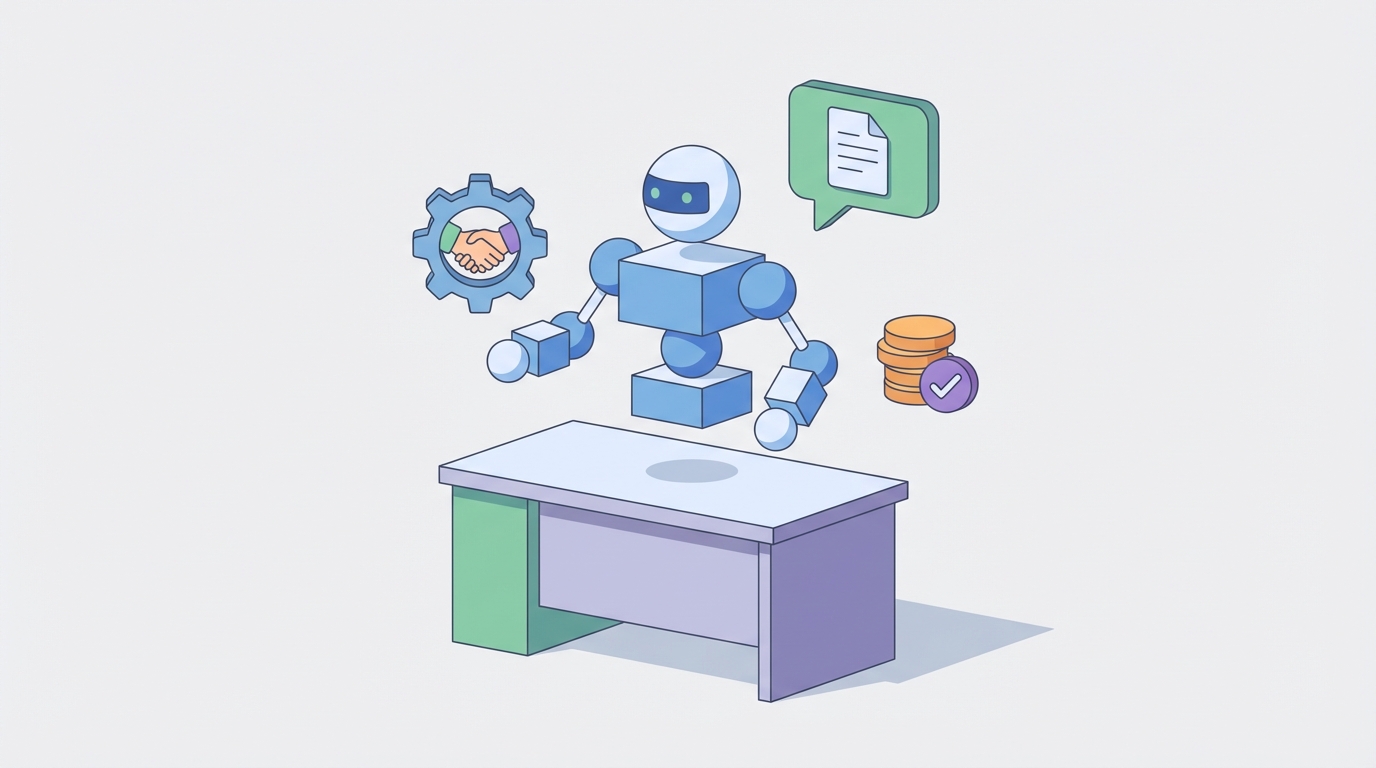
If you're running a creative service business — photography, wedding planning, consulting, coaching — there's a decent chance you've landed on 17hats as your operational backbone. It handles the client lifecycle from inquiry to invoice, and for a one-person or small-team operation, it genuinely replaces a half-dozen tools.
But here's the thing: 17hats was designed to be a Swiss Army knife, not a scalpel. Its automation system is linear, its reporting is surface-level, and its ability to think about your business is nonexistent. It does what you tell it. Nothing more.
That's the gap. And it's exactly where a custom AI agent — built on OpenClaw and connected to 17hats via its REST API — turns a decent small-business CRM into something that actually works for you instead of just storing your data and firing off template emails.
Let me walk through what this looks like in practice.
The Core Problem with 17hats Automations
17hats has a built-in automation system. It's rule-based, trigger-action, straight line. Here's what you get:
- Triggers: Lead created, status changed, payment received, contract signed.
- Actions: Send email, create task, change status, add tag.
That's it. No branching. No conditional logic based on what a client said in their inquiry. No way to evaluate whether a lead is worth your time before you spend 15 minutes reading their message and crafting a reply. No ability to call external services, parse email content intelligently, or adapt based on context.
For a photographer who shoots the same type of session every time at the same price, this works. For everyone else — anyone with variable pricing, multiple service tiers, complex project timelines, or clients who don't fit neatly into a three-step funnel — you outgrow these automations within about two months.
The usual workaround is Zapier. You bolt on a $50/month Zapier plan, wire up some multi-step zaps, and pray they don't break silently at 2 AM when a lead comes in from your website. It works. Sort of. Until it doesn't.
The better answer is an AI agent that sits on top of 17hats, reads the data, understands context, and takes intelligent action.
What an OpenClaw Agent Actually Does Here
OpenClaw is the platform you use to build this. It's designed specifically for creating AI agents that connect to business tools via APIs and webhooks, reason about the data, and take autonomous action — or surface recommendations for you to approve.
Here's the architecture in broad strokes:
- 17hats fires a webhook when something happens (new lead, status change, payment received, etc.)
- OpenClaw receives the webhook, enriches it with context from the 17hats API (pulling the full contact record, project history, related invoices, etc.)
- The agent reasons about the situation using the logic and knowledge you've configured
- It takes action — creating tasks, updating statuses, drafting emails, generating proposals, flagging risks — either autonomously or with your approval
This isn't a chatbot. It's not a glorified search bar. It's an operational layer that makes decisions and executes them.
Let me get specific.
Workflow 1: Intelligent Lead Triage and Response
This is the highest-ROI use case for most 17hats users, and it's the one you should build first.
The Problem
A lead submits your inquiry form. 17hats captures it, maybe sends a generic "Thanks for reaching out!" email, and dumps it in your inbox. Now you have to:
- Read the inquiry
- Figure out if it's a good fit
- Determine which service tier applies
- Write a personalized response
- Maybe send a proposal or questionnaire
This takes 10–20 minutes per lead. If you get 5–10 inquiries a week, that's 1–3 hours of your week just doing lead intake. And if you're slow to respond (because you're, you know, doing the work), you lose leads.
The OpenClaw Solution
Set up a webhook in 17hats for the "New Lead" event. When it fires, OpenClaw receives the payload, which includes the lead's name, email, and form responses.
Here's a simplified version of what the agent logic looks like:
# OpenClaw agent: Lead Triage for 17hats

def handle_new_lead(webhook_payload):
    lead_id = webhook_payload["contact_id"]

    # Pull full contact details from 17hats API
    contact = seventeen_hats_api.get_contact(lead_id)
    inquiry_text = contact["inquiry_message"]

    # Agent reasoning step: classify and score the lead
    analysis = openclaw.reason(
        context={
            "inquiry": inquiry_text,
            "services": BUSINESS_SERVICES,
            "pricing_tiers": PRICING_TIERS,
            "availability": get_current_availability(),
            "past_clients": get_similar_past_clients(inquiry_text)
        },
        instructions="""
        Analyze this inquiry. Determine:
        1. Which service category it fits (wedding, portrait, commercial, etc.)
        2. Estimated budget signals (explicit or implied)
        3. Lead quality score (1-10) based on fit, budget, and timeline
        4. Recommended response tier (premium, standard, nurture, decline)
        5. Draft a personalized first reply in our brand voice
        """
    )

    # Take action based on analysis
    if analysis.score >= 7:
        seventeen_hats_api.update_contact(lead_id, {
            "tags": [analysis.category, "high-priority"],
            "status": "Hot Lead"
        })
        seventeen_hats_api.create_task(lead_id, {
            "title": f"Send {analysis.recommended_tier} proposal",
            "due_date": today_plus(1)
        })
        # Queue personalized response for review
        openclaw.queue_for_approval(
            action="send_email",
            to=contact["email"],
            subject=analysis.email_subject,
            body=analysis.email_draft
        )
    elif analysis.score >= 4:
        seventeen_hats_api.update_contact(lead_id, {
            "tags": [analysis.category, "nurture"],
            "status": "Warm Lead"
        })
        # Auto-send nurture sequence
        seventeen_hats_api.trigger_automation(lead_id, "nurture_sequence")
    else:
        seventeen_hats_api.update_contact(lead_id, {
            "tags": ["low-priority"],
            "status": "Archive"
        })
What just happened in about 3 seconds:
- The agent read the inquiry, understood what the person is asking for, and scored them
- It tagged and categorized the contact inside 17hats
- For high-quality leads, it drafted a personalized reply (not a template) and queued it for your review
- For medium leads, it routed them into a nurture sequence automatically
- For poor-fit leads, it archived them so they don't clog your pipeline
You go from 15 minutes per lead to 30 seconds of reviewing and approving the agent's draft. That's not a marginal improvement. That's getting your mornings back.
Workflow 2: Smart Workflow Engine with Conditional Logic
Here's where 17hats's native automations completely fall apart, and where OpenClaw earns its keep.
The Problem
Real client journeys aren't linear. A wedding photographer's workflow for a $2,000 elopement package is completely different from a $15,000 full-day wedding. The questionnaires are different, the timeline is different, the number of touchpoints is different, the payment schedule is different. But 17hats gives you one automation path per status change.
The OpenClaw Solution
Instead of relying on 17hats's rigid status-based triggers, you use OpenClaw as the workflow brain.
# OpenClaw agent: Dynamic Workflow Router

def handle_status_change(webhook_payload):
    job_id = webhook_payload["job_id"]
    new_status = webhook_payload["new_status"]

    # Pull full job context
    job = seventeen_hats_api.get_job(job_id)
    contact = seventeen_hats_api.get_contact(job["contact_id"])
    invoices = seventeen_hats_api.get_invoices(job_id)

    if new_status == "Booked":
        # Determine which workflow to apply
        workflow = openclaw.reason(
            context={
                "service_type": job["tags"],
                "package_value": sum(i["amount"] for i in invoices),
                "event_date": job["event_date"],
                "client_history": contact.get("previous_jobs", []),
                "custom_fields": job["custom_fields"]
            },
            instructions="""
            Based on this job's details, determine:
            1. Which onboarding workflow to apply (elopement, half-day, full-day, multi-day)
            2. What tasks need to be created and their deadlines (relative to event date)
            3. What payment schedule milestones to set
            4. Whether to assign a second shooter based on package value
            5. Which questionnaire to send first
            """
        )

        # Create all tasks dynamically
        for task in workflow.tasks:
            seventeen_hats_api.create_task(job_id, {
                "title": task.title,
                "due_date": calculate_date(job["event_date"], task.days_before),
                "assignee": task.assignee
            })

        # Set payment milestones
        for milestone in workflow.payment_schedule:
            seventeen_hats_api.create_invoice(job_id, {
                "amount": milestone.amount,
                "due_date": milestone.due_date,
                "auto_remind": True
            })

        # Send appropriate questionnaire
        seventeen_hats_api.send_questionnaire(
            job_id,
            workflow.questionnaire_id
        )
Now a $2,500 elopement gets 8 tasks and 2 payment milestones. A $15,000 wedding gets 25 tasks, 4 payment milestones, a second shooter assignment, and a different questionnaire. All created automatically based on the actual details of the job — not a one-size-fits-all template.
This is the kind of branching logic that would require dozens of Zapier zaps to approximate, and even then it'd be brittle. With OpenClaw, it's one agent that reasons about the situation and adapts.
Workflow 3: Proactive Client Risk Monitoring
The Problem
You have 15 active projects. One of them has a client who hasn't responded to your last two emails. Another has a final payment that's 10 days overdue. A third has an event in two weeks and you still haven't received their shot list. You don't know about any of this until you manually check each project, because 17hats's reporting won't tell you.
The OpenClaw Solution
Run a scheduled agent (daily or twice daily) that scans all active projects and flags risks.
# OpenClaw agent: Daily Risk Scan

def daily_risk_scan():
    active_jobs = seventeen_hats_api.get_jobs(status="active")

    risks = []
    for job in active_jobs:
        contact = seventeen_hats_api.get_contact(job["contact_id"])
        tasks = seventeen_hats_api.get_tasks(job["id"])
        invoices = seventeen_hats_api.get_invoices(job["id"])

        risk_assessment = openclaw.reason(
            context={
                "job": job,
                "overdue_tasks": [t for t in tasks if t["overdue"]],
                "unpaid_invoices": [i for i in invoices if i["status"] == "unpaid"],
                "last_client_communication": contact["last_email_date"],
                "days_until_event": days_between(today(), job["event_date"]),
                "communication_history": contact["recent_emails"]
            },
            instructions="""
            Assess risk level for this project. Consider:
            - Overdue tasks that block progress
            - Unpaid invoices relative to event date
            - Communication gaps (no response in X days)
            - Approaching deadlines with incomplete prerequisites
            - Sentiment in recent communications

            Return: risk_level (low/medium/high/critical),
            reasons, recommended_actions
            """
        )

        if risk_assessment.risk_level in ["high", "critical"]:
            risks.append({
                "job": job["name"],
                "client": contact["name"],
                "level": risk_assessment.risk_level,
                "reasons": risk_assessment.reasons,
                "actions": risk_assessment.recommended_actions
            })

    if risks:
        # Send daily briefing
        openclaw.send_briefing(
            channel="email",  # or Slack, SMS
            subject=f"🚨 {len(risks)} projects need attention",
            body=format_risk_report(risks)
        )
Every morning at 7 AM, you get a message: "3 projects need attention. Sarah's wedding — final payment 12 days overdue, event in 18 days. Marcus's brand shoot — hasn't responded to questionnaire in 9 days. Priya's headshots — second shooter not confirmed, session in 5 days."
That's not a report you pull. It's an agent that watches your business and tells you what matters. You didn't ask for it. It just knows.
Workflow 4: Predictive Follow-ups and Smart Payment Collection
Late payments are the bane of every creative service business. 17hats can send automated reminders on a schedule — "Your invoice is due in 3 days," "Your invoice is overdue" — but these are static, impersonal, and easy to ignore.
An OpenClaw agent can do something much smarter:
- Analyze payment patterns across your client base to identify who's likely to pay late
- Adjust reminder timing and tone based on the client's history and the project relationship
- Escalate intelligently — friendly nudge first, then firmer follow-up, then phone call reminder to you
- Correlate payment behavior with communication patterns — if a client went quiet AND has an overdue invoice, that's a different situation than someone who's been responsive and just forgot
The agent drafts each follow-up with context. Instead of "Reminder: Invoice #1234 is overdue," it sends something like "Hey Sarah — just wanted to make sure this didn't slip through the cracks. Here's the link to take care of the remaining balance for your March session. Let me know if you have any questions!" And it can do this across 20 clients simultaneously without you touching a thing.
Technical Integration Notes
A few practical details if you're wiring this up:
17hats API authentication uses API keys. Straightforward — you pass it in the header. No OAuth dance.
Webhooks are available for the key events: new lead, status change, payment received, contract signed. You configure these in 17hats's settings and point them to your OpenClaw agent endpoint.
Rate limits on the 17hats API are restrictive. Your agent should batch reads where possible and cache contact/job data rather than hitting the API on every single reasoning step. OpenClaw handles this well with its built-in state management.
Gaps in the API: Proposal line items and email sequence configuration have limited or no API access. For proposal generation, the practical approach is to have the agent prepare the content and then you paste it into 17hats's proposal builder — or use the API to create a basic proposal and refine it manually. Not perfect, but the time savings on everything else more than compensates.
Email handling: Since 17hats's email API access is limited, many users set up email forwarding (Gmail → OpenClaw) so the agent can read and analyze incoming client emails independently. This gives you the sentiment analysis and communication gap monitoring without relying on 17hats's email endpoints.
What You're Actually Getting
Let me put real numbers on this for a typical 17hats user — say a wedding photographer doing 30–40 events per year:
- Lead triage: Save 5–8 hours/month on inquiry responses
- Workflow automation: Save 3–5 hours/month on manual project setup
- Risk monitoring: Catch 2–3 at-risk projects per month before they become problems
- Payment follow-ups: Reduce average days-to-payment by 30–40%
- Client communication: Maintain personalized touch at scale without the time cost
None of this replaces you. It replaces the administrative version of you — the one who spends Sunday nights tagging contacts and Monday mornings writing follow-up emails. The AI does the operational work. You do the creative work and the relationship work.
Where to Start
Don't try to build all four workflows at once. Start with Workflow 1: Lead Triage. It's the highest-impact, fastest to implement, and gives you immediate time back.
Once that's running and you trust the agent's judgment (you'll want to keep it in approval-required mode for the first few weeks), layer on the daily risk scan. Then the smart workflow engine. Then the payment follow-ups.
Each one compounds. By the time you have all four running, 17hats stops being a tool you manage and starts being a system that manages your business — with you making the final calls on the things that actually matter.
Build It or Have It Built
If you're technical enough to configure API connections and write agent logic, OpenClaw gives you the platform to build these agents yourself. The 17hats API is well-documented enough to get started, and OpenClaw's agent framework handles the reasoning, state management, and action execution.
If you'd rather have someone build this for you — configured for your specific services, pricing, workflow, and brand voice — that's exactly what Clawsourcing is for. The team at Claw Mart will build your custom AI agent integration, tailored to your 17hats setup and your actual business processes. No generic templates, no one-size-fits-all nonsense.
Get started with Clawsourcing →
Your 17hats account has all your client data. It just needs a brain. OpenClaw is that brain.
Recommended for this post

Adam
Full-Stack Engineer
Your full-stack AI engineer that architects, builds, deploys, and automates entire applications from a single conversation. 23+ Core Capabilities.
 Clarence Maker
Your Linear expert that automates issue tracking, builds workflows, and streamlines project management.
 SpookyJuice.ai
Three-level OODA strategy, five-phase Ralph execution, and a recursive feedback engine. Your agent gets faster — this makes it get better.
 JerryRunsOps